Fernweh: Home
ExploreGuideDestinationsMy tripsMy trip
de|en
All Places & RegionsRound tripsNight trains in EuropeAll highlightsAbout FernwehFAQPrivacy PolicyImprint
Download on the App StoreGet it on Google Play
ExploreGuideDestinationsMy tripsMy trip
    • Neighborhoods & highlights
    • Eat & drink
    • Culture
    • Getting around
    • Accommodation
    • Plan trip
    • Nearby
    Fischland-Darß-Zingst

    Jörg Braukmann / Wikimedia Commons / CC BY-SA 4.0, mod.

    Germany

    Fischland-Darß-Zingst

    CityBeachNature

    The approximately 45-kilometer-long peninsula between Rostock and Stralsund separates the Baltic Sea from the Darß-Zingst Bodden Chain.

    by Felix Gillen

    1. Home
    2. Destinations
    3. Germany
    4. Rügen & Western Pomerania
    5. Fischland-Darß-Zingst
    The approximately 45-kilometer-long peninsula between Rostock and Stralsund separates the Baltic Sea from the Darß-Zingst Bodden Chain. It consists of three parts: Fischland in the southwest with Wustrow and the artists' village of Ahrenshoop, the forested Darß with Born, Wieck, and Prerow, and Zingst in the east.Large parts of Darß and eastern Zingst belong to the Western Pomerania Lagoon Area National Park. Along the Darßer Weststrand, approximately 14 kilometers of dunes and sand stretch along the coast, and a lighthouse stands at Darßer Ort. Between March and October, cranes rest in the Bodden waters.
    Germany travel guideRound trips in GermanyPlan a trip with Fischland-Darß-Zingst

    Contents

    • Neighborhoods & highlights
    • Eat & drink
    • Culture
    • Getting around
    • Accommodation
    • Nearby

    Sights in Fischland-Darß-Zingst

    Discover the most important sights and attractions

    Point of Interest

    1Darss West Beach

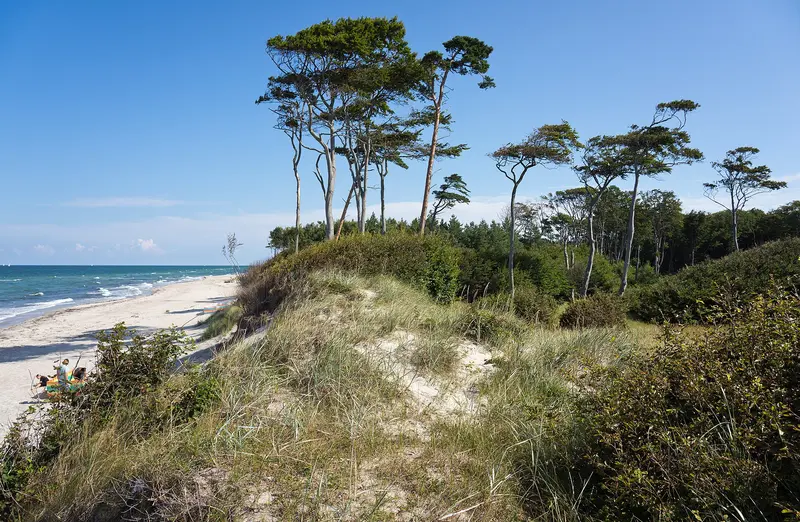
    Approximately 14 kilometers of dunes and natural beach stretch along the west coast of Darß, bordered by the Darß Forest. The coast is constantly changing: In the west, the sea erodes approximately one meter of land annually, while at Darßer Ort it expands. The northern section is closed to protect nature.
    Open in Google Maps
    Museum

    2Ahrenshoop and Art Museum

    1892, the first painters came to Ahrenshoop; Paul Müller-Kaempff founded an artists' colony here. The Kunstmuseum Ahrenshoop, opened in 2013, and the Kunstkaten, built in 1909 in regional style – one of the local galleries – tie into this.
    Open in Google Maps
    Museum

    3Darßer Ort Lighthouse and Natureum

    The lighthouse at Darß's northern tip stands in the National Park; nearby, the Natureum features exhibitions on the coast and nature. From Prerow, it's about six kilometers, with most arriving by bike or on foot through the forest.
    Open in Google Maps
    Attraction

    4Sea Bridge Zingst

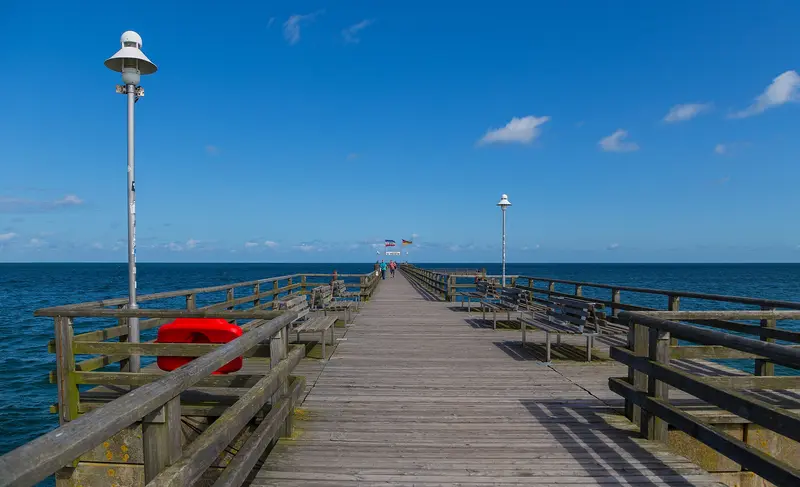
    The 270-meter-long pier in Zingst stretches from the beach out into the Baltic Sea. At its tip, a diving gondola is suspended, taking you below the water's surface for a ride lasting up to 45 minutes.
    Open in Google Maps
    Prerow Sea Bridge

    J.-H. Janßen / Wikimedia Commons / CC BY-SA 4.0, mod.

    Attraction

    5Prerow Sea Bridge

    The pier, opened in October 2024, is 720 meters long, making it the longest on the Baltic Sea. At its end lies Inselhafen Prerow; cycling is not permitted on the pier.
    Open in Google Maps

    Restaurants in Fischland-Darß-Zingst

    Artists, Captains and Bodden

    Ahrenshoop Artists' ColonyFrom 1892, painters came to the coast; Paul Müller-Kaempff founded an artists' colony in Ahrenshoop. Today, the Ahrenshoop Art Museum and numerous galleries recall this.Seafaring VillagesIn Prerow, you'll find the Seamen's Church and stately captain's houses. The peninsula was formerly made up of islands: in the 14th century, the passages between Fischland and Darß were closed, and after the 1872 storm surge, so was the Prerower Strom. Since 1874, Zingst has been connected to Darß.

    Exploring Fischland-Darß-Zingst

    Getting ThereThe nearest train stations are on the mainland, for example in Barth, which is connected via the Velgast line. From there, and from Ribnitz-Damgarten, you can continue to the peninsula by bus or car.LocallyThe peninsula is flat and ideal for exploring by bike. To the lighthouse at Darßer Ort, it's about a six-kilometre bike ride from Prerow. Within the National Park, designated path rules apply, and parts of the West Beach are restricted.Observing CranesFrom March to October, cranes fly at sunset to their roosting sites near the Kirr bird island. You can observe them from a viewing platform in Zingst, and boat trips are also available.

    Accommodations in Fischland-Darß-Zingst

    Find perfect stay in Fischland-Darß-Zingst

    Booking.com* (Affiliate link)
    Search Hotels
    Agoda* (Affiliate link)
    Search Hotels
    Airbnb
    Vacation Rentals

    * Affiliate link: if you book through it, we earn a small commission. The price stays the same for you.

    Campgrounds in Fischland-Darß-Zingst

    Find perfect campground in Fischland-Darß-Zingst

    Search via Google Maps
    Campgrounds nearby (15km)
    Camping.info
    Find Campgrounds
    Park4Night
    RV Parks & Camping

    Plan your trip to Fischland-Darß-Zingst

    Save places, build a route and plan your city trip, all in one place.

    1. 1
      Sunrise over alpine peaks and a sea of clouds
      1234

      Round trip

      12 days · 4 stops

      Saved

      Pick a route

      Pick a ready-made one or save places and plan your own.

      Open bookmarks
    2. 2

      Trip to Fischland-Darß-Zingst

      Live
      • 1Darss West Beach3 days
      • 2Ahrenshoop and Art Museum4 days
      • 3Darßer Ort Lighthouse and Natureum5 days
      Budget

      Plan your trip

      The planner sorts stops, days and budget. Plan together in real time.

      Start trip planning
    3. 3
      9:41 No signal
      Fischland-Darß-Zingst
      Available offline

      Jörg Braukmann / Wikimedia Commons / CC BY-SA 4.0, mod.

      Use it on the road

      Download the guide to your phone and use it on site, even offline.

    Nearby

    Stralsund

    Stralsund

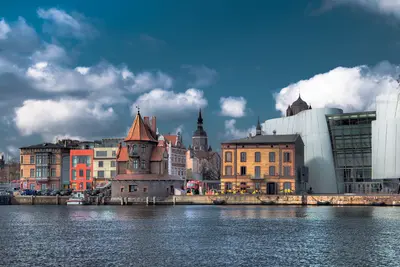
    Stralsund lies on the Strelasund and is regarded as the gateway to the island of Rügen. The old town is almost completely surrounded by water, by the sound and by the Knieperteich, Frankenteich and Moorteich ponds. Since 2002 it has been a UNESCO World Heritage Site together with Wismar, and for almost 200 years the city belonged to Swedish Pomerania.On the Alter Markt stand the town hall, one of the most important secular buildings of Brick Gothic in northern Germany, and the Nikolaikirche. From the 104-metre-high tower of the Marienkirche you look out over the city and Rügen. In the harbour, the Ozeaneum, opened in 2008, shows the underwater world of the Baltic Sea and the North Atlantic.

    Tino Schmidt·Pexels

    Rostock & Warnemünde

    Rostock & Warnemünde

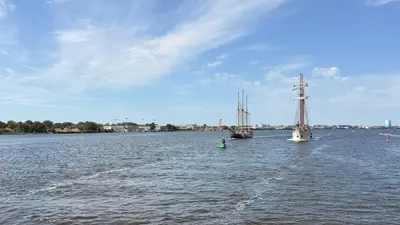
    Rostock, with some 210,000 inhabitants, is Mecklenburg-Vorpommern's largest city, stretching about 16 kilometers along both banks of the Warnow, from the city center to its mouth in Warnemünde. The Hanseatic city received Lübeck city rights in 1218; its university, founded in 1419, is Northern Europe's oldest.Marienkirche, Town Hall on Neuer Markt, and Kröpeliner Tor shape the Old Town. The S-Bahn gets you quickly to Warnemünde, where Lighthouse, Teepott, and Alter Strom await. Hanse Sail in August welcomes some 300 traditional tall ships.

    Stephan Leuzinger·Pexels

    Rügen

    Rügen

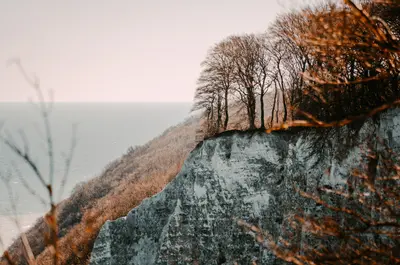
    Rügen, at 926 square kilometers, is Germany's largest island and is connected to Stralsund by the Rügendamm and Rügen Bridge. Its main attractions are the chalk cliffs of the Jasmund Peninsula, featuring the Königsstuhl, plus the seaside resorts on the east coast and Cape Arkona in the north.The island is divided into highly diverse landscapes: Jasmund with its beech forests and chalk coast; the seaside resorts of Binz, Sellin, Baabe, and Göhren, known for their resort architecture and piers; Wittow with Cape Arkona and the fishing village of Vitt; and Putbus in the south. The "Rasender Roland" narrow-gauge steam train operates between Putbus and Göhren.

    Philipp Deus·Unsplash

    Heiligendamm

    Heiligendamm

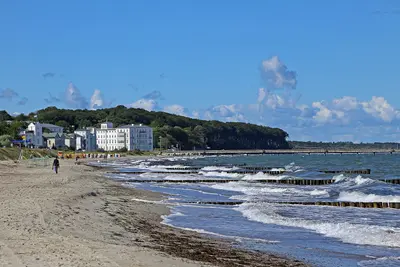
    Heiligendamm, a district of Bad Doberan, is Germany's and Continental Europe's oldest seaside resort. Duke Friedrich Franz I. founded it in 1793; in September of that year, the first bathhouse opened. Due to its white houses along the beach, the complex is known as the 'White City by the Sea'.The ensemble includes the Grand Hotel, the 'Pearl Necklace' of eight villas, and a roughly 200-meter-long pier. The G8 Summit in 2007 brought it international recognition. You can take the Molli narrow-gauge railway to Bad Doberan or Kühlungsborn.

    W. Bulach·CC BY-SA 4.0

    Rügen & Western Pomerania

    Rügen & Western Pomerania

    At 926 square kilometers, Rügen is Germany's largest and most populous island. It connects to Stralsund via the Rügendamm and the Rügen Bridge (opened 2007); its Old Town is a UNESCO World Heritage site since 2002. On the Jasmund peninsula, Königsstuhl towers 118 meters above the Baltic Sea; the National Park's ancient beech forests are a World Natural Heritage site since 2011.Along the east coast are seaside resorts like Binz, Sellin, and Göhren, with spa architecture and long sandy beaches. Further east on Usedom, a twelve-kilometer promenade connects the Imperial Spas Bansin, Heringsdorf, and Ahlbeck with Swinemünde, Poland.

    Anja Dietzinger·CC BY-SA 4.0

    Your next steps

    Fischland-Darß-Zingst is in Germany. Ways to carry on from here.

    • More in Germany

      Highlights, areas, routes and the best time to travel for all of Germany.

      Germany travel guide
    • Round trips in Germany

      Ready-made routes through Germany, with stops, nights and a map.

      See the routes

    Sources & method

    • Photos: Wikimedia Commons. Each photo carries its credit.
    • Place data such as addresses and ratings comes from Google Maps.
    • The content is based on web research from public, traceable sources. How the content is made · The role of AI