Fernweh: Home
ExploreGuideDestinationsMy tripsMy trip
de|en
All Places & RegionsRound tripsNight trains in EuropeAll highlightsAbout FernwehFAQPrivacy PolicyImprint
Download on the App StoreGet it on Google Play
ExploreGuideDestinationsMy tripsMy trip
    • Neighborhoods & highlights
    • Recommendations
    • Tours
    • Eat & drink
    • Culture
    • Nightlife
    • Getting around
    • Accommodation
    • Plan trip
    • Round trips
    • Nearby
    Busan

    Photo by Saksham Vikram on Pexels

    South Korea

    Busan

    City

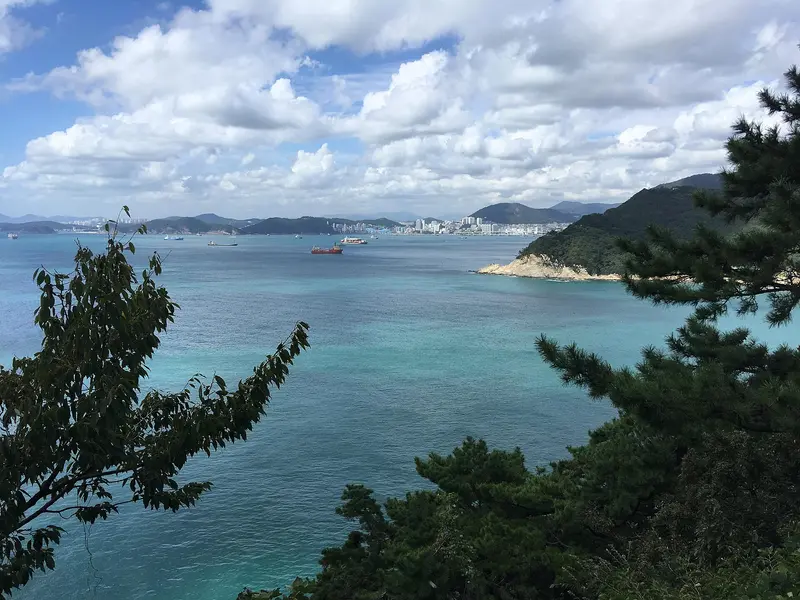
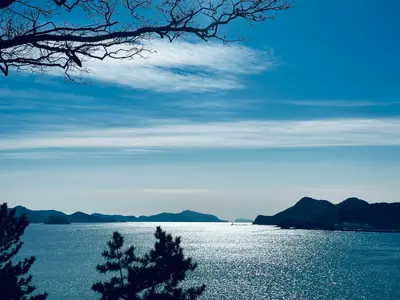
    Located on the southeastern tip of the Korean Peninsula, Busan is a port and beach metropolis with approximately 3.2 million inhabitants.

    by Felix Gillen

    1. Home
    2. Destinations
    3. South Korea
    4. Busan
    Located on the southeastern tip of the Korean Peninsula, Busan is a port and beach metropolis with approximately 3.2 million inhabitants. City beaches like Haeundae and Gwangalli are found here alongside mountain temples such as Beomeosa and hillside villages from the Korean War era like Gamcheon. During the war, the city grew significantly due to refugees, a history still told today by Gukje Market and the pork soup Dwaeji-gukbap. Every October, Busan hosts the Busan International Film Festival, Korea's first international film festival.
    South Korea travel guideSee the round tripPlan a trip with Busan

    Contents

    • Neighborhoods & highlights
    • Recommendations
    • Tours
    • Eat & drink
    • Culture
    • Nightlife
    • Getting around
    • Accommodation
    • Round trips
    • Nearby

    Sights in Busan

    Discover the most important sights and attractions

    Haeundae Beach

    Mobius6 / Wikimedia Commons / CC BY-SA 4.0, mod.

    Attraction

    1Haeundae Beach

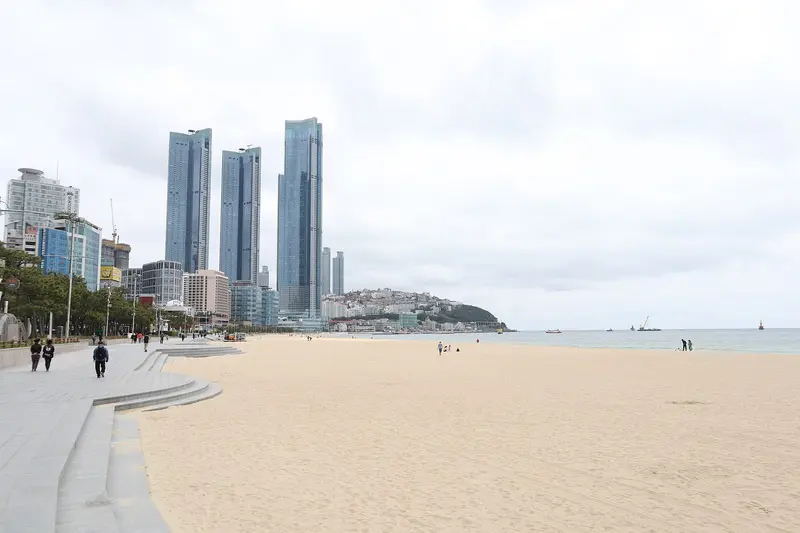
    The sandy beach, approximately 1.46 kilometers long and 40 meters wide, opened in 1965 and has been a Special Tourist Area since 1994. Every January since 1988, it hosts the Polar Bear Festival, complete with ice swimming. The beach is open year-round and free. You can reach it from Busan Station by train in about 40 minutes.
    Open in Google Maps
    Gamcheon Culture Village

    Christophe95 / Wikimedia Commons / CC BY-SA 4.0, mod.

    Attraction

    2Gamcheon Culture Village

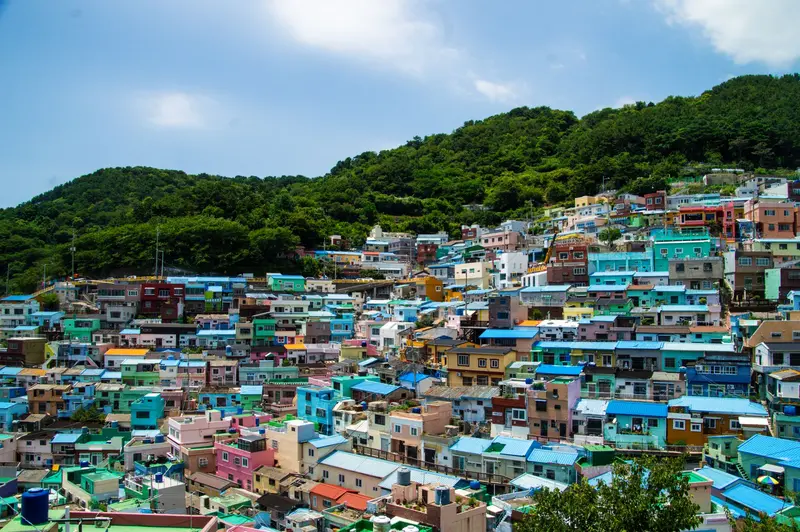
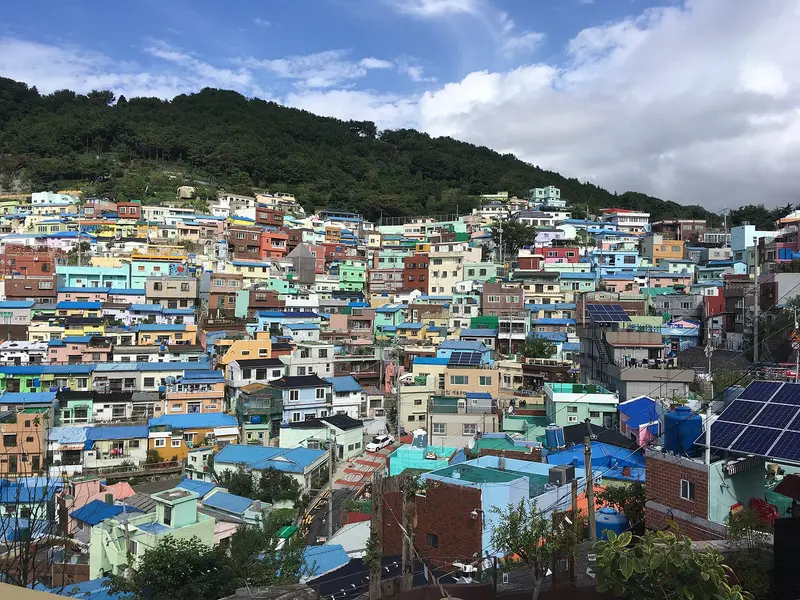
    The terraced hillside village in Saha-gu was settled by war refugees. Since 2009, students, artists, and residents have been transforming it with the Village Art Project, often called the 'Machu Picchu of Busan'. The village is freely accessible. The Info Center is open 9 AM - 6 PM (March-October) and 9 AM - 5 PM (November-February). Stamp cards are available here. As people live here, please be quiet; drones are forbidden. Arrive by Metro Line 1 to Toseong or Goejeong (Exit 6 from either), then take the village bus to Gamjeong Elementary School.
    Open in Google Maps
    Haedong Yonggungsa

    Christian Bolz / Wikimedia Commons / CC BY-SA 4.0, mod.

    Place of Worship

    3Haedong Yonggungsa

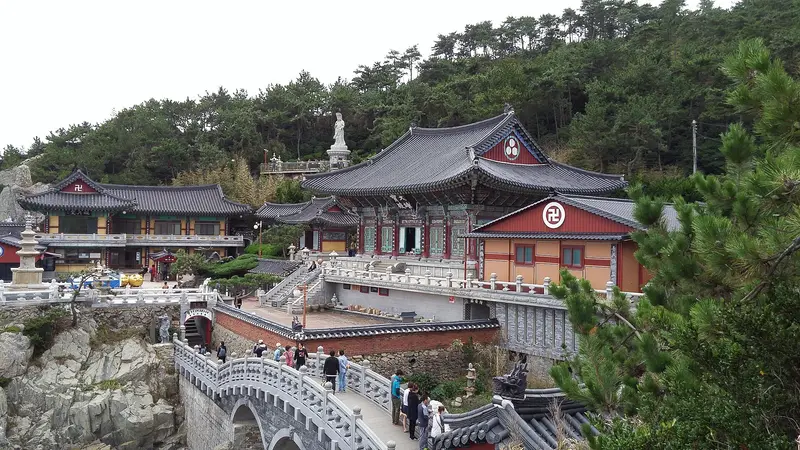
    Haedong Yonggungsa is one of Korea's few temples located directly by the sea. Its founding is dated to 1376, though this is disputed; it was rebuilt in the early 1930s. 108 steps lead down to the water, and the statue Haesu Gwaneum Daebul overlooks the coast. Admission is free, parking costs a fee, and it is open from 5 AM until sunset. On Buddha's Birthday, the temple is decorated with lanterns and becomes very crowded. Access is by bus 1001, 181, or 100 from Haeundae Station (Line 2, Exit 7).
    Open in Google Maps
    Jagalchi Market

    Bernard Gagnon / Wikimedia Commons / CC0

    Market

    4Jagalchi Market

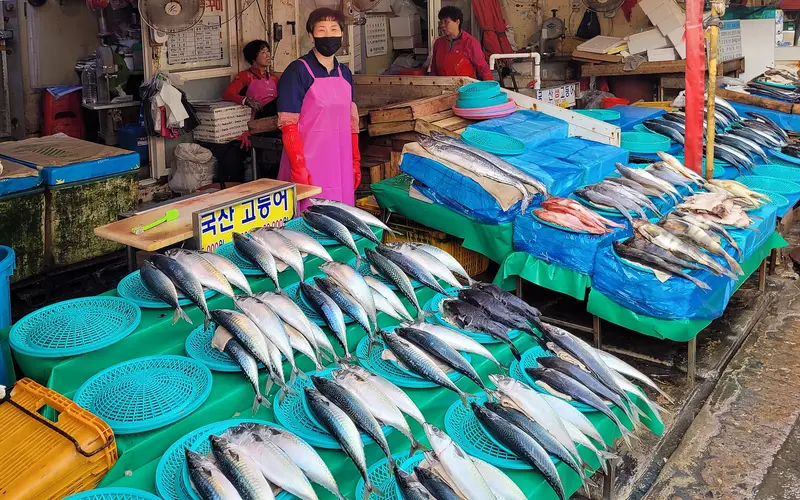
    The fish market's vendors are known as 'Jagalchi Ajumma', a term originating from the post-war period. The Jagalchi Festival takes place here in autumn. The market is open daily from 5 AM to 10 PM and closed on the 1st and 3rd Tuesday of the month. Take Metro Line 1 to Jagalchi, Exit 10, then about a 5-minute walk.
    Open in Google Maps
    Beach

    5Gwangalli Beach and Gwangan Bridge

    The Gwangan Bridge is a total of 7.42 kilometers long and stretches as a suspension bridge over Suyeong Bay. It was partially opened for the Asian Games in 2002 and officially opened in January 2003. At Gwangalli Beach, it is the backdrop for the Busan Fireworks Festival in autumn, featuring a light show on the bridge.
    Open in Google Maps
    Taejongdae

    Christophe95 / Wikimedia Commons / CC BY-SA 4.0, mod.

    Park

    6Taejongdae

    The nature park at the southern tip of Yeongdo is named after Silla King Taejong Muyeol and has been a Scenic Site since 2005. The cliffs formed during the Cretaceous period, and the area is now a National Geopark. Entry to the park is free; the 4.3-kilometer circular path leads to the Observatory, Yeongdo Lighthouse, and Taejongsa Temple. Important: The Danubi Train has been out of service since 2026 due to accidents, and a resumption date is not yet confirmed (as of autumn 2026). Alternatively, a free shuttle bus operates Wednesday to Sunday, approximately 9:30 AM to 5:30 PM; free tickets are available at the counter. Check the current status before your visit.
    Open in Google Maps

    Tours & experiences in Busan

    Search tours for Busan on GetYourGuide* (Affiliate link)On GetYourGuide, with reviews from other travellers

    * Affiliate link: if you book through it, we earn a small commission. The price stays the same for you.

    Restaurants in Busan

    1

    Jeongjitgan

    Eatery for Dwaeji-gukbap, a pork soup with rice, open since 2011. Recommended as Bib Gourmand in the Michelin Guide South Korea 2026.
    Show on Google Maps
    2

    Moemiljip

    Memil-guksu, buckwheat noodles using 100% Korean buckwheat. Recommended as a Bib Gourmand in the Michelin Guide South Korea 2026.
    Show on Google Maps
    3

    Hapcheon Gukbapjip

    Dwaeji-gukbap eatery, Michelin-praised for clear, umami-rich broth. Named Bib Gourmand in the Michelin Guide South Korea 2026.
    Show on Google Maps
    4

    Bibijae

    Bibimbap restaurant near Gwangalli. Featured as a Bib Gourmand in the Michelin Guide South Korea 2026.
    Show on Google Maps
    5

    Haemok

    Japanese restaurant in Haeundae, known for Hitsumabushi, grilled eel over rice. Recommended as a Bib Gourmand in the Michelin Guide South Korea 2026.
    Show on Google Maps
    6

    Naeho Naengmyeon

    Restaurant for Milmyeon, the Busan wheat noodle variant of cold Naengmyeon. It was opened in 1953 by a refugee family and is often cited as the origin of Milmyeon, though this is disputed.
    Show on Google Maps

    Culture and Food

    FoodDwaeji-gukbap: a hearty pork soup with rice, originating from the Korean War. The Michelin Guide lists several Dwaeji-gukbap restaurants in Busan as Bib Gourmand.Milmyeon: a wheat flour variation of the cold noodle dish Naengmyeon.Ssiat-hotteok: a sliced hotteok, filled with pine nuts, sunflower and pumpkin seeds. You can find it at the stalls in BIFF Square.FestivalsBusan International Film Festival (BIFF): held every October, in 2026 from October 6th to 15th at the Busan Cinema Center in Haeundae-gu. The first edition took place in 1996.Busan Fireworks Festival: in autumn at Gwangalli Beach, in 2026 in early November. The Gwangan Bridge is closed for this event. It's best to check the date annually.Busan Sea Festival: in August at Dadaepo Beach, in 2026 from August 7th to 13th.Polar Bear Festival: ice swimming at Haeundae Beach, held every January since 1988.

    Nightlife

    1

    HQ Gwangan

    A Western-style bar in Gwangalli. Fodor's lists it as 'Fodor's Choice'.
    Show on Google Maps

    Getting there and around

    Getting ThereFrom Seoul, the KTX takes about 2.5 hours to Busan Station, the terminus of the Gyeongbu Line. Gimhae International Airport is located in Gangseo-gu and is connected via the Busan-Gimhae Light Rail, which meets Line 2 at Sasang and Line 3 at Daejeo.Getting Around the CityThe Metro has four lines, plus the Light Rail to Gimhae and the Donghae Line. Line 2 runs along Haeundae, while Line 1 takes you to Jagalchi and Gamcheon Culture Village.Onward to JejuThe ferry from Busan to Jeju has been discontinued since December 2022. You can fly to Jeju from Gimhae in about an hour.

    Accommodations in Busan

    Find perfect stay in Busan

    Booking.com* (Affiliate link)
    Search Hotels
    Agoda* (Affiliate link)
    Search Hotels
    Airbnb
    Vacation Rentals

    * Affiliate link: if you book through it, we earn a small commission. The price stays the same for you.

    Plan your trip to Busan

    Save places, build a route and plan your city trip, all in one place.

    1. 1
      Sunrise over alpine peaks and a sea of clouds
      1234

      Round trip

      12 days · 4 stops

      Saved

      Pick a route

      Pick a ready-made one or save places and plan your own.

      Open bookmarks
    2. 2

      Trip to Busan

      Live
      • 1Haeundae Beach3 days
      • 2Gamcheon Culture Village4 days
      • 3Haedong Yonggungsa5 days
      Budget

      Plan your trip

      The planner sorts stops, days and budget. Plan together in real time.

      Start trip planning
    3. 3
      9:41 No signal
      Busan
      Available offline

      Photo by Saksham Vikram on Pexels

      Use it on the road

      Download the guide to your phone and use it on site, even offline.

    Round trips with Busan

    Classic: Seoul, Gyeongju, Busan and Jeju

    Classic: Seoul, Gyeongju, Busan and Jeju

    The round trip links the capital with ancient Silla capital Gyeongju, port metropolis Busan, and volcanic island Jeju. Between Seoul, Gyeongju, and Busan, you travel comfortably by high-speed train KTX; to Jeju and back by short domestic flights.

    12 Days
    5 stops

    Hyeok Jang·Pexels

    Nearby

    Tongyeong

    Tongyeong

    Tongyeong is a coastal city in Gyeongsangnam-do Province at the southern tip of the Goseong Peninsula, surrounded by the sea on three sides. The city area includes 41 inhabited and 110 uninhabited islands, and the port is the gateway to Hallyeohaesang National Park. Take the cable car up 461-meter-high Mireuksan; the mural village of Dongpirang is by Gangguan Port. Tongyeong is home to composer Isang Yun, and Chungmu-Gimbap is named after the former city name, Chungmu.

    Peter Kang·Unsplash

    Gyeongju

    Gyeongju

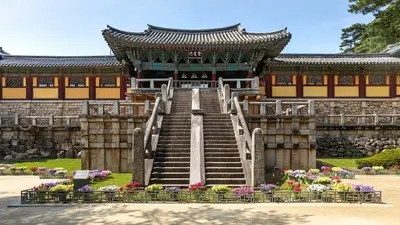
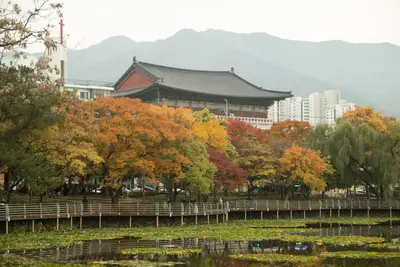
    Gyeongju was the capital of the Silla Kingdom for about 1,000 years, from 57 BC to 935 AD. Burial mounds, palace ponds, and temples are still found within the city today. The city in the far southeast of Gyeongsangbuk-do Province has several sites on the UNESCO World Heritage List, including Bulguksa and Seokguram, the Historic Areas, and Yangdong Village. Several central sites such as Cheomseongdae, Woljeonggyo, and Wolji are accessible in the evenings until 10 PM.

    Basile Morin·CC BY-SA 4.0

    Daegu

    Daegu

    Daegu was less devastated in the Korean War than many other cities. Consequently, traces of modernity remain in the alleys of its old town, which you can explore on the city's "Modern Alley" tours.During the Joseon period, Seomun Market was one of the country's three largest markets. To the city's northeast lies Palgongsan, a national park since 2023, home to Donghwasa Temple.Daegu is known for Chimaek – chicken with beer – and celebrates it annually in July with its own festival.

    Jc Laurio·Pexels

    Haeinsa and Gayasan

    Haeinsa and Gayasan

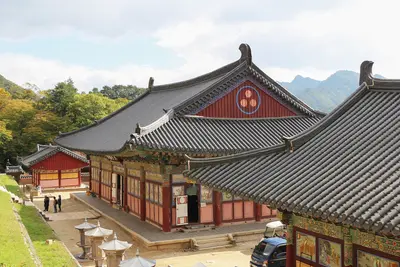
    Haeinsa Temple is located on Mount Gayasan in Hapcheon County, Gyeongsangnam-do. Founded in 802 by monks Suneung and Ijung, its name comes from the Hwaeom Sutra.Haeinsa is renowned for the Tripitaka Koreana: some 80,000 wooden printing blocks from 1237-1248. They are kept in the 15th-century Janggyeong Panjeon depots, a UNESCO World Heritage site since 1995. Buildings and blocks are National Treasures.

    Bernard Gagnon·CC0

    Suncheon

    Suncheon

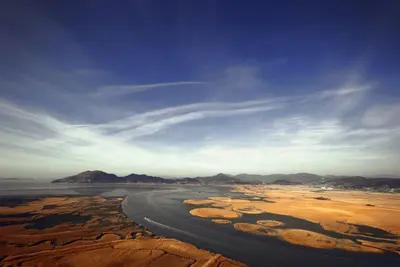
    Suncheon Bay, with its tidal flats and reeds, is part of UNESCO Natural Heritage 'Getbol, Korean Tidal Flats', inscribed in 2021 and extended in 2026. A total of 216 bird species are recorded here, including Spoon-billed Sandpipers and Black-faced Spoonbills.On the edge of the bay lies the Suncheonman Bay National Garden, created for the International Garden Expo 2013. In the mountains are the temples Seonamsa, a UNESCO World Heritage site since 2018, and Songgwangsa. Due to its many temples, Suncheon is known for its vegetarian temple cuisine.

    정규송 Nui MALAMA·Pexels

    Your next steps

    Busan is in South Korea. Ways to carry on from here.

    • More in South Korea

      Highlights, areas, routes and the best time to travel for all of South Korea.

      South Korea travel guide
    • Round trips with Busan

      One route passes through Busan, with stops, nights and a map.

      See the round trip

    Sources & method

    • Photos: Wikimedia Commons, Pexels. Each photo carries its credit.
    • Place data such as addresses and ratings comes from Google Maps.
    • The content is based on web research from public, traceable sources. How the content is made · The role of AI