Fernweh: Home
    ExploreTravel GuidesPlan a tripMy tripLast visited
    de|en
    All Places & RegionsAll highlightsAbout FernwehFAQPrivacy PolicyImprint
    ExploreTravel GuidesPlan a tripMy tripLast visited
    Center (former District 1)

    Vietnam

    Center (former District 1)

    Other

    The center in former District 1 is Ho Chi Minh City's colonial heart, where most attractions are within easy walking distance. Although the districts officially ceased to exist in 2025, many still refer to it as "District 1" in daily life.

    by Felix Gillen

    1. Home
    2. Destinations
    3. Vietnam
    4. Ho Chi Minh City
    5. Center (former District 1)
    The center in former District 1 is Ho Chi Minh City's colonial heart, where most attractions are within easy walking distance. Although the districts officially ceased to exist in 2025, many still refer to it as "District 1" in daily life.On Đồng Khởi Street stands the 1900 Opera House; a few minutes away are the brick Notre-Dame Cathedral and the Central Post Office (1886-1891). Further southwest lies Bến Thành Market with its clock tower, the starting point of Metro Line 1, and to the northwest, the Independence Palace.

    Sights in Center (former District 1)

    Discover the most important sights and attractions

    Nguyễn-Huệ-Boulevard
    Attraction

    1Nguyễn-Huệ-Boulevard

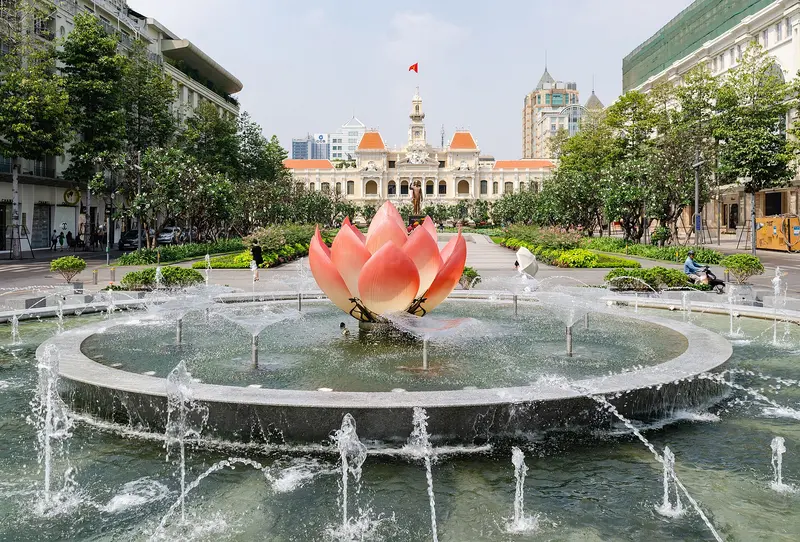
    The central lanes of the 670-meter-long boulevard were converted into a pedestrian plaza in 2015; on weekend evenings, the entire street is closed to vehicles. At the northwestern end stands Ho Chi Minh City Hall, with a monument to Hồ Chí Minh in front of it.
    Open in Google Maps
    Museum of the Beautiful Arts
    Museum

    2Museum of the Beautiful Arts

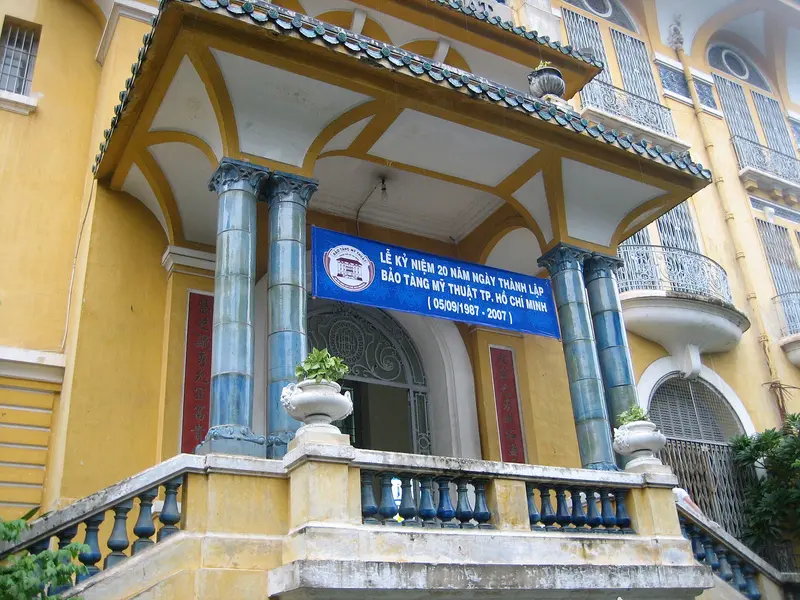
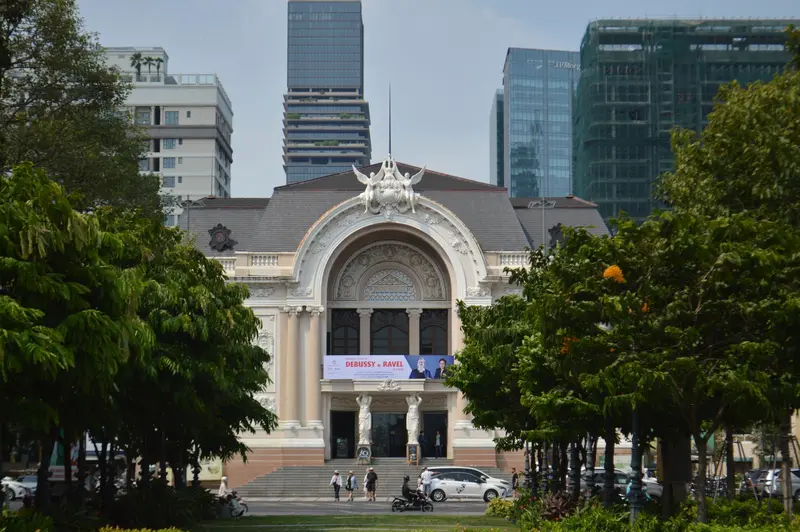
    Since 1987, the museum has occupied a villa built 1929-1934 for the Hui Bon Hoa merchant family, a few minutes' walk from Bến Thành Market. It displays Vietnamese lacquer painting, silk painting, oil paintings, sculptures, traditional woodcuts, ceramics, and Buddhist art. The third floor also features archaeological finds from the Cham and Óc Eo cultures.
    Open in Google Maps

    Restaurants in Center (former District 1)

    Accommodations in Center (former District 1)

    Find perfect stay in Center (former District 1)

    Booking.com* (Affiliate link)
    Search Hotels
    Agoda* (Affiliate link)
    Search Hotels
    Airbnb
    Vacation Rentals

    * Affiliate link: if you book through it, we earn a small commission. The price stays the same for you.

    Nearby

    Ho Chi Minh City

    Ho Chi Minh City

    Ho Chi Minh City, still called Saigon by many, is Vietnam's largest city and the economic hub of the south. You'll come for its blend of French colonial architecture, war history, street food stalls on every corner, and a pace that will captivate you from the very first evening.As of July 1, 2025, there are no longer any districts in Vietnam; the city is divided into Wards (phường) and has simultaneously incorporated the former provinces of Bình Dương and Bà Rịa-Vũng Tàu. However, in daily life and on many signs, the old district names persist, which is why they are helpful for orientation.Former District 1: The city center, home to the grand avenue Đồng Khởi, the Opera House, Central Post Office, Cathedral, and Bến Thành Market. Today, it belongs to the Wards Sài Gòn, Bến Thành, Tân Định, and Cầu Ông Lãnh.Former District 3: Quieter streets with villas, cafés, and street food stalls, plus the War Remnants Museum. Today, these are the Wards Bàn Cờ, Xuân Hòa, and Nhiêu Lộc.Chợ Lớn: The historic Chinese quarter in former Districts 5 and 6, featuring assembly halls, temples, and the Bình Tây Market.Thảo Điền: On the other side of the Saigon River in former District 2, popular with expats, with cafés, restaurants, and a Metro Line 1 station. Today, it is part of Ward An Khánh.Two to three days are sufficient for the main sights. The city also serves as the usual starting point for tours into the Mekong Delta.
    Thảo Điền

    Thảo Điền

    Thảo Điền lies east of the city center on a peninsula surrounded on three sides by the Saigon River. The former village in erstwhile District 2 now belongs to Thủ Đức City and has developed into a residential area with villas and apartment complexes since its founding in 1997.In the 1970s, many journalists lived here, which is why the district was called "Làng Báo chí," or Press Village. Metro Line 1 has a Thảo Điền station, making it easy to reach the district from Bến Thành Market.
    Chợ Lớn

    Chợ Lớn

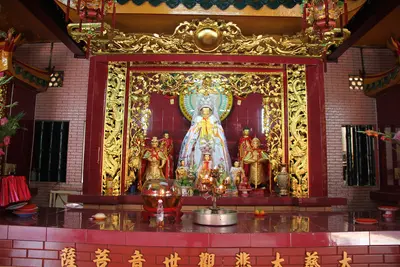
    Chợ Lớn is the historic Chinese Quarter of Ho Chi Minh City, extending across the former Districts 5 and 6. It is considered the world's largest Chinatown by area and has always been home to the Hoa, Vietnamese of Chinese descent.The French founded Chợ Lớn as a separate city in 1865, and it was merged with Saigon in 1931. Its centerpiece is the Bình Tây Market, built between 1928 and 1930 and the largest and oldest preserved market in the district. Most religious sites are of Chinese origin, including the Thiên Hậu Temple at 710 Nguyễn Trãi Street and several assembly halls.
    Bến Tre

    Bến Tre

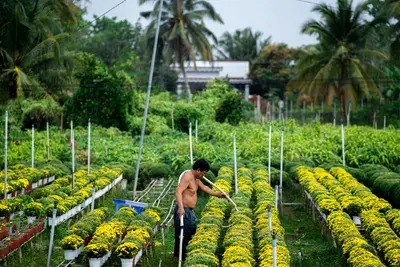
    Located in the northern Mekong Delta, about 90 kilometers from Ho Chi Minh City, Bến Tre is the most easily accessible destination in the Delta. The area is renowned for its coconut palms, with approximately 600 million coconuts harvested annually.Its most famous product is coconut candy (kẹo dừa), originally made only from coconut milk and sugar, but now also available with durian, pandan, or peanuts. Thanks to the Rạch Miễu Bridge over the Tiền River, Bến Tre is also feasible as a day trip.Since 2025, Bến Tre has been part of the newly formed Vĩnh Long province.
    Southern Vietnam

    Southern Vietnam

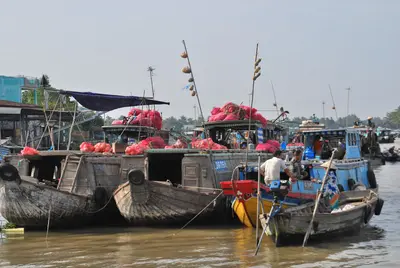
    Southern Vietnam is the country's economic powerhouse. Around the metropolis of Ho Chi Minh City, the Mekong Delta spreads with its river arms, canals, and orchards; offshore is Phú Quốc island.The climate is tropical and hot year-round. The dry season, from about November to April, is the best time to visit. From May to October, strong but brief afternoon showers are common.

    Sources & method

    • Photos: Wikimedia Commons, Pexels. Each photo carries its credit.
    • Place data such as addresses and ratings comes from Google Maps.
    • The content is based on web research from public, traceable sources. How the content is made · The role of AI