Fernweh: Home
    ExploreTravel GuidesPlan a tripMy tripLast visited
    de|en
    All Places & RegionsAll highlightsAbout FernwehFAQPrivacy PolicyImprint
    ExploreTravel GuidesPlan a tripMy tripLast visited
    • Overview
    • Places in the region
    • Getting around
    • Round trips
    • Nearby

    Peru

    Region

    On the north coast around Trujillo were the centers of two great pre-Inca cultures: The Moche built here the Huacas del Sol y de la Luna, the Chimú their capital Chan Chan, the largest adobe city in the Americas.

    by Felix Gillen

    1. Home
    2. Destinations
    3. Peru
    On the north coast around Trujillo were the centers of two great pre-Inca cultures: The Moche built here the Huacas del Sol y de la Luna, the Chimú their capital Chan Chan, the largest adobe city in the Americas. The fishing village of Huanchaco, with its reed boats and surf waves, is just a few kilometers away. For Trujillo and parts of the region, a state of emergency is temporarily in effect; please note the current travel advisories from the Foreign Office before your trip.
    Pre-Inca EmpiresLong before the Inca conquered the coast, the Moche and later the Chimú flourished here. Their adobe constructions around Trujillo are among the most impressive archaeological sites in South America, yet few travellers come here.Adobe City and PyramidsChan Chan, the Chimú capital, is a UNESCO World Heritage site and the largest adobe city in the Americas. In the Huacas del Sol y de la Luna, the Moche's colourful reliefs still glow.Surfing and Reed BoatsIn the fishing village of Huanchaco, fishermen still paddle out on Caballitos de Totora, narrow reed boats. At the same time, the village is a relaxed surf spot with excellent ceviche restaurants.
    Bernard Gagnon / Wikimedia Commons / CC BY-SA 3.0

    Place 1 of 2

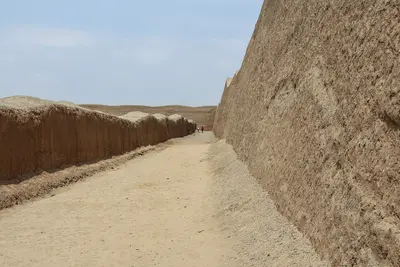
    Chan Chan was the capital of the Chimú Empire, which dominated Peru's northern coast until the Inca conquered it around 1470.

    Discover

    Place 2 of 2

    Trujillo, the capital of the La Libertad region, was founded in 1534 and named after Francisco Pizarro's hometown in Extremadura.

    Discover

    Exploring Locally

    Getting ThereYou can reach Trujillo by flight from Lima or by overnight bus via the Panamericana.Getting AroundCombis and shared taxis connect Trujillo with Huanchaco and also stop at Chan Chan. The easiest way to get to the Huacas del Sol y de la Luna is by taxi or a tour.
    Round trips through this region

    Glaciers and Clay Pyramids: Huaraz and the North Coast

    Glaciers and Clay Pyramids: Huaraz and the North Coast

    Twelve days from Lima to the Cordillera Blanca in Huaraz and on to the North Coast in Trujillo. Between Lima, Huaraz, and Trujillo, you travel by long-distance buses, returning to Lima by plane.

    12 Days
    5 stops

    Nearby

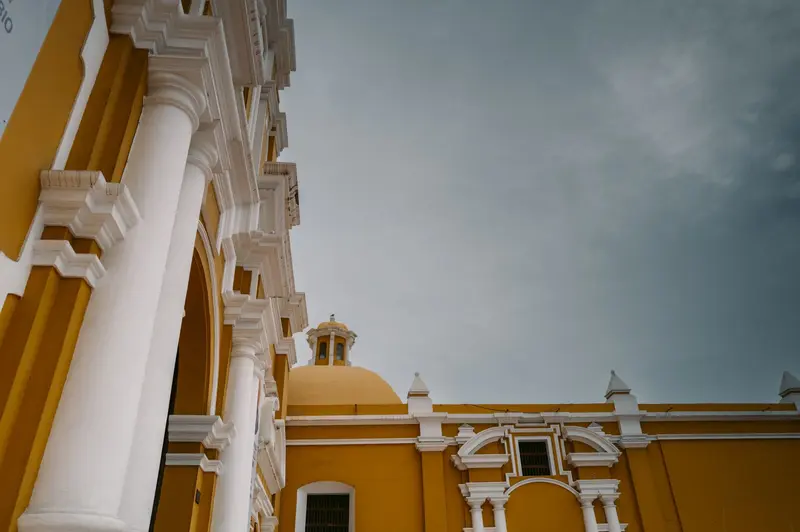
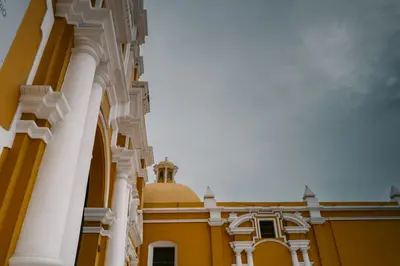
    Trujillo, the capital of the La Libertad region, was founded in 1534 and named after Francisco Pizarro's hometown in Extremadura. The city center features a grid of streets with colorful colonial houses and wrought-iron window grilles surrounding the Plaza de Armas with its cathedral.Most visitors come for the archaeological sites on the outskirts of the city: Chan Chan, the Chimú capital, and the temple pyramids Huaca del Sol and Huaca de la Luna of the Moche. In the nearby seaside town of Huanchaco, fishermen still go out to sea in traditional reed boats, the Caballitos de Totora, while the waves attract surfers.The Federal Foreign Office reports a current state of emergency in Trujillo. Check the current situation there before traveling.

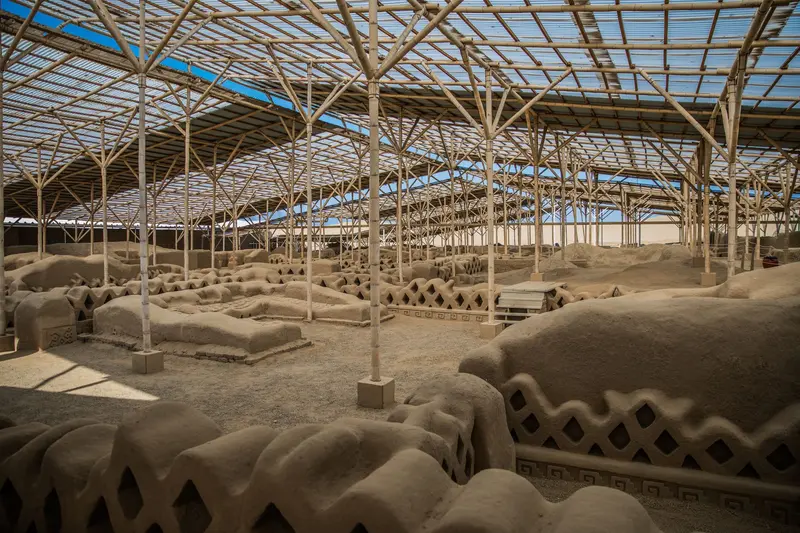
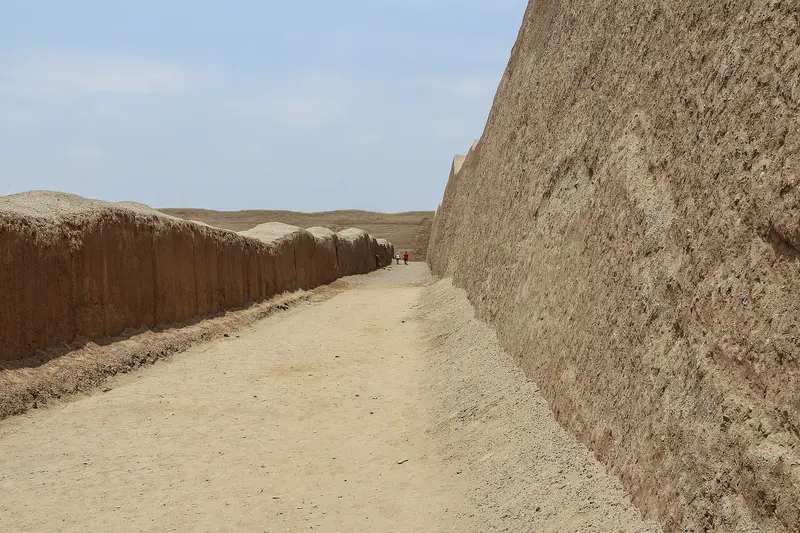
    Chan Chan was the capital of the Chimú Empire, which dominated Peru's northern coast until the Inca conquered it around 1470. The city on the outskirts of Trujillo covered approximately 20 square kilometers and is considered the largest adobe city in the Americas. Its core consists of walled palace compounds with courtyards, storerooms, and walls into which reliefs of fish, birds, and geometric patterns are sculpted.UNESCO inscribed Chan Chan on its World Heritage List in 1986 and simultaneously placed it on the List of World Heritage in Danger, because rain and wind attack the adobe. Visitors can primarily explore the restored Tschudi (Nik An) palace complex and the museum at the entrance.
    Huascarán National Park

    Huascarán National Park

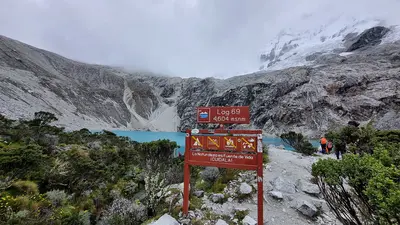
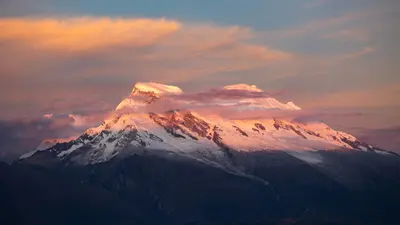
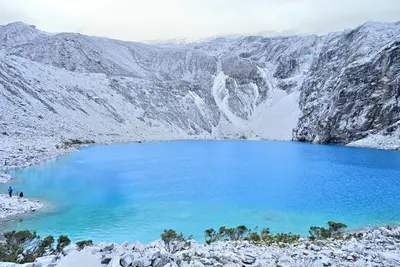
    Huascarán National Park encompasses almost the entire Cordillera Blanca: glaciers, hundreds of high-altitude lakes, and Huascarán, Peru's highest mountain at 6,768 meters. The park was founded in 1975, has been a biosphere reserve since 1977, and a UNESCO World Heritage site since 1985.Laguna 69: the most famous day hike, a turquoise glacial lake at around 4,600 meters. The starting point is Cebollapampa, and the round trip takes about six to seven hours.Lagunas de Llanganuco: two lakes at around 3,850 meters on the way to Laguna 69, also a stop for day trips from Huaraz.Laguna Churup above Huaraz is suitable as an acclimatization hike.You need a ticket for the park, available as a day, three-day, or month pass. Camping is not allowed at Laguna 69.
    Huaraz and Cordillera Blanca

    Huaraz and Cordillera Blanca

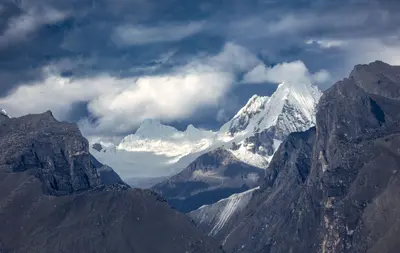
    In the Ancash region of northern Peru rises the Cordillera Blanca, the world's highest tropical mountain range. Nearly the entire massif belongs to Huascarán National Park, a UNESCO World Heritage site since 1985, named after Huascarán, Peru's highest peak at 6,768 meters. The city of Huaraz is the starting point for day hikes, trekking tours, and mountaineering.
    Huaraz

    Huaraz

    Huaraz is the capital of the Ancash region and the hub for hikers and mountaineers in the Cordillera Blanca. The city itself primarily serves as a base: Here you book tours, organize equipment, and acclimatize before heading into Huascarán National Park.From Lima, you can reach Huaraz by overnight bus in approximately eight hours or by flight. Note that travel advisories caution against overnight intercity bus journeys.Two to three days of acclimatization in Huaraz are recommended before longer high-altitude tours.Mountaineers can register in advance with the Peruvian Mountain Rescue service.

    Sources & method

    • Photos: Pexels. Each photo carries its credit.
    • The content is based on web research from public, traceable sources. How the content is made · The role of AI