ExploreTravel GuidesPlan a trip
    de|en
    All Places & RegionsAbout FernwehFAQPrivacy PolicyImprint
    ExploreTravel GuidesPlan a trip
    • Neighborhoods & highlights
    • Eat & drink
    • Food culture
    • Culture
    • Nightlife
    • Getting around
    • Accommodation
    • Plan trip
    • Nearby
    Palm Springs

    United States

    Palm Springs

    City

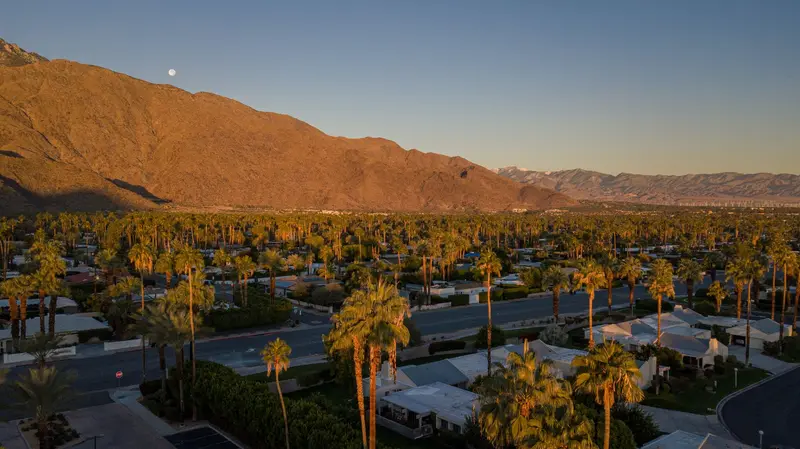
    Palm Springs is a desert city in Southern California, about 150 kilometers as the crow flies east of Los Angeles at the foot of Mount San Jacinto.

    1. Home
    2. Destinations
    3. United States
    4. California
    5. Palm Springs
    Palm Springs is a desert city in Southern California, about 150 kilometers as the crow flies east of Los Angeles at the foot of Mount San Jacinto. You go there for Mid-Century architecture, palm oases in the Agua Caliente canyons, and over 300 days of sunshine a year.Since the 1930s, Hollywood stars built weekend homes here, and architects like Albert Frey, E. Stewart Williams, and Richard Neutra turned the city into an open-air museum of Desert Modernism. Add to that pools, cocktail bars with Rat Pack history, and a cable car that takes you from the desert to the mountain forest in ten minutes.The best time to visit is from autumn to spring, when the population roughly triples with winter guests. In summer, it gets extremely hot; then early mornings and the mountain station of the Tramway are the most pleasant destinations. Joshua Tree National Park is located northeast, a day trip away.
    Palm Springs has around 45,000 residents and is a flat, sprawling city whose center, called The Village, stretches along Palm Canyon Drive. Here, restaurants, bars, shops, and the Palm Springs Art Museum are close together, and on Thursday evenings, the street fair VillageFest takes place. To the north, the Uptown Design District follows, with shops, restaurants, and bars. East of the center lies the Movie Colony, where stars settled from the 1930s onwards. For the canyons, the Tramway, and the architecture in the residential areas, you'll need a car or a bicycle.

    Sights in Palm Springs

    Discover the most important sights and attractions

    Palm Springs Aerial Tramway
    Attraction

    1Palm Springs Aerial Tramway

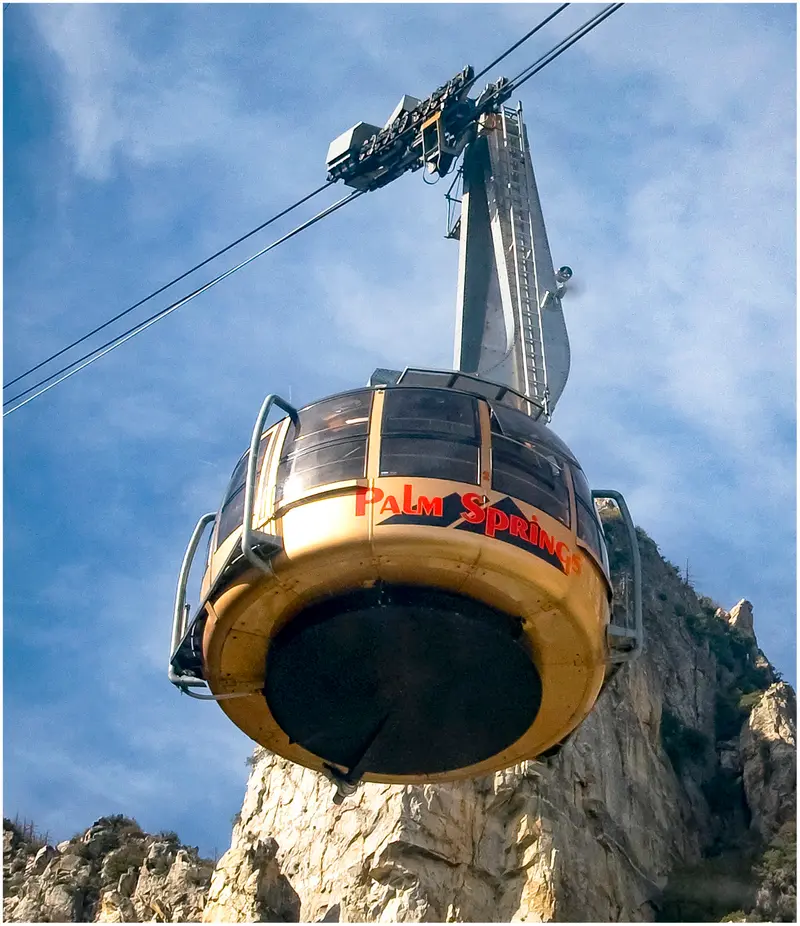
    The rotating gondolas travel in about ten minutes over four kilometers from the valley station at 806 meters up to the mountain station at 2,596 meters. Up in Mount San Jacinto State Park, it is up to 22 degrees cooler, and over 80 kilometers of hiking trails begin directly at the station.
    Open in Google Maps
    Indian Canyons
    Park

    2Indian Canyons

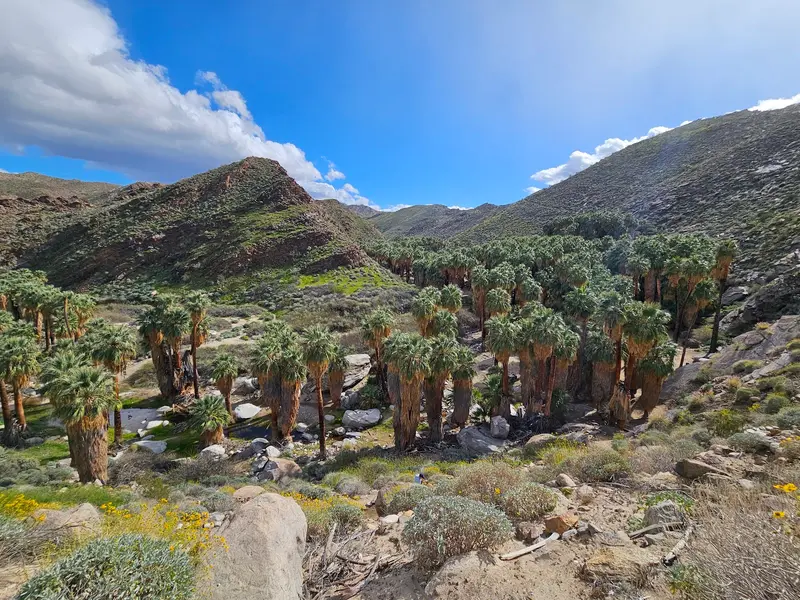
    The canyons on the city's southern edge are home to the Agua Caliente Band of Cahuilla Indians and house one of the largest natural oases with California Fan Palms. The loop trail in Andreas Canyon is easy; the hike through Murray Canyon is longer.
    Open in Google Maps
    Moorten Botanical Garden
    Attraction

    3Moorten Botanical Garden

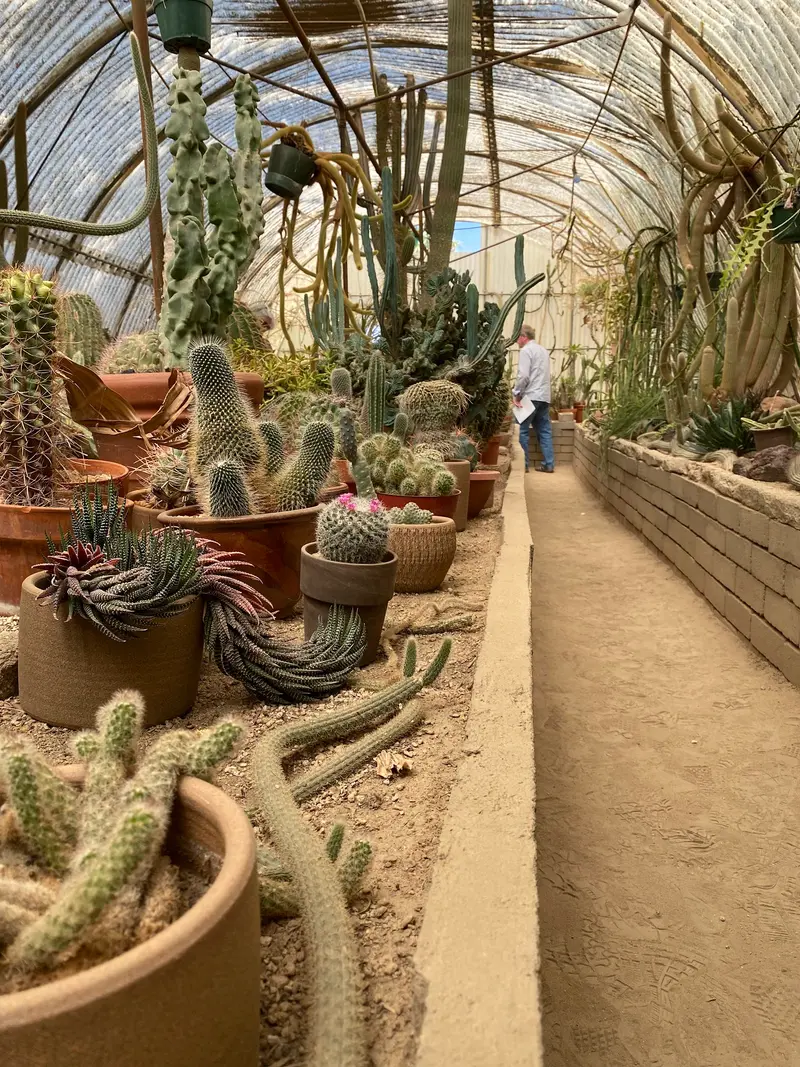
    Moorten Family's private desert garden exhibits around 3,000 cacti and desert plants, region-sorted. The Cactarium also grows two Namibian Welwitschia.
    Open in Google Maps
    Palm Springs Art Museum
    Museum

    4Palm Springs Art Museum

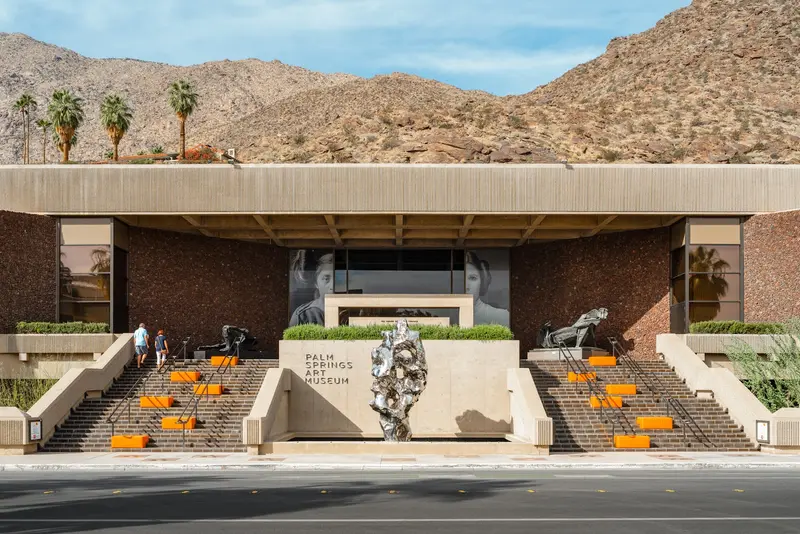
    The museum at the foot of the mountains showcases its collection and changing exhibitions; on Thursday evenings, admission is free. Its Architecture and Design Center on Palm Canyon Drive is dedicated to Desert Modernism.
    Open in Google Maps
    Agua Caliente Cultural Museum
    Museum

    5Agua Caliente Cultural Museum

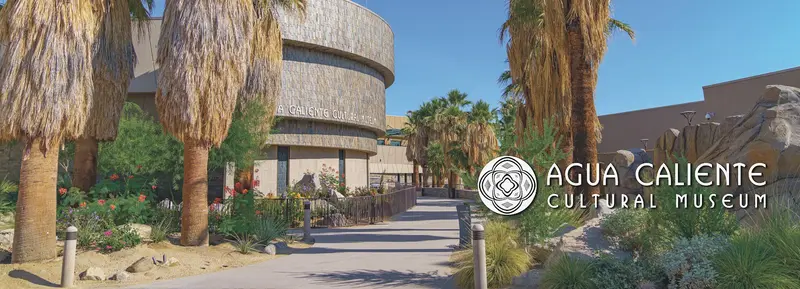
    The 2023-opened museum downtown sits on the original hot spring site, telling the Cahuilla story. Next door is The Spa at Séc-he, with spring mineral water.
    Open in Google Maps
    Palm Springs Visitor Center

    6Palm Springs Visitor Center

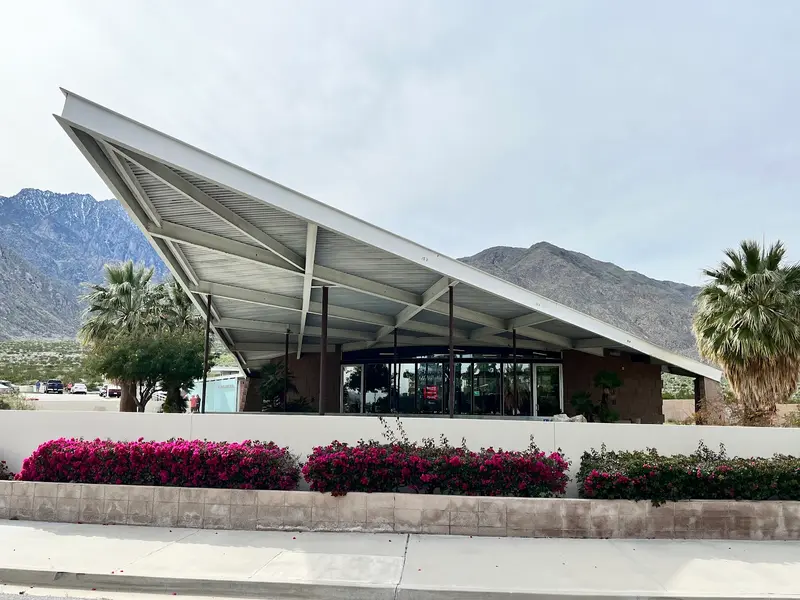
    The 1965 Tramway Gas Station by Albert Frey and Robson Chambers, with its cantilevered, curved roof, is a landmark of Desert Modernism. Since 2003, it's where you'll find maps and info for architectural tours.
    Open in Google Maps

    Restaurants in Palm Springs

    1

    Tyler's Burgers

    Small burger stand at La Plaza in the city center and one of the city's classic spots for a quick lunch.
    Show on Google Maps
    2

    Cheeky's

    Popular spot for breakfast and brunch, ideal before a day in the Canyons.
    Show on Google Maps
    3

    Sherman's Deli & Bakery

    Deli and bakery, long a go-to spot for breakfast, sandwiches and cakes.
    Show on Google Maps
    4

    Workshop Kitchen + Bar

    Upscale Californian cuisine on Palm Canyon Drive, perfect for a sophisticated dinner.
    Show on Google Maps

    Dining and Drinks

    Palm Springs' culinary scene is defined by Coachella Valley dates, retro-style burger joints and brunch spots, and a bar scene still steeped in the glamour of the 1950s and 60s.
    Date Shake

    Date Shake

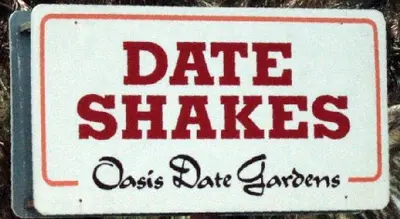
    Date shake with crushed dates, invented around 1930 in the Coachella Valley. Try one in town or drive to the date gardens near Indio.
    Medjool Dates

    Medjool Dates

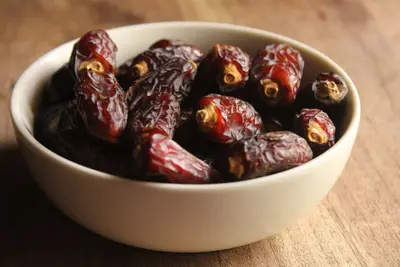
    The soft, caramel-like variety came to the Valley in 1927 as a Moroccan offshoot. Almost 90% of US dates come from the Coachella Valley.
    Deglet Noor

    Deglet Noor

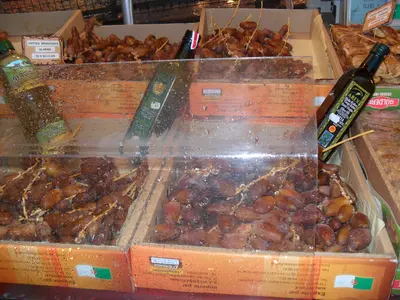
    The firmer, less sweet Algerian date has been grown here since 1903 and is ideal for baking and as a hiking snack.
    Tiki Cocktails

    Tiki Cocktails

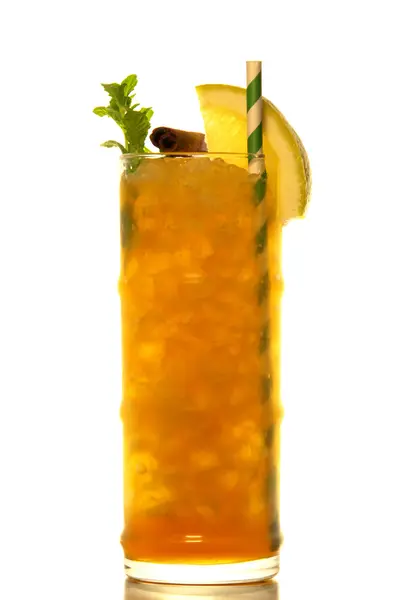
    Rum cocktails like the Zombie are part of the city's history: On Palm Canyon Drive, a Don the Beachcomber opened in 1953; Bootlegger Tiki mixes there today.
    Cocktails in Rat-Pack style

    Cocktails in Rat-Pack style

    Martini and piano bar instead of craft beer: Classic drinks in historic hotel bars like Melvyn's are part of an evening in Palm Springs.

    History and Culture

    The Cahuilla have used the hot springs in what is now the city center for thousands of years. To this day, over a tenth of the city's area belongs to the reservation of the Agua Caliente Band of Cahuilla Indians, which was laid out in a checkerboard pattern of alternating square miles, with the remaining plots going to the Southern Pacific Railroad. Since November 2023, the Agua Caliente Cultural Museum has been telling this story at the site of the original spring.In 1938, Palm Springs became an independent city. Hollywood discovered the place as a retreat, Frank Sinatra had E. Stewart Williams build the Twin Palms house for him and was a regular guest at Melvyn's. The clear architecture of this period, with flat roofs, glass, and steel, still characterizes entire neighborhoods today and is celebrated every year in February during Modernism Week.Palm Springs is also a center for the LGBTQ community: in 2017, the city was the first in the USA to elect an entirely LGBTQ-member city council.

    Nightlife

    1

    Bootlegger Tiki

    Tiki-Bar in the Uptown Design District at the 1953 Don the Beachcomber site. Order the Zombie using the 1934 recipe.
    Show on Google Maps

    Getting There & Around

    AirportPalm Springs International Airport (PSP) is located just three kilometers east of the city center. The terminal is partly open-air. Many connections, such as to Canada and the Midwest, are only available seasonally in winter.Train and BusThe Amtrak station is located far outside the city to the north and is only served three times a week by the long-distance train Sunset Limited. For most travelers, it's not a practical option. In the Coachella Valley, buses are operated by SunLine Transit.Car and ParkingFrom Los Angeles, you can take Interstate 10. In the city, a car is the most convenient solution, especially for Indian Canyons, Tramway, and excursions to Joshua Tree National Park.Getting AroundThe Village and the Uptown Design District are easily explored on foot. For architecture tours through the residential areas, a bicycle is suitable. Always carry water in summer and avoid the midday heat.
    Accommodations in Palm Springs

    Find perfect stay in Palm Springs

    Booking.com* (Affiliate link)
    Search Hotels
    Agoda* (Affiliate link)
    Search Hotels
    Airbnb
    Vacation Rentals

    * Affiliate link: if you book through it, we earn a small commission. The price stays the same for you.

    Campgrounds in Palm Springs

    Find perfect campground in Palm Springs

    Search via Google Maps
    Campgrounds nearby (15km)
    Camping.info
    Find Campgrounds
    Park4Night
    RV Parks & Camping

    Plan your trip to Palm Springs

    Save places, build a route and plan your city trip, all in one place.

    1. 1
      1234

      Round trip

      12 days · 4 stops

      Saved

      Pick a route

      Pick a ready-made one or save places and plan your own.

      Open bookmarks
    2. 2

      Trip to Palm Springs

      Live
      • 1Palm Springs Aerial Tramway3 days
      • 2Indian Canyons4 days
      • 3Moorten Botanical Garden5 days
      Budget

      Plan your trip

      The planner sorts stops, days and budget. Plan together in real time.

      Start trip planning
    3. 3
      9:41 No signal
      Available offline

      Use it on the road

      Download the guide to your phone and use it on site, even offline.

    Nearby

    La Jolla

    La Jolla

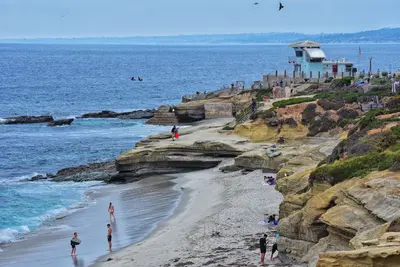
    La Jolla is located about 19 kilometers north of Downtown and boasts approximately 11 kilometers of Pacific coastline. This affluent district features expensive villas, yet its coast belongs to everyone: rocky coves, caves, sea lions on the cliffs, and sandy beaches for surfing and snorkeling.The area was shaped by publisher and philanthropist Ellen Browning Scripps, who settled here in 1896. She funded, among other things, the Scripps Institution of Oceanography, founded in 1903 and later evolving into the University of California San Diego, and the Children's Pool wall in 1931. Her former residence, designed by Irving Gill, now houses the Museum of Contemporary Art San Diego.The heart of La Jolla is The Village around Prospect Street, featuring galleries, boutiques, and restaurants with ocean views. Directly below lies La Jolla Cove, a small bay within a marine protected area, where hundreds of California Sea Lions rest. Further north, you'll find La Jolla Shores with its wide sandy beach and the Birch Aquarium, while to the south is the surf spot Windansea.Arrive early in the morning for easier parking and often calmer waters. At sunset, a stroll across the lawn of Scripps Park above the Cove is worthwhile.
    Pacific Beach and Mission Beach

    Pacific Beach and Mission Beach

    Pacific Beach, known to all as P.B., and the Mission Beach just to its south, are San Diego’s classic beach districts. Between the Pacific Ocean and Mission Bay, beach houses, surf shops, taco joints, and bars line the streets. While once primarily a haunt for surfers and students, the area is now slowly aging and becoming more expensive, though its laid-back atmosphere persists.The Ocean Front Walk is the area's lifeline, a roughly 5-kilometer beach promenade where pedestrians, cyclists, and skaters share the space. At the end of Garnet Avenue, the Crystal Pier juts into the ocean, home to a hotel with small cottages. In Mission Beach, the Giant Dipper wooden roller coaster has been operating since 1925 at Belmont Park amusement park.To the east lies Mission Bay, a 4,235-acre expanse and the USA's largest man-made aquatic park. Here, you can rent kayaks and stand-up paddleboards, or cycle and jog along approximately 22 kilometers of pathways. In the evenings, Garnet Avenue and Mission Boulevard become the nightlife hubs, bustling with bars.During the day, especially from late morning once the early summer coastal fog has often cleared, it's beach time. As the sun sets, the promenade and pier fill with people.
    Balboa Park

    Balboa Park

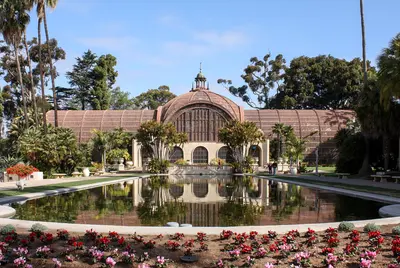
    Balboa Park, spanning approximately 1,200 acres (nearly 490 hectares), is one of the largest urban parks in the USA and San Diego's cultural heart. It's home to the San Diego Zoo, around 16 museums and cultural institutions, gardens, theaters, and ample space for strolling.The city decided back in 1868 to designate the area as a park. It gained its present appearance from the 1915/16 Panama-California Exposition and the 1935/36 California Pacific International Exposition. The ornate Spanish Colonial and Baroque-style buildings along El Prado date from this period, as does the Cabrillo Bridge from 1914, serving as the main entrance. Since 1977, the park and its exhibition buildings have been a National Historic Landmark. The zoo also traces its origins to the exposition: it was founded in 1916 with animals left over after the show.Plan at least half a day; for the Zoo and one or two museums, allow closer to two days. Many gardens and the architecture can be enjoyed for free, such as the Botanical Building, restored in 2024, or the free organ concerts on Sunday afternoons.Mornings are quieter, and parking is easier to find. In the late afternoon, beautiful light falls on the facades along El Prado. Many museums are not open daily, so check their hours beforehand.
    Old Town

    Old Town

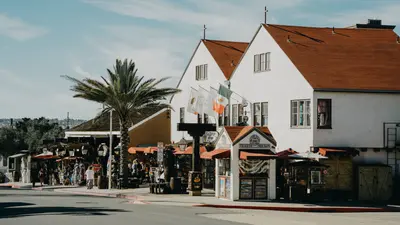
    Old Town is the cradle of San Diego. On the hill above the present-day district, the Spanish founded the Presidio and the first mission in 1769, the first of many missionary outposts in Alta California. Below it, a small settlement arose from 1821, which served as the city's center during the Mexican period and its first decades under US rule.This period from 1821 to 1872 is showcased today by the Old Town San Diego State Historic Park. Restored and reconstructed adobe buildings, an old newspaper office, a school, and a stable with carriages are arranged around a green plaza. Admission to the park and its museums is free. Old Town didn't remain the city center because of Alonzo Horton, who began building his “New Town” by the harbor from 1867, which is today's Downtown.Besides the museums, Mexican restaurants, margaritas in courtyards, and craft shops define the district. This is partly touristy, but especially cozy in the evenings. For a quieter look at the beginnings, a short climb to Presidio Park with the Junípero Serra Museum is worthwhile.It's best to come in the late morning when the museums open and stay until dinner. The museums in the State Park close at 5 PM.
    Little Italy and Embarcadero

    Little Italy and Embarcadero

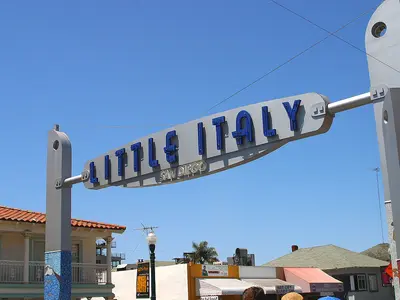
    Little Italy lies on Downtown's northwest rim, mere blocks from the bay. Forty-eight blocks bustle with trattorias, wine bars, design shops, and galleries, alongside homes and small squares. By night, India Street is one of the city's top entertainment strips.The district was founded by Italian fishing families, primarily from Liguria and Sicily. They built the boats that built San Diego's tuna fleet; in 1911, the Pacific Tuna Canning Company opened here. The last canning factories closed in the early 1980s. Interstate 5's construction in the 1970s cut the district in two. Fishing is over, but Italian heritage lives on in delis, bakeries, and festivals.On Saturdays, 8 AM to 2 PM, visit the Little Italy Mercato, one of the county's largest farmers markets with over 200 stalls; it's also smaller on Wednesdays. From here, it's just minutes to the Embarcadero, the bay's waterfront promenade. There lie museum ships, the aircraft carrier USS Midway, and further south, the shops of Seaport Village.The best is a combination of morning at the Mercato, afternoon by the water, and dinner in Little Italy. At sunset, a walk along the bay is worthwhile.