Fernweh: Home
ExploreGuideDestinationsMy tripsMy trip
de|en
All Places & RegionsRound tripsNight trains in EuropeAll highlightsAbout FernwehFAQPrivacy PolicyImprint
Download on the App StoreGet it on Google Play
ExploreGuideDestinationsMy tripsMy trip
    • Neighborhoods & highlights
    • Eat & drink
    • Accommodation
    • Plan trip
    • Nearby
    El Raval

    Thomas Ledl / Wikimedia Commons / CC BY-SA 4.0, mod.

    Spain

    El Raval

    City

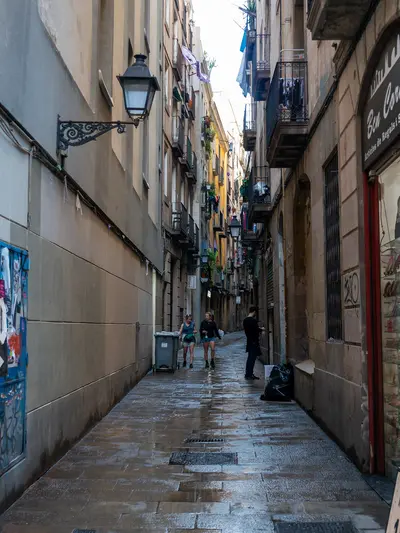
    El Raval is the part of the Old Town west of La Rambla, a densely built, multicultural district with small shops, bars, and cultural centers.

    by Felix Gillen

    1. Home
    2. Destinations
    3. Spain
    4. Barcelona
    5. El Raval
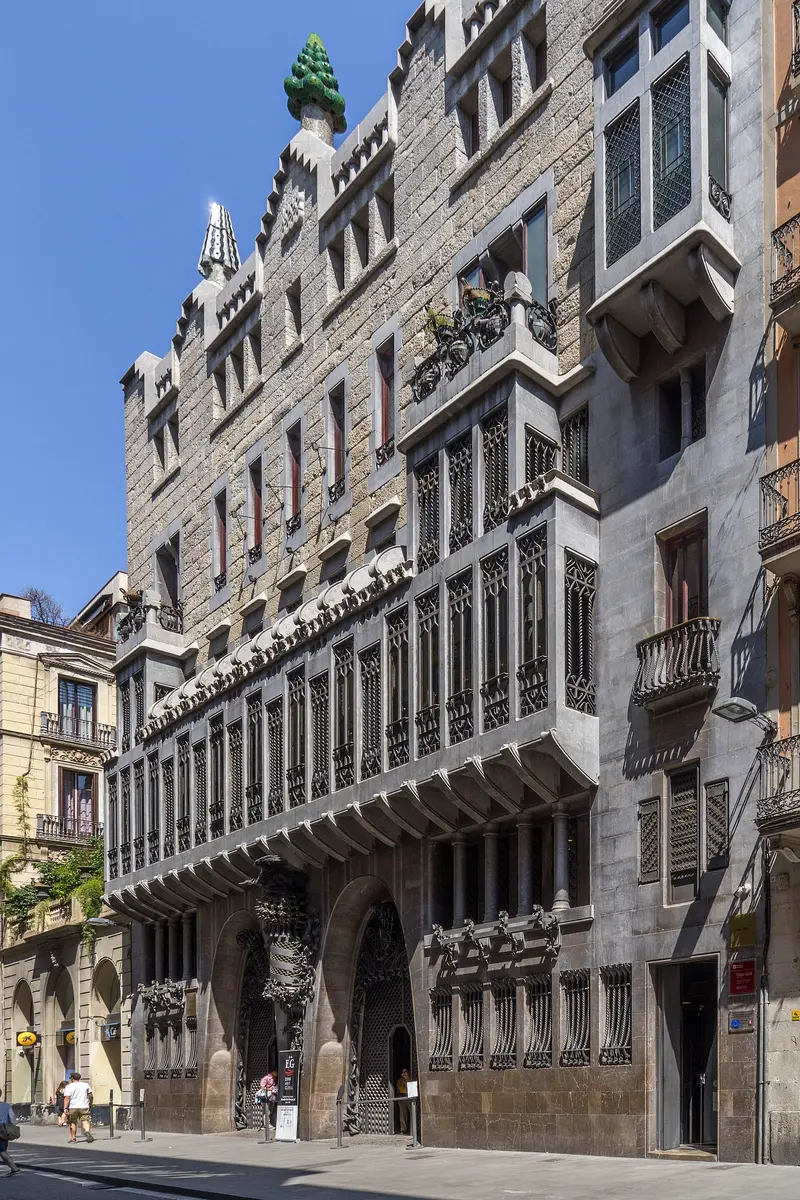
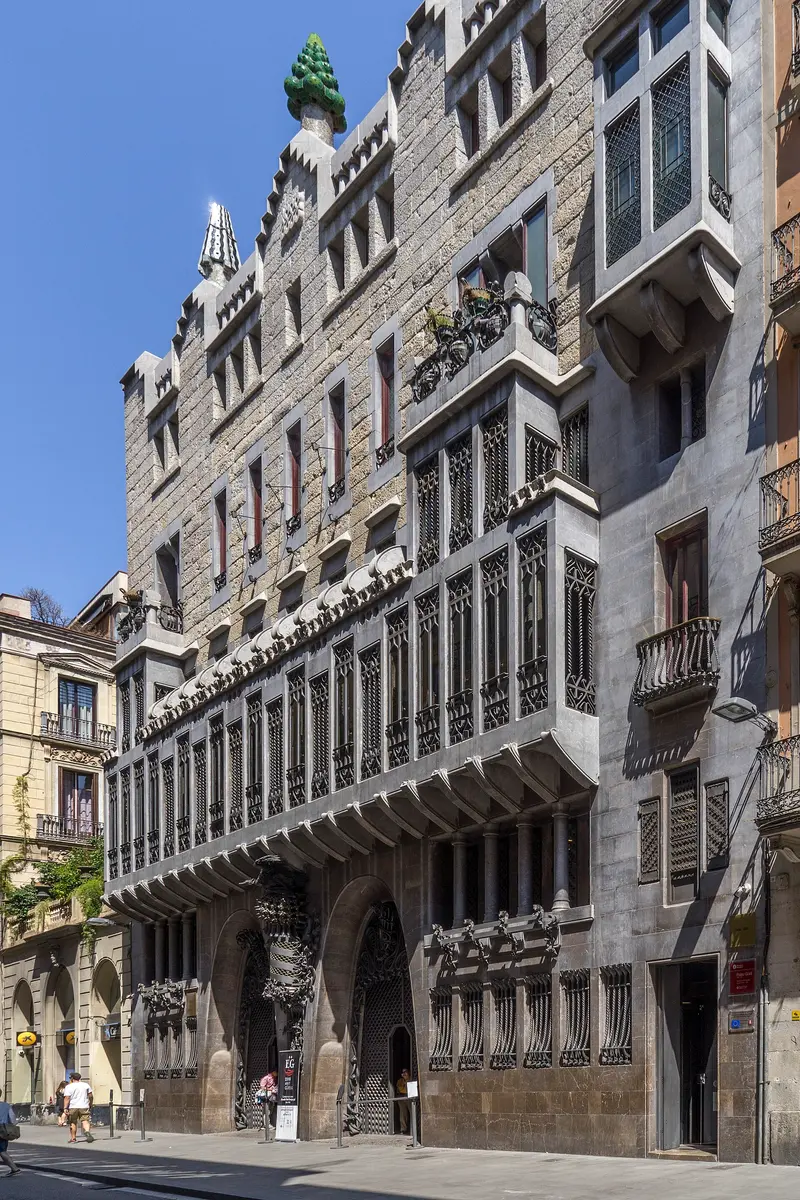
    El Raval is the part of the Old Town west of La Rambla, a densely built, multicultural district with small shops, bars, and cultural centers. On Carrer Nou de la Rambla stands the Palau Güell, which Antoni Gaudí built from 1886 to 1888 as his first major work for the industrialist Eusebi Güell. It has been a UNESCO World Heritage site since 1984 and is open Tuesday to Sunday.To the north are the Museum of Contemporary Art MACBA, housed in a white building by Richard Meier, and just behind it, the CCCB cultural center. On Plaça dels Àngels in front of MACBA, skaters gather in the late afternoon. The wide Rambla del Raval, with its terraces and Fernando Botero's bronze cat, is the heart of the district; at its southern end stands the Romanesque monastery Sant Pau del Camp with a small cloister. Boqueria Market Hall has its main entrance on La Rambla, and it's quietest in the morning.
    Spain travel guideRound trips in SpainPlan a trip with El Raval

    Contents

    • Neighborhoods & highlights
    • Eat & drink
    • Accommodation
    • Nearby

    Sights in El Raval

    Discover the most important sights and attractions

    Palau Güell

    Thomas Ledl / Wikimedia Commons / CC BY-SA 4.0, mod.

    Museum

    1Palau Güell

    Antoni Gaudí built Palau Güell from 1886 to 1888 as a city palace for the industrialist Eusebi Güell; it was his first major work. Since 1984, it has been a UNESCO World Heritage site.It is open Tuesday to Sunday. From April to October, it's open until 8 PM; in winter, until 5:30 PM. For current hours and prices, visit palauguell.cat. The palace is on Carrer Nou de la Rambla, a few steps from the Rambla.

    Open in Google Maps
    Museum

    2MACBA (Museu d'Art Contemporani de Barcelona)

    The MACBA, Barcelona's major contemporary art museum, occupies a white Richard Meier building. Just behind it, the CCCB cultural center hosts exhibitions, cinema, and literary events.On the Plaça dels Àngels in front of the museum, skaters meet, primarily in the late afternoon. This scene now defines the neighborhood.
    Open in Google Maps

    Restaurants in El Raval

    1

    Bar Cañete

    Tapas bar on Carrer de la Unió, near Liceu station, offering fish, seafood, and seasonal products. Time Out highlights its fried dishes, such as prawns or marinated moray eel in rice flour, and gazpacho in summer. Dining is at the lively counter or tables; prices are upscale. Open daily for lunch and dinner; reservations recommended.
    Show on Google Maps
    2

    Bacaro

    Venetian tavern on two floors on Carrer de Jerusalem, directly behind the Boqueria Market. The cuisine stays true to Italian tradition: Sardines in Saor, Venetian-style calf's liver and Tiramisù, accompanied by classic Italian wines. The Michelin Guide awards the restaurant a Bib Gourmand for its good value for money.
    Show on Google Maps

    Accommodations in El Raval

    Find perfect stay in El Raval

    Booking.com* (Affiliate link)
    Search Hotels
    Agoda* (Affiliate link)
    Search Hotels
    Airbnb
    Vacation Rentals

    * Affiliate link: if you book through it, we earn a small commission. The price stays the same for you.

    Campgrounds in El Raval

    Find perfect campground in El Raval

    Search via Google Maps
    Campgrounds nearby (15km)
    Camping.info
    Find Campgrounds
    Park4Night
    RV Parks & Camping

    Plan your trip to El Raval

    Save places, build a route and plan your city trip, all in one place.

    1. 1
      Sunrise over alpine peaks and a sea of clouds
      1234

      Round trip

      12 days · 4 stops

      Saved

      Pick a route

      Pick a ready-made one or save places and plan your own.

      Open bookmarks
    2. 2

      Trip to El Raval

      Live
      • 1Palau Güell3 days
      • 2MACBA (Museu d'Art Contemporani de Barcelona)4 days
      Budget

      Plan your trip

      The planner sorts stops, days and budget. Plan together in real time.

      Start trip planning
    3. 3
      9:41 No signal
      El Raval
      Available offline

      Thomas Ledl / Wikimedia Commons / CC BY-SA 4.0, mod.

      Use it on the road

      Download the guide to your phone and use it on site, even offline.

    Nearby

    Barcelona

    Barcelona

    Barcelona, the capital of Catalonia and Spain's second-largest city, sits right on the Mediterranean and combines a Gothic old town, a city beach and the buildings of Catalan Modernisme. You come above all for Antoni Gaudí's works such as the Sagrada Família, Park Güell and Casa Batlló, for the tapas bars and market halls, and for Barceloneta beach in the middle of the city.The Barri Gòtic holds the cathedral and medieval lanes; next door in El Born you find Santa Maria del Mar, the Picasso Museum and small shops. La Rambla is the best-known promenade but also the most crowded. Gràcia, with its many small squares, is quieter.Good to knowTickets: Book timed slots for the Sagrada Família, Park Güell and Casa Batlló online; on-site tickets often sell out.Tourist tax: Since April 2026 the per-person, per-night tax is much higher than before: 8.40 euros in a four-star hotel, 12 euros in a five-star hotel. The city plans further increases up to 2029.Pickpocketing: For general safety advice, see the FCDO travel advice linked on the country page.When to go: Spring and autumn are pleasant; July and August are hot and very crowded.

    AXP Photography·Pexels

    Barri Gòtic

    Barri Gòtic

    The Barri Gòtic is the oldest part of Barcelona and lies between La Rambla, Via Laietana, Plaça de Catalunya, and the port. This was once the Roman settlement of Barcino; remnants of its city walls still stand among the buildings. At its centre stands the Gothic cathedral, surrounded by narrow alleys leading to squares such as Plaça de Sant Jaume, home to the City Hall and the Catalan government.On Plaça del Rei stand the Palau Reial Major, once the seat of the Counts of Barcelona, and the Chapel of Santa Àgata. Below the square, the City Museum MUHBA displays streets, houses, and workshops of Roman Barcino. The 19th-century Plaça Reial, with its arcades and palm trees, is a popular meeting spot in the evenings. The best way to explore the district is on foot; metro stations are Liceu and Jaume I.

    Matti Blume·CC BY-SA 4.0

    El Born and La Ribera

    El Born and La Ribera

    El Born and La Ribera form the part of the Old Town east of Via Laietana. In the Middle Ages, it was the district of merchants and seafarers: Along Carrer de Montcada stand stately mansions, five of which house the Museu Picasso. The church of Santa Maria del Mar was built by the district's artisans and seafarers, and is considered a masterpiece of Catalan Gothic.Next to the church, the memorial square Fossar de les Moreres commemorates those who fell during the siege of 1714. In the former market hall on Passeig del Born, the El Born Centre de Cultura i Memòria displays the excavated remains of the district, which was demolished after 1714. Today, fashion boutiques, delicatessens, bars, and restaurants blend with medieval alleys here. On its northern edge lies the Palau de la Música Catalana.

    Alvesgaspar·CC BY-SA 4.0

    Eixample

    Eixample

    The Eixample is the 19th-century urban expansion. Ildefons Cerdà presented the plan in 1859: a right-angled grid of city blocks approximately 100 by 100 meters, approved by government decree in 1860. The Diagonal and Meridiana avenues cut diagonally through this grid. The district begins at Plaça de Catalunya and is now the city's business and shopping center.Most of the Modernisme buildings are located here: the Sagrada Família, the Hospital de Sant Pau, and on Passeig de Gràcia, the Casa Batlló, the Casa Milà, the Casa Amatller, and the Casa Lleó Morera. The section featuring the three houses Batlló, Amatller, and Lleó Morera is called the Mansana de la Discòrdia. Passeig de Gràcia is Barcelona's most famous shopping street; Metro lines L2, L3, and L4 stop here.

    Büsra·Pexels

    La Barceloneta

    La Barceloneta

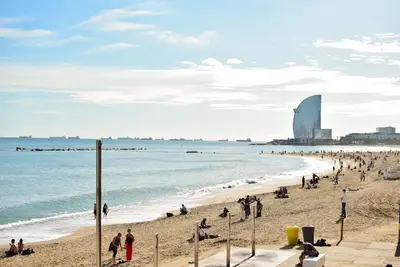
    La Barceloneta is the port and beach quarter situated on the spit of land between Port Vell and the Mediterranean Sea. The military engineer Juan Martín Cermeño designed it from 1753 as a maritime quarter with a strict grid of long, narrow blocks, for instance, for families whose homes in the La Ribera district were cleared for the citadel's construction. Many residents worked as fishermen, caulkers, or in the port.Today you mainly come for the city beach: Platja de la Barceloneta lies between Sant Sebastià in the south and Somorrostro in the north, connected by a beach promenade. In the narrow streets, there are many eateries with fish and rice dishes; the fried potato ball Bomba is said to have been invented here. You take Metro L4 to Barceloneta, and from Barri Gòtic, you walk about 15 minutes. In July and August, the central beach section is very crowded during the day; before 10 AM or after 7 PM, it's quieter.

    Vinícius Vieira ft·Pexels

    Your next steps

    El Raval is in Spain. Ways to carry on from here.

    • More in Spain

      Highlights, areas, routes and the best time to travel for all of Spain.

      Spain travel guide
    • Round trips in Spain

      Ready-made routes through Spain, with stops, nights and a map.

      See the routes

    Sources & method

    • Photos: Wikimedia Commons. Each photo carries its credit.
    • Place data such as addresses and ratings comes from Google Maps.
    • The content is based on web research from public, traceable sources. How the content is made · The role of AI