Region
Portugal
Madeira
Madeira is a volcanic island in the Atlantic, almost 1,000 kilometers southwest of Lisbon and a good 500 kilometers off the coast of Morocco.
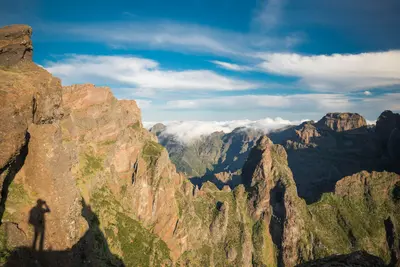
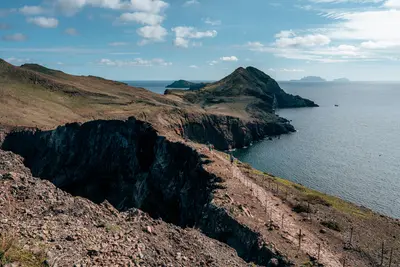
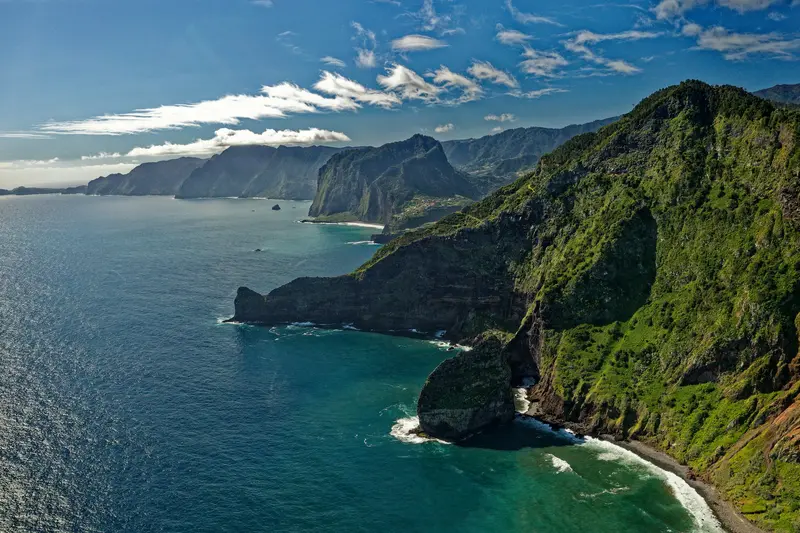
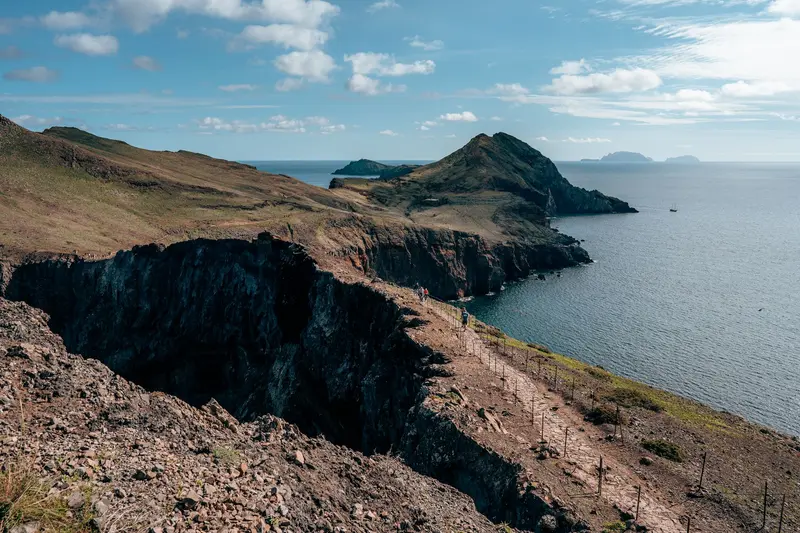
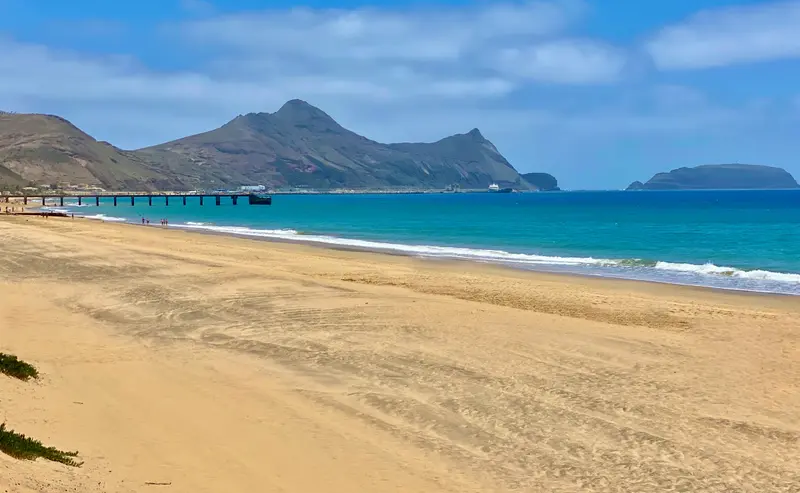
Madeira is a volcanic island in the Atlantic, almost 1,000 kilometers southwest of Lisbon and a good 500 kilometers off the coast of Morocco. Steep mountains rising over 1,800 meters, laurel forests, irrigation channels (Levadas), and a rugged coastline characterize the island; the climate is mild all year round. The Autonomous Region also includes the small neighboring island of Porto Santo, with a long sandy beach.
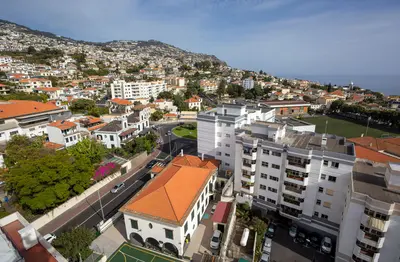
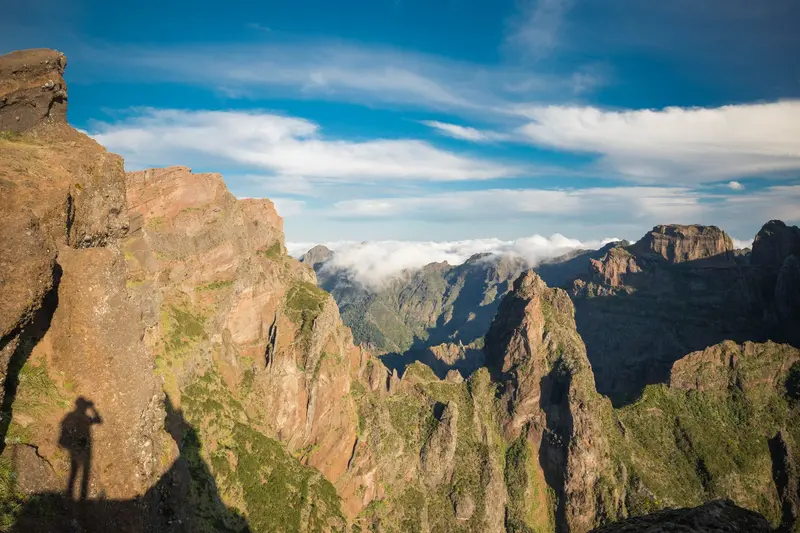
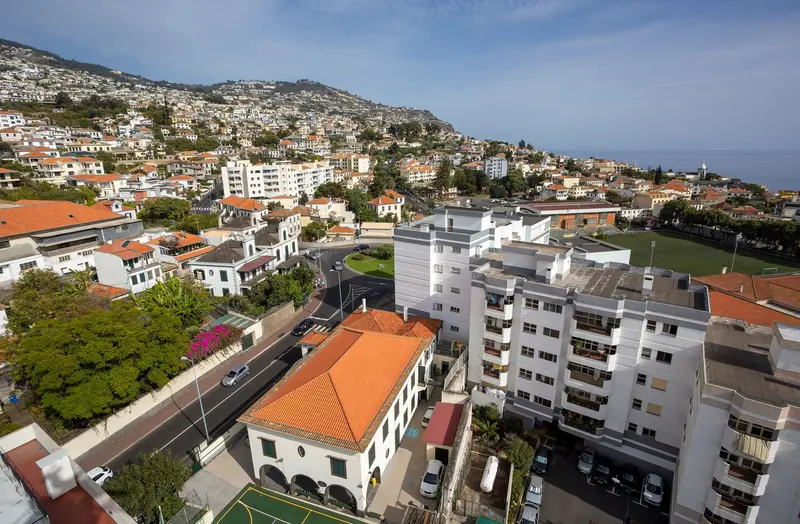
Madeira is approximately 57 kilometers long and 22 kilometers wide, with about 250,000 inhabitants, almost half of whom live in the capital Funchal on the south coast. The island's center rises steeply to Pico Ruivo (1,862 m); the north is wetter and greener, while the south is sunnier. Large sandy beaches are scarce; bathing takes place in natural swimming pools and on pebble beaches; the sandy beach is on Porto Santo. Most visitors come for hiking along the Levadas and on the mountain trails. A rental car is practical, as the roads are steep and pass through many tunnels. The airport is near Santa Cruz, about 20 minutes east of Funchal.
More places in Madeira
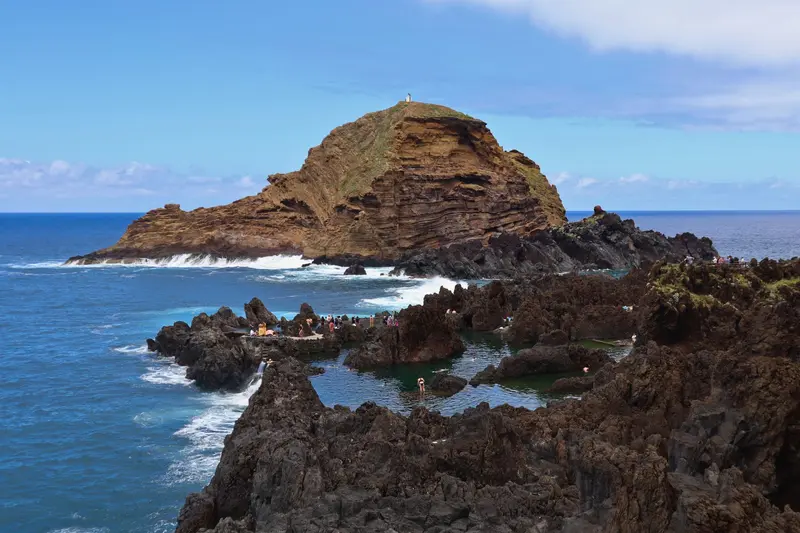
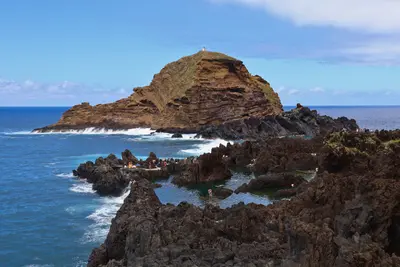
Porto Moniz is situated on Madeira's far northwestern tip. The town is known for its natural swimming pools formed from dark lava rock, into which seawater washes in at high tide. The journey there takes you across the Paul da Serra high plateau or along the north coast, featuring waterfalls and steep cliffs.
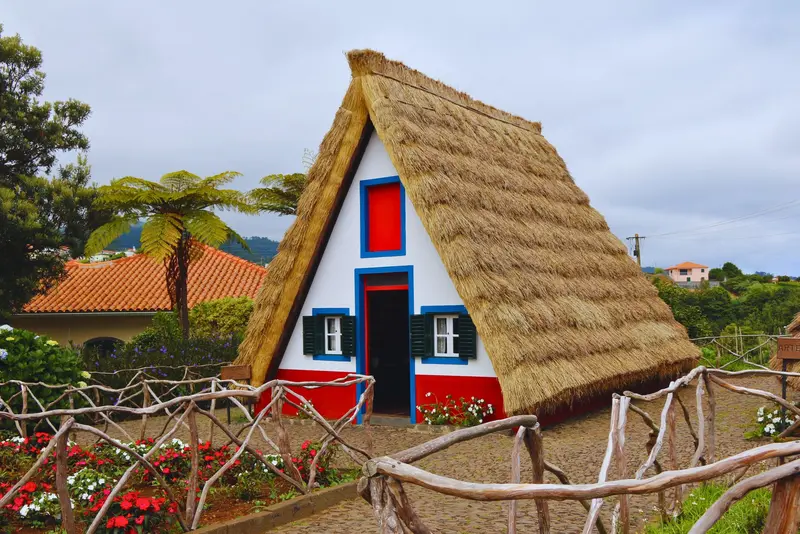
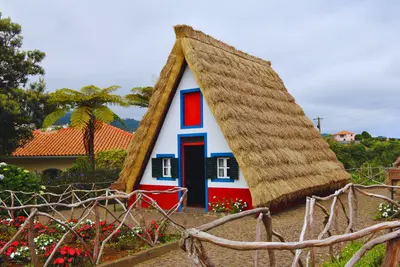
Santana, on Madeira's green north coast, is known for its traditional triangular thatched-roof houses, which are today preserved mainly as display pieces. The village is a starting point for hikes in the laurel forest, such as to Caldeirão Verde, and for the drive to Pico Ruivo.
Food and Drink
Espetada
Beef skewer, traditionally grilled on a laurel branch and served hanging.
Scabbard and Banana
Black scabbardfish from the deep sea, breaded and served with fried banana.
Bolo do caco
Warm stone-baked flatbread with garlic butter.
Poncha
Drink made from sugarcane spirit, honey, and lemon juice.
Madeira Wine
Fortified wine, stabilized by heating and long aging, from dry (Sercial) to sweet (Malvasia) styles.
Best Time to Visit
When is the best time for your trip?
17–23°C·6–76 mm(little rain)
Madeira can be visited year-round; along the Funchal coast, daily average temperatures are between 16 and 23 degrees Celsius. Spring and early autumn are ideal for hiking, when the paths are drier and it's not yet so crowded. In winter, it rains significantly more in the north and in the mountains than in Funchal.
These figures are for Funchal on the south coast. The mountains are considerably cooler; on Pico do Arieiro, it can freeze during winter. The north side is more humid and frequently cloudier than the south.
Seasons
Jan
Feb
Mar
Apr
May
Jun
Jul
Aug
Sep
Oct
Nov
Dec
High season (Summer, Christmas & New Year's)
Good hiking time
Low season with more rain
Best Time to Visit
▶Show detailed monthly data
| Month | Temp (°C) | Rain (mm) | Sun (h) |
|---|---|---|---|
| January | 16.5 | 88 | 5.3 |
| February | 16.3 | 74 | 5.6 |
| March | 16.8 | 66 | 6.2 |
| April | 17.3 | 34 | 6.7 |
| May | 18.5 | 17 | 7.3 |
| June | 20.3 | 6 | 6.7 |
| July | 21.9 | 2 | 7.9 |
| August | 22.9 | 3 | 8.2 |
| September | 22.7 | 26 | 7.2 |
| October | 21.2 | 76 | 6.3 |
| November | 19.0 | 102 | 5.5 |
| December | 17.4 | 100 | 5.1 |
History & Character
Settlement and SugarcanePortuguese seafarers under João Gonçalves Zarco reached Madeira around 1419; settlement began shortly after. In the 15th and 16th centuries, sugarcane brought wealth, later Madeira wine, mainly exported to England. For irrigating terraced fields, a Levada network emerged, now over 2,000 kilometres long.Nature and AutonomyThe laurel forest (Laurisilva) in the island's north is a remnant of vegetation that once covered large parts of Southern Europe and has been a UNESCO World Heritage site since 1999. Since 1976, Madeira is an Autonomous Region of Portugal with its own parliament and government.
Getting Here & About
Flight, Rental Car and BusDirect flights are available from many German cities, as well as from Lisbon and Porto. Strong winds can lead to diversions and delays at the airport. On the island, a rental car is the most flexible solution; buses connect Funchal with most places but rarely operate off the main routes. A ferry departs from Funchal for Porto Santo; flights are also available.For many official hiking trails (PR), online registration with a fee is required via the Regional Government's portal. Check the current rules and whether the trail is open beforehand.In the mountains, the weather can change quickly; warm clothing and a headlamp for Levada tunnels should be packed.