ExploreTravel GuidesPlan a trip
    de|en
    All Places & RegionsAbout FernwehFAQPrivacy PolicyImprint
    ExploreTravel GuidesPlan a trip
    • Neighborhoods & highlights
    • Eat & drink
    • Nightlife
    • Getting around
    • Accommodation
    • Plan trip
    • Nearby
    Downtown LA

    United States

    Downtown LA

    City

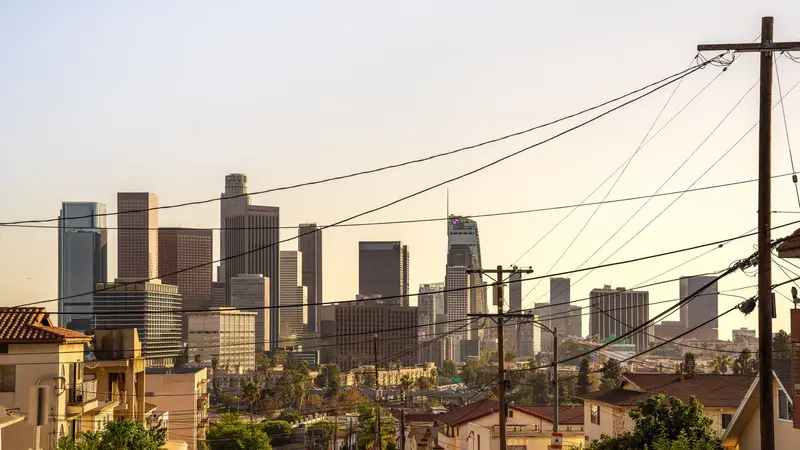
    Downtown is the most metropolitan-looking part of Los Angeles: skyscrapers on Bunker Hill, old movie palaces on Broadway, interspersed with market halls, museums, and loft buildings.

    1. Home
    2. Destinations
    3. United States
    4. Los Angeles
    5. Downtown LA
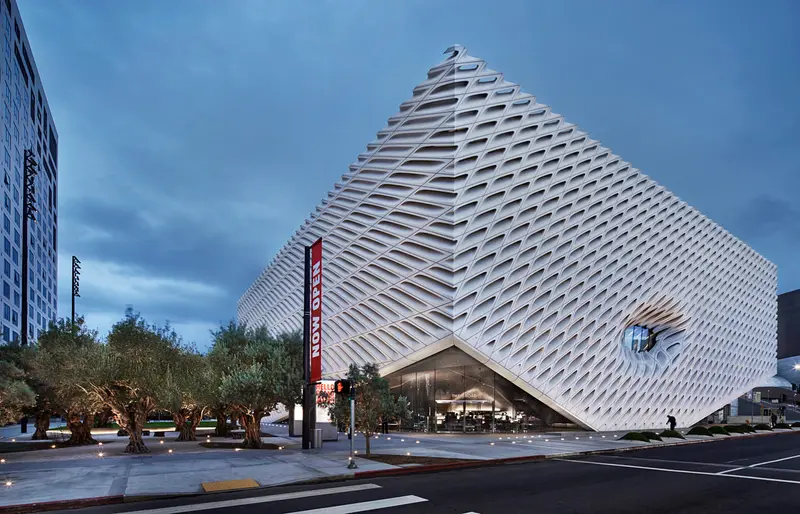
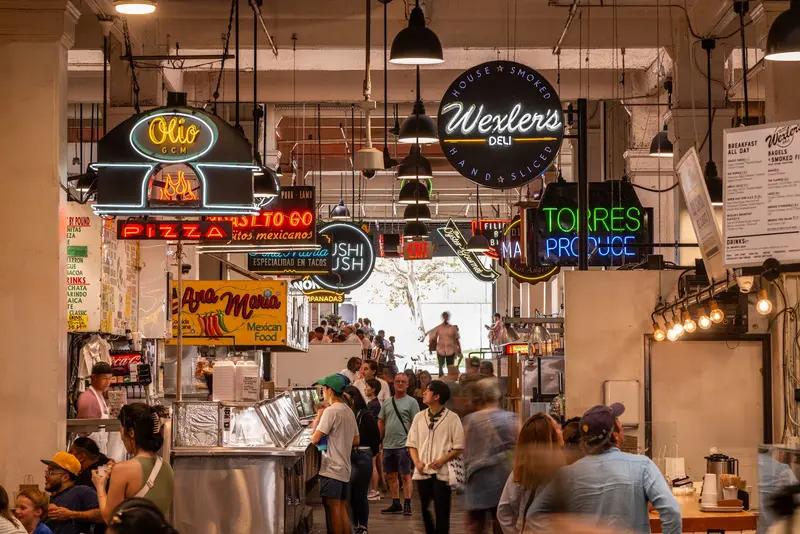
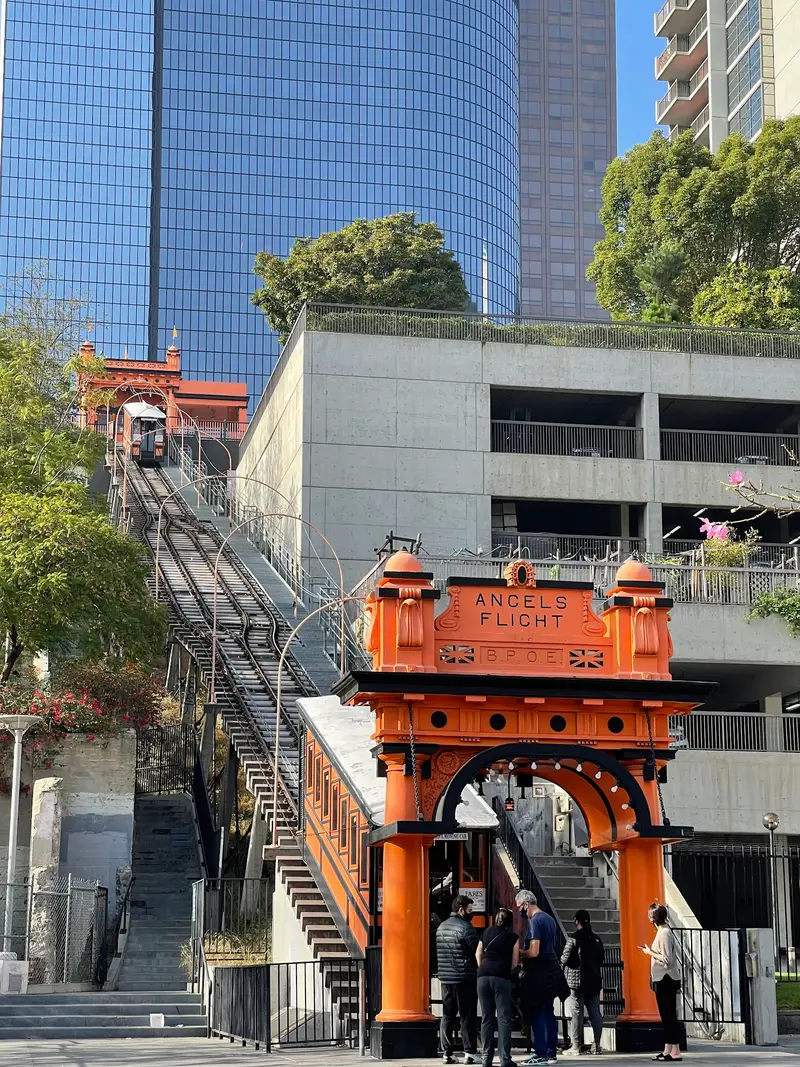
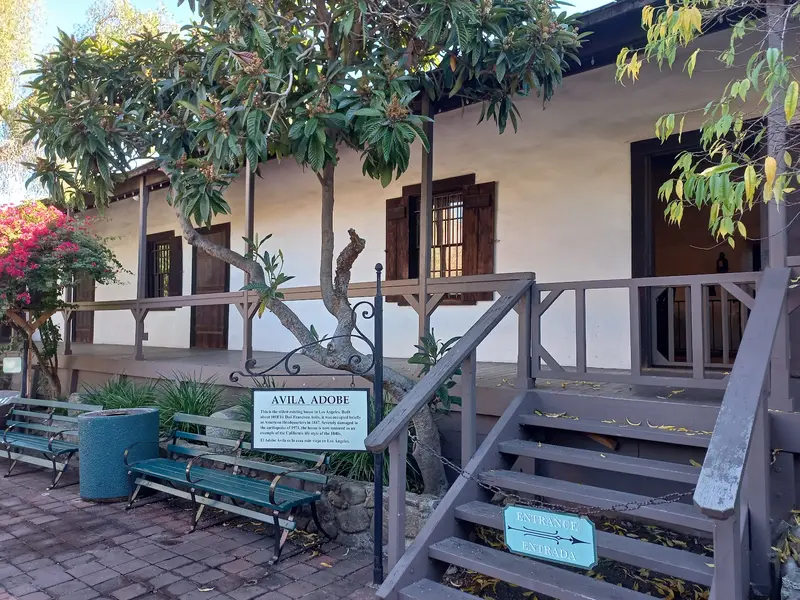
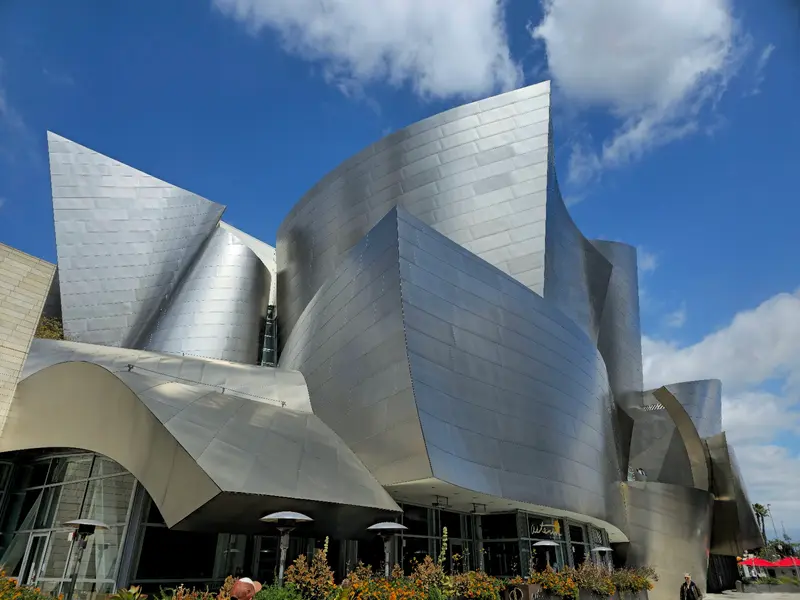
    Downtown is the most metropolitan-looking part of Los Angeles: skyscrapers on Bunker Hill, old movie palaces on Broadway, interspersed with market halls, museums, and loft buildings. The city began here in 1781 as El Pueblo de Los Ángeles, founded by eleven families who came from Mission San Gabriel.Bunker Hill is home to architectural icons: the Walt Disney Concert Hall by Frank Gehry (2003), home of the LA Philharmonic, and opposite, The Broad, the 2015-opened museum featuring the collection of Eli and Edythe Broad. Entry is free. With the Angels Flight funicular, operating since 1901, you rumble down the slope to Grand Central Market, which has gathered tacos, ramen, and coffee under one roof since 1917.Further north, Olvera Street leads to the Avila Adobe from 1818, the city's oldest surviving residence. To the east are Little Tokyo, the largest of the three official Japantowns in the USA, and the Arts District, where artists converted empty warehouses into studios starting in the late 1960s. Today, you'll find galleries there like Hauser & Wirth and some of the city's most sought-after restaurants.Plan a full day: morning for museums on Bunker Hill, noon for the market hall, afternoon for Little Tokyo and the Arts District, evening for a drink on a rooftop terrace above Pershing Square.

    Sights in Downtown LA

    Discover the most important sights and attractions

    Walt Disney Concert Hall
    Attraction

    1Walt Disney Concert Hall

    Frank Gehry's curved steel structure opened in 2003 and is home to the LA Philharmonic. On most days, there are free one-hour self-guided audio tours, starting in the Grand Avenue Lobby.
    Open in Google Maps
    The Broad
    Museum

    2The Broad

    Museum of Contemporary Art with almost 2,000 works by around 200 artists, opened 2015. Admission is free, online timed tickets are recommended, and for Yayoi Kusama's Infinity Mirrored Room you need a separate reservation. Closed Mondays.
    Open in Google Maps
    Grand Central Market
    Market

    3Grand Central Market

    Broadway Market Hall, open since 1917, daily 8 AM-9 PM. Get tacos at Tacos Tumbras a Tomas, ramen at Ramen Hood, or coffee at Go Get Em Tiger.
    Open in Google Maps
    Angels Flight Railway
    Historic Landmark

    4Angels Flight Railway

    The 1901 funicular connects Hill Street opposite the Grand Central Market with California Plaza on Bunker Hill and calls itself the world's shortest railway.
    Open in Google Maps
    Olvera Street
    Museum

    5Olvera Street

    Since 1930, a Mexican-influenced marketplace in El Pueblo's historic core. Here stands the Avila Adobe from 1818, the city's oldest surviving residence, now a museum.
    Open in Google Maps
    Japanese Village Plaza
    Shopping Mall

    6Japanese Village Plaza

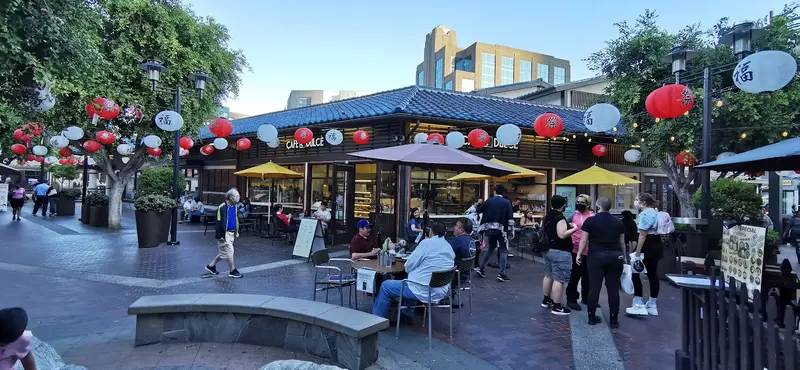
    Pedestrian plaza in the center of Little Tokyo with small restaurants and shops. Every August, the neighborhood celebrates Nisei Week here with a parade and Taiko drums.
    Open in Google Maps

    Restaurants in Downtown LA

    1

    Philippe The Original

    Since 1908 in LA and since 1951 on Alameda Street, near Union Station and Olvera Street. Philippe claims to have invented the French Dip sandwich, open daily 6 AM to 10 PM.
    Show on Google Maps
    2

    Bestia

    Italian restaurant in the Arts District, one of the city's most renowned. Open daily only in the evenings, reservations via OpenTable.
    Show on Google Maps

    Nightlife

    1

    Perch

    16th-floor rooftop bar above Pershing Square with French-inspired small plates, cocktails, and skyline views.
    Show on Google Maps

    Getting There and Around

    Downtown is the hub of the Metro network. Since June 2023, the underground Regional Connector links the A and E Lines directly through the city center. A ride costs 1.75 US dollars, with a TAP card a maximum of 5 dollars per day.B and D Line: Union Station (Olvera Street), Civic Center/Grand Park, Pershing Square (Grand Central Market, Angels Flight), 7th St/Metro CenterA and E Line: Grand Av Arts/Bunker Hill (The Broad, Disney Concert Hall), Historic Broadway, Little Tokyo/Arts DistrictAngels Flight: 1.50 US dollars per ride, 0.75 dollars with a TAP card, daily 6:45 AM to 10 PMOn to the Beach: The E Line goes directly to Downtown Santa Monica

    Accommodations in Downtown LA

    Find perfect stay in Downtown LA

    Booking.com* (Affiliate link)
    Search Hotels
    Agoda* (Affiliate link)
    Search Hotels
    Airbnb
    Vacation Rentals

    * Affiliate link: if you book through it, we earn a small commission. The price stays the same for you.

    Campgrounds in Downtown LA

    Find perfect campground in Downtown LA

    Search via Google Maps
    Campgrounds nearby (15km)
    Camping.info
    Find Campgrounds
    Park4Night
    RV Parks & Camping

    Plan your trip to Downtown LA

    Save places, build a route and plan your city trip, all in one place.

    1. 1
      1234

      Round trip

      12 days · 4 stops

      Saved

      Pick a route

      Pick a ready-made one or save places and plan your own.

      Open bookmarks
    2. 2

      Trip to Downtown LA

      Live
      • 1Walt Disney Concert Hall3 days
      • 2The Broad4 days
      • 3Grand Central Market5 days
      Budget

      Plan your trip

      The planner sorts stops, days and budget. Plan together in real time.

      Start trip planning
    3. 3
      9:41 No signal
      Available offline

      Use it on the road

      Download the guide to your phone and use it on site, even offline.

    Nearby

    Los Angeles

    Los Angeles

    Los Angeles, with nearly 3.9 million inhabitants, is the second-largest city in the USA and the cultural center of Southern California. The city lies mostly in the Los Angeles Basin on the Pacific, and by 1921, most of the world's film industry was located here.From the 1935-opened Griffith Observatory on the slopes of Mount Hollywood, you can see the Hollywood Sign up close; admission is free. The Getty Center also has free admission, but requires a timed reservation; parking costs 25 dollars, and it is closed on Mondays. Along the coast are the Santa Monica Pier and Venice, with its boardwalk and historic canal district.The Metro-Rail network comprises six lines with 110 stations. From June 2025, the C and K Lines will stop at the LAX/Metro Transit Center station, from where shuttle buses run to the terminals. The E Line ends in Downtown Santa Monica. The city boasts over 3,000 hours of sunshine per year.
    Griffith Park and Los Feliz

    Griffith Park and Los Feliz

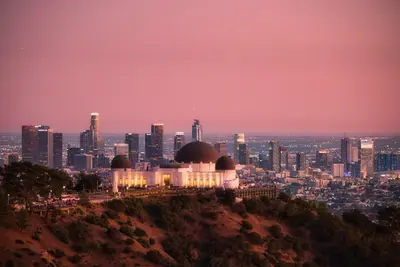
    Griffith Park is a piece of wild mountainous landscape right in the city: dry slopes, hiking trails, viewpoints over the Los Angeles basin. Griffith J. Griffith gifted its original land to the city in 1896; today, the park spans about 1,740 hectares.The main attraction is the Griffith Observatory on the southern slope of Mount Hollywood, opened in 1935. Admission is free, over nine million people have already looked through the Zeiss telescope on the roof, and on clear evenings, you can look through it for free. From the parking lot, you can see the Hollywood Sign, and from its far end, hiking trails lead up Mount Hollywood to further viewpoints. The observatory appears twice in the film "Rebel Without a Cause" (1955).Scattered throughout the park you'll also find the Los Angeles Zoo, the Greek Theatre (dating from 1930), the Bronson Caves, which served as the Batcave in the 1960s Batman series, and the shady valley of Fern Dell. To the south is Los Feliz, a hillside neighborhood with villas in the hills and Los Feliz Village around Vermont and Hillhurst Avenue, featuring cafés, restaurants, and vintage shops. On Olive Hill stands Frank Lloyd Wright's Hollyhock House, the first UNESCO World Heritage Site in Los Angeles since 2019.For hiking, it's best to go early in the morning. The observatory is worth visiting in the evening: it's open until 10 PM, and the sea of city lights is most beautiful after sunset.
    Hollywood

    Hollywood

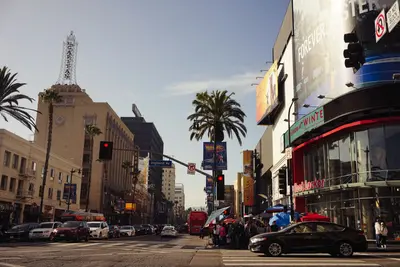
    Hollywood is less about glamour and more of a pilgrimage site: On Hollywood Boulevard, visitors jostle over the Walk of Fame stars, costumed characters pose for tips, amidst souvenir shops and old movie palaces. Film history lies in the details, such as the hand and footprints in front of the TCL Chinese Theatre or in bars where Frank Sinatra and Charles Bukowski once sat.The Walk of Fame spans 15 blocks of Hollywood Boulevard and three blocks of Vine Street. The first permanent stars were laid in 1960; there are now around 2,850. The Chinese Theatre opened in 1927 and is currently an IMAX cinema. Right next door is the Ovation Hollywood complex, home to the Dolby Theatre, where the Oscars have been presented since 2002. From 2029, the gala will move to the Peacock Theater in Downtown.The Hollywood Sign has stood on Mount Lee since 1923, originally an advertisement for the "Hollywoodland" settlement. You cannot get close to the letters; the steep terrain is cordoned off and monitored. Two viewpoints are officially recommended: the terraces of Ovation Hollywood and the Griffith Observatory in neighboring Griffith Park, reachable by bus or car in under half an hour.It's best to come in the morning before the boulevard fills, and return in the evening for a drink at the Frolic Room or a steak at Musso & Frank. Then the neon signs glow, and the day visitors have disappeared.
    Beverly Hills and West Hollywood

    Beverly Hills and West Hollywood

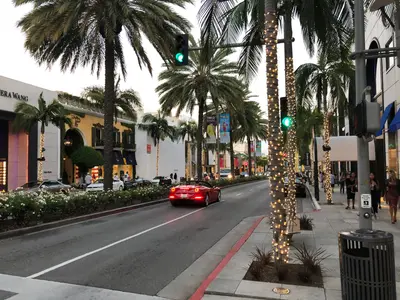
    Two distinct cities within the Los Angeles urban area, two distinct personalities: Beverly Hills stands for villas, palm-lined avenues, and luxury boutiques, while West Hollywood, founded only in 1984, is synonymous with rock history, comedy, and nightlife.The most famous section of Rodeo Drive comprises approximately three blocks between Wilshire Boulevard and Little Santa Monica Boulevard. The Beverly Wilshire hotel stands at the corner of Wilshire Boulevard. At the intersection with Dayton Way, the “Torso” sculpture marks the Rodeo Drive Walk of Style, where commemorative plaques honor fashion icons. This is where the scene in “Pretty Woman” (1990) takes place, where Julia Roberts is complimented out of a boutique. Worth a detour is Greystone Mansion, a 1928 Tudor estate, now a city park and a backdrop for films like “There Will Be Blood” and “The Big Lebowski.” For a photo with the iconic lettering, head to the Beverly Hills Sign in Beverly Gardens Park.The Sunset Strip, approximately 2.7 kilometers of Sunset Boulevard in West Hollywood, was the stage for rock in the 1960s. At the Whisky a Go Go, opened in 1964, The Doors played as the house band, and The Comedy Store has been around since 1972. Huge billboards still line the street today.Beverly Hills is best explored on foot during the day, while the Strip comes alive from late evening, when concerts and comedy shows begin.
    Venice

    Venice

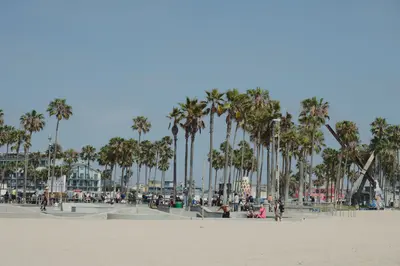
    Venice was Abbot Kinney's dream: in 1905, the entrepreneur established a seaside resort here called "Venice of America," complete with canals, a pier, and Venetian architecture. In 1926, the previously independent city became part of Los Angeles, and many canals were later filled in. What remains is a district with a leaning towards counterculture: due to low rents, artists and Beat poets moved here, and The Doors formed in 1965.The Venice Beach Boardwalk, approximately three kilometers long, is always bustling: street artists, souvenir stands, skaters, and cyclists on the beach bike path. At the outdoor gym Muscle Beach Venice, bodybuilders lift weights for an audience, and right next to it is the 2009 skate park with bowls reminiscent of empty swimming pools. In addition, there are the graffiti walls of the Venice Art Walls.A few blocks inland, it gets quieter. In the Venice Canal Historic District, listed on the National Register of Historic Places since 1982, you can stroll along the preserved canals from 1905. The Abbot Kinney Boulevard, a street over 1.5 kilometers long with boutiques, galleries, and restaurants, is Venice's shopping and entertainment district.The Boardwalk is liveliest on weekend afternoons. For the canals, early morning or late afternoon light are best, and in the evening, you'll find the best spots at a restaurant on Abbot Kinney.