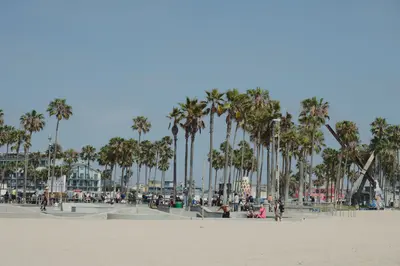
Los Angeles, with nearly 3.9 million inhabitants, is the second-largest city in the USA and the cultural center of Southern California.
Los Angeles, with nearly 3.9 million inhabitants, is the second-largest city in the USA and the cultural center of Southern California. The city lies mostly in the Los Angeles Basin on the Pacific, and by 1921, most of the world's film industry was located here.From the 1935-opened Griffith Observatory on the slopes of Mount Hollywood, you can see the Hollywood Sign up close; admission is free. The Getty Center also has free admission, but requires a timed reservation; parking costs 25 dollars, and it is closed on Mondays. Along the coast are the Santa Monica Pier and Venice, with its boardwalk and historic canal district.The Metro-Rail network comprises six lines with 110 stations. From June 2025, the C and K Lines will stop at the LAX/Metro Transit Center station, from where shuttle buses run to the terminals. The E Line ends in Downtown Santa Monica. The city boasts over 3,000 hours of sunshine per year.
Los Angeles counted nearly 3.9 million residents in the 2020 census, and by 1921, over 80 percent of the world's film industry was already based here. The city is sprawling, but the Metro network connects Downtown, Hollywood, Koreatown, and Universal City, and through the LAX/Metro Transit Center, you can also get near the airport by rail. The city includes studios, a museum scene from the Getty Center to LACMA, and a cuisine shaped by large Mexican and Korean communities. Highlights include Downtown with Little Tokyo and Chinatown, Hollywood, Koreatown along Wilshire Boulevard, and Miracle Mile. The Pacific coast also offers neighboring Santa Monica and Venice.
District 1 of 4
Hollywood
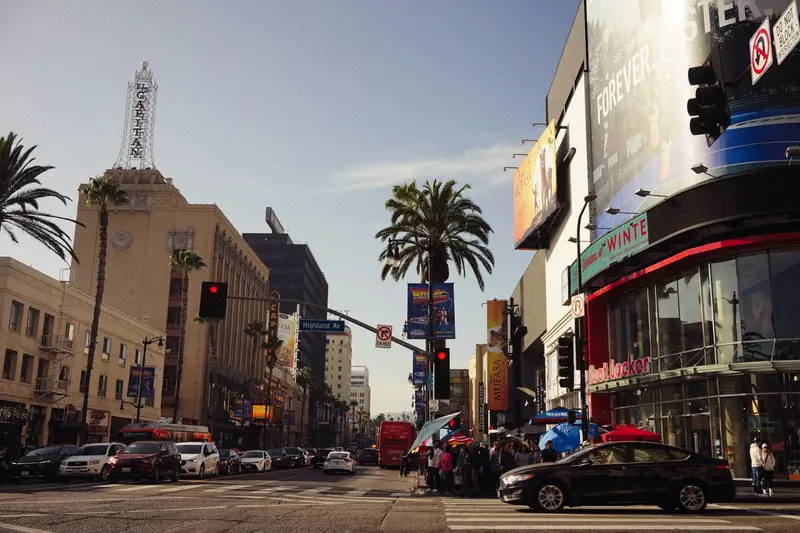
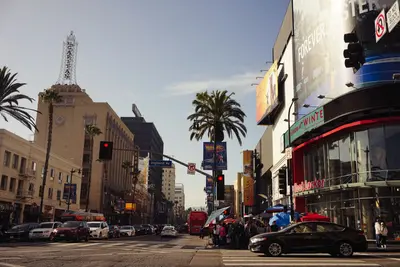
Hollywood is less about glamour and more of a pilgrimage site: On Hollywood Boulevard, visitors jostle over the Walk of Fame stars, costumed characters pose for tips, amidst souvenir shops and old movie palaces.
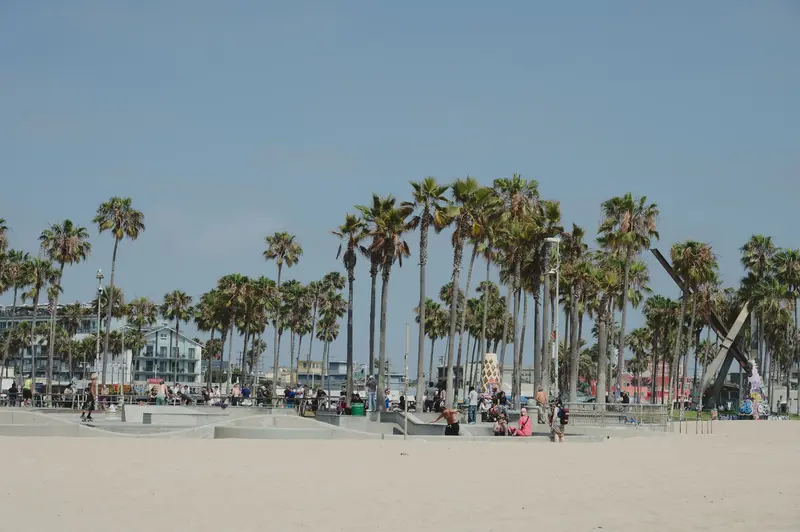
Venice was Abbot Kinney's dream: in 1905, the entrepreneur established a seaside resort here called "Venice of America," complete with canals, a pier, and Venetian architecture.
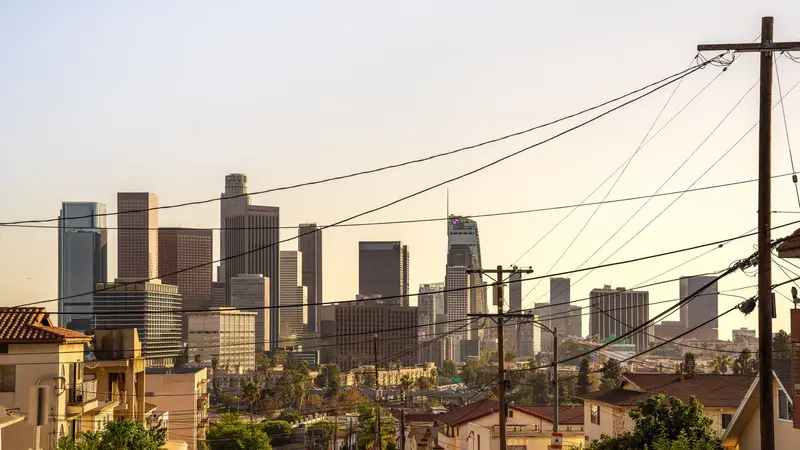
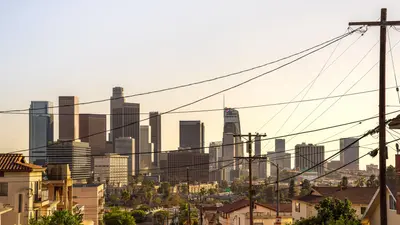
Downtown is the most metropolitan-looking part of Los Angeles: skyscrapers on Bunker Hill, old movie palaces on Broadway, interspersed with market halls, museums, and loft buildings.
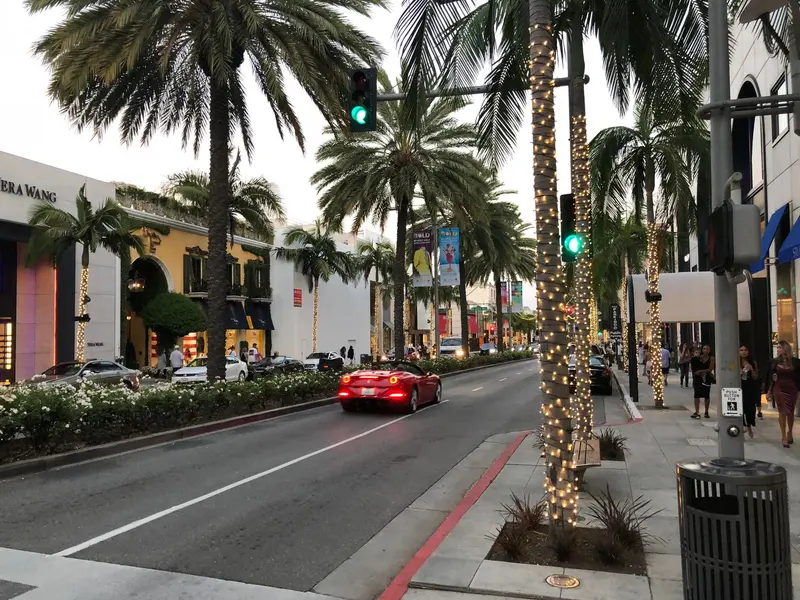
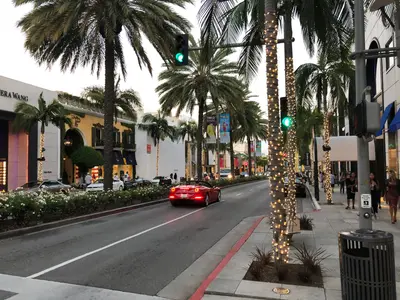
Two distinct cities within the Los Angeles urban area, two distinct personalities: Beverly Hills stands for villas, palm-lined avenues, and luxury boutiques, while West Hollywood, founded only in 1984, is synonymous with rock history, comedy, and nightlife.
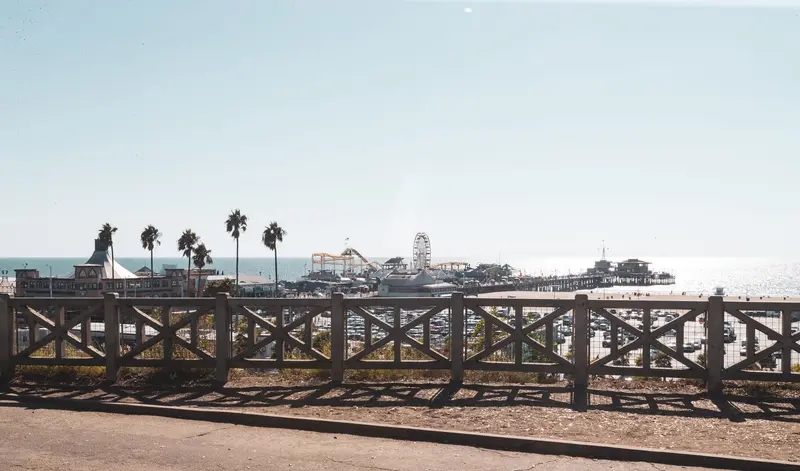
Santa Monica is a city by the sea in its own right, but for most visitors, it's where Los Angeles meets the Pacific. Wide sandy beaches, a bike path along the water, palm trees on the bluff above the coastal road. The center is compact and easily explored on foot, which is rare in LA.At its heart is the Santa Monica Pier. The Municipal Pier opened in 1909, and in 1916, the Looff family's amusement pier was added to its south. The Looff Hippodrome features a 1922 carousel, and the pier is home to Pacific Park amusement park with its solar-powered Pacific Wheel Ferris wheel. Since 2009, the 'End of the Trail' sign has stood here, a photo op for everyone who has driven Route 66. Officially, however, the road ended at the intersection of Lincoln and Olympic Boulevard. Route 66 celebrates its 100th birthday in 2026.A few blocks inland, the Third Street Promenade runs between Wilshire Boulevard and Broadway, a pedestrian zone since 1965, featuring street musicians and dinosaur-shaped topiary hedges. On Wednesdays and Saturdays, a Farmers Market is held there. South of the pier is the Original Muscle Beach, where gymnasts and bodybuilders like Jack LaLanne trained from the 1930s onwards.The pier is most beautiful at sunset, when the Ferris wheel begins to glow. For the beach and bike path, mornings are quieter.
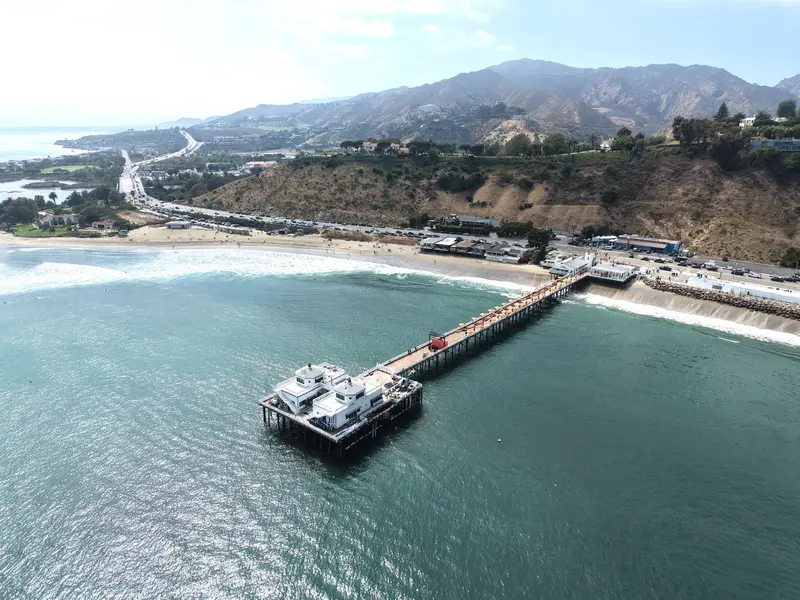
Malibu is not a city with a central core, but rather a 34-kilometer-long stretch of coastline along the Pacific Coast Highway, nestled between the Santa Monica Mountains and the Pacific Ocean. Officially, Malibu lies outside the city of Los Angeles, only establishing itself as its own municipality in 1991. It is known for its surf beaches, rocky coves, and rugged cliffs.The fires of December 2024 and January 2025 hit Malibu hard; the Palisades Fire destroyed a large portion of the beach houses in the eastern part of the area. The Pacific Coast Highway has been open to all traffic again since May 2025, reconstruction is ongoing, and many restaurants have only gradually reopened.On the eastern edge of the coastline lies the Getty Villa, a recreation of the Roman Villa dei Papiri from Herculaneum, housing around 44,000 Greek, Roman, and Etruscan antiquities. Further west, Point Dume juts into the sea, a headland at the northern end of Santa Monica Bay. From February into spring, you can often spot gray whales and humpback whales on their migration from here. Approximately 16 kilometers west of the center, paths and stairs lead down to El Matador State Beach, a small cove nestled beneath the cliffs.For Malibu, you'll need a full day and preferably a car. The beaches are emptier in the mornings, and a sunset at El Matador or on Point Dume makes for a perfect end to the day.
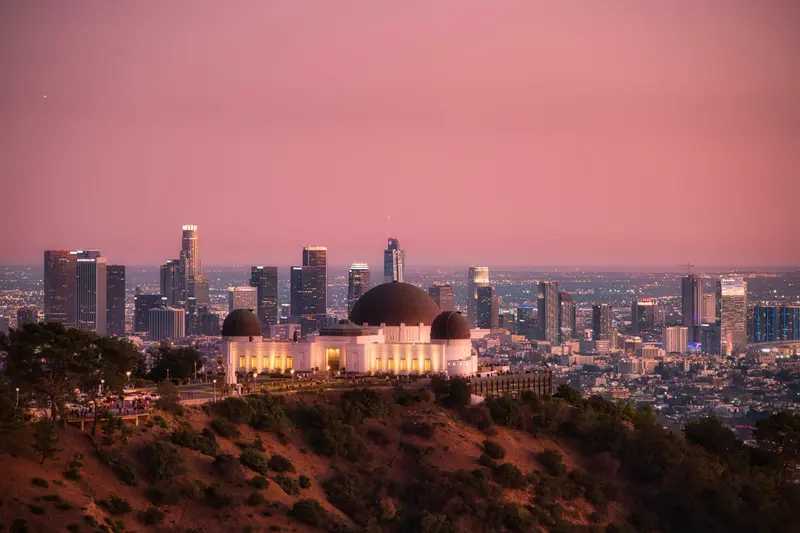
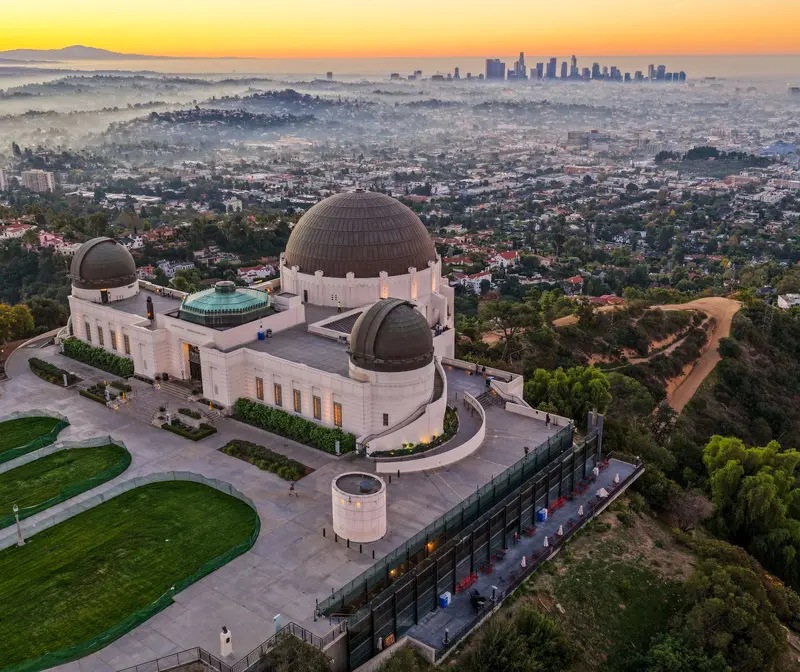
Griffith Park is a piece of wild mountainous landscape right in the city: dry slopes, hiking trails, viewpoints over the Los Angeles basin. Griffith J. Griffith gifted its original land to the city in 1896; today, the park spans about 1,740 hectares.The main attraction is the Griffith Observatory on the southern slope of Mount Hollywood, opened in 1935. Admission is free, over nine million people have already looked through the Zeiss telescope on the roof, and on clear evenings, you can look through it for free. From the parking lot, you can see the Hollywood Sign, and from its far end, hiking trails lead up Mount Hollywood to further viewpoints. The observatory appears twice in the film "Rebel Without a Cause" (1955).Scattered throughout the park you'll also find the Los Angeles Zoo, the Greek Theatre (dating from 1930), the Bronson Caves, which served as the Batcave in the 1960s Batman series, and the shady valley of Fern Dell. To the south is Los Feliz, a hillside neighborhood with villas in the hills and Los Feliz Village around Vermont and Hillhurst Avenue, featuring cafés, restaurants, and vintage shops. On Olive Hill stands Frank Lloyd Wright's Hollyhock House, the first UNESCO World Heritage Site in Los Angeles since 2019.For hiking, it's best to go early in the morning. The observatory is worth visiting in the evening: it's open until 10 PM, and the sea of city lights is most beautiful after sunset.
Sights in Los Angeles
Discover the most important sights and attractions
Historic Landmark
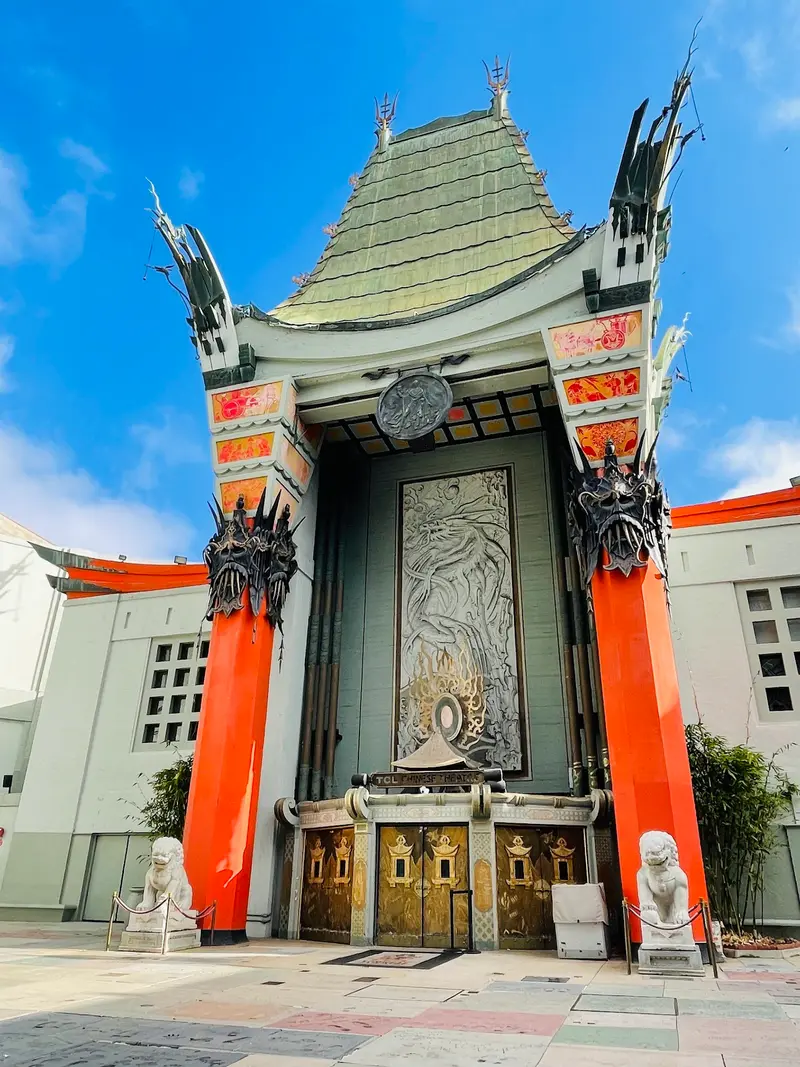
1TCL Chinese Theatre and Walk of Fame
The Chinese Theatre opened in 1927, its forecourt features hand and footprints of nearly 200 stars. In front of it lies the Hollywood Walk of Fame, which counted 2,850 stars in June 2026. The sidewalk and forecourt are freely accessible.
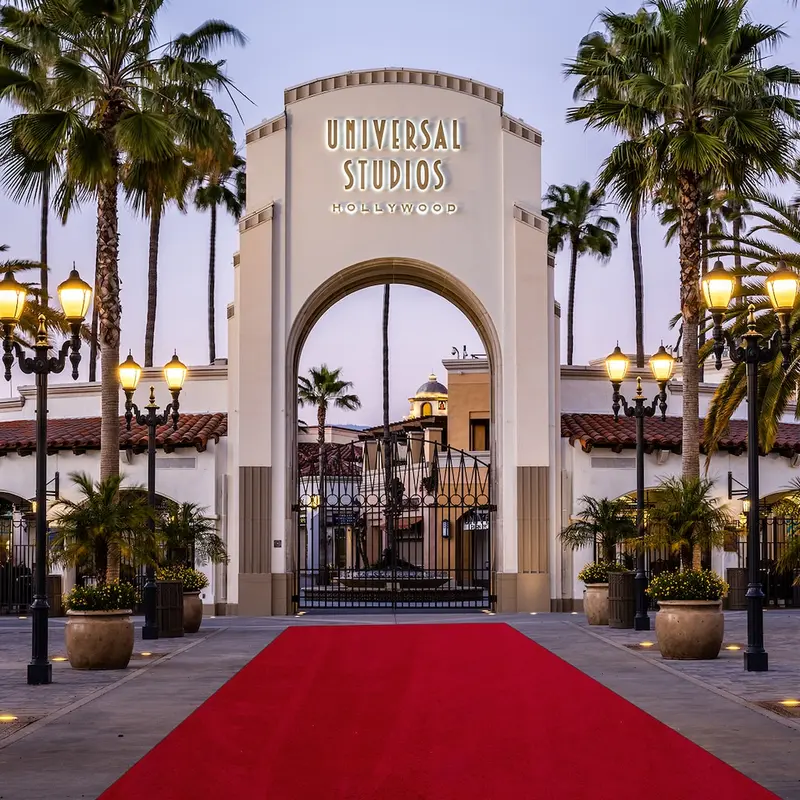
The Studio Tour dates back to 1964, with additions including the Wizarding World of Harry Potter (2016) and Super Nintendo World (2023). The Metro B Line stops at Universal City/Studio City station.
Opened in 1935, the observatory on the south slope of Mount Hollywood offers exhibitions, the Samuel Oschin Planetarium, and views over the basin to the Hollywood Sign. Admission is free, open Tuesday to Friday from 12 PM to 10 PM and from 10 AM on weekends, closed Mondays.
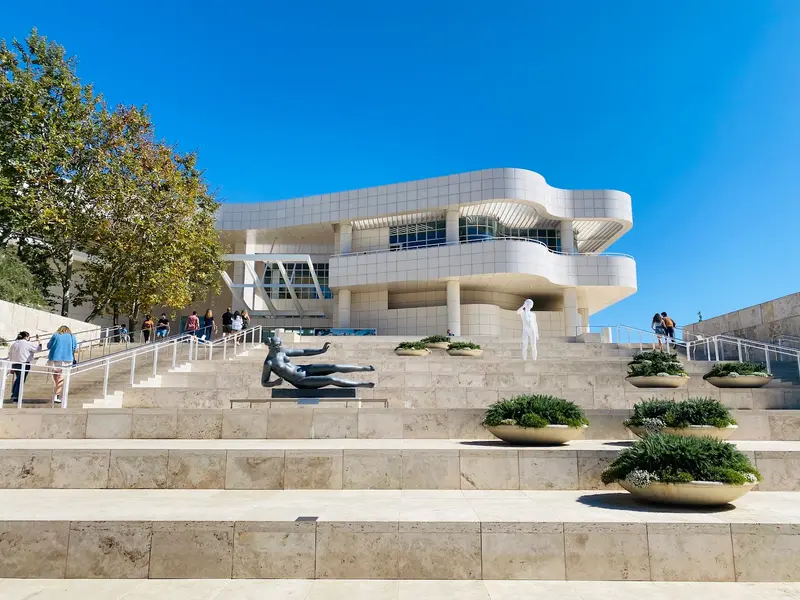
The museum complex in the hills above Brentwood is open Tuesday to Sunday, closed Mondays. Admission is free, but you need a complimentary timed entry reservation; parking costs $25.
The Museum of Contemporary Art in Downtown is next to the Walt Disney Concert Hall. Admission is free, a timed ticket is recommended, and advance reservations are required for the Infinity Mirror Room. Closed on Mondays.
The cuisine of Los Angeles reflects the city's large immigrant communities and some inventions that originated in the city itself.
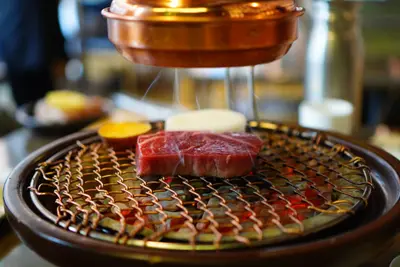
Korean BBQ in Koreatown
Along Wilshire Boulevard between Vermont and Western Avenue, you'll find numerous Korean BBQ restaurants and karaoke bars, many open late. The easiest way to reach the neighborhood is via the Metro D Line to Wilshire/Normandie.
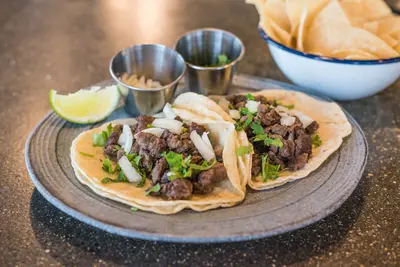
Tacos
Almost a third of the population has Mexican roots, and this shapes the city's street food. You can get tacos at stands and from food trucks.
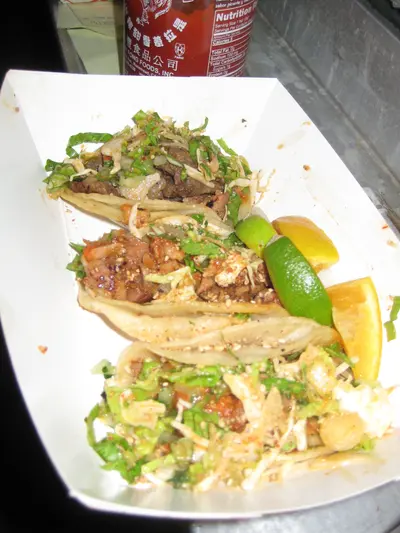
Korean Tacos
The Food Truck Kogi started in November 2008 with Bulgogi-Tacos and Kimchi-Quesadillas, a Mexican-Korean fusion. Its chef Roy Choi was named Food & Wine's "Best New Chef" in 2010, the first food truck chef to receive the distinction.
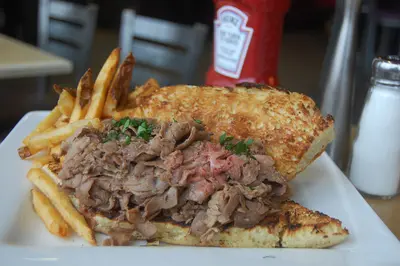
French Dip
The warm sandwich consists of thinly sliced roast beef on a French roll and is served with beef broth for dipping. Philippe the Original and Cole's in Downtown, both founded in 1908, claim its invention.
Culture and History
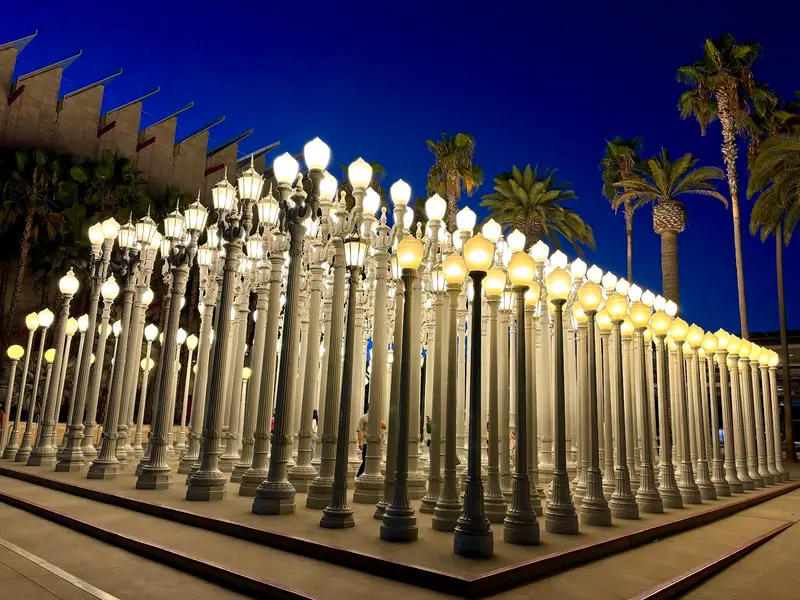
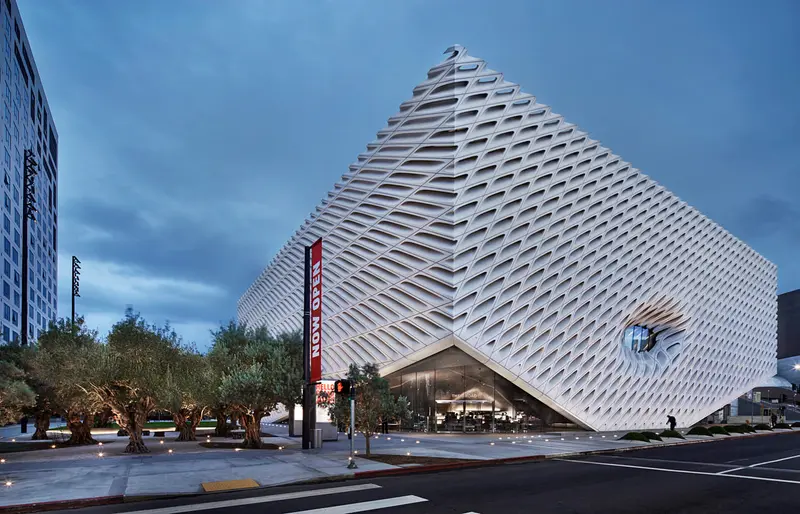
Los Angeles was founded on September 4, 1781, by 44 Spanish settlers, the “Pobladores”. Hollywood became part of the city in 1910, and since then, the film industry has shaped its identity. On Hollywood Boulevard, the handprints in front of the TCL Chinese Theatre and the stars of the Walk of Fame serve as reminders.Museums: The Getty Center is free but requires a timed reservation. The Broad features contemporary art with free admission. LACMA opened the Peter Zumthor-designed David Geffen Galleries in April 2026; adults without L.A. County residency pay $30.Music: Frank Gehry’s Walt Disney Concert Hall opened in 2003 and is home to the Los Angeles Philharmonic.Communities: Approximately 32 percent of residents have Mexican roots. Additionally, there are Koreatown, Little Tokyo, and Chinatown.
Die Metro ist mit der TAP-Karte oder der TAP-App für Strecken zwischen Downtown, Hollywood und Universal City praktisch. Für die Küste und die Hügel planst du mehr Zeit ein.Flughafen: Der FlyAway-Bus fährt von den Terminals zur Union Station und nach Van Nuys und kostet 12,75 $ pro Strecke. Kostenlose Shuttles an den rosa Schildern bringen dich zum LAX/Metro Transit Center mit Anschluss an die C und K Line.Metro-Tarif: Eine Fahrt kostet 1,75 $, Umsteigen ist zwei Stunden lang frei. Wer mit TAP zahlt, zahlt höchstens 5 $ am Tag und 18 $ in sieben Tagen. Barzahlung geht nur im Bus, und dafür gelten die Obergrenzen nicht.Parken: Am Getty Center kostet Parken 25 $, ab 15 Uhr 15 $ und ab 18 Uhr 10 $. Am Griffith Observatory sind die Parkplätze direkt am Gebäude kostenpflichtig.