Fernweh: Home
    ExploreTravel GuidesPlan a tripMy tripLast visited
    de|en
    All Places & RegionsAll highlightsAbout FernwehFAQPrivacy PolicyImprint
    ExploreTravel GuidesPlan a tripMy tripLast visited
    Pamukkale & Hierapolis

    Turkey

    Pamukkale & Hierapolis

    Point of InterestUNESCONature

    Pamukkale is an approximately 2.7-kilometer long slope of white travertine terraces in the Aegean hinterland, about 20 kilometers from Denizli.

    by Felix Gillen

    1. Home
    2. Destinations
    3. Turkey
    4. Aegean Coast
    5. Pamukkale & Hierapolis
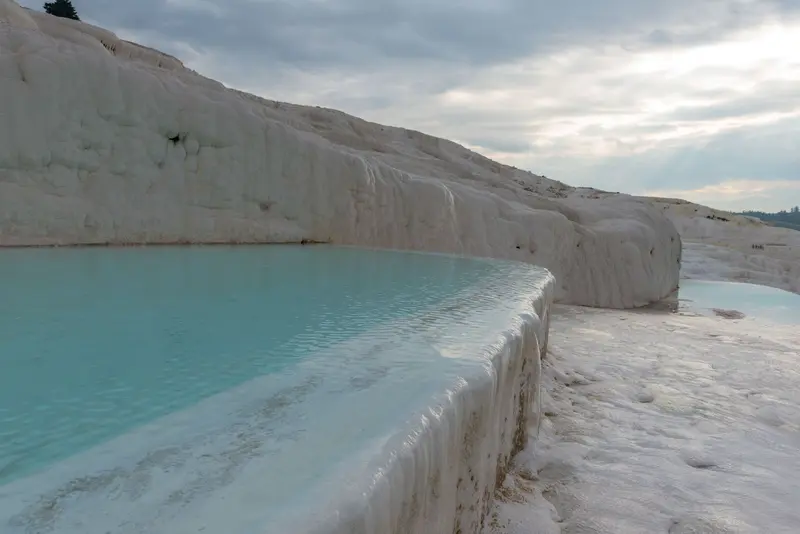
    Pamukkale is an approximately 2.7-kilometer long slope of white travertine terraces in the Aegean hinterland, about 20 kilometers from Denizli. Above the terraces lies the ancient city of Hierapolis, featuring a theater, necropolis, and thermal pool dating back to Roman times. Since 1988, Hierapolis-Pamukkale has been a UNESCO World Heritage site.

    Sights in Pamukkale & Hierapolis

    Discover the most important sights and attractions

    Theater of Hierapolis
    Museum

    1Theater of Hierapolis

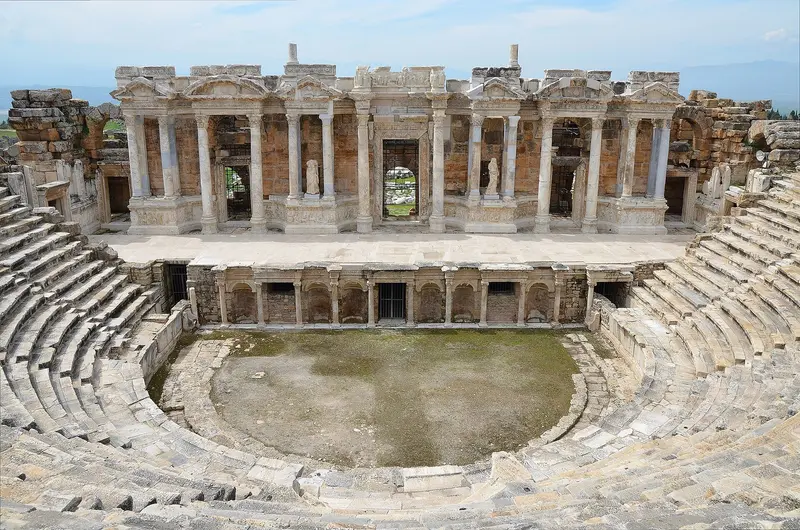
    The theater dates to Emperor Hadrian's time, presumably after the earthquake of 60 AD. It seated around 15,000 spectators. It lies on the slope above Hierapolis' main street, near the Antique Pool.
    Open in Google Maps
    Laodikeia
    Attraction

    2Laodikeia

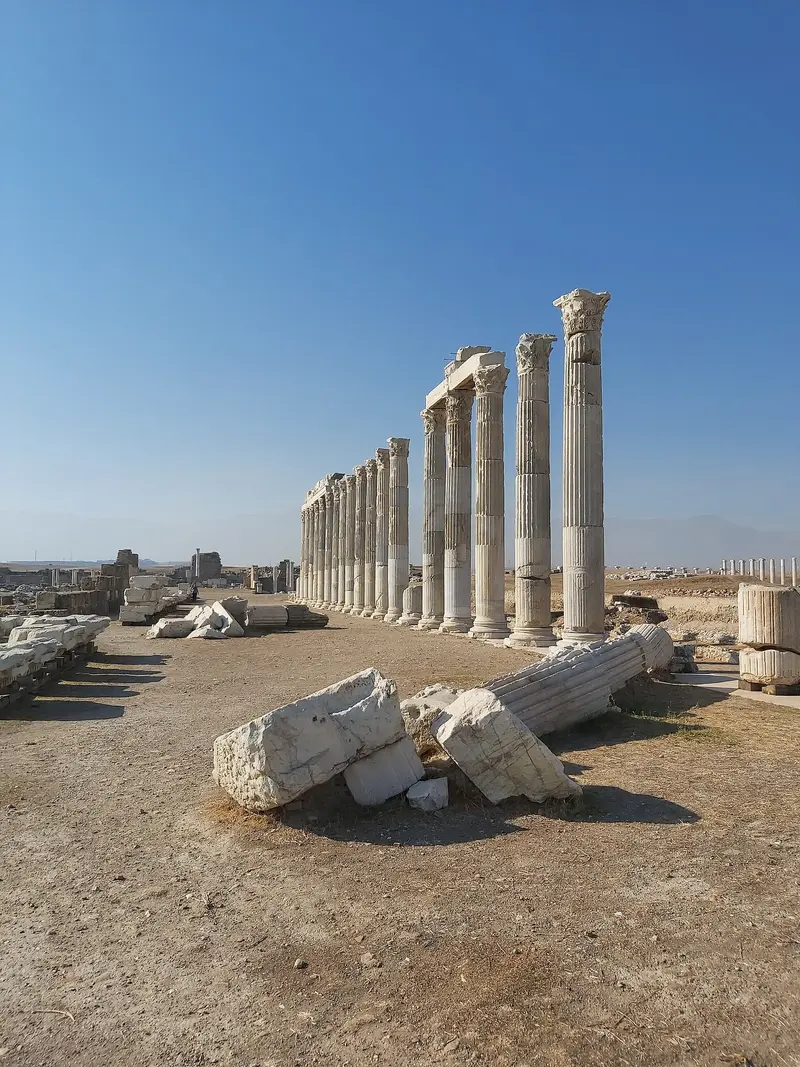
    The ancient city is located approximately six kilometers north of Denizli and about a 15-minute drive from Pamukkale village. For decades, it has been excavated under the direction of Pamukkale University, and the restored West Theater has been reopened for events. Since 2013, Laodikeia has been on UNESCO's Tentative List.
    Open in Google Maps
    Travertine Terraces
    Attraction

    3Travertine Terraces

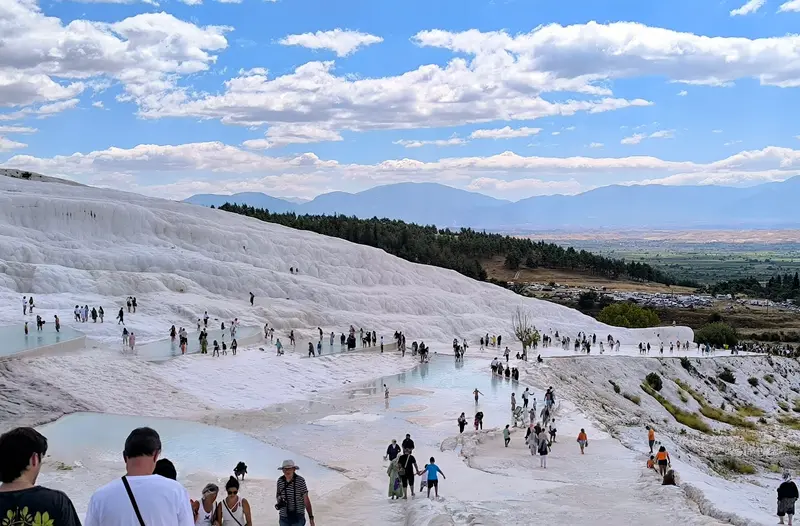
    The white slope is about 2.7 kilometres long, 600 metres wide and 160 metres high. The calcium-rich thermal water has formed pools and terraces. You may only walk on them barefoot, and parts are closed at times so the travertine can recover.
    Open in Google Maps
    Ancient Pool (Cleopatra's Pool)

    4Ancient Pool (Cleopatra's Pool)

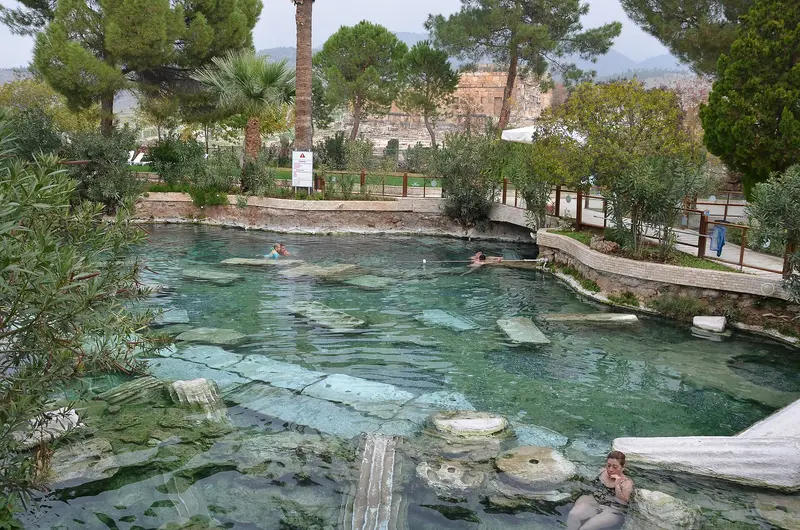
    The thermal pool at Hierapolis is also called the Cleopatra Pool, though the legend about the Egyptian queen is unproven. At its bottom lie marble columns and capitals, which presumably fell into the water from the nearby Temple of Apollo during earthquakes. The spring water is around 36 degrees all year round. To bathe, you pay a separate fee in addition to Hierapolis admission.
    Open in Google Maps
    Hierapolis Archaeological Museum

    5Hierapolis Archaeological Museum

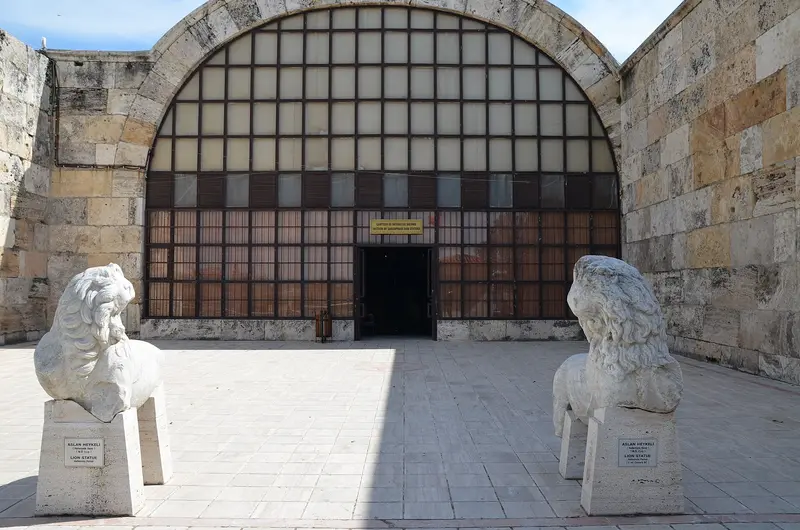
    The museum is housed in Hierapolis' Roman Southern Baths, begun under Hadrian and finished under Septimius Severus. Since February 1, 1984, it displays finds from Hierapolis and Lykos Valley cities like Laodikeia, Kolossai, and Tripolis. Exhibits include Laodikeia sarcophagi and stage building reliefs from the Hierapolis Theatre. The open-air area displays marble and stone architectural elements.
    Open in Google Maps

    Restaurants in Pamukkale & Hierapolis

    1

    Kayas Wine House

    Wine bar with restaurant on Atatürk Caddesi in Pamukkale village. Besides a wide wine selection, Kebab, Köfte, and mixed grill platters are served for lunch and dinner; outdoor seating is also available.
    Show on Google Maps
    2

    Onur Restaurant

    Restaurant on Cumhuriyet Square, the small center of Pamukkale village. The menu offers Anatolian classics like Testi Kebab from a clay pot, Mantı, Sac Kavurma, grilled Köfte, and Menemen.
    Show on Google Maps
    3

    Mehmet's Heaven

    Restaurant in Pamukkale village, just a few steps from the travertine terraces. The cooking is Turkish: mixed meze platter, döner, kebabs and pide. Good for a meal after walking down from the terraces.
    Show on Google Maps

    Food and Drink

    In Pamukkale village, choices are limited; the places on Atatürk Caddesi serve Meze, Köfte, lamb skewers, and Gözleme.

    Denizli kebab

    Lamb cooked in a wood-fired oven. This kebab is the best-known specialty of Denizli Province.

    Gözleme

    Filled flatbread baked on a tray, a staple in the village's restaurants.

    Tavas Baklava

    Baklava from Tavas district in Denizli province, registered as a traditional regional product.

    Culture & History

    HierapolisThe city was founded under the Seleucid Antiochus I, and Pergamon's King Eumenes II later granted it city rights. The theatre dates back to the time of Emperor Hadrian and accommodated around 15,000 spectators. The necropolis extends for more than two kilometres and contains approximately 1,200 tombs.Thermal SpringsIn the area, 17 hot springs emerge with temperatures between 35 and 100 °C. Their calcareous water has formed the terraces. Parts of the terraces are temporarily closed to allow the deposits to recover.Early ChristianityOn a hill outside the northeastern city wall stands the 5th-century Martyrion of the Apostle Philip, an octagonal structure about 20 metres in diameter. Approximately 40 metres away, a tomb was discovered in 2011 that is associated with Philip.

    Arrival & Transport

    Getting ThereThe nearest city is Denizli, about 20 kilometers away. Trains run from İzmir via Selçuk to Denizli. From Denizli bus station, minibuses run regularly to Pamukkale village.On SiteThe terraces may only be entered barefoot; sandals and swim shoes are also forbidden. The travertine is rough and slippery in wet areas. The Ancient Pool with submerged marble columns requires a separate entrance fee.TipAvoiding the Barefoot Walk: Via the North Gate, you can reach Hierapolis without walking over the terraces.Laodikeia: The excavation site is about a 15-minute drive south of the village and can easily be visited on the same day.

    Accommodations in Pamukkale & Hierapolis

    Find perfect stay in Pamukkale & Hierapolis

    Booking.com* (Affiliate link)
    Search Hotels
    Agoda* (Affiliate link)
    Search Hotels
    Airbnb
    Vacation Rentals

    * Affiliate link: if you book through it, we earn a small commission. The price stays the same for you.

    Campgrounds in Pamukkale & Hierapolis

    Find perfect campground in Pamukkale & Hierapolis
    Search via Google Maps
    Campgrounds nearby (15km)
    Camping.info
    Find Campgrounds
    Park4Night
    RV Parks & Camping

    Nearby

    Dalyan

    Dalyan

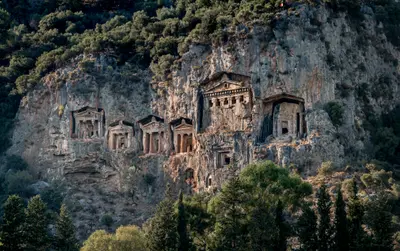
    Dalyan is a town on the river of the same name, located between Marmaris and Fethiye, about 30 km from Dalaman Airport. You come for the Lycian rock tombs above the river, the ancient city of Kaunos, and İztuzu Beach, where sea turtles lay their eggs. Boats connect the town with the beach, Köyceğiz Lake, and the thermal springs.
    Fethiye & Ölüdeniz

    Fethiye & Ölüdeniz

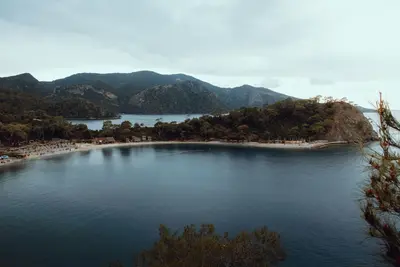
    Fethiye is a port city in Muğla province at the western end of the Lycian Coast, about an hour's drive from Dalaman Airport. You come for the Ölüdeniz lagoon, the Lycian rock tombs, and as the starting point of the Lycian Way. The city stands on ancient Telmessos; its center is the Old Town Paspatur by the harbor. Ölüdeniz, with its beach and lagoon, is located south of the city.
    Selçuk & Şirince

    Selçuk & Şirince

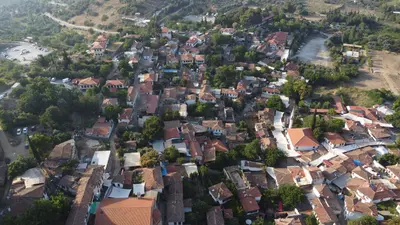
    Selçuk is the small town right next to Ephesus, about an hour and a half by train south of İzmir, and the best base for the archaeological site. In the town are the Artemision, the İsa Bey Mosque, and the Ephesus Museum. About eight kilometers east, in the hills, lies the wine village of Şirince with its stone houses.
    Ephesus

    Ephesus

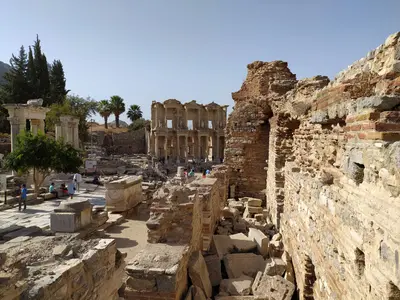
    Ephesus is the major archaeological site of the Turkish Aegean, about an hour and a half by train south of İzmir. You come for the facade of the Celsus Library, the Great Theater, and the residential houses with mosaics and frescoes. Since 2015, Ephesus has been a UNESCO World Heritage site, and the small town of Selçuk is right next door.
    Aegean Coast

    Aegean Coast

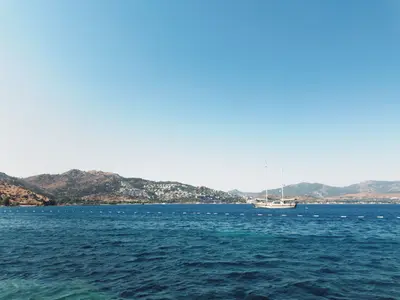
    The Turkish Aegean coast stretches from Pergamon in the north to the Bodrum Peninsula in the south and is rich in ancient sites. Here are three World Heritage Sites: Ephesus, Pergamon, and Hierapolis-Pamukkale, plus seaside resorts like Alaçatı and Bodrum. İzmir, Turkey's third-largest city, is a hub with an airport and rail connections to the hinterland.

    Sources & method

    • Photos: Wikimedia Commons, Pexels, Google Maps. Each photo carries its credit.
    • Place data such as addresses and ratings comes from Google Maps.
    • The content is based on web research from public, traceable sources. How the content is made · The role of AI