Fernweh: Home
ExploreGuideDestinationsMy tripsMy trip
de|en
All Places & RegionsRound tripsNight trains in EuropeAll highlightsAbout FernwehFAQPrivacy PolicyImprint
Download on the App StoreGet it on Google Play
ExploreGuideDestinationsMy tripsMy trip
    • Neighborhoods & highlights
    • Eat & drink
    • Culture
    • Getting around
    • Accommodation
    • Plan trip
    • Round trips
    • Nearby
    Garmisch-Partenkirchen

    Photo by op23 on Pexels

    Germany

    Garmisch-Partenkirchen

    CityMountains

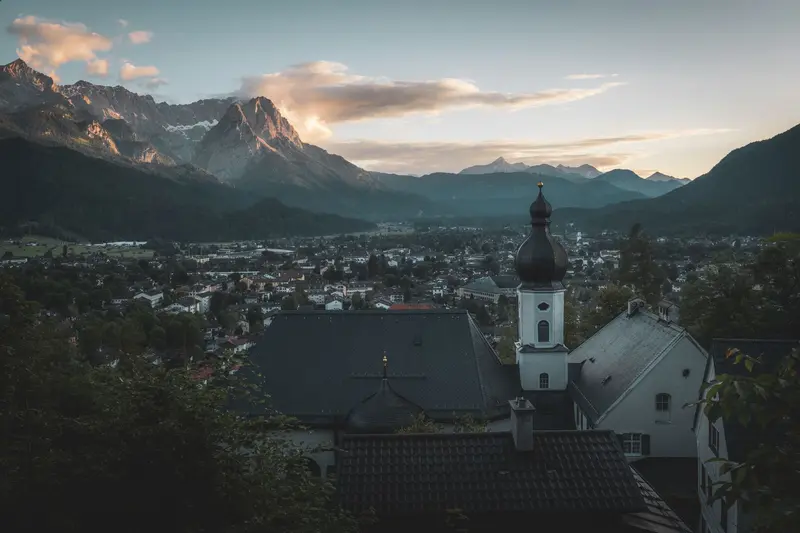
    Garmisch-Partenkirchen is situated in the Werdenfelser Land at the foot of the Wetterstein Mountains and is the most important starting point for the Zugspitze, Germany's highest mountain.

    by Felix Gillen

    1. Home
    2. Destinations
    3. Germany
    4. Munich & Upper Bavaria
    5. Garmisch-Partenkirchen
    Garmisch-Partenkirchen is situated in the Werdenfelser Land at the foot of the Wetterstein Mountains and is the most important starting point for the Zugspitze, Germany's highest mountain. The two market towns were merged in 1935 in preparation for the 1936 Winter Olympics, commemorated by the Olympia Ski Stadium with its impressive ski jump.In the Partenkirchen district, the historic Ludwigstraße runs, and composer Richard Strauss lived in Garmisch until his death in 1949. Around the town, the Partnach Gorge, Lake Eibsee, and the Alpspitze attract visitors. Since 1889, a railway line has connected the town with Munich.
    Germany travel guideSee the round tripPlan a trip with Garmisch-Partenkirchen

    Contents

    • Neighborhoods & highlights
    • Eat & drink
    • Culture
    • Getting around
    • Accommodation
    • Round trips
    • Nearby

    More districts in Garmisch-Partenkirchen

    Zugspitze

    Bastian Riccardi·Pexels

    Zugspitze

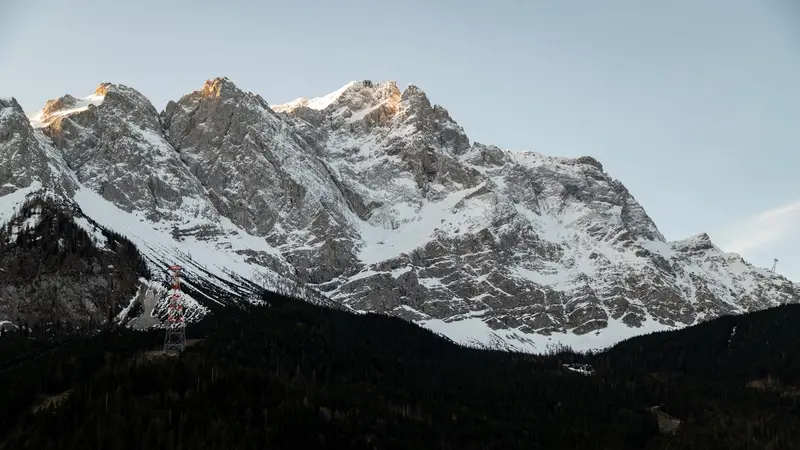
    The Zugspitze, at 2962 meters on its eastern peak, is Germany's highest mountain; the border with Austria runs over its western peak. A 4.88-meter-high summit cross stands on the peak, and below, on the Zugspitzplatt, lies the Nördliche Schneeferner, Germany's largest glacier.You can reach the top in two ways: The Bayerische Zugspitzbahn starts in Garmisch-Partenkirchen and reaches the glacier station at 2588 meters after approximately 45 minutes; the Seilbahn Zugspitze, opened in 2017, soars from Eibsee at 1000 meters directly to the summit.

    Sights in Garmisch-Partenkirchen

    Discover the most important sights and attractions

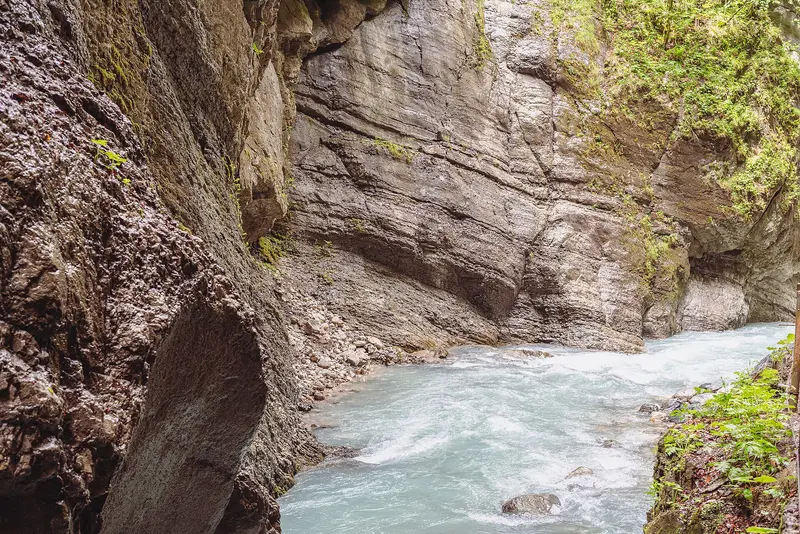
    Partnachklamm

    Flocci Nivis / Wikimedia Commons / CC BY 4.0, mod.

    Attraction

    1Partnachklamm

    This roughly 700-meter-long gorge is over 80 meters deep in places and has been a natural monument since 1912. A path leads through the gorge along the water; it is open year-round during the day and costs admission. During spring snowmelt, it may be temporarily closed. You can reach the entrance on foot from the Olympic Ski Stadium.
    Open in Google Maps
    Stadium

    2Olympic Ski Stadium

    The stadium of the 1936 Winter Olympics with its large Olympic ski jump is still a stop on the Four Hills Tournament today. From here, you walk to the Partnach Gorge.
    Open in Google Maps
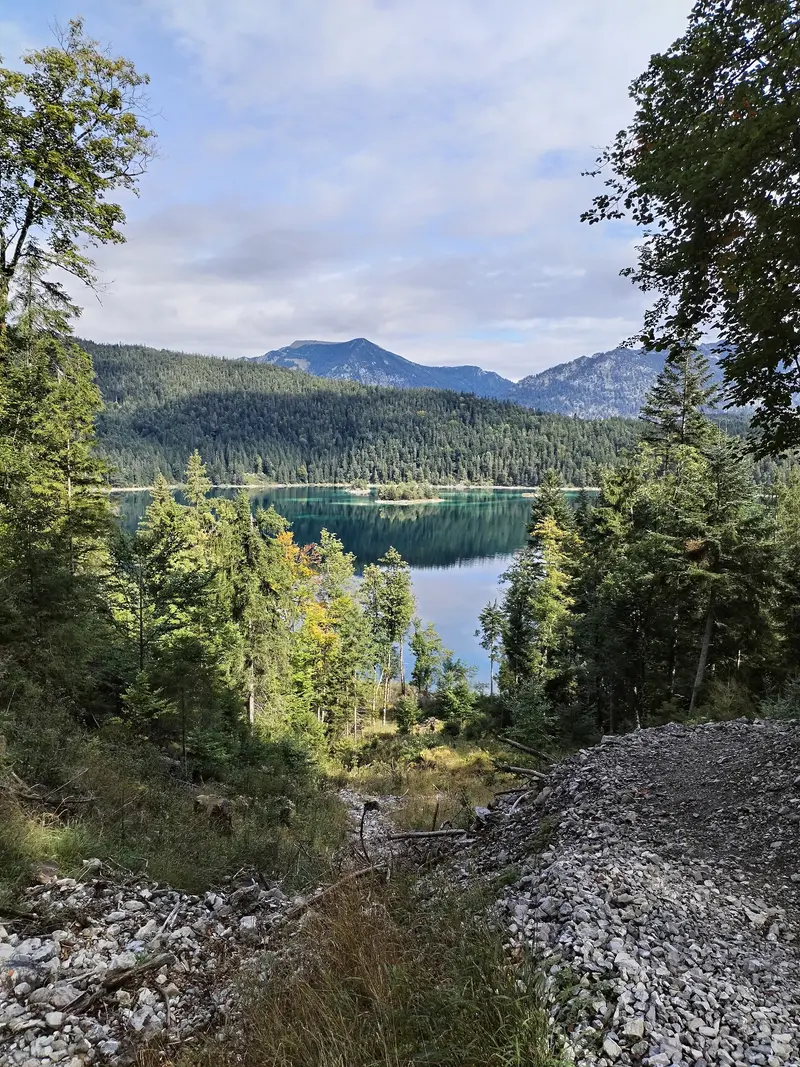
    Eibsee

    Thisik / Wikimedia Commons / CC0

    Attraction

    3Eibsee

    The mountain lake at the foot of the Zugspitze covers 172 hectares, features small islands, and lies about 3.5 kilometers north of the summit. The Zugspitze cable car departs from its shore.
    Open in Google Maps

    4Historical Ludwigstraße

    The historic main street of Partenkirchen is lined with old burgher and farmhouses. In a 17th/18th-century merchant's house (No. 47), the Werdenfels Museum displays traditional costumes, rural living culture, a Mittenwald violin workshop, and carved carnival masks on five floors; the collection dates back to 1895.
    Open in Google Maps

    Restaurants in Garmisch-Partenkirchen

    1

    Restaurant Husar

    Inn on Fürstenstraße in Garmisch with a painted facade over four centuries old. The classic cuisine focuses on seasonal dishes and regional products, recommended by the Guide Michelin.
    Show on Google Maps

    Olympia and Music

    Olympic Winter Games 1936Garmisch and Partenkirchen were merged into a market town on Jan 1, 1935, for the Winter Games. 636 athletes from 28 nations took part; the Olympiaschanze ski jump in the ski stadium is still a stop on the Four Hills Tournament.Richard StraussThe composer lived in his Garmisch villa until his death in 1949. Founded in 1999, the Richard Strauss Institute is dedicated to his work.

    Getting there and about

    Getting HereSince 1889, the Munich–Garmisch-Partenkirchen railway line has directly connected the town with the state capital; regional trains run regularly.To the ZugspitzeAt the Bayerische Zugspitzbahn station, the cogwheel railway to Zugspitzplatt starts; the Zugspitze cable car runs from Eibsee directly to the summit. The Zugspitze ticket for adults costs 78 Euros in summer 2026 for an up and down journey, also available as a round trip.Around TownGarmisch and Partenkirchen lie close together; many destinations like the Olympia Ski Stadium and the path to Partnachklamm can be reached on foot.

    Accommodations in Garmisch-Partenkirchen

    Find perfect stay in Garmisch-Partenkirchen

    Booking.com* (Affiliate link)
    Search Hotels
    Agoda* (Affiliate link)
    Search Hotels
    Airbnb
    Vacation Rentals

    * Affiliate link: if you book through it, we earn a small commission. The price stays the same for you.

    Campgrounds in Garmisch-Partenkirchen

    Find perfect campground in Garmisch-Partenkirchen

    Search via Google Maps
    Campgrounds nearby (15km)
    Camping.info
    Find Campgrounds
    Park4Night
    RV Parks & Camping

    Plan your trip to Garmisch-Partenkirchen

    Save places, build a route and plan your city trip, all in one place.

    1. 1
      Sunrise over alpine peaks and a sea of clouds
      1234

      Round trip

      12 days · 4 stops

      Saved

      Pick a route

      Pick a ready-made one or save places and plan your own.

      Open bookmarks
    2. 2

      Trip to Garmisch-Partenkirchen

      Live
      • 1Partnachklamm3 days
      • 2Olympic Ski Stadium4 days
      • 3Eibsee5 days
      Budget

      Plan your trip

      The planner sorts stops, days and budget. Plan together in real time.

      Start trip planning
    3. 3
      9:41 No signal
      Garmisch-Partenkirchen
      Available offline

      Photo by op23 on Pexels

      Use it on the road

      Download the guide to your phone and use it on site, even offline.

    Round trips with Garmisch-Partenkirchen

    Southern Bavaria and the Royal Castles

    Southern Bavaria and the Royal Castles

    This round trip from Munich takes you to the three palaces of Ludwig II, which together with the Royal House on the Schachen have been a UNESCO World Heritage Site since 2025, and up into the mountains. On Herreninsel in Lake Chiemsee you visit Herrenchiemsee Palace, whose Great Hall of Mirrors, at 75 meters, is slightly longer than the Hall of Mirrors at Versailles. From Garmisch-Partenkirchen you go up the Zugspitze, at 2,962 meters Germany's highest mountain, and on to Linderhof Palace in the Graswang Valley, the only palace Ludwig II saw completed in his lifetime. After Neuschwanstein near Füssen, the loop ends at Lake Constance in Lindau before you return to Munich.

    7 Days
    7 stops

    Taylor Marx·Pexels

    Nearby

    Linderhof Palace

    Linderhof Palace

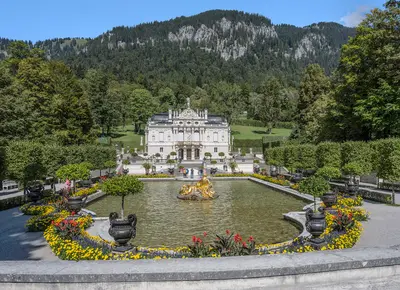
    Linderhof Palace, located in the Graswangtal valley near Ettal, is the smallest of King Ludwig II's three palaces and the only one completed during his lifetime. The palace, built in the Neo-Rococo style, was constructed from 1870 to 1886, with the park created from 1874 to 1880. Since July 2025, Linderhof has been a UNESCO World Heritage site.Surrounding the palace is a formal garden in the French style, whose fountain rises up to 22 meters high, solely powered by natural gradient. The artificial Venus Grotto, alluding to Wagner's "Tannhäuser," is again accessible since the 2026 season, following extensive restoration.

    Cayambe·CC BY-SA 4.0

    Allgäu & Royal Castles

    Allgäu & Royal Castles

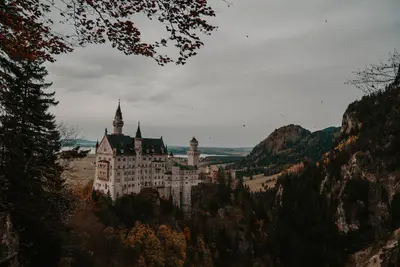
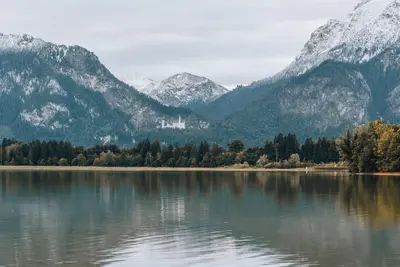
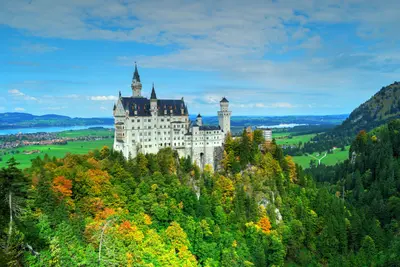
    Here stands Neuschwanstein Castle, which King Ludwig II had built from 1869 above Hohenschwangau. Since July 2025, it has been a UNESCO World Heritage site, along with Linderhof, Herrenchiemsee, and Königshaus am Schachen. Opposite lies Hohenschwangau Castle, where Ludwig II spent his childhood.According to the city, nearby Füssen am Lech, at 808 meters, is Bavaria's highest town and the end point of the Romantic Road. In the Oberallgäu region around Oberstdorf, you can expect mountain railways, hiking trails, and the Breitachklamm gorge. Linderhof Castle is already located in Upper Bavaria in the Graswangtal valley near Ettal, in the Ammergau Alps.

    Masood Aslami·Pexels

    Neuschwanstein Castle

    Neuschwanstein Castle

    King Ludwig II had Neuschwanstein Castle built from 1869 in southern Bavaria on a rocky ridge above Hohenschwangau; the Pöllat Gorge lies to its south. Of the more than 200 rooms planned, only about 15 were completed, including the Singers' Hall and the Throne Room. Six weeks after the King's death in 1886, the castle opened to visitors; today, around 1.4 to 1.5 million people come annually. Since July 2025, it has been a UNESCO World Heritage site.You can only see the interiors during an approximately 30-minute guided tour. Tickets for 2026 are sold online subject to availability; a daily remaining contingent is available at the Ticket Center in Hohenschwangau. The restoration of the magnificent rooms, for which the Free State spent around 40 million Euros, ran parallel to visitor operations and was largely completed by August 2024.

    Gildo Cancelli·Pexels

    Füssen

    Füssen

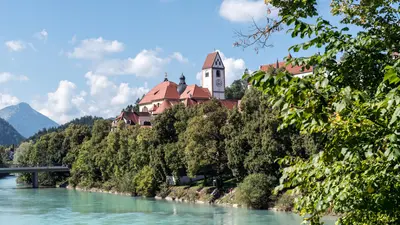
    Situated on the Lech at 808 meters, Füssen is Bavaria's highest city. Above the old town, the Hohe Schloss, the late Gothic residence of the Augsburg Prince-Bishops, presides. Below it lies the baroque former Benedictine monastery of St. Mang, home to the city museum. In 1562, Europe's first lute-makers' guild was founded here.Füssen marks the end of the Romantic Road and serves as the gateway to the royal castles of Neuschwanstein and Hohenschwangau. At the Lechfall, the river carves its way through a gorge; northeast of the city, it flows into Lake Forggensee. Regional trains connect Füssen with Munich and Augsburg.

    Wolfgang Weiser·Pexels

    Innsbruck

    Innsbruck

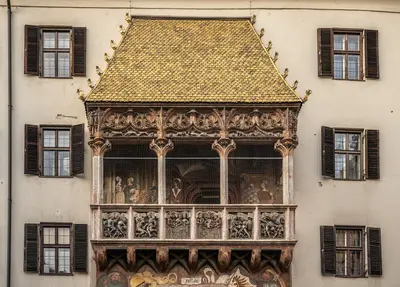
    The capital of Tyrol is located in western Austria right in front of the Alps. In the Old Town, the Golden Roof shines with its 2,657 gilded copper shingles; from there, the Hungerburgbahn, designed by Zaha Hadid, takes you up to the Nordkette.

    Wilfredor·CC0

    Your next steps

    Garmisch-Partenkirchen is in Germany. Ways to carry on from here.

    • More in Germany

      Highlights, areas, routes and the best time to travel for all of Germany.

      Germany travel guide
    • Round trips with Garmisch-Partenkirchen

      One route passes through Garmisch-Partenkirchen, with stops, nights and a map.

      See the round trip

    Sources & method

    • Photos: Wikimedia Commons, Pexels. Each photo carries its credit.
    • Place data such as addresses and ratings comes from Google Maps.
    • The content is based on web research from public, traceable sources. How the content is made · The role of AI