Fernweh: Home
    ExploreTravel GuidesPlan a tripMy tripLast visited
    de|en
    All Places & RegionsAll highlightsAbout FernwehFAQPrivacy PolicyImprint
    ExploreTravel GuidesPlan a tripMy tripLast visited
    Ourika Valley
    User:China_Crisis / Wikimedia Commons / CC BY-SA 2.5

    Morocco

    Ourika Valley

    Point of Interest

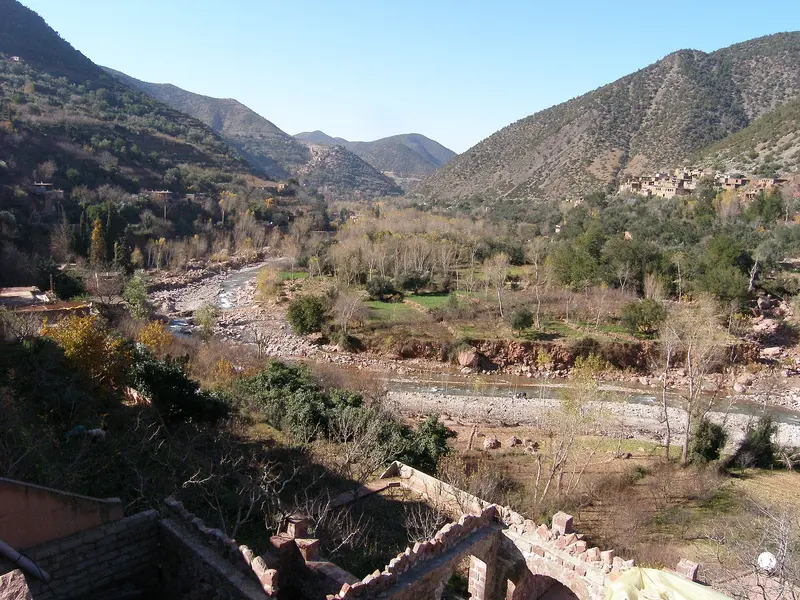
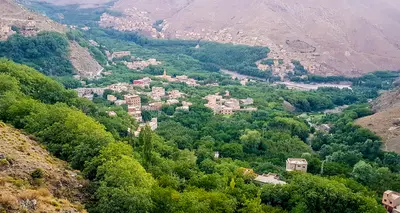
    The Ourika Valley stretches south of Marrakech into the High Atlas, alongside its namesake river. At the end of the road lies the village of Setti Fatma, above which seven waterfalls cascade over the rocks.

    by Felix Gillen

    1. Home
    2. Destinations
    3. Morocco
    4. Marrakech & The High Atlas
    5. Ourika Valley
    The Ourika Valley stretches south of Marrakech into the High Atlas, alongside its namesake river. At the end of the road lies the village of Setti Fatma, above which seven waterfalls cascade over the rocks.

    Restaurants in Ourika Valley

    1

    The Kasbah of Ourika

    Restaurant with Moroccan cuisine in the Ourika Valley.
    Show on Google Maps

    Culture & History

    Berber Villages by the RiverThe valley is predominantly home to Berbers who speak Taschelhit. A weekly market is held in Tnine-de-l'Ourika on Mondays. The valley is also home to the ANIMA Garden by Viennese artist André Heller.The Waterfalls of Setti FatmaMost visitors hike up to the first or second of the seven falls. Higher up, the path is exposed and partly secured with fixed ropes; completing all seven takes about three hours round trip.

    Locally exploring

    Getting thereSetti Fatma is about 60 to 70 kilometers from Marrakech, and the journey takes one and a half to two hours by car or shared taxi.For the waterfalls, you'll need sturdy shoes.

    Accommodations in Ourika Valley

    Find perfect stay in Ourika Valley

    Booking.com* (Affiliate link)
    Search Hotels
    Agoda* (Affiliate link)
    Search Hotels
    Airbnb
    Vacation Rentals

    * Affiliate link: if you book through it, we earn a small commission. The price stays the same for you.
    Nearby

    Imlil & Toubkal

    Imlil & Toubkal

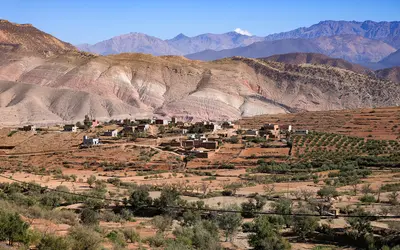
    Imlil is located at around 1,800 metres in the High Atlas, approximately 65 kilometres south of Marrakech, and serves as the starting point for climbing Toubkal. At 4,167 metres, it is the highest mountain in North Africa and the centrepiece of the Toubkal National Park, founded in 1942. Around the village, hiking trails lead to Berber villages and to the Sidi Chamharouch shrine, which non-Muslims are not permitted to enter.
    Marrakech

    Marrakech

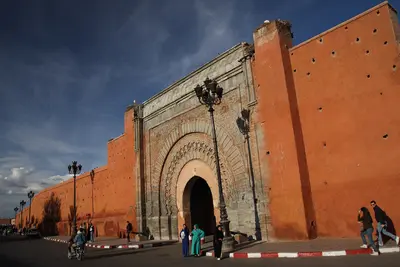
    Marrakech, nestled at the foot of the High Atlas, will be Morocco’s top destination in 2025, expecting over ten million passengers. Founded by the Almoravids around 1070, its approximately nine-kilometre-long red clay walls still enclose the Medina, a UNESCO World Heritage site since 1985. Its heart is Jemaa el-Fna Square, surrounded by souks, palaces, and gardens.
    Marrakech & The High Atlas

    Marrakech & The High Atlas

    Marrakesh is often the gateway to Morocco: The Medina has been a UNESCO World Heritage site since 1985. South of the city, the High Atlas rises to 4,167m at Toubkal, with valleys like Ourika Valley and mountain villages like Imlil.
    Aït-Ben-Haddou

    Aït-Ben-Haddou

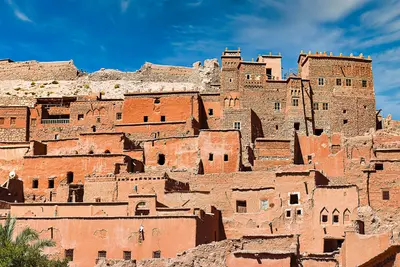
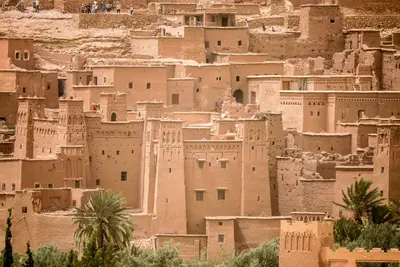
    The Ksar Aït-Ben-Haddou is a fortified mud-brick settlement in the Ounila Valley on the old caravan route between the Sahara and Marrakesh. Since 1987, it has been a UNESCO World Heritage site. The backdrop of mud-brick kasbahs on the hillside above the river served for films like Lawrence of Arabia and Gladiator.
    South: Kasbahs & Desert

    South: Kasbahs & Desert

    South of the High Atlas begins the land of mud-brick kasbahs and oases: the Ksar Aït-Ben-Haddou, the film city Ouarzazate, the gorges of Dadès and Todra and at the end the sand dunes of Erg Chebbi near Merzouga.

    Sources & method

    • Photos: Wikimedia Commons, Google Maps. Each photo carries its credit.
    • Place data such as addresses and ratings comes from Google Maps.
    • The content is based on web research from public, traceable sources. How the content is made · The role of AI