Fernweh: Home
ExploreGuideDestinationsMy tripsMy trip
de|en
All Places & RegionsRound tripsNight trains in EuropeAll highlightsAbout FernwehFAQPrivacy PolicyImprint
Download on the App StoreGet it on Google Play
ExploreGuideDestinationsMy tripsMy trip
    • Overview
    • Places in the region
    • Eat & drink
    • Recommendations
    • Culture
    • Getting around
    • Round trips
    • Nearby
    Jeju

    Photo by 현우 조 on Pexels

    South Korea

    Jeju

    Region

    Jeju is a volcanic island in the south of South Korea with approximately 663,000 inhabitants. It is administered in two parts: Jeju-si in the north and Seogwipo-si in the south.

    by Felix Gillen

    1. Home
    2. Destinations
    3. South Korea
    4. Jeju
    Jeju is a volcanic island in the south of South Korea with approximately 663,000 inhabitants. It is administered in two parts: Jeju-si in the north and Seogwipo-si in the south. In the center of the island stands the 1,947 m high Hallasan with the crater lake Baengnokdam.Since 2007, Hallasan, Seongsan Ilchulbong, and the Geomunoreum lava tube system have been protected as a UNESCO Natural Heritage site "Jeju Volcanic Island and Lava Tubes."
    South Korea travel guideSee the round tripPlan a trip with Jeju

    Contents

    • Overview
    • Places in the region
    • Eat & drink
    • Recommendations
    • Culture
    • Getting around
    • Round trips
    • Nearby
    Jeju is easily divided into five parts. Jeju City and the North Coast, with its airport, Dongmun Market, and Hamdeok Beach, are the starting point for most. The East features Seongsan Ilchulbong, Udo Ferry Island, Manjanggul Lava Tube, and the Haenyeo Museum. The West, around Hyeopjae and Aewol, offers beaches and Saebyeol Oreum; the Osulloc Tea Museum is in the southwest.In Seogwipo and the South, you'll find the Cheonjiyeon and Jeongbang Waterfalls, plus the Seogwipo Maeil Olle Market. Central Hallasan dominates the island; the Seongpanak and Gwaneumsa routes lead to its summit. The Jeju Olle Trail, with 27 routes, connects large parts of the island.

    Sights in Jeju

    Discover the most important sights and attractions

    Seongsan Ilchulbong

    Bernard Gagnon / Wikimedia Commons / CC0

    Park

    Seongsan Ilchulbong

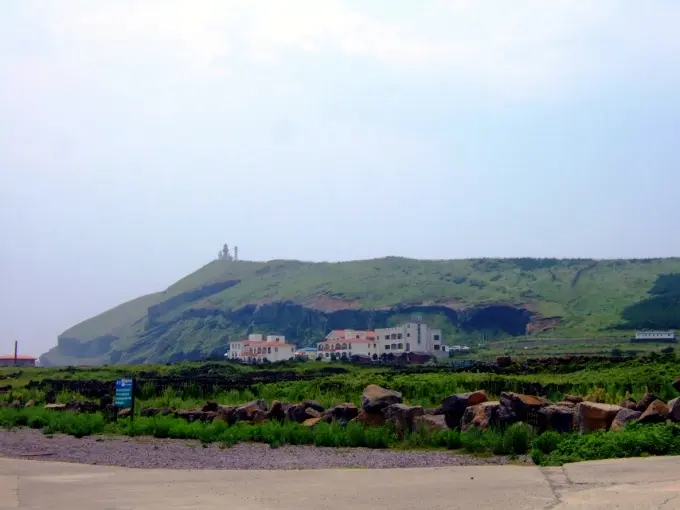
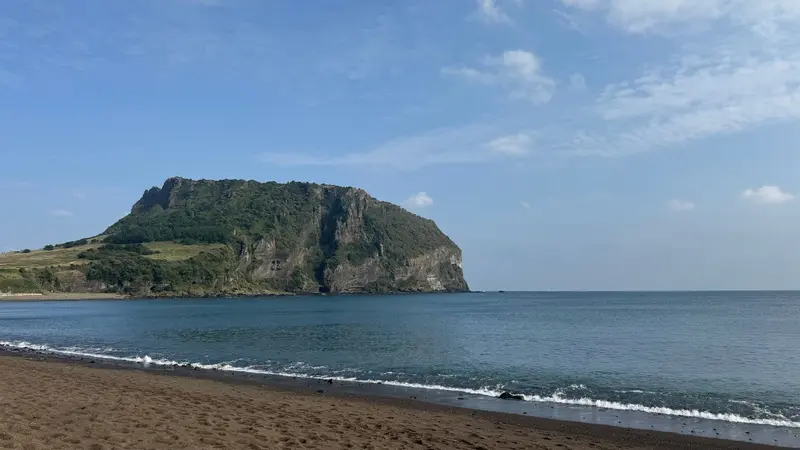
    The approximately 180 m high tuff cone in the east of the island is about 6,700 years old and has been part of the UNESCO Natural Heritage since 2007. Admission 5,000 KRW, reduced 2,500 KRW. Open November to February 06:00 to 18:00, March, April, September and October 05:00 to 19:00, May to August 04:30 to 20:00. Closed on the first Monday of the month; if this falls on a public holiday, it closes the day after. Address: 284-12 Ilchul-ro, Seongsan-eup.
    Open in Google Maps
    Hallasan

    Wikimedia Commons / public domain

    National Park

    Hallasan

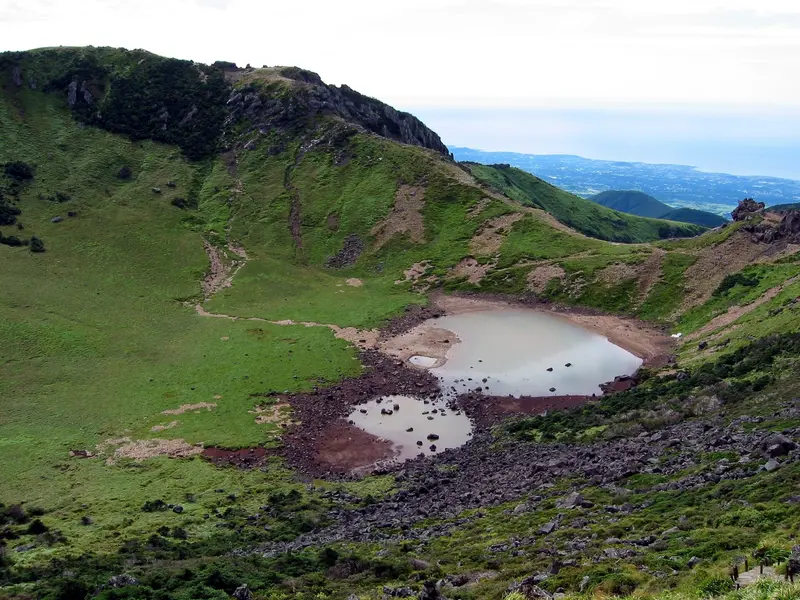
    The 1,947 m high Hallasan, at the island's center, features the crater lake Baengnokdam at its summit and has been part of the UNESCO Natural Heritage since 2007. Only the Seongpanak (9.6 km) and Gwaneumsa (8.7 km) routes lead to the summit, requiring a reservation via the Hallasan National Park website. The daily limit is 1,000 people via Seongpanak and 500 via Gwaneumsa. As of May 2025, you can go without a reservation up to Jindallaebat (Seongpanak), Samgakbong (Gwaneumsa), and Saraoreum. Admission is free. As of Jan 1, 2026, car parking costs 1,000 KRW for the first hour, then 500 KRW per 20 minutes, up to a maximum of 13,000 KRW per day. Winter season Oct 1, 2026 to Mar 31, 2027: Entry from 5 AM, last entry Seongpanak and Gwaneumsa 11:30 AM, Eorimok and Yeongsil 12 PM, Donnaeko 10 AM.
    Open in Google Maps
    Manjanggul

    AhmadElq / Wikimedia Commons / CC BY-SA 4.0, mod.

    Park

    Manjanggul

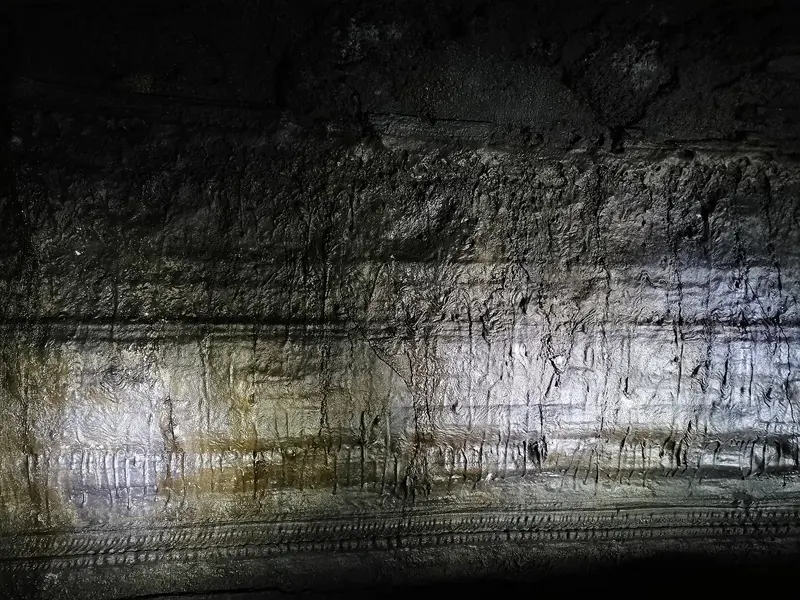
    The lava tube is 8.9 km long, with an approximately 7.6 m high lava column inside. Following a rockfall at the entrance, it was closed from December 2023, and reopened on May 30, 2026. The entire route now features visitor walkways. Open 9 AM to 6 PM, last admission 5 PM, closed on the first Wednesday of the month. Admission: Adults 4,000 KRW, Youth and Children 2,000 KRW.
    Open in Google Maps
    Udo

    “Udo by jeon” by Libjbr / Wikimedia Commons / CC BY-SA 3.0, mod.

    Attraction

    Udo

    You can reach Udo, the 'Cow Island', by ferry from Seongsan Port in about 15 minutes. Ferries depart approximately every 30 minutes; check the first and last departures locally. Purchase tickets at the terminal; you'll need an ID or passport and a completed passenger form. Rental cars and ATVs are restricted on the island. Seobinbaeksa is among its beaches.
    Open in Google Maps
    Attraction

    Cheonjiyeon Waterfall

    The waterfall in Seogwipo is 22 m high and 12 m wide. Open 09:00 to 22:00, last admission 21:20. Admission approximately 2,000 KRW.
    Open in Google Maps
    Attraction

    Hyeopjae Beach

    The beach on the west side of the island is 1,100 m long and 30 to 90 m wide, with white sand and basalt. The water is shallow. Biyangdo Island lies off the beach.
    Open in Google Maps

    Restaurants in Jeju

    1

    Ollae Guksu

    Jeju City restaurant for Gogi-guksu, the pork noodle soup, around 8,500 KRW (per ivisitkorea). Ivisitkorea lists it as one of Jeju's local favorites. Closed Sundays. Address: 24 Gwiarang-gil.
    Show on Google Maps
    2

    Oneunjeong Gimbap

    Takeaway Gimbap in Seogwipo, according to ivisitkorea one of the local favorites on Jeju. Closed on Sundays. Address: 2 Dongmundong-ro.
    Show on Google Maps
    3

    Jamae Guksu

    Restaurant for Gogi-guksu, the pork noodle soup. The restaurant has moved and is now located in Iho-il-dong. Open 9:00 to 18:00, break from 14:30 to 16:10, last order 17:50. Closed Wednesdays, and during Seollal and Chuseok. Address: 46 Hanggol-namgil.
    Show on Google Maps
    4

    Myeongjin Jeonbok

    Abalone restaurant in Gujwa on the east of the island. Specialty is Jeonbok-dolsotbap, rice with abalone in a stone pot. The abalones come from their own adjacent farm. Open 9:30 AM to 9:30 PM, closed Tuesdays. Address: 1282 Haemajihaean-ro, Gujwa-eup.
    Show on Google Maps
    5

    Jeju Ttukbaegi

    Seafood restaurant in Seongsan. Specialty is Jeonbok-haemul-ttukbaegi, an abalone and seafood stew. Open 7 AM to 8 PM, no day off. Address: 255 Ilchul-ro, Seongsan-eup.
    Show on Google Maps

    Culture & Cuisine

    HaenyeoJeju's Haenyeo women divers made the UNESCO Intangible Cultural Heritage list in 2016. They dive up to 20 m deep, holding their breath for 1 to 3 minutes. By late 2025, only 2,371 registered Haenyeo remained; approximately 63% were 70 or older. The Haenyeo Museum in Gujwa reveals more.FoodHeukdwaeji: the black pig, a local breed often served as barbecue meat.Gogi-guksu: Noodle soup with pork.Hallabong: Tangerines, available at Dongmun Market and Seogwipo Maeil Olle Market, for example.FestivalsThe Jeju Fire Festival (Deulbul) occurs in March at Saebyeol Oreum. The hillside burning was cancelled in 2023; 2026 saw a "digital fire" with media art and LED torches instead. In September, the Jeju Haenyeo Festival celebrates the divers at the Haenyeo Museum.

    Arrival and Around

    Getting ThereFlights from Seoul (Gimpo) or Busan to Jeju International Airport take about an hour. The Busan–Jeju ferry service ceased in December 2022. From Mokpo, ferries to Jeju take approximately 4 to 5 hours, depending on the vessel.BusLimousine 600: from the airport via Jungmun to Seogwipo, 06:00 to 22:40, up to 5,500 KRW, approx. 80 minutes to Seogwipo.Express Buses: 101 along the East Coast, 102 along the West Coast, 181 and 182 around Hallasan.Rental CarFor most routes, a rental car is almost indispensable; buses rarely run outside cities. You need an International Driving Permit along with your national driver's license. On Udo, rental cars are restricted; get there without a car.

    Round trips through this region

    Classic: Seoul, Gyeongju, Busan and Jeju

    Classic: Seoul, Gyeongju, Busan and Jeju

    The round trip links the capital with ancient Silla capital Gyeongju, port metropolis Busan, and volcanic island Jeju. Between Seoul, Gyeongju, and Busan, you travel comfortably by high-speed train KTX; to Jeju and back by short domestic flights.

    12 Days
    5 stops

    Hyeok Jang·Pexels

    Nearby

    Suncheon

    Suncheon

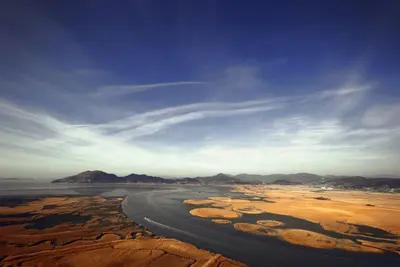
    Suncheon Bay, with its tidal flats and reeds, is part of UNESCO Natural Heritage 'Getbol, Korean Tidal Flats', inscribed in 2021 and extended in 2026. A total of 216 bird species are recorded here, including Spoon-billed Sandpipers and Black-faced Spoonbills.On the edge of the bay lies the Suncheonman Bay National Garden, created for the International Garden Expo 2013. In the mountains are the temples Seonamsa, a UNESCO World Heritage site since 2018, and Songgwangsa. Due to its many temples, Suncheon is known for its vegetarian temple cuisine.

    정규송 Nui MALAMA·Pexels

    Tongyeong

    Tongyeong

    Tongyeong is a coastal city in Gyeongsangnam-do Province at the southern tip of the Goseong Peninsula, surrounded by the sea on three sides. The city area includes 41 inhabited and 110 uninhabited islands, and the port is the gateway to Hallyeohaesang National Park. Take the cable car up 461-meter-high Mireuksan; the mural village of Dongpirang is by Gangguan Port. Tongyeong is home to composer Isang Yun, and Chungmu-Gimbap is named after the former city name, Chungmu.

    Peter Kang·Unsplash

    Jeonju

    Jeonju

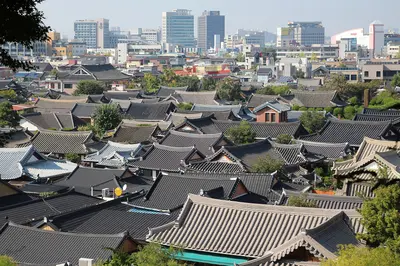
    Located in the southwest of South Korea, Jeonju is primarily known for its Hanok Village, featuring several hundred traditional houses. It is also home to Gyeonggijeon, the hall built in 1410 housing the portrait of King Taejo, and the Jeondong Cathedral, completed in 1914.The city is considered the home of Jeonju Bibimbap and also offers Kongnamul-gukbap, a rice soup with bean sprouts. With the KTX, you can get there from Seoul in approximately 1.5 to 2 hours.

    Bernard Gagnon·CC0

    Haeinsa and Gayasan

    Haeinsa and Gayasan

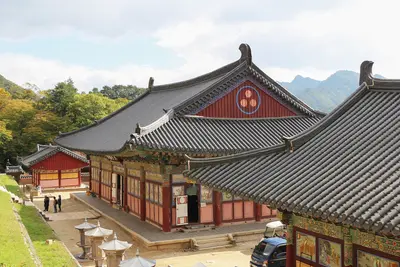
    Haeinsa Temple is located on Mount Gayasan in Hapcheon County, Gyeongsangnam-do. Founded in 802 by monks Suneung and Ijung, its name comes from the Hwaeom Sutra.Haeinsa is renowned for the Tripitaka Koreana: some 80,000 wooden printing blocks from 1237-1248. They are kept in the 15th-century Janggyeong Panjeon depots, a UNESCO World Heritage site since 1995. Buildings and blocks are National Treasures.

    Bernard Gagnon·CC0

    Busan

    Busan

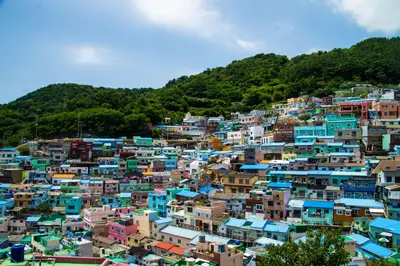
    Located on the southeastern tip of the Korean Peninsula, Busan is a port and beach metropolis with approximately 3.2 million inhabitants. City beaches like Haeundae and Gwangalli are found here alongside mountain temples such as Beomeosa and hillside villages from the Korean War era like Gamcheon. During the war, the city grew significantly due to refugees, a history still told today by Gukje Market and the pork soup Dwaeji-gukbap. Every October, Busan hosts the Busan International Film Festival, Korea's first international film festival.

    Saksham Vikram·Pexels

    Your next steps

    Jeju is in South Korea. Ways to carry on from here.

    • More in South Korea

      Highlights, areas, routes and the best time to travel for all of South Korea.

      South Korea travel guide
    • Round trips with Jeju

      One route passes through Jeju, with stops, nights and a map.

      See the round trip
    • Plan a trip with Jeju

      The Guide asks about season, length and who is coming, and suggests a trip with Jeju.

      Plan the trip

    Sources & method

    • Photos: Wikimedia Commons, Pexels. Each photo carries its credit.
    • Place data such as addresses and ratings comes from Google Maps.
    • The content is based on web research from public, traceable sources. How the content is made · The role of AI