Fernweh: Home
    ExploreTravel GuidesPlan a tripMy tripLast visited
    de|en
    All Places & RegionsAll highlightsAbout FernwehFAQPrivacy PolicyImprint
    ExploreTravel GuidesPlan a tripMy tripLast visited
    Huacachina

    Peru

    Huacachina

    Point of Interest

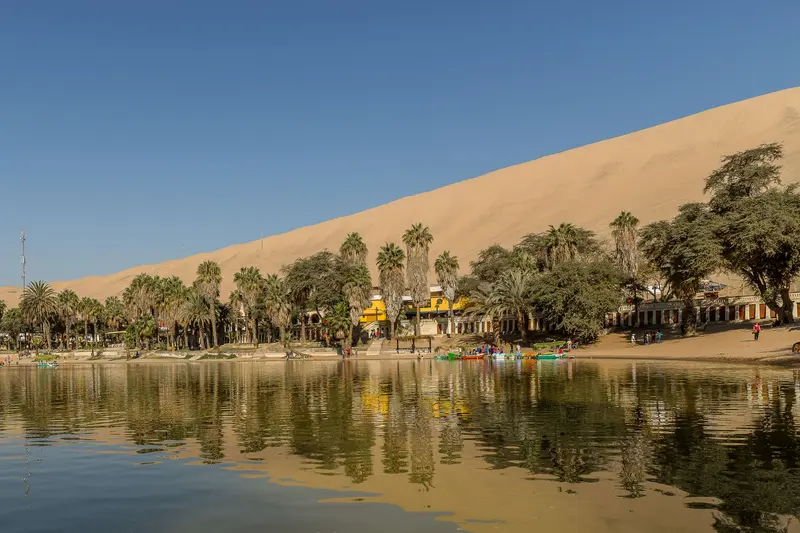
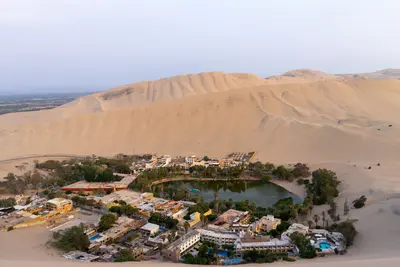
    Huacachina is a small oasis with a lagoon and palm trees, surrounded by towering sand dunes, just a few kilometers from the center of the city of Ica. Most visitors come for exhilarating dune buggy tours and sandboarding, often in the late…

    by Felix Gillen

    1. Home
    2. Destinations
    3. Peru
    4. Southcoast (Ica)
    5. Huacachina
    Huacachina is a small oasis with a lagoon and palm trees, surrounded by towering sand dunes, just a few kilometers from the center of the city of Ica. Most visitors come for exhilarating dune buggy tours and sandboarding, often in the late afternoon to experience the sunset over the desert. The lagoon's water level has dropped, and water is now being supplied.From Lima, take a bus to Ica, then a ten-minute taxi ride to Huacachina.Around Ica, you'll find bodegas producing Pisco and wine, offering tours with tastings.Buggies have been involved in accidents, so choose a reputable provider.

    Restaurants in Huacachina

    On the go locally

    Getting ThereHuacachina is located just a few kilometers outside Ica. From Ica's bus terminal, a taxi will take you to the oasis in just a few minutes.In the OasisYou can walk around the oasis itself in about fifteen minutes. Buggy tours and sandboarding can be booked directly on site, best enjoyed in the late afternoon when the heat subsides and the sun dips behind the dunes.

    Accommodations in Huacachina

    Find perfect stay in Huacachina

    Booking.com* (Affiliate link)
    Search Hotels
    Agoda* (Affiliate link)
    Search Hotels
    Airbnb
    Vacation Rentals

    * Affiliate link: if you book through it, we earn a small commission. The price stays the same for you.
    Nearby

    Southcoast (Ica)

    Southcoast (Ica)

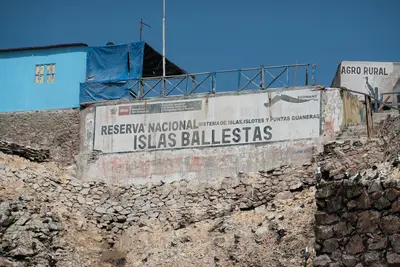
    The Ica region lies south of Lima on the desert coast and is easily accessible via the Panamericana. From Paracas, boat tours depart for the Islas Ballestas, home to sea lions and Humboldt penguins, alongside which lies the Reserva Nacional de Paracas, the country's largest coastal protected area. Around the city of Ica, Pisco is distilled; on the city's outskirts lies the Huacachina oasis, nestled between high dunes. Further south, the Nazca Lines stretch across the desert, a UNESCO World Heritage site since 1994.
    Paracas

    Paracas

    The coastal resort of Paracas on the Pacific coast is the starting point for two of the most famous natural experiences on the Peruvian coast. From Muelle El Chaco, boats depart in the mornings for the Islas Ballestas, passing the El Candelabro geoglyph, which can be seen from the sea on a sand dune. Sea lions, Humboldt penguins, pelicans, and colonies of guano birds live on the rocky islands.South of the town begins the Reserva Nacional de Paracas, founded in 1975 and, at around 335,000 hectares, the largest protected area on Peru's coast, two-thirds of which is ocean. Viewpoints such as Playa Roja, with its reddish beach, and the rock formation La Catedral, whose arch collapsed in the 2007 earthquake, are accessible by car or tour.

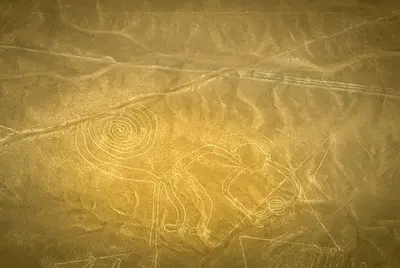
    The Nazca Lines are immense geoglyphs etched into the desert on Peru's southern coast, primarily created by the Nazca culture, which lived here roughly between 100 BC and 800 AD. Alongside straight lines and geometric forms, there are animal figures like the hummingbird, monkey, spider, and condor. In 1994, UNESCO designated the Lines and Geoglyphs of Nazca and Palpa as a World Heritage site.The figures are barely discernible from the ground. From the observation tower on the Pan-American Highway, you can see two figures: the Hands and the Tree. Only scenic flights from María Reiche Airport in Nazca, lasting about half an hour, offer a complete overview. The German Foreign Office advises that there have been several accidents on these flights in the past; please research your provider beforehand.
    Barranco

    Barranco

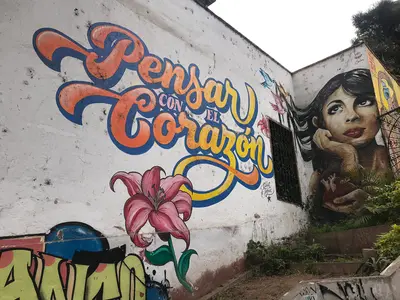
    Barranco is located south of Miraflores on the coastal cliffs and was once a seaside resort for wealthy Limeños. In the early 20th century, writers and artists moved here; today, colorful houses, murals, galleries, cafes, and bars define the district. Barranco is Lima's nightlife district.Its landmark is the wooden Puente de los Suspiros, beneath which the cobbled Bajada de los Baños leads down to the sea. Barranco also houses the MATE photography museum by Mario Testino and the Museo de Arte Contemporáneo (MAC). The Auswärtige Amt names Barranco, alongside Miraflores, as a district where evening thefts occur.
    Miraflores

    Miraflores

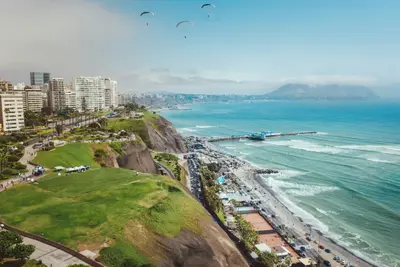
    Miraflores is the district where most travelers in Lima stay. It is located on the steep cliffs above the Pacific: Along the Malecón, parks and pathways stretch, and on the cliff, the Larcomar shopping center is built into the rock. The heart of the neighborhood is Parque Kennedy.Amidst residential blocks stands Huaca Pucllana, a seven-tiered adobe pyramid, which the Lima culture used as a ceremonial and administrative center between approximately 200 and 700 AD. You can visit it with a guided tour, and a small museum is included.

    Sources & method

    • Photos: Pexels. Each photo carries its credit.
    • The content is based on web research from public, traceable sources. How the content is made · The role of AI