Fernweh: Home
    ExploreTravel GuidesPlan a tripMy tripLast visited
    de|en
    All Places & RegionsAll highlightsAbout FernwehFAQPrivacy PolicyImprint
    ExploreTravel GuidesPlan a tripMy tripLast visited
    • Neighborhoods & highlights
    • Eat & drink
    • Food culture
    • Culture
    • Nightlife
    • Getting around
    • Accommodation
    • Plan trip
    • Nearby
    Stettin (Szczecin)
    Michalpe96 / Wikimedia Commons / CC BY-SA 4.0

    Poland

    Stettin (Szczecin)

    City

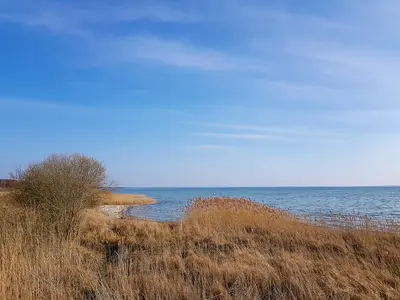
    Stettin (Szczecin) is situated on the Oder River, just before it flows into the Szczecin Lagoon, and with almost 390,000 inhabitants, it is Poland's seventh-largest city and the capital of the West Pomeranian Voivodeship.

    by Felix Gillen

    1. Home
    2. Destinations
    3. Poland
    4. West Pomerania
    5. Stettin (Szczecin)
    Stettin (Szczecin) is situated on the Oder River, just before it flows into the Szczecin Lagoon, and with almost 390,000 inhabitants, it is Poland's seventh-largest city and the capital of the West Pomeranian Voivodeship. Since 1278, the city has been part of the Hanseatic League, and its port remains one of the largest on the Baltic Sea. North of the center, the Oder widens into Lake Dąbie (Jezioro Dąbie). The Old Town, with the Ducal Castle and St. James' Cathedral, is located on the west bank, above which is the Hakenterrasse with views of the river. Opposite, between the arms of the Oder, are the islands of Lastadie (Łasztownia) and Silberwiese. Adjacent is the New Town, whose wide avenues, modeled on Parisian designs, converge on star-shaped squares like Plac Grunwaldzki. From Berlin, Stettin is easily accessible by train and is perfect for a long weekend. If you have more time, combine your visit with the coast around Swinemünde or Kolberg.

    Sights in Stettin (Szczecin)

    Discover the most important sights and attractions
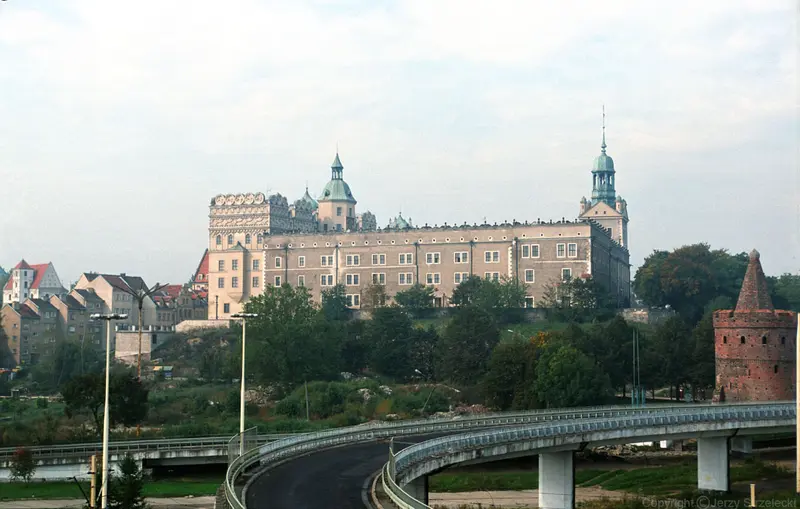
    Palace of the Pomeranian Dukes
    Castle

    1Palace of the Pomeranian Dukes

    The Griffin Dukes' Castle in the Old Town was rebuilt after the Second World War. Today, it hosts art and history exhibitions, plus concerts, also in the courtyard during summer.
    Open in Google Maps
    Haken Terraces (Wały Chrobrego)

    2Haken Terraces (Wały Chrobrego)

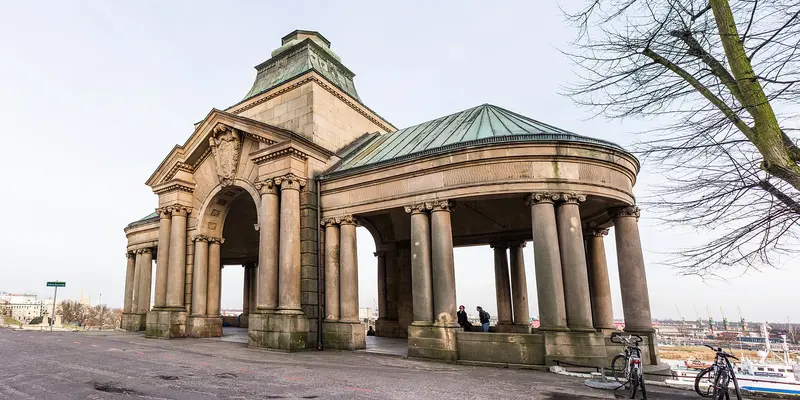
    The terrace, built between 1902 and 1921, above the Oder’s west bank, is the city’s flagship. It includes the former navigation school, the former provincial government building, and the National Museum.
    Open in Google Maps
    Jakobi Cathedral
    Church

    3Jakobi Cathedral

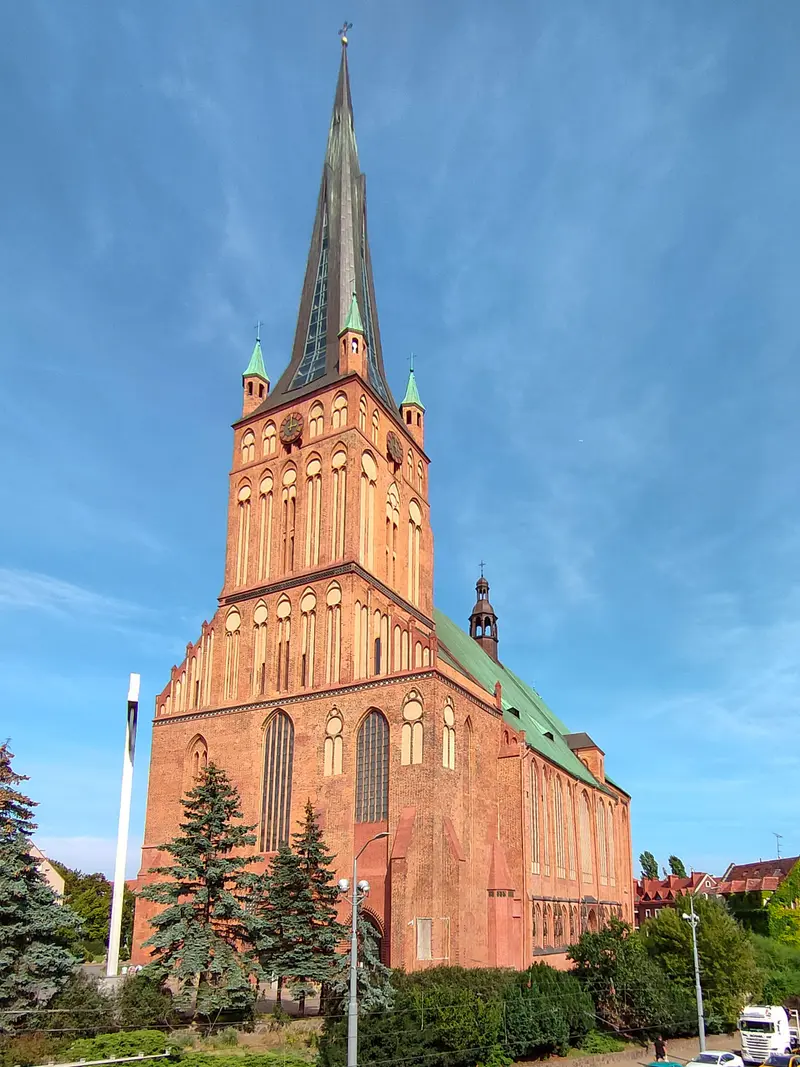
    The Gothic church, founded in 1187 and modeled on Lübeck's St. Mary's Church, is Poland's second-tallest church at 110 meters. Its spire collapsed during air raids in August 1944; the tower only regained a spire in the 21st century. Since 1972, it has been a cathedral.
    Open in Google Maps
    Central Cemetery (Cmentarz Centralny)
    Attraction

    4Central Cemetery (Cmentarz Centralny)

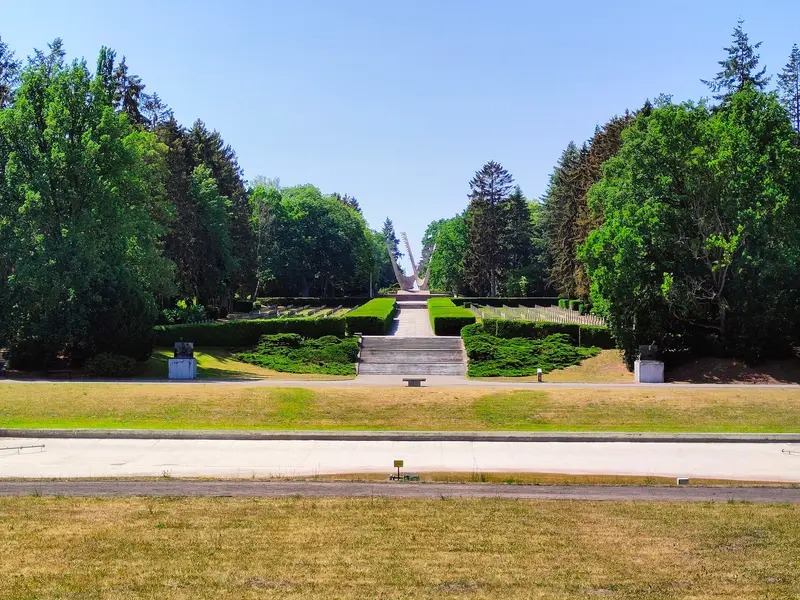
    At 1.7 square kilometers, the early 20th-century cemetery stands as one of Europe's largest. It is designed like a park, complete with avenues, sculptures, and a Neo-Romanesque chapel.
    Open in Google Maps

    Restaurants in Stettin (Szczecin)

    1

    Tkacka 7

    The city's first Michelin Guide recommended restaurant (2026). Modern cuisine uses seasonal, local ingredients.
    Show on Google Maps
    2

    The Szczecin Larder

    Restaurant at Plac Hołdu Pruskiego, where you can get freshly prepared Paprykarz szczeciński.
    Show on Google Maps
    3

    Rybarex

    Fish restaurant in Małopolska, operating since 1981, with mussels, shrimp, squid, crabs, fish, and salads.
    Show on Google Maps
    4

    Bachus

    Wine shop with restaurant on the Sienna in the Podzamcze district below the Castle, operating since 1999. The menu combines Polish classics with dishes from wine regions worldwide.
    Show on Google Maps

    Food and Drink in Szczecin

    Pasztecik szczeciński

    Savory yeast pastry, best with clear beetroot Barszcz. The eponymous bar at Wojska Polskiego 46 serves it in a 1970s interior.

    Paprykarz szczeciński

    The city's most famous product, produced since 1967: fish, rice, onions, and tomato paste with spices, usually canned and eaten as a spread. You can get it fresh, for instance, at Spiżarnia Szczecińska or at the Paprykarz fish market.

    Starka

    A brandy that matures for decades in oak barrels in Szczecin cellars. Bottles of various vintages are available commercially.

    History and Architecture

    Hanseatic City and Residence Stettin joined the Hanseatic League in 1278. In the Old Town stands the Castle of the Pomeranian Dukes, rebuilt after the war. St. James' Cathedral, founded in 1187 and modeled after Lübeck's St. Mary's Church, is today Poland's second-tallest church. After the August 1944 air raids, its tower only regained its spire in the 21st century. The New Town was laid out with wide, straight avenues and star-shaped squares, its plan recalling Paris, while the houses look more like Berlin's. Between 1902 and 1921, the Hakenterrasse was added as an imposing riverfront promenade. Modern Architecture The Philharmonic Hall by Barcelona-based firm Barozzi Veiga opened in September 2014. Its ice-like form and translucent glass facade, which glows white at night, earned it the European Union Prize for Contemporary Architecture in 2015. The Central Cemetery, one of Europe's largest, is also worth a stroll.

    Nightlife

    1

    Hala Odra

    Industrial hall by the river with a bar and several stages where music plays until morning.
    Show on Google Maps
    2

    Brewery by Castle

    Beer pub in the Old Town near the castle.
    Show on Google Maps
    3

    Browar Stara Komenda

    Family-run brewpub and restaurant on Plac Batorego in the former military headquarters building from 1867. The beer is brewed on-site and served unpasteurized.
    Show on Google Maps

    Getting There and Around

    Getting There From Szczecin Główny railway station, trains run to destinations including Berlin. Szczecin-Goleniów Airport is located outside the city. By car, you can reach Szczecin via the A6 motorway and national road DK3. Getting Around the City Szczecin has twelve tram lines, with an additional tourist line in summer, as well as over 60 daytime bus routes and night buses. Tickets are time-based and allow unlimited transfers; the cheapest costs 3 Złoty for 15 minutes, while express lines A, B, and C cost double. Tickets are available from machines inside vehicles and at stops, as well as via apps such as zBiletem, SkyCash, or mPay. From July 1, 2026, tickets purchased on board will be validated via a QR code above the door. The Szczecin Tourist Card (24 or 72 hours) includes free travel throughout the entire network. In the city center, you can easily get around without a car.

    Accommodations in Stettin (Szczecin)

    Find perfect stay in Stettin (Szczecin)

    Booking.com* (Affiliate link)
    Search Hotels
    Agoda* (Affiliate link)
    Search Hotels
    Airbnb
    Vacation Rentals

    * Affiliate link: if you book through it, we earn a small commission. The price stays the same for you.

    Campgrounds in Stettin (Szczecin)

    Find perfect campground in Stettin (Szczecin)

    Search via Google Maps
    Campgrounds nearby (15km)
    Camping.info
    Find Campgrounds
    Park4Night
    RV Parks & Camping

    Plan your trip to Stettin (Szczecin)

    Save places, build a route and plan your city trip, all in one place.

    1. 1
      Sunrise over alpine peaks and a sea of clouds
      1234

      Round trip

      12 days · 4 stops

      Saved

      Pick a route

      Pick a ready-made one or save places and plan your own.

      Open bookmarks
    2. 2

      Trip to Stettin (Szczecin)

      Live
      • 1Palace of the Pomeranian Dukes3 days
      • 2Haken Terraces (Wały Chrobrego)4 days
      • 3Jakobi Cathedral5 days
      Budget

      Plan your trip

      The planner sorts stops, days and budget. Plan together in real time.

      Start trip planning
    3. 3
      9:41 No signal
      Stettin (Szczecin)
      Available offline

      Use it on the road

      Download the guide to your phone and use it on site, even offline.

    Nearby

    Swinemünde (Świnoujście)

    Swinemünde (Świnoujście)

    Swinemünde (Świnoujście) is situated on the eastern part of Usedom Island, the western tip of Wollin, and the small island of Kaseburg (Karsibór). The Swine River separates Usedom and Wollin. Approximately 39,000 people live here. Swinemünde has been a seaside resort since its first bathing season in July 1824. On the Usedom side are the city center and the spa district with the Lenné spa park, the beach, and the promenade, which stretches about twelve kilometers across the border to Ahlbeck, Heringsdorf, and Bansin. On the Wollin side, you'll find the tallest lighthouse on the Baltic coast, Fort Gerhard, and the port facilities with the LNG terminal. Its location directly on the German border makes Swinemünde an easy day trip from Usedom, and several days are also worthwhile for a beach holiday.
    Usedom Royal Spas

    Usedom Royal Spas

    Bansin, Heringsdorf, and Ahlbeck have formed the municipality of Ostseebad Heringsdorf, known as the Kaiserbäder (Imperial Spas), since 2006. Villas, hotels, and guesthouses in distinctive spa architecture characterize these resorts. The oldest preserved building is the Weiße Schloss (White Castle), dating from 1825 and built to plans by Karl Friedrich Schinkel.A twelve-kilometer promenade connects the three resorts with Swinemünde, backed by an average 40-meter-wide sandy beach. Three piers extend into the sea: Heringsdorf boasts Germany's longest at 508 meters, while Ahlbeck features the oldest.
    West Pomerania

    West Pomerania

    The West Pomeranian Voivodeship (Zachodniopomorskie) covers northwest Poland, situated between the Oder on the German border and the Pomeranian Lake District. Spanning nearly 22,900 square kilometers, it is home to around 1.63 million people, with its capital and largest city being Stettin (Szczecin), followed by Köslin (Koszalin) and Stargard. The Voivodeship was established in 1999 as part of Poland's administrative reform. To the north, the Baltic Sea coast, with its cliffs and seaside resorts like Swinemünde and Kolberg, defines the region, while the Szczecin Lagoon shapes its western part. Inland, the Pomeranian Lake District extends, and in the very south lies the Drawa National Park.
    Kolberg (Kołobrzeg)

    Kolberg (Kołobrzeg)

    Kolberg (Kołobrzeg), situated at the mouth of the Persante (Parsęta) into the Baltic Sea, is a brine and spa resort with over 43,000 inhabitants and a long tradition: first guests arrived around 1800, and by 1904, the town already welcomed over 13,000 spa visitors. Weak brine springs once laid the foundation for the settlement and the town's wealth; it belonged to the Hanseatic League from before 1361 to 1610. In the year 1000, it briefly hosted a bishopric with Bishop Reinbern. In the Old Town are the five-aisled 14th-century cathedral and the city hall designed by Schinkel. In March 1945, the city was about 90 percent destroyed. Towards the sea lie the Spa Quarter and the promenade; at the harbour stand the lighthouse and the 220-meter-long pier. Kolberg is ideal for beach holidays and spa stays. At the harbour, the fishing cooperative sells the fresh and smoked catch from its cutters directly to customers.
    Müritz National Park

    Müritz National Park

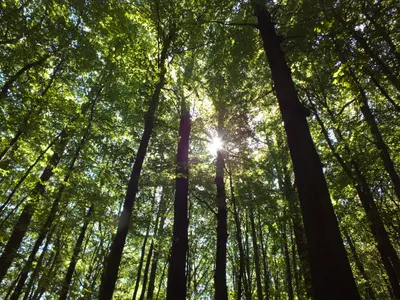
    Founded in 1990, Müritz National Park covers 322 square kilometers and is considered Germany's largest terrestrial national park. Nearly three-quarters of its area is forest, complemented by 108 lakes over one hectare, as well as bogs and meadows. The park comprises the larger Müritz section in the west and the smaller Serrahn section in the east, whose beech forests have been a UNESCO World Natural Heritage site since June 2011.White-tailed eagles and ospreys have their territory here, with over 100 pairs of cranes breeding in the park. From observation platforms, you can watch ospreys, and from the Käflingsbergturm, you can survey the landscape. In Waren, the Müritzeum provides information about the region's nature.

    Sources & method

    • Photos: Wikimedia Commons, Google Maps. Each photo carries its credit.
    • Place data such as addresses and ratings comes from Google Maps.
    • The content is based on web research from public, traceable sources. How the content is made · The role of AI