Fernweh: Home
    ExploreTravel GuidesPlan a tripMy tripLast visited
    de|en
    All Places & RegionsAll highlightsAbout FernwehFAQPrivacy PolicyImprint
    ExploreTravel GuidesPlan a tripMy tripLast visited
    • Overview
    • Places in the region
    • Round trips
    • Nearby
    West Pomerania

    Poland

    West Pomerania

    Region

    The West Pomeranian Voivodeship (Zachodniopomorskie) covers northwest Poland, situated between the Oder on the German border and the Pomeranian Lake District.

    by Felix Gillen

    1. Home
    2. Destinations
    3. Poland
    4. West Pomerania
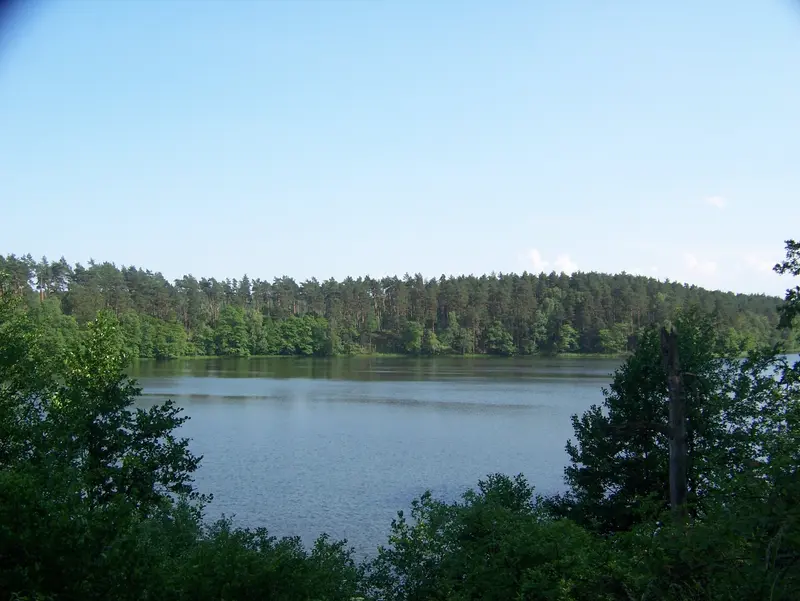
    The West Pomeranian Voivodeship (Zachodniopomorskie) covers northwest Poland, situated between the Oder on the German border and the Pomeranian Lake District. Spanning nearly 22,900 square kilometers, it is home to around 1.63 million people, with its capital and largest city being Stettin (Szczecin), followed by Köslin (Koszalin) and Stargard. The Voivodeship was established in 1999 as part of Poland's administrative reform. To the north, the Baltic Sea coast, with its cliffs and seaside resorts like Swinemünde and Kolberg, defines the region, while the Szczecin Lagoon shapes its western part. Inland, the Pomeranian Lake District extends, and in the very south lies the Drawa National Park.
    Stettin is the gateway to the region: This Hanseatic city on the Oder, with the Hakenterrasse, the Pomeranian Dukes' Castle, and the award-winning Philharmonie, is close to Berlin and easily accessible by train. To the north, the Stettin Lagoon opens up, with about 410 square kilometres lying on the Polish side. On the coast, in the far west, is Swinemünde on Usedom and Wolin, a seaside resort since 1824, linked by promenade to German resorts. Just to its east, the Wolin National Park protects a steep coast up to 95 metres high and European bison. Further east lies Kolberg, a brine and spa resort with a cathedral, lighthouse, and pier. The central and eastern part of the region is taken up by the Pomeranian Lake District. In the south, the Drawa National Park with the Drawa River is a destination for canoe tours. The highest point of the voivodeship, the Biały Bór, reaches only 246 metres.
    Stettin (Szczecin)
    Michalpe96 / Wikimedia Commons / CC BY-SA 4.0

    Place 1 of 3

    Stettin (Szczecin)

    Stettin (Szczecin) is situated on the Oder River, just before it flows into the Szczecin Lagoon, and with almost 390,000 inhabitants, it is Poland's seventh-largest city and the capital of the West Pomeranian Voivodeship.

    Discover
    Swinemünde (Świnoujście)

    Place 2 of 3

    Swinemünde (Świnoujście)

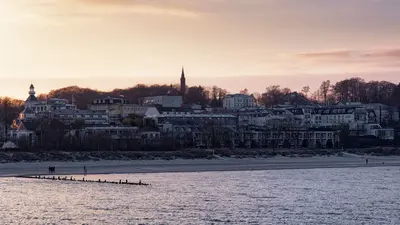
    Swinemünde (Świnoujście) is situated on the eastern part of Usedom Island, the western tip of Wollin, and the small island of Kaseburg (Karsibór). The Swine River separates Usedom and Wollin.

    Discover
    Kolberg (Kołobrzeg)

    Place 3 of 3

    Kolberg (Kołobrzeg)

    Kolberg (Kołobrzeg), situated at the mouth of the Persante (Parsęta) into the Baltic Sea, is a brine and spa resort with over 43,000 inhabitants and a long tradition: first guests arrived around 1800, and by 1904, the town already welcomed over 13,000 spa…

    Discover

    Sights in West Pomerania

    Discover the most important sights and attractions

    Observation Point Gosań
    Attraction

    Observation Point Gosań

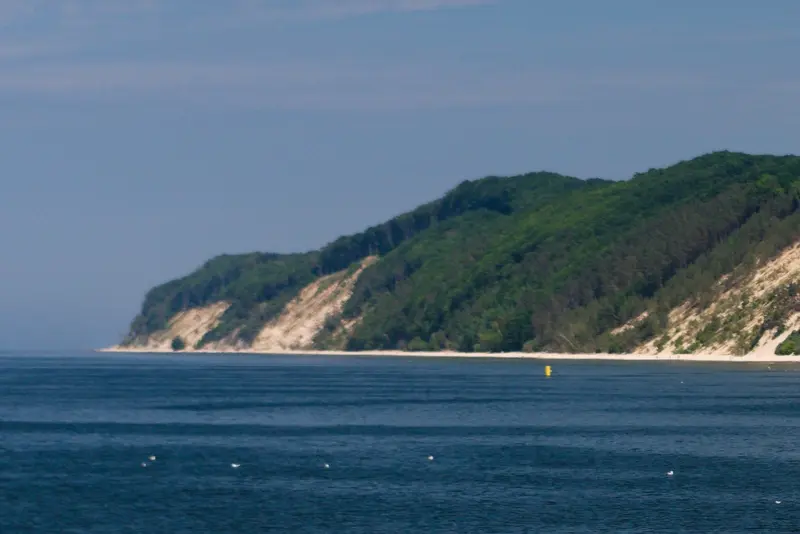
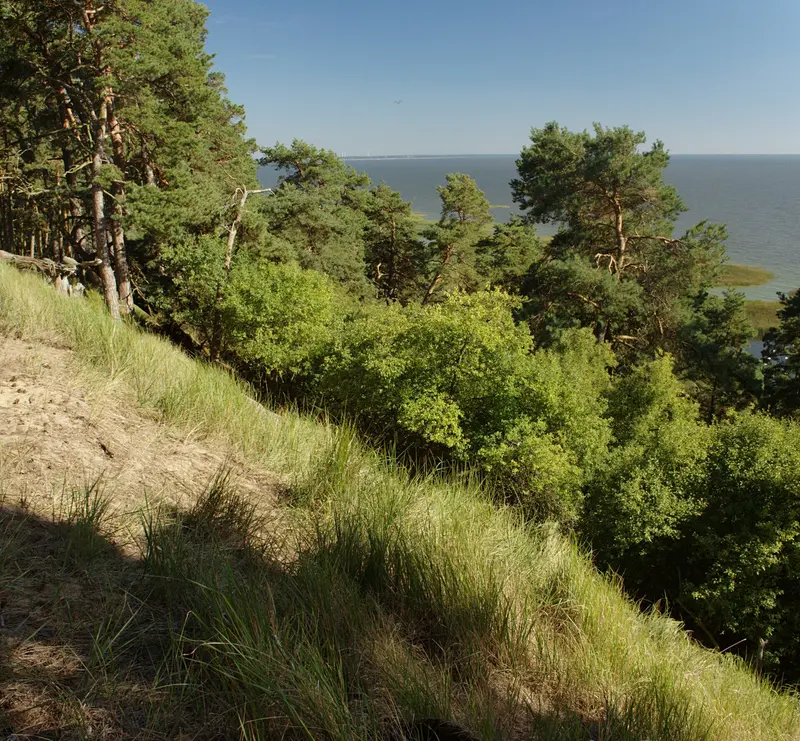
    Viewpoint on Gosań Cliff near Misdroy with a view over the steep coast of Wolin National Park and the Baltic Sea.
    Open in Google Maps
    Drawieński National Park
    National Park

    Drawieński National Park

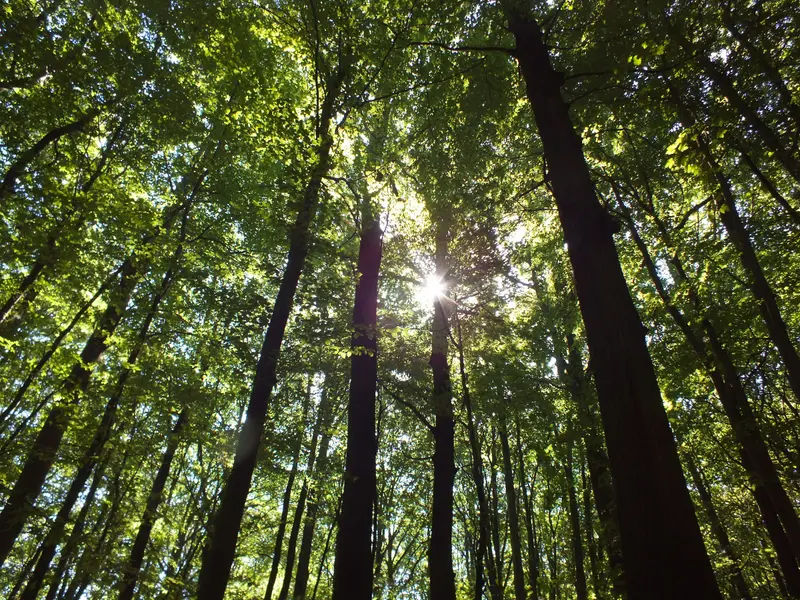
    Founded in 1990, the National Park on the southern border of the voivodeship protects sections of the Drawa and Płociczna rivers, as well as forests with oaks and beeches, some over 300 years old. The Drawa is a popular canoeing route.
    Open in Google Maps
    Woliński National Park
    National Park

    Woliński National Park

    Founded in 1960, the National Park in the northwest of Wolin Island (Wollin) near Międzyzdroje (Misdroy) protects a steep coast up to 95 meters high and approx. 15 km long, and since 1996, the Swina Delta with 44 swampy islands. Its attractions include bison.
    Open in Google Maps

    Round trips through this region

    Baltic Coast and Masuria

    Baltic Coast and Masuria

    This route follows the Polish Baltic coast from Szczecin via the seaside resorts of Świnoujście and Kołobrzeg to the moving dunes near Łeba and on to Gdańsk. From there, it continues via Malbork Castle into Warmia to Olsztyn and into the Masurian Lake District to Mikołajki and Giżycko. This is a car route: The stages are mostly 60 to 140 kilometres long, as the train only serves some of the places in Masuria. Beaches, dunes, Hanseatic towns, and lakes alternate.

    11 Days
    9 stops
    Open jaw

    Nearby

    Stettin (Szczecin)

    Stettin (Szczecin)

    Stettin (Szczecin) is situated on the Oder River, just before it flows into the Szczecin Lagoon, and with almost 390,000 inhabitants, it is Poland's seventh-largest city and the capital of the West Pomeranian Voivodeship. Since 1278, the city has been part of the Hanseatic League, and its port remains one of the largest on the Baltic Sea. North of the center, the Oder widens into Lake Dąbie (Jezioro Dąbie). The Old Town, with the Ducal Castle and St. James' Cathedral, is located on the west bank, above which is the Hakenterrasse with views of the river. Opposite, between the arms of the Oder, are the islands of Lastadie (Łasztownia) and Silberwiese. Adjacent is the New Town, whose wide avenues, modeled on Parisian designs, converge on star-shaped squares like Plac Grunwaldzki. From Berlin, Stettin is easily accessible by train and is perfect for a long weekend. If you have more time, combine your visit with the coast around Swinemünde or Kolberg.

    Kolberg (Kołobrzeg)

    Kolberg (Kołobrzeg)

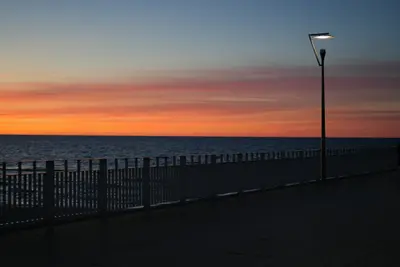
    Kolberg (Kołobrzeg), situated at the mouth of the Persante (Parsęta) into the Baltic Sea, is a brine and spa resort with over 43,000 inhabitants and a long tradition: first guests arrived around 1800, and by 1904, the town already welcomed over 13,000 spa visitors. Weak brine springs once laid the foundation for the settlement and the town's wealth; it belonged to the Hanseatic League from before 1361 to 1610. In the year 1000, it briefly hosted a bishopric with Bishop Reinbern. In the Old Town are the five-aisled 14th-century cathedral and the city hall designed by Schinkel. In March 1945, the city was about 90 percent destroyed. Towards the sea lie the Spa Quarter and the promenade; at the harbour stand the lighthouse and the 220-meter-long pier. Kolberg is ideal for beach holidays and spa stays. At the harbour, the fishing cooperative sells the fresh and smoked catch from its cutters directly to customers.
    Swinemünde (Świnoujście)

    Swinemünde (Świnoujście)

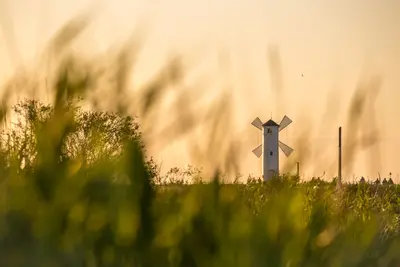
    Swinemünde (Świnoujście) is situated on the eastern part of Usedom Island, the western tip of Wollin, and the small island of Kaseburg (Karsibór). The Swine River separates Usedom and Wollin. Approximately 39,000 people live here. Swinemünde has been a seaside resort since its first bathing season in July 1824. On the Usedom side are the city center and the spa district with the Lenné spa park, the beach, and the promenade, which stretches about twelve kilometers across the border to Ahlbeck, Heringsdorf, and Bansin. On the Wollin side, you'll find the tallest lighthouse on the Baltic coast, Fort Gerhard, and the port facilities with the LNG terminal. Its location directly on the German border makes Swinemünde an easy day trip from Usedom, and several days are also worthwhile for a beach holiday.
    Usedom Royal Spas

    Usedom Royal Spas

    Bansin, Heringsdorf, and Ahlbeck have formed the municipality of Ostseebad Heringsdorf, known as the Kaiserbäder (Imperial Spas), since 2006. Villas, hotels, and guesthouses in distinctive spa architecture characterize these resorts. The oldest preserved building is the Weiße Schloss (White Castle), dating from 1825 and built to plans by Karl Friedrich Schinkel.A twelve-kilometer promenade connects the three resorts with Swinemünde, backed by an average 40-meter-wide sandy beach. Three piers extend into the sea: Heringsdorf boasts Germany's longest at 508 meters, while Ahlbeck features the oldest.
    Posen (Poznań)

    Posen (Poznań)

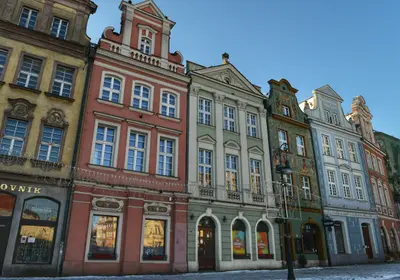
    Poznań (Posen), located on the Warta River approximately halfway between Berlin and Warsaw, is Poland's fifth-largest city with around 534,000 inhabitants. On Cathedral Island, Poland's first bishopric was established in 968; opposite, a city was founded from 1253 under Magdeburg Law. A university, trade fair, and vibrant restaurant scene characterize daily life today.The city's heart is the Old Market Square (Stary Rynek) with its Renaissance Town Hall and narrow merchant houses. East of this, beyond the Warta, are Cathedral Island (Ostrów Tumski) and its cathedral, plus the small Śródka district, linked to the island by a footbridge over the Cybina. West of the Old Town, the Imperial Quarter encircles the Imperial Castle, with the Jeżyce residential district (cafés, restaurants) beyond it.Poznań can be easily explored on foot in two to three days. Those with more time can combine the city with excursions into the Greater Poland region, for example, to Gniezno (Gnesen) or Kórnik Castle.

    Sources & method

    • Photos: Wikimedia Commons, Unsplash. Each photo carries its credit.
    • Place data such as addresses and ratings comes from Google Maps.
    • The content is based on web research from public, traceable sources. How the content is made · The role of AI