Fernweh: Home
ExploreGuideDestinationsMy tripsMy trip
de|en
All Places & RegionsRound tripsNight trains in EuropeAll highlightsAbout FernwehFAQPrivacy PolicyImprint
Download on the App StoreGet it on Google Play
ExploreGuideDestinationsMy tripsMy trip
    • Neighborhoods & highlights
    • Recommendations
    • Eat & drink
    • Accommodation
    • Plan trip
    • Nearby
    La Latina and Lavapiés

    Javier Pérez Montes / Wikimedia Commons / CC BY-SA 4.0, mod.

    Spain

    La Latina and Lavapiés

    City

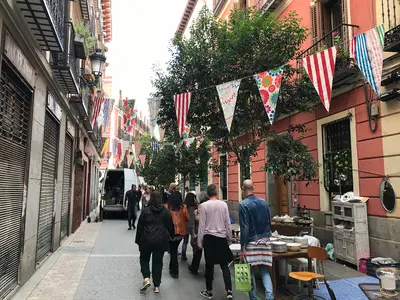
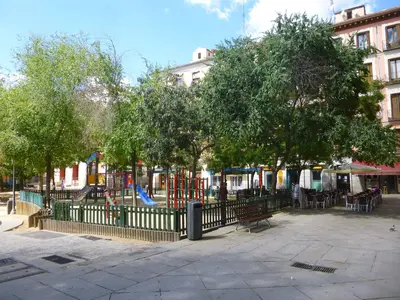
    La Latina borders Madrid de los Austrias to the south. Narrow, winding medieval streets lead to small squares such as Plaza de la Cebada, Plaza de los Carros, and Plaza de la Paja.

    by Felix Gillen

    1. Home
    2. Destinations
    3. Spain
    4. Madrid
    5. La Latina and Lavapiés
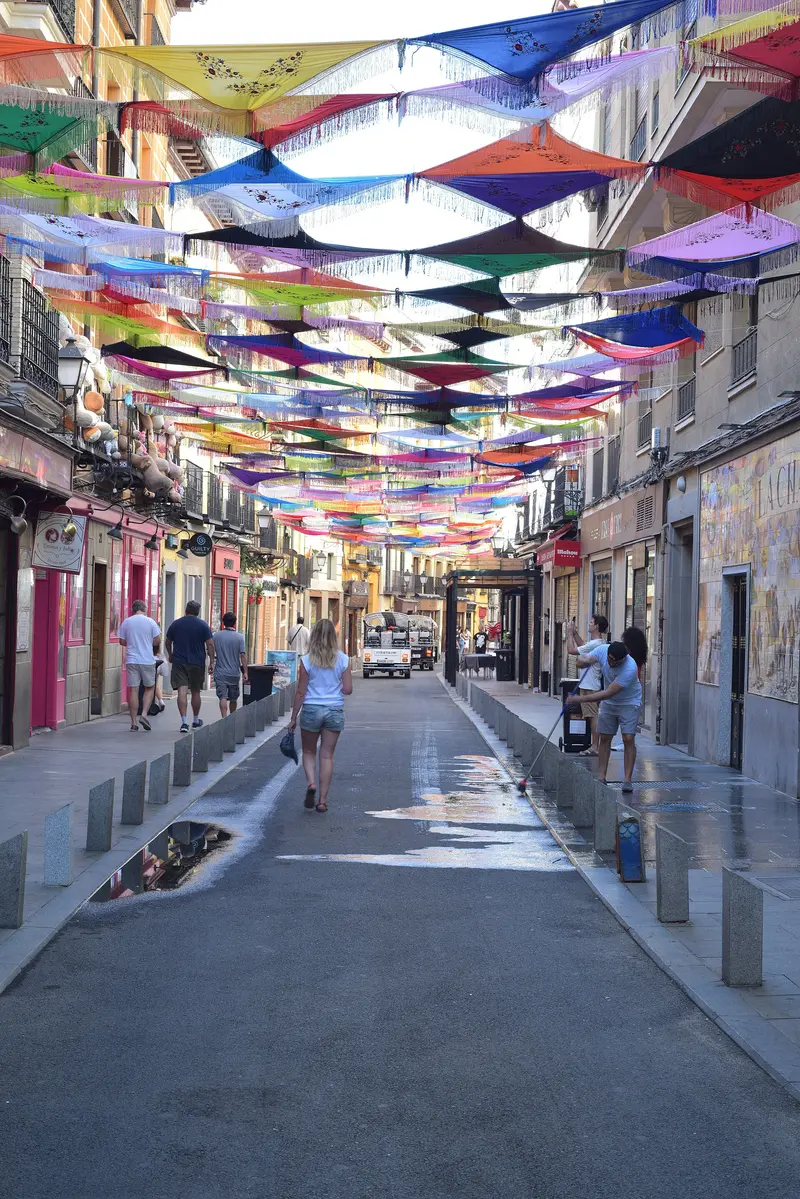
    La Latina borders Madrid de los Austrias to the south. Narrow, winding medieval streets lead to small squares such as Plaza de la Cebada, Plaza de los Carros, and Plaza de la Paja. Cava Baja is a classic tapas street; in many bars, you get a complimentary tapa with your drink. The district owes its name to Beatriz Galindo, known as La Latina, teacher of Queen Isabella I, who founded a hospital here.Worth seeing are the Basílica de San Francisco el Grande from the 18th century, featuring one of the world's largest domes and a painting by Goya, as well as the Colegiata de San Isidro with the tomb of the city's patron saint. On Sundays and public holidays, starting at 9 AM, the flea market El Rastro takes place around Plaza de Cascorro and Ribera de Curtidores. To the southeast, Lavapiés adjoins, a traditional yet highly multicultural district. In August, both districts celebrate their Verbenas.
    Spain travel guideRound trips in SpainPlan a trip with La Latina and Lavapiés

    Contents

    • Neighborhoods & highlights
    • Recommendations
    • Eat & drink
    • Accommodation
    • Nearby

    Sights in La Latina and Lavapiés

    Discover the most important sights and attractions

    Market

    1El Rastro

    The El Rastro flea market dates back to 1740. On Sundays and public holidays, from 9 AM to 3 PM, stalls sprawl around Plaza de Cascorro and down the steep Ribera de Curtidores, also home to permanent antique shops, bookstores, and specialty stores. Additionally, on the first Saturday of the month (excluding July, August, and November), don't miss the Sábados del Rastro.After your market visit, La Latina's tapas bars are perfect for a bite.
    Open in Google Maps

    Restaurants in La Latina and Lavapiés

    1

    Malacatín

    Family-run tavern on Calle de la Ruda, established 1895, with tiled walls and bullfighting posters. People come here primarily for the Cocido madrileño, Madrid's signature stew, and for Callos. Madrid's Tourism Office lists the venue among the city's century-old taverns.
    Show on Google Maps
    2

    Trèsde

    Bistro on Cava Alta in La Latina, run by three friends. Chef Aitor Sua cooks seasonally, focusing on vegetables, available as a menu (starter, main, dessert). The Guide Michelin has newly awarded the venue a Bib Gourmand for excellent value in its 2026 edition.
    Show on Google Maps
    3

    Taberna Antonio Sánchez

    Tavern on Calle del Mesón de Paredes in Lavapiés, founded in 1787, making it one of the city's oldest. The menu features Madrid classics like Callos, Patatas bravas, and Cocido madrileño. Madrid's Tourism Board lists it among the century-old restaurants and taverns.
    Show on Google Maps
    4

    Corral de la Morería

    A renowned flamenco tablao on Calle de la Morería, offering evening shows and dinner. Right next door is the venue's small gourmet restaurant, led by chef David García, which holds a Michelin star; Madrid's Tourist Board lists it among the city's Michelin-starred restaurants. Upscale pricing, reservations essential.
    Show on Google Maps

    Accommodations in La Latina and Lavapiés

    Find perfect stay in La Latina and Lavapiés

    Booking.com* (Affiliate link)
    Search Hotels
    Agoda* (Affiliate link)
    Search Hotels
    Airbnb
    Vacation Rentals

    * Affiliate link: if you book through it, we earn a small commission. The price stays the same for you.

    Campgrounds in La Latina and Lavapiés

    Find perfect campground in La Latina and Lavapiés

    Search via Google Maps
    Campgrounds nearby (15km)
    Camping.info
    Find Campgrounds
    Park4Night
    RV Parks & Camping

    Plan your trip to La Latina and Lavapiés

    Save places, build a route and plan your city trip, all in one place.

    1. 1
      Sunrise over alpine peaks and a sea of clouds
      1234

      Round trip

      12 days · 4 stops

      Saved

      Pick a route

      Pick a ready-made one or save places and plan your own.

      Open bookmarks
    2. 2

      Trip to La Latina and Lavapiés

      Live
      • 1El Rastro3 days
      Budget

      Plan your trip

      The planner sorts stops, days and budget. Plan together in real time.

      Start trip planning
    3. 3
      9:41 No signal
      La Latina and Lavapiés
      Available offline

      Javier Pérez Montes / Wikimedia Commons / CC BY-SA 4.0, mod.

      Use it on the road

      Download the guide to your phone and use it on site, even offline.

    Nearby

    Madrid

    Madrid

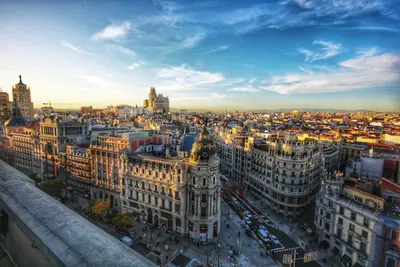
    Madrid is the capital of Spain and, with approximately 3.4 million inhabitants, the country's largest city. Along the Paseo del Prado, within about one kilometer, are three world-class museums: the Prado, Thyssen-Bornemisza, and Reina Sofía. The Paseo del Prado and Retiro Park have been UNESCO World Heritage Sites since 2021. Additionally, there's the Royal Palace, Plaza Mayor, and Puerta del Sol in the historic center, alongside a nightlife that starts late.The best way to explore the city is by its districts: the Madrid de los Austrias around Plaza Mayor and Palacio Real, the literary quarter Barrio de las Letras, La Latina with its tapas bars and Sunday flea market El Rastro, the nightlife districts Malasaña and Chueca, and the elegant Barrio de Salamanca.Good to knowFree Admission: The Prado offers free entry Mondays to Saturdays from 6 PM to 8 PM and Sundays from 5 PM to 7 PM. The Reina Sofía is free Mondays and Wednesdays to Saturdays from 7 PM to 9 PM, and Sundays from 12:30 PM to 2:30 PM. You'll still need a ticket for these, so expect queues.Closing Days: The Reina Sofía is closed on Tuesdays, and the Templo de Debod on Mondays.New Year's Eve: At Puerta del Sol, people eat twelve grapes with the twelve chimes of the clock; the square is extremely crowded then.

    Jorge Fernández Salas·Unsplash

    Madrid of the Austrias and Sol

    Madrid of the Austrias and Sol

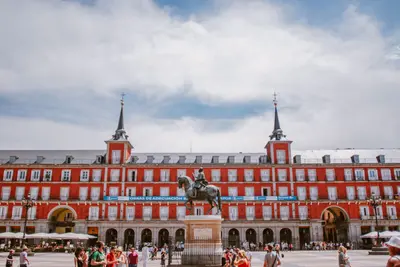
    The Madrid de los Austrias is the historic center from the Habsburg era. Its heart is the Plaza Mayor, completed in 1619 by Juan Gómez de Mora, measuring roughly 129 by 94 meters and surrounded by 237 balconies. Nearby is the Mercado de San Miguel market hall with specialty food stalls. To the west are the Palacio Real and, opposite it, the Almudena Cathedral.To the east lies the Puerta del Sol: In front of the Casa de Correos is Kilómetro 0 of the Spanish road network, and on New Year's Eve, people eat twelve grapes here to the chime of the clock. Lively shopping streets like Calle del Arenal, Calle Mayor, and Calle de Preciados begin here. Everything is close together and easy to explore on foot; Metro and Cercanías stop at Sol station.

    Luis Quintero·Pexels

    Madrid Region

    Madrid Region

    The Madrid region is located in the center of the Iberian Peninsula, at an elevation of around 650 meters. In addition to the capital, it includes the royal sites of El Escorial and Aranjuez, the university city of Alcalá de Henares, and the Sierra de Guadarrama mountains in the north.

    Bedirhan Gül·Unsplash

    Barrio de las Letras

    Barrio de las Letras

    In the Barrio de las Letras, between Calle de la Cruz, Carrera de San Jerónimo, Paseo del Prado, and Calle Atocha, lived the great writers of the Golden Age: Cervantes, Lope de Vega, Quevedo, Tirso de Molina, and Góngora. Many streets bear their names, and along Calle Huertas, excerpts from Spanish authors accompany you.The house where Lope de Vega spent his last 25 years is today the Casa Museo Lope de Vega. Cervantes' remains lie in the Convento de las Trinitarias. The district's focal point is the Plaza de Santa Ana, featuring statues of Calderón de la Barca and Federico García Lorca, and the Teatro Español, successor to the theatre courtyard where many Siglo de Oro comedies premiered. Around the square, bars and terraces line up, and it's just a few minutes to the Paseo del Prado with its major museums.

    Triplecaña·CC BY-SA 4.0

    Malasaña and Chueca

    Malasaña and Chueca

    Malasaña and Chueca lie one to two kilometers north of Puerta del Sol, separated by Calle de Fuencarral, which is a pedestrian shopping street for about 500 meters. Malasaña was once a simple residential district and became the center of the Movida madrileña in the 1980s. Today, vintage shops, bars, and cafés define the area. Plaza del Dos de Mayo commemorates the leaders of the 1808 uprising against Napoleon.Chueca is Madrid's best-known LGBTQ neighborhood, with many bars and restaurants that welcome all guests, and numerous antique shops. Both neighborhoods are especially lively in the evenings. To its west lies the quieter Conde Duque, with its cultural center in a former barracks.

    Zarateman·CC0

    Your next steps

    La Latina and Lavapiés is in Spain. Ways to carry on from here.

    • More in Spain

      Highlights, areas, routes and the best time to travel for all of Spain.

      Spain travel guide
    • Round trips in Spain

      Ready-made routes through Spain, with stops, nights and a map.

      See the routes

    Sources & method

    • Photos: Wikimedia Commons. Each photo carries its credit.
    • Place data such as addresses and ratings comes from Google Maps.
    • The content is based on web research from public, traceable sources. How the content is made · The role of AI