ExploreTravel GuidesPlan a trip
    de|en
    All Places & RegionsAbout FernwehFAQPrivacy PolicyImprint
    ExploreTravel GuidesPlan a trip
    • Neighborhoods & highlights
    • Eat & drink
    • Nightlife
    • Accommodation
    • Plan trip
    • Nearby
    St. Johannis and Gostenhof
    Tilman2007 / Wikimedia Commons / CC BY-SA 4.0

    Germany

    St. Johannis and Gostenhof

    City

    West of the Old Town lie two districts with very different characters, separated by the Pegnitz River. North of the river, St. Johannis grew up around a lazaretto first mentioned in 1234, a station for lepers.

    1. Home
    2. Destinations
    3. Germany
    4. Nuremberg
    5. St. Johannis and Gostenhof
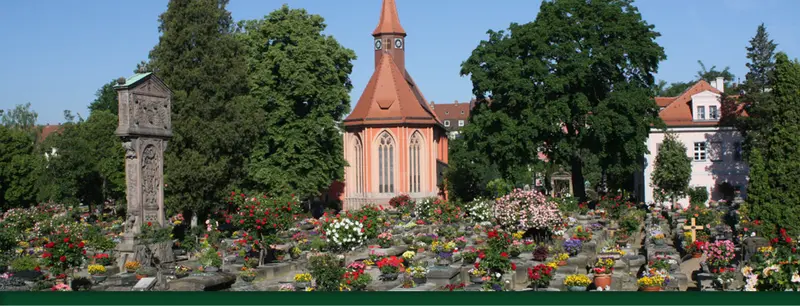
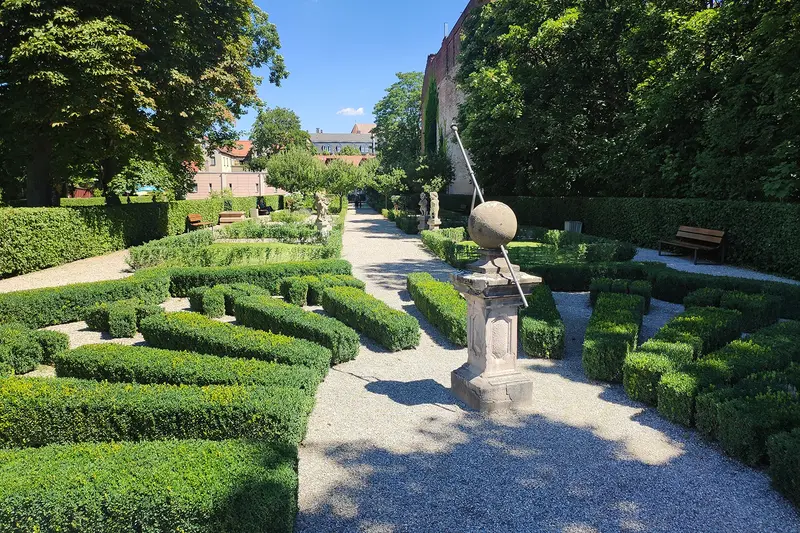
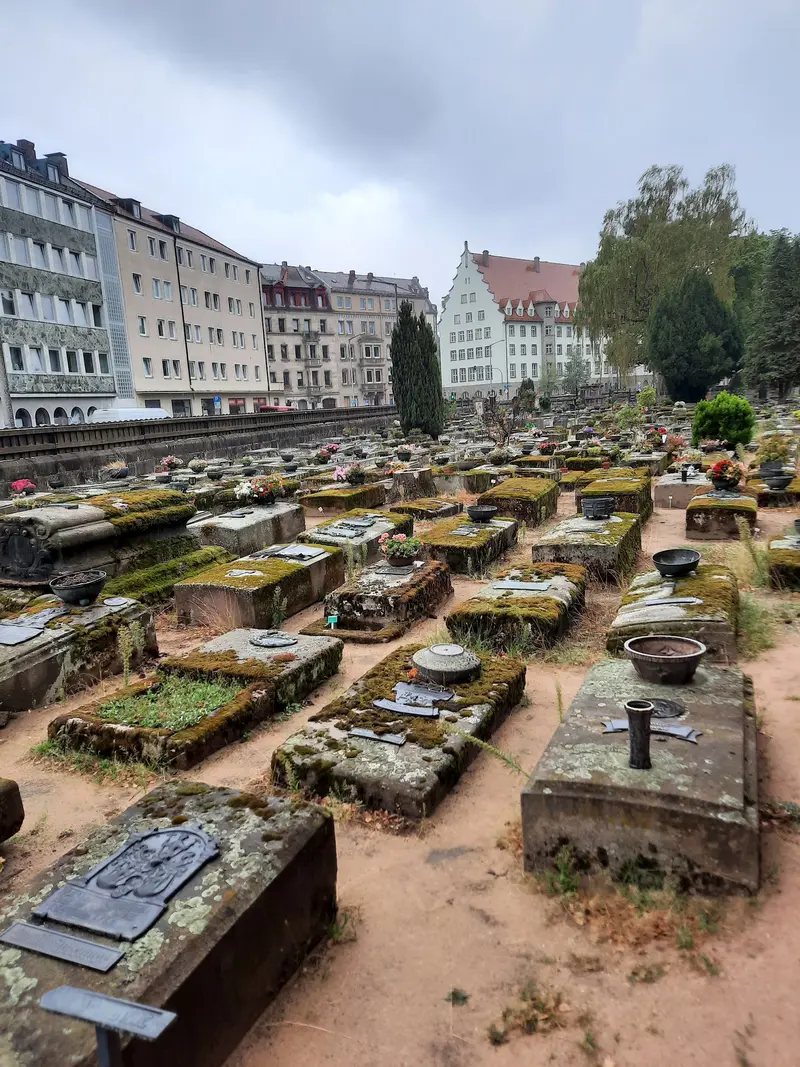
    West of the Old Town lie two districts with very different characters, separated by the Pegnitz River. North of the river, St. Johannis grew up around a lazaretto first mentioned in 1234, a station for lepers. On the Johannisfriedhof, also called Rosenfriedhof due to its many roses, Albrecht Dürer and Veit Stoß are buried. In the Hesperidengärten, reconstructed Baroque gardens demonstrate how Nuremberg patricians once cultivated citrus plants here. South of the Pegnitz lies Gostenhof, first mentioned in 1311 and largely undamaged during World War II. Long notorious as the "Glass Shard Quarter," the district has acquired an an alternative image since the 1980s with pubs, initiatives, and artist studios; its acronym "GoHo" alludes to SoHo in Manhattan.Here you can stroll through old cemeteries with elaborate epitaphs, relax in the Baroque gardens, and explore Gostenhof's pubs in the evening. Composer Johann Pachelbel is buried in the Rochusfriedhof; the Memorium in the Palace of Justice on Fürther Straße commemorates the Nuremberg Trials. The U1 stops in Gostenhof at the Gostenhof and Bärenschanze stations; at Plärrer, on the border with the Old Town, lines U1, U2, and U3 intersect.
    St. Johannis and Gostenhof are situated west of the Old Town, flanking the Pegnitz. In St. Johannis, you'll find the Johannisfriedhof with the graves of Albrecht Dürer and Veit Stoß, as well as the baroque Hesperidengärten. Gostenhof has acquired an alternative image with its pubs, initiatives, and artist workshops. The U1 stops at two stations in Gostenhof; at Plärrer, you transfer to U2 and U3.

    Sights in St. Johannis and Gostenhof

    Discover the most important sights and attractions

    Johannisfriedhof
    Attraction

    1Johannisfriedhof

    The cemetery dates back to a Siechkobel mentioned in 1234 and is known as Rosenfriedhof due to its many rose bushes. Thousands of historic epitaphs are heritage-protected. Albrecht Dürer and Veit Stoß are buried here. St. John's Church was consecrated in 1377 in the choir and in 1395 in the nave.
    Open in Google Maps
    Hesperides Gardens
    Garden

    2Hesperides Gardens

    Between Johannisstraße and Hallerwiese, patricians and merchants from the 16th to 18th centuries laid out pleasure gardens where, following Italian models, they cultivated citrus plants like bitter oranges. Some of the Baroque gardens were reconstructed in the early 1980s; you can enter them via Johannisstraße 13 and 47 or Riesenschritt 26.
    Open in Google Maps
    Rochus Cemetery
    Attraction

    3Rochus Cemetery

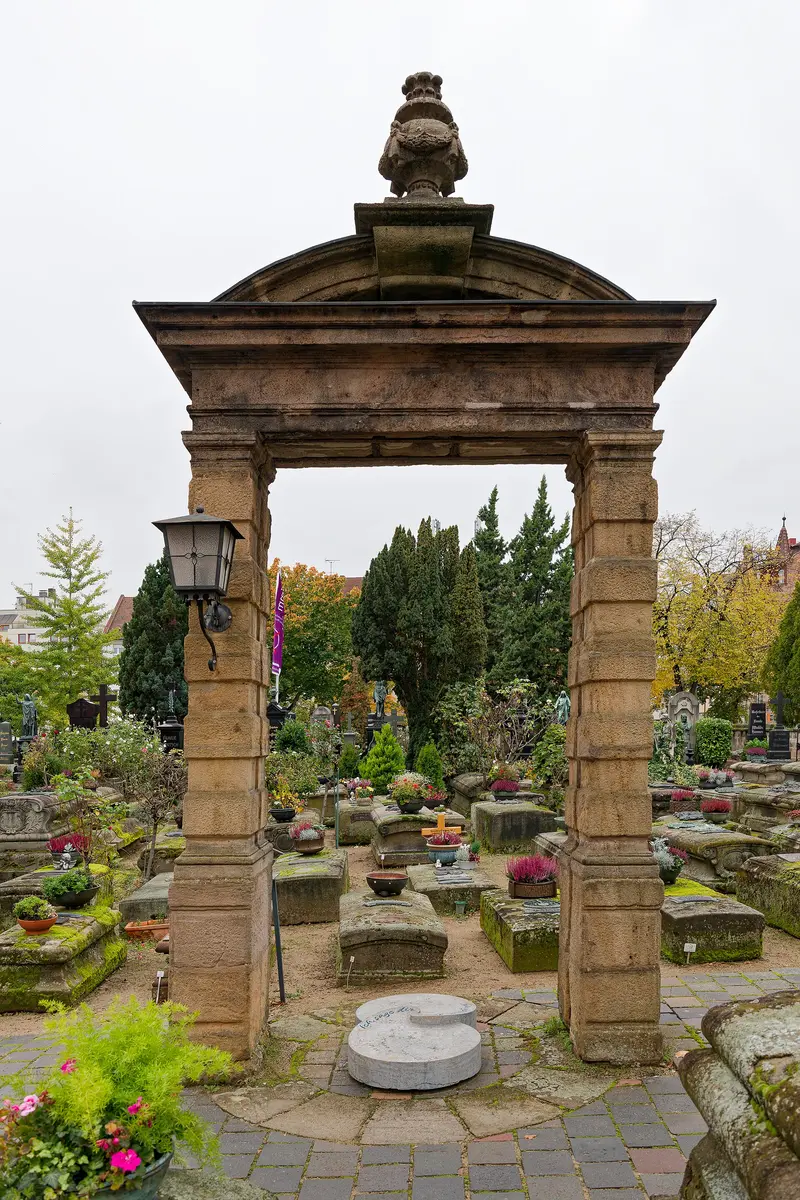
    The cemetery of St. Lorenz Parish was laid out in 1518 and consecrated in 1519. Here lie, among others, the composer Johann Pachelbel and the bronze caster Peter Vischer the Elder. In the Rochus Chapel, founded in 1520/21, the eleven windows from the Hirsvogel workshop are almost entirely original.
    Open in Google Maps

    Restaurants in St. Johannis and Gostenhof

    1

    Veles

    Upscale restaurant with European cuisine on Kernstraße in Gostenhof.
    Show on Google Maps
    2

    Kakehashi

    Japanese Restaurant on Johannisstraße in St. Johannis.
    Show on Google Maps
    3

    Rosi's Baroque Cottage

    Cozy eatery in an old timber-framed house with a beer garden, wines and Franconian specialties.
    Show on Google Maps

    Nightlife

    1

    Pug from Gostenhof

    Pub and bar on Volprechtstraße in Gostenhof.
    Show on Google Maps
    2

    The Willich

    Bar with an oriental lounge atmosphere, cocktails, hot drinks, and international snacks.
    Show on Google Maps
    3

    KBH Pub and Beer Garden

    Pub with beer garden and snack bar on Johannisstraße in St. Johannis.
    Show on Google Maps

    Accommodations in St. Johannis and Gostenhof

    Find perfect stay in St. Johannis and Gostenhof

    Booking.com* (Affiliate link)
    Search Hotels
    Agoda* (Affiliate link)
    Search Hotels
    Airbnb
    Vacation Rentals

    * Affiliate link: if you book through it, we earn a small commission. The price stays the same for you.

    Campgrounds in St. Johannis and Gostenhof

    Find perfect campground in St. Johannis and Gostenhof

    Search via Google Maps
    Campgrounds nearby (15km)
    Camping.info
    Find Campgrounds
    Park4Night
    RV Parks & Camping

    Plan your trip to St. Johannis and Gostenhof

    Save places, build a route and plan your city trip, all in one place.

    1. 1
      1234

      Round trip

      12 days · 4 stops

      Saved

      Pick a route

      Pick a ready-made one or save places and plan your own.

      Open bookmarks
    2. 2

      Trip to St. Johannis and Gostenhof

      Live
      • 1Johannisfriedhof3 days
      • 2Hesperides Gardens4 days
      • 3Rochus Cemetery5 days
      Budget

      Plan your trip

      The planner sorts stops, days and budget. Plan together in real time.

      Start trip planning
    3. 3
      9:41 No signal
      Available offline

      Use it on the road

      Download the guide to your phone and use it on site, even offline.

    Nearby

    Nuremberg

    Nuremberg

    Nuremberg is Bavaria's second-largest city, with over 520,000 inhabitants. The Pegnitz divides the almost entirely walled Old Town into the Sebalder and Lorenzer sides. On the northern edge, the Imperial Castle stands, where all emperors and kings of the Holy Roman Empire temporarily resided between 1105 and 1571. Albrecht Dürer lived from 1509 until his death in 1528 in his house at the Tiergärtnertor.The city also confronts its dark history: a Documentation Center is located on the former Nazi Party Rally Grounds, and the Nuremberg Trials began in the Palace of Justice in November 1945. The Germanisches Nationalmuseum is considered the largest cultural history museum in the German-speaking world, and during Advent, the Christkindlesmarkt draws visitors.
    Lorenz's Old Town

    Lorenz's Old Town

    Die Lorenzer Altstadt ist der südliche Teil der Nürnberger Altstadt zwischen Pegnitz und Stadtmauer. Ihr Mittelpunkt ist die gotische Lorenzkirche, ihr gegenüber steht mit dem Nassauer Haus der letzte erhaltene Wohnturm der Stadt, obwohl es um 1430 noch rund 65 solcher Türme gegeben haben soll. Durch das Viertel zieht sich die Fußgängerzone mit den großen Einkaufsstraßen, an ihrem Westende steht der vermutlich um 1250 errichtete Weiße Turm, ein Rest der vorletzten Stadtbefestigung. Am Königstor, auf dem ehemaligen Waffenhof der Reichsstadt, liegt der Handwerkerhof.Hier kaufst du im Handwerkerhof Lebkuchen, Zinnfiguren oder Blechspielzeug direkt in den Werkstätten, schaust dir vor dem Weißen Turm die überlebensgroßen Figurengruppen des Ehekarussells an und gehst ins Germanische Nationalmuseum oder ins Neue Museum mit seiner 100 Meter langen Glasfassade. Die U1 hält an den Stationen Lorenzkirche und Weißer Turm, Lorenzkirche ist die erste Station nach dem Hauptbahnhof.
    Sebald's Old Town

    Sebald's Old Town

    The Sebalder Altstadt is the northern part of Nuremberg's Old Town, bounded by the city wall and Kaiserburg to the north and the Pegnitz to the south. It is named after Saint Sebaldus, whose tomb lies in St. Sebald, the city's oldest parish church. During World War II, the district was so severely destroyed by air raids that in the early post-war years it was called the 'Sebalder Steppe'. Today, many historical, partly reconstructed houses stand alongside plain buildings from the 1950s and 1960s, and over half of the stations on the Historical Mile are located on this side of the Pegnitz.You climb from Hauptmarkt up to the Castle, admire the timber-framed and sandstone ensemble around Dürer-Haus and Pilatushaus at Tiergärtnertor, and stroll through Weißgerbergasse with its cafés, bars, and small shops. Beneath your feet lie the Felsengänge, cellars, and galleries that have been carved into the sandstone since the 14th century. At Weinstadel and Henkersteg, the Old Town reveals itself from the riverside. The next subway station is Lorenzkirche (U1) on the Lorenzer side, from there you cross over the Pegnitz.
    Nuremberg Rally Grounds and Dutzendteich

    Nuremberg Rally Grounds and Dutzendteich

    In the southeast of Nuremberg lies the former Nazi Party Rally Grounds of the NSDAP, an area spanning over 16.5 square kilometers. Most of the structures remained unfinished: The Congress Hall, whose foundation stone was laid in 1935, reached only 39 meters in height instead of the planned 68.5 meters and never received a roof. The Zeppelintribüne, designed by Albert Speer, is the only completed building on the site. Today, these monumental buildings are located within Volkspark Dutzendteich, featuring its lakes, and cycling and walking paths. The Documentation Center in the North Wing of the Congress Hall has been showing its new permanent exhibition “Nuremberg and the Nazi Party Rallies” in trial operation since May 22, 2026; the official opening is scheduled for November 4, 2026.You best start at the Documentation Center and then walk along the Große Straße and Dutzendteich lake to the Zeppelintribüne. The grandstand's facade is currently being restored, with the renovation of the entire Zeppelinfeld expected to be completed by 2030. In summer, you can rent paddle and rowboats at Dutzendteich lake. Tram lines 6 and 8, as well as buses 36, 45, 55, and 65, stop at Doku-Zentrum; however, replacement buses occasionally operate on the tram route due to construction work. You can reach Dutzendteich station with the S2 and tram lines 7 and 10.
    Franken

    Franken

    Nuremberg is Bavaria's second-largest city. Perched on a sandstone ridge above the Old Town is the Kaiserburg (Imperial Castle), where all emperors and kings of the Holy Roman Empire temporarily resided between 1105 and 1571. The Germanisches Nationalmuseum (German National Museum) is considered the largest cultural history museum in the German-speaking world.In Bamberg, the Old Town has been a UNESCO World Heritage site since 1993, and in Würzburg, Balthasar Neumann's Residenz (Residence) with its Court Garden since 1981. The Romantic Road, founded in 1950 as Germany's first scenic route, leads from Würzburg via Rothenburg ob der Tauber, with its 3,360-meter-long city wall, all the way to Füssen.