Fernweh: Home
ExploreGuideDestinationsMy tripsMy trip
de|en
All Places & RegionsRound tripsNight trains in EuropeAll highlightsAbout FernwehFAQPrivacy PolicyImprint
Download on the App StoreGet it on Google Play
ExploreGuideDestinationsMy tripsMy trip
    • Neighborhoods & highlights
    • Tours
    • Eat & drink
    • Culture
    • Getting around
    • Accommodation
    • Plan trip
    • Nearby
    Coro

    Photo by Waskyria Miranda on Pexels

    Venezuela

    Coro

    City

    For this area, the FCDO advises against travel unless it is essential. Check the FCDO travel advice, linked on the country page, before planning.

    by Felix Gillen

    1. Home
    2. Destinations
    3. Venezuela
    4. Coro
    For this area, the FCDO advises against travel unless it is essential. Check the FCDO travel advice, linked on the country page, before planning.Coro in north-western Venezuela, founded in 1527 as Santa Ana de Coro, has a colonial old town built of earth: some 600 historic buildings combine local building traditions with Mudéjar style and Dutch techniques. Coro and its port La Vela have been a UNESCO World Heritage Site since 1993, and the sand dunes of Médanos de Coro National Park begin right outside the city.Since 2005 the site has been on the List of World Heritage in Danger because rain and groundwater damage the earthen buildings. The Paraguaná Peninsula lies to the north.
    Venezuela travel guideRound trips in VenezuelaPlan a trip with Coro

    Contents

    • Neighborhoods & highlights
    • Tours
    • Eat & drink
    • Culture
    • Getting around
    • Accommodation
    • Nearby

    Sights in Coro

    Discover the most important sights and attractions

    Museum

    1Balcony of the Arcayas

    The two-story 18th-century house with its long wooden balcony is a typical example of Coro's colonial architecture. Today, it houses the Museo de Loza Popular, displaying folk pottery.
    Open in Google Maps
    Museum

    2House with the Iron Windows

    The colonial house is striking for its over 8m high portal and wrought-iron window grilles from Andalusia. Today, it houses a private collection of historical family items.
    Open in Google Maps
    Church

    3Church of San Francisco

    The Franciscan Church was destroyed in a pirate attack in 1620 and rebuilt; its Neo-Gothic tower dates from 1900. In the adjoining building, the Museo Diocesano Lucas Guillermo Castillo displays sacred art.
    Open in Google Maps
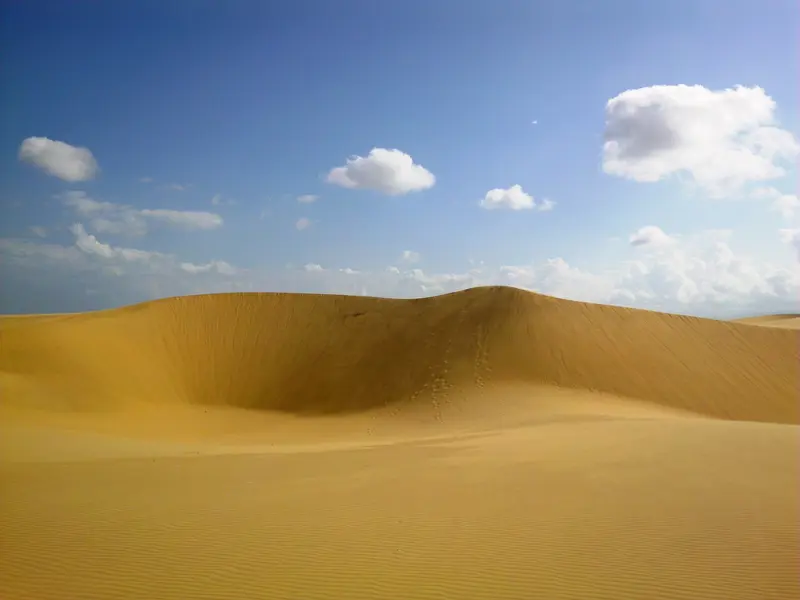
    Médanos de Coro National Park

    Nehe009 / Wikimedia Commons / CC BY-SA 4.0, mod.

    National Park

    4Médanos de Coro National Park

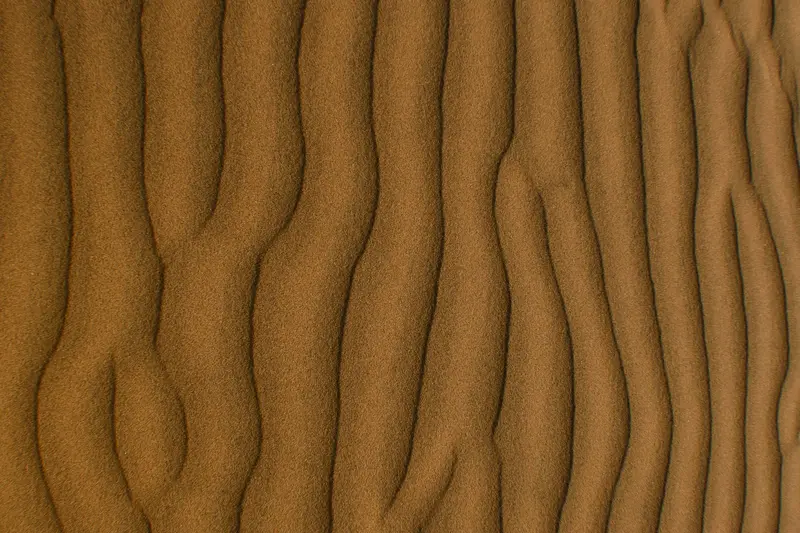
    Just north of the city lies the dune area, protected as a National Park in 1974, on the isthmus linking Coro to Paraguaná Peninsula. The sand dunes reach the city limits.
    Open in Google Maps

    5La Vela de Coro

    The port town, some 11 km northeast of Coro, is a UNESCO World Heritage site; its houses display Antillean and Dutch influences. Here, on August 3, 1806, Francisco de Miranda first raised the tricolor flag on Venezuelan soil.
    Open in Google Maps
    Place of Worship

    6Jewish Cemetery of Coro

    The Jewish cemetery dates to 1832, when Joseph Curiel and Debora Levy Maduro bought land to bury their daughter; the families were from Curaçao. It is considered the oldest continuously used Jewish cemetery in the Americas and is part of Coro's UNESCO World Heritage.
    Open in Google Maps

    Tours & experiences in Coro

    Search tours for Coro on GetYourGuide* (Affiliate link)On GetYourGuide, with reviews from other travellers

    * Affiliate link: if you book through it, we earn a small commission. The price stays the same for you.

    Restaurants in Coro

    Culture and History

    First CapitalCoro was founded in 1527 and was the first capital of the later Captaincy General of Venezuela. Among its oldest buildings is the Cathedral, whose construction began in 1583.Adobe Under PressureThe old town comprises some 600 historic buildings spread across over 18 hectares. Heavy rainfall in 2004/05 and again in 2022 damaged numerous houses; UNESCO demands improved drainage and has kept the site on the List of World Heritage in Danger in 2026.

    Getting Here & Around

    Getting ThereFrom Caracas, it takes 7 to 10 hours to get to Coro, depending on your transport. The old town is easily explored on foot, and the Médanos dunes begin at the northern edge of the city.

    Accommodations in Coro

    Find perfect stay in Coro

    Booking.com* (Affiliate link)
    Search Hotels
    Agoda* (Affiliate link)
    Search Hotels
    Airbnb
    Vacation Rentals

    * Affiliate link: if you book through it, we earn a small commission. The price stays the same for you.

    Plan your trip to Coro

    Save places, build a route and plan your city trip, all in one place.

    1. 1
      Sunrise over alpine peaks and a sea of clouds
      1234

      Round trip

      12 days · 4 stops

      Saved

      Pick a route

      Pick a ready-made one or save places and plan your own.

      Open bookmarks
    2. 2

      Trip to Coro

      Live
      • 1Balcony of the Arcayas3 days
      • 2House with the Iron Windows4 days
      • 3Church of San Francisco5 days
      Budget

      Plan your trip

      The planner sorts stops, days and budget. Plan together in real time.

      Start trip planning
    3. 3
      9:41 No signal
      Coro
      Available offline

      Photo by Waskyria Miranda on Pexels

      Use it on the road

      Download the guide to your phone and use it on site, even offline.

    Nearby

    Halbinsel Paraguaná

    Halbinsel Paraguaná

    For this area, the FCDO advises against travel unless it is essential. Check the FCDO travel advice, linked on the country page, before planning.The roughly 3,400 km² peninsula in Falcón state is joined to the mainland only by the dune landscape of the Médanos de Coro. Cabo San Román marks the northernmost point of mainland Venezuela, Cerro Santa Ana rises in the interior, and on the east coast Adícora, with its steady trade winds, is a spot for windsurfers and kitesurfers.The largest town is Punto Fijo, which grew with the Amuay and Cardón refineries on the west coast. A highway crosses the isthmus from Coro.

    Aramburu Carlos·CC BY 4.0

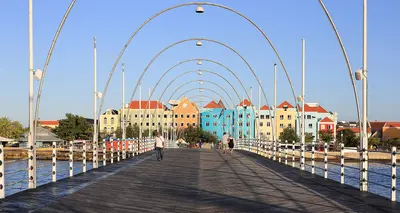
    Otrobanda

    Otrobanda

    Otrobanda, 'the other side,' lies west of Sint Anna Bay and originated in the 18th century. You can reach this district on foot from Punda via the floating Queen Emma Bridge.On the waterfront stands Rif Fort, dating from the late 1820s, now part of a shopping district. At Rif, a monument commemorates Tula, leader of the 1795 slave revolt, who was executed here; and in buildings of a former slave trading post, the Museum Kura Hulanda, founded in 1999, displays over 5,000 objects.

    Martin Falbisoner·CC BY-SA 4.0

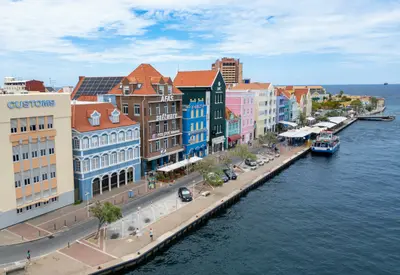
    Punda

    Punda

    Punda is Willemstad's oldest district, founded in the 17th century on the east side of the Sint Anna Bay. Colorful merchant houses line the Handelskade, while Breedestraat and Heerenstraat are the main shopping streets.Fort Amsterdam, whose construction began in 1636, now houses the Governor's Palace and the Fort Church Museum. A few alleys away stands the Mikvé Israel-Emanuel Synagogue from 1732. Along the waterfront are the Plasa Bieu Market Hall and the fruit boats from Venezuela.

    Aron Marinelli·Unsplash

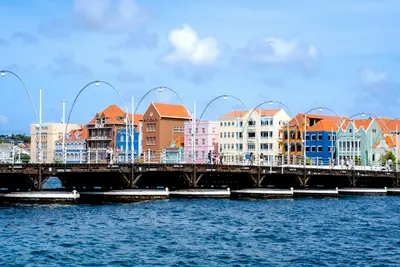
    Willemstad

    Willemstad

    Willemstad, the capital of Curaçao, has been on UNESCO's World Heritage List since 1997 as the "Historic Area of Willemstad, Inner City and Harbour." The Sint Anna Bay divides the city into Punda, the oldest district from the 17th century, and Otrobanda on the other side; additionally, Pietermaai and Scharloo from the 18th century.According to UNESCO, the colorful facades stem from an 1817 ban on white lime plaster facades. The two banks are connected by the floating Queen Emma Bridge from 1888 for pedestrians and the high Juliana Bridge from 1974 for cars.

    Bent Van Aeken·Unsplash

    San Nicolas and the South

    San Nicolas and the South

    San Nicolas in the southeast was the site of the Lago Refinery and is now known for its large-format murals: Since the first Aruba Art Fair in September 2016, artists like Bordalo II have adorned the facades. The Carnival Museum Carnival Euphoria and the San Nicolas Community Museum tell the story of the city.Nearby lies Baby Beach, a shallow lagoon for families, and on the south coast near Savaneta, the mangroves of Mangel Halto as well as the Zeerovers fishing pier.

    Ginelly.Q·CC0

    Your next steps

    Coro is in Venezuela. Ways to carry on from here.

    • More in Venezuela

      Highlights, areas, routes and the best time to travel for all of Venezuela.

      Venezuela travel guide
    • Round trips in Venezuela

      Ready-made routes through Venezuela, with stops, nights and a map.

      See the routes

    Sources & method

    • Photos: Wikimedia Commons, Pexels. Each photo carries its credit.
    • Place data such as addresses and ratings comes from Google Maps.
    • The content is based on web research from public, traceable sources. How the content is made · The role of AI