ExploreTravel GuidesPlan a trip
    de|en
    All Places & RegionsAbout FernwehFAQPrivacy PolicyImprint
    ExploreTravel GuidesPlan a trip
    • Places in the region
    • Nearby
    Mecklenburg Lake District
    Bybbisch94, Christian Gebhardt / Wikimedia Commons / CC BY-SA 4.0

    Germany

    Mecklenburg Lake District

    RegionNatureUNESCO

    In the inland of Mecklenburg, Müritz is the largest body of water located entirely within Germany, spanning 117 square kilometers.

    1. Home
    2. Destinations
    3. Germany
    4. Mecklenburg Lake District
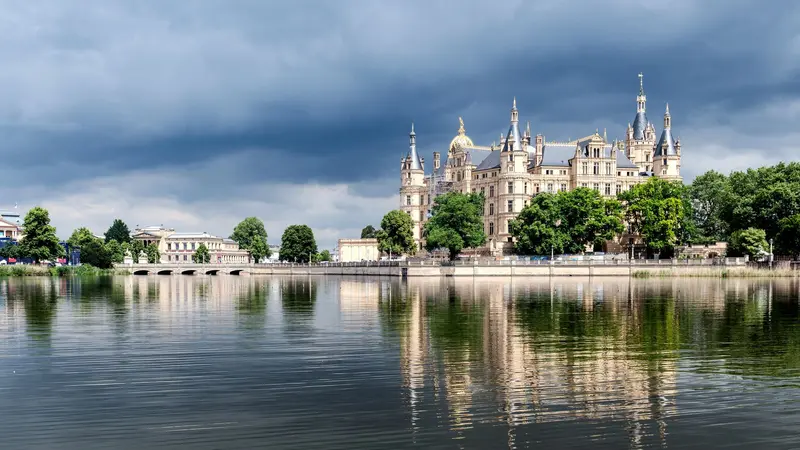
    In the inland of Mecklenburg, Müritz is the largest body of water located entirely within Germany, spanning 117 square kilometers. Right next to it lies the Müritz National Park with 108 lakes over one hectare, featuring moors, meadows, and vast forests where sea eagles, ospreys, and cranes breed.In the west of the region, Schwerin, Germany's smallest state capital, boasts its castle majestically on an island. Since July 2024, it has been part of the UNESCO World Heritage as part of the Residenzensemble Schwerin. Within Schwerin's city limits alone, there are twelve lakes.
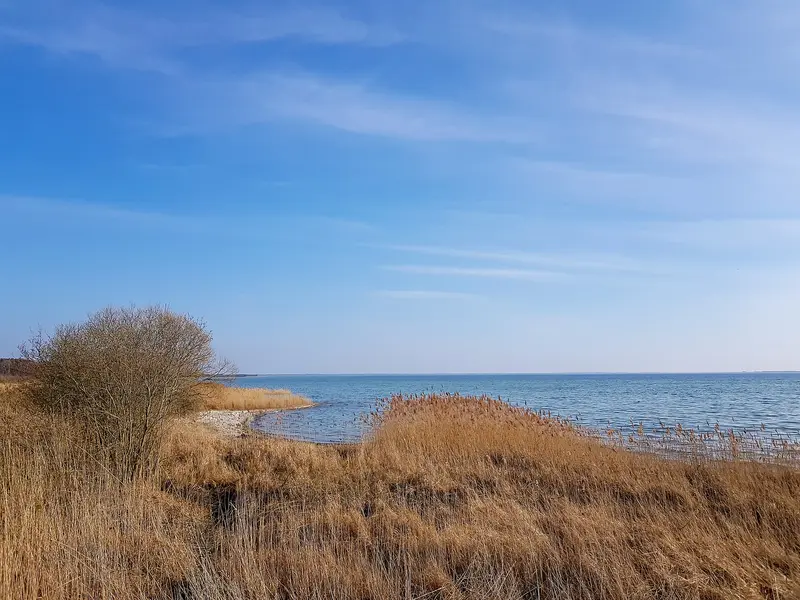
    Müritz National Park
    Sven Segler / Wikimedia Commons / CC BY-SA 4.0

    Place 1 of 2

    Müritz National Park

    Founded in 1990, Müritz National Park covers 322 square kilometers and is considered Germany's largest terrestrial national park. Nearly three-quarters of its area is forest, complemented by 108 lakes over one hectare, as well as bogs and meadows.

    Discover
    Schwerin

    Place 2 of 2

    Schwerin

    Schwerin, with just under 100,000 inhabitants, is Germany's smallest state capital. Twelve lakes lie within the city area, including Lake Schwerin, Germany's fourth-largest lake.

    Schwerin has almost 100,000 inhabitants and is Germany's smallest state capital. Twelve lakes lie within the city area, most notably Lake Schwerin.

    Discover

    Nearby

    Müritz National Park

    Müritz National Park

    Founded in 1990, Müritz National Park covers 322 square kilometers and is considered Germany's largest terrestrial national park. Nearly three-quarters of its area is forest, complemented by 108 lakes over one hectare, as well as bogs and meadows. The park comprises the larger Müritz section in the west and the smaller Serrahn section in the east, whose beech forests have been a UNESCO World Natural Heritage site since June 2011.White-tailed eagles and ospreys have their territory here, with over 100 pairs of cranes breeding in the park. From observation platforms, you can watch ospreys, and from the Käflingsbergturm, you can survey the landscape. In Waren, the Müritzeum provides information about the region's nature.
    Rostock & Warnemünde

    Rostock & Warnemünde

    Rostock, with some 210,000 inhabitants, is Mecklenburg-Vorpommern's largest city, stretching about 16 kilometers along both banks of the Warnow, from the city center to its mouth in Warnemünde. The Hanseatic city received Lübeck city rights in 1218; its university, founded in 1419, is Northern Europe's oldest.Marienkirche, Town Hall on Neuer Markt, and Kröpeliner Tor shape the Old Town. The S-Bahn gets you quickly to Warnemünde, where Lighthouse, Teepott, and Alter Strom await. Hanse Sail in August welcomes some 300 traditional tall ships.
    Schwerin

    Schwerin

    Schwerin, with just under 100,000 inhabitants, is Germany's smallest state capital. Twelve lakes lie within the city area, including Lake Schwerin, Germany's fourth-largest lake. Its landmark is the castle on the castle island, completed in 1857 in Neo-Renaissance style and today housing the state parliament.Schwerin's Residence Ensemble became a UNESCO World Heritage site in July 2024. Around the Alter Garten stand the State Theatre and Museum, the Cathedral in the Old Town, and the Town Hall at the market. The Baroque Schelfstadt and Pfaffenteich invite for a stroll.
    Mecklenburg Baltic Sea Coast

    Mecklenburg Baltic Sea Coast

    Along the Mecklenburg coast, between Wismarbucht and Warnemünde, old Hanseatic towns and classic seaside resorts are strung together. Wismar, along with Stralsund, became a UNESCO World Heritage site in 2002. Rostock is Mecklenburg-Vorpommern's largest city and, with its university founded in 1419, boasts Northern Europe's oldest higher education institution.In Heiligendamm, Duke Friedrich Franz I founded Germany's oldest seaside resort in 1793, known as the "White City by the Sea". From here, the narrow-gauge railway Molli leisurely chugs to Bad Doberan and Kühlungsborn. In Warnemünde, Rostock's district at the mouth of the Warnow, a beach up to 150 meters wide, a lighthouse, and captain's houses along the Alter Strom await you.
    Wismar

    Wismar

    Wismar is located at the southern tip of Wismar Bay, which is protected by Poel Island. The Hanseatic city was under Swedish rule from 1648, which ended in 1803 with a pledge to Mecklenburg. Since 2002, its Old Town, together with that of Stralsund, has been a UNESCO World Heritage site.The heart of the city is the 100 by 100-meter market square, featuring the Wasserkunst of 1602 and the Alter Schwede citizens' house from 1360. From there, you walk to the brick churches St. Nikolai, St. Georgen, and the tower of St. Marien, and down to the Old Harbor.