Fernweh: Home
ExploreGuideDestinationsMy tripsMy trip
de|en
All Places & RegionsRound tripsNight trains in EuropeAll highlightsAbout FernwehFAQPrivacy PolicyImprint
Download on the App StoreGet it on Google Play
ExploreGuideDestinationsMy tripsMy trip
    • Neighborhoods & highlights
    • Recommendations
    • Tours
    • Eat & drink
    • Culture
    • Getting around
    • Accommodation
    • Plan trip
    • Nearby
    Portobelo

    Mariordo (Mario Roberto Durán Ortiz) / Wikimedia Commons / CC BY-SA 4.0, mod.

    Panama

    Portobelo

    City

    Portobelo is a small town on a Caribbean bay in the province of Colón, about one and a half to two hours' drive from Panama City.

    by Felix Gillen

    1. Home
    2. Destinations
    3. Panama
    4. Portobelo
    Portobelo is a small town on a Caribbean bay in the province of Colón, about one and a half to two hours' drive from Panama City. On both sides of the bay lie Spanish fortresses that are part of the UNESCO World Heritage, and the town is a center of Afro-Caribbean Congo culture.The gold and silver of the Spanish crown passed through the Real Aduana, the royal custom house. The fortresses were attacked multiple times, including by Henry Morgan and later by Admiral Edward Vernon. In 2012, UNESCO placed the Portobelo-San Lorenzo World Heritage site on the List of World Heritage in Danger due to its poor state of preservation and kept it there in July 2026. Since 2025, the fortresses have been part of the Colonial Transisthmian Route.The Iglesia de San Felipe houses the Cristo Negro, to whose festival on October 21st pilgrims arrive in violet robes. At the mouth of the Río Chagres lies Fuerte San Lorenzo, the second part of the World Heritage site.
    Panama travel guideRound trips in PanamaPlan a trip with Portobelo

    Contents

    • Neighborhoods & highlights
    • Recommendations
    • Tours
    • Eat & drink
    • Culture
    • Getting around
    • Accommodation
    • Nearby

    Sights in Portobelo

    Discover the most important sights and attractions

    Historic Landmark

    1Fort San Jerónimo

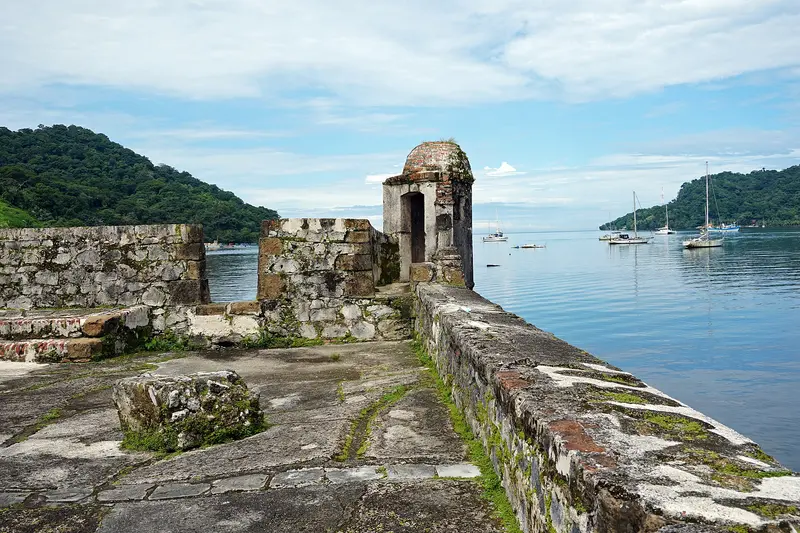
    The fortress in the town center is considered Portobelo's best-preserved structure and, according to Lonely Planet, was the largest built to protect the bay. Visible are a gate, the ruins of the officers' quarters, barracks, and guardhouse, as well as a terrace with cannons overlooking the water. It is a UNESCO World Heritage Site.
    Open in Google Maps
    Royal Customs of Portobelo

    “Street Scene with Real Aduana de Portobelo” by Adam Jones / Wikimedia Commons / CC BY-SA 2.0, mod.

    Museum

    2Royal Customs of Portobelo

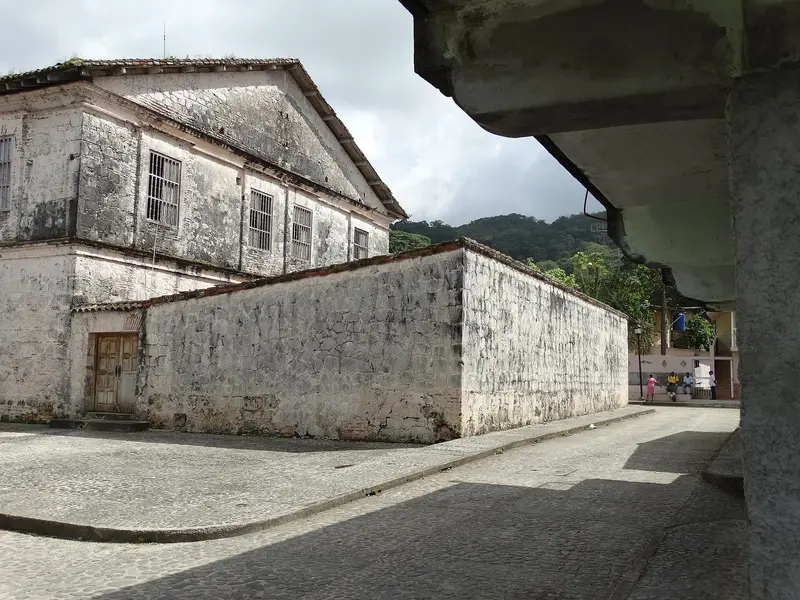
    In the two-story colonial building of the Royal Customs House, the gold and silver of the Spanish Crown were counted and registered. A small exhibition displays rifle replicas, fortress sketches, and old photos. Lonely Planet recently reported renovations; you should best check the opening on site.
    Open in Google Maps
    Point of Interest

    3Fort San Fernando

    The fortress across the bay is reachable by water taxi from the pier. Not much remains, because the USA removed stones for canal building.
    Open in Google Maps
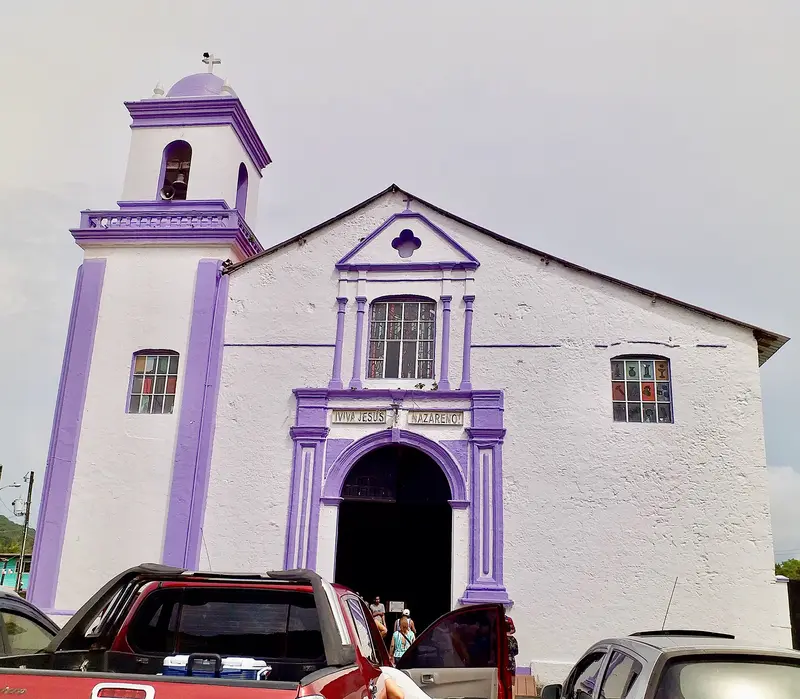
    Church of Saint Philip (Black Christ)

    GiankM. M / Wikimedia Commons / CC BY-SA 4.0, mod.

    Church

    4Church of Saint Philip (Black Christ)

    In the church stands the figure of the Cristo Negro, the Black Christ. On October 21st, it draws the region's largest pilgrimage, with pilgrims arriving on foot and in purple robes. In the former Hospital San Juan de Dios behind it, many of the figure's robes, newly sewn annually, are displayed.
    Open in Google Maps

    Tours & experiences in Portobelo

    Search tours for Portobelo on GetYourGuide* (Affiliate link)On GetYourGuide, with reviews from other travellers

    * Affiliate link: if you book through it, we earn a small commission. The price stays the same for you.

    Restaurants in Portobelo

    Fortresses, Cristo Negro and Congo Culture

    Fortresses at Gold HarbourFuerte San Jerónimo is considered the best-preserved fortress in the town. Some cannons still stand where Spanish troops left them in 1821 when Panama became independent. Castillo Santiago de la Gloria was destroyed by Morgan, rebuilt, and abandoned after Vernon's attack.Cristo NegroEvery year on October 21st, Portobelo celebrates its biggest festival in honor of the dark Christ figure in the Iglesia de San Felipe. Pilgrims arrive on foot, many in purple robes and carrying crosses. The figure's robe is new each year, always purple with gold. There are several legends about the figure's origin.Congo CultureUNESCO recognized the ritual and festive expressions of Panama's Congo culture as intangible cultural heritage in 2018. The tradition originates from descendants of rebellious enslaved people. The Congo season lasts from January 20th until Ash Wednesday; every two years, the Festival de Diablos y Congos takes place in Portobelo after Easter.

    Getting Around Portobelo

    Getting thereFrom Panama City it takes about 1.5 hours by car via the highway towards Colón, or 2.5 to 3 hours by bus via Colón.On siteSan Jerónimo, the Real Aduana and the Iglesia de San Felipe are close together in the town centre. A water taxi from the pier takes you to Fuerte San Fernando on the other side of the bay.Practical tipsOn 21 October parking is scarce, so an organised trip is easier. Parts of the forts are crumbling, so respect the barriers. For crime in Colón Province, see the FCDO Travel Advice for Panama.

    Accommodations in Portobelo

    Find perfect stay in Portobelo

    Booking.com* (Affiliate link)
    Search Hotels
    Agoda* (Affiliate link)
    Search Hotels
    Airbnb
    Vacation Rentals

    * Affiliate link: if you book through it, we earn a small commission. The price stays the same for you.

    Plan your trip to Portobelo

    Save places, build a route and plan your city trip, all in one place.

    1. 1
      Sunrise over alpine peaks and a sea of clouds
      1234

      Round trip

      12 days · 4 stops

      Saved

      Pick a route

      Pick a ready-made one or save places and plan your own.

      Open bookmarks
    2. 2

      Trip to Portobelo

      Live
      • 1Fort San Jerónimo3 days
      • 2Royal Customs of Portobelo4 days
      • 3Fort San Fernando5 days
      Budget

      Plan your trip

      The planner sorts stops, days and budget. Plan together in real time.

      Start trip planning
    3. 3
      9:41 No signal
      Portobelo
      Available offline

      Mariordo (Mario Roberto Durán Ortiz) / Wikimedia Commons / CC BY-SA 4.0, mod.

      Use it on the road

      Download the guide to your phone and use it on site, even offline.

    Nearby

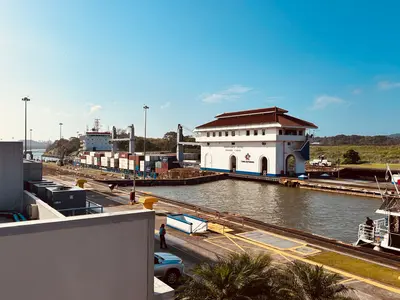
    Panama Canal and Gatun Lake

    Panama Canal and Gatun Lake

    The Panama Canal connects the Pacific and Caribbean, starting right at the edge of Panama City. At the visitor centers of Miraflores on the Pacific side and Agua Clara near Colón, you can watch ships navigate the locks.The heart of the canal route is Gatun Lake, a reservoir formed by the damming of the Río Chagres. Its largest island, Barro Colorado, has been a protected area since 1923; a research station opened there in 1924, operated by the Smithsonian since 1946. On the east bank lies Soberanía National Park with Pipeline Road, one of the country's most famous birdwatching trails.Two bridges cross the canal on the Pacific side: the Puente de las Américas from 1962 and the cable-stayed bridge Puente Centenario, inaugurated in 2004 and open to traffic since 2005.

    Kevin Alvarez·Pexels

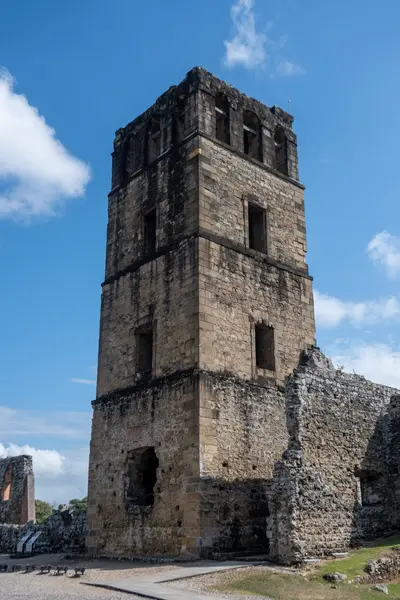
    Panamá Viejo

    Panamá Viejo

    Panamá Viejo are the ruins of the first Spanish city on the Pacific coast of the Americas, on the eastern edge of Panama City. Since 2003, they have been a UNESCO World Heritage site, and from the tower of the old cathedral, you can overlook the grounds and the bay.Pedro Arias Dávila founded the city on August 15, 1519. In 1671, the Welsh privateer Henry Morgan attacked the city, and the subsequent fire destroyed it. Afterward, it was refounded a few kilometers further west.The Patronato Panamá Viejo operates the site as an open-air museum. Inside the museum, a model shows the city as it looked before 1671.

    xiquinhosilva·CC BY 4.0

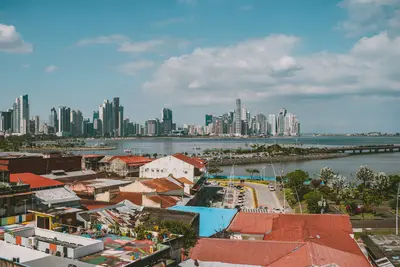
    Panama City

    Panama City

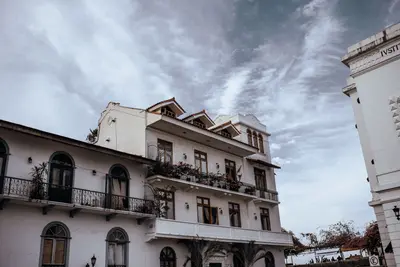
    Panama City is Panama's capital, situated at the Pacific entrance of the Panama Canal. Within a small area, you'll discover the colonial Old Town Casco Viejo, the ruins of the original city, a museum by Frank Gehry, and the Miraflores Locks.The city was founded on August 15, 1519, by Pedro Arias Dávila. After its destruction by Henry Morgan in 1671, it was rebuilt a few kilometers further west, from which today's Casco Viejo emerged. UNESCO inscribed it as a World Heritage Site in 1997 and expanded it in 2003 to include the ruins of Panamá Viejo.West of the Old Town begins the former Canal Zone around Balboa. From there, the Calzada de Amador with the Biomuseo extends into the bay. The Federal Foreign Office provides information on crime in individual districts.
    Eliécer Gómez·Pexels

    Casco Viejo

    Casco Viejo

    Casco Viejo is the old town of Panama City, located on a peninsula on the Pacific and a UNESCO World Heritage site since 1997. Amidst churches, squares, and the old city walls, you have views of the skyline and the ships at the canal entrance.The city was rebuilt after Henry Morgan destroyed the original city of Panamá Viejo in 1671. UNESCO listed the district as “Historic District of Panamá, with the Salón Bolívar”; since 2025, it has been part of the Colonial Transisthmian Route. The Pan-American Congress, convened by Simón Bolívar, met in the Salón Bolívar.Around the Plaza de la Independencia stand the Cathedral and the Museo del Canal. At the tip of the peninsula, the Plaza de Francia commemorates the workers who died during the French canal project.

    Luis Quintero·Pexels

    Guna Yala (San Blas)

    Guna Yala (San Blas)

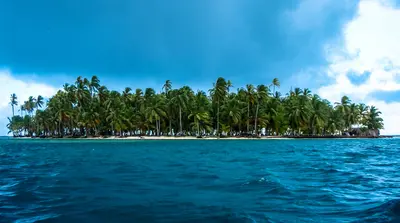
    Guna Yala is a self-governed territory of the Guna people on the Caribbean coast east of Panama City, with an archipelago of several hundred flat coral islands, only a small number of which are inhabited. You come for the palm-fringed islands, the clear water and an indigenous culture that sets its own rules for its territory.After the Tule Revolution of 1925, the area was recognised as the Guna's own territory. Non-Guna may not live here, so tourist lodgings and boat trips are run by the communities. Indigenous law applies in the comarca.The region is also a focus of climate change: in 2024 the community of the flood-threatened island of Gardi Sugdub, around 300 families, moved to the new settlement of Isber Yala on the mainland. Check the current situation and the FCDO Travel Advice for Panama before you go.

    Cotopaxi5897·CC BY-SA 4.0

    Your next steps

    Portobelo is in Panama. Ways to carry on from here.

    • More in Panama

      Highlights, areas, routes and the best time to travel for all of Panama.

      Panama travel guide
    • Round trips in Panama

      Ready-made routes through Panama, with stops, nights and a map.

      See the routes

    Sources & method

    • Photos: Wikimedia Commons. Each photo carries its credit.
    • Place data such as addresses and ratings comes from Google Maps.
    • The content is based on web research from public, traceable sources. How the content is made · The role of AI