ExploreTravel GuidesPlan a trip
    de|en
    All Places & RegionsAbout FernwehFAQPrivacy PolicyImprint
    ExploreTravel GuidesPlan a trip
    Brocken / Brockenbahn

    Germany

    Brocken / Brockenbahn

    Point of Interest

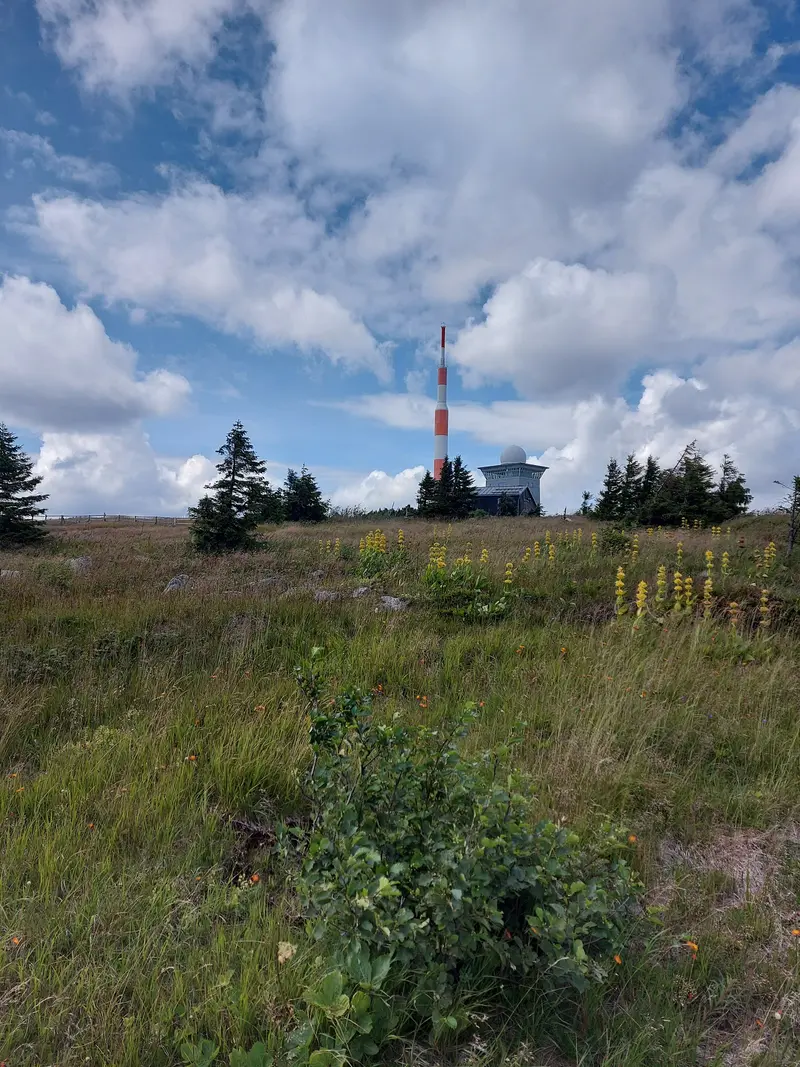
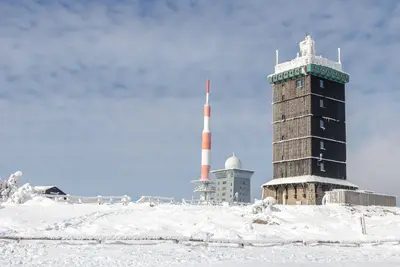
    At 1,141 meters, the Brocken is the highest mountain in the Harz, in Saxony-Anhalt, and throughout North Germany. It lies within the Harz National Park and is one of Germany's most popular excursion destinations.

    1. Home
    2. Destinations
    3. Germany
    4. Harz & Saxony-Anhalt
    5. Brocken / Brockenbahn
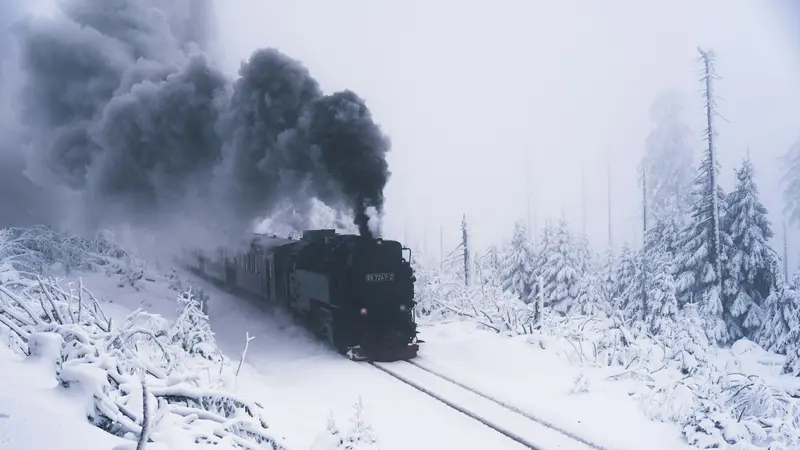
    At 1,141 meters, the Brocken is the highest mountain in the Harz, in Saxony-Anhalt, and throughout North Germany. It lies within the Harz National Park and is one of Germany's most popular excursion destinations. With fog shrouding the summit over 300 days a year, many legends surround the mountain: First mentioned in 1540 as a witches' meeting place, Goethe even relocated his Faust's Walpurgis Night here.From August 1961 to December 3, 1989, the summit was a military exclusion zone. Today, the Brocken Railway of the Harz Narrow-Gauge Railways ascends from Wernigerode via Drei Annen Hohne and Schierke. During high forest fire risk, diesel locomotives temporarily replace steam locomotives between Drei Annen Hohne and the Brocken.

    Sights in Brocken / Brockenbahn

    Discover the most important sights and attractions

    Brockenhaus
    Museum

    1Brockenhaus

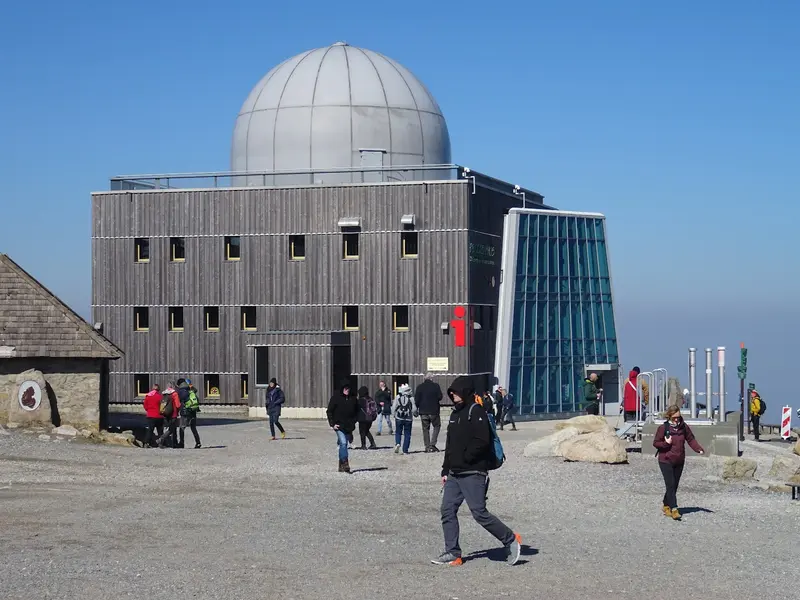
    Visitor center on the Brocken summit with regional information, a café, and a viewpoint.
    Open in Google Maps
    Brockengarten
    Garden

    2Brockengarten

    Botanist Albert Peter founded the garden on the summit in 1890 as Germany's first alpine garden.
    Open in Google Maps

    Restaurants in Brocken / Brockenbahn

    Accommodations in Brocken / Brockenbahn

    Find perfect stay in Brocken / Brockenbahn

    Booking.com* (Affiliate link)
    Search Hotels
    Agoda* (Affiliate link)
    Search Hotels
    Airbnb
    Vacation Rentals

    * Affiliate link: if you book through it, we earn a small commission. The price stays the same for you.

    Campgrounds in Brocken / Brockenbahn

    Find perfect campground in Brocken / Brockenbahn
    Search via Google Maps
    Campgrounds nearby (15km)
    Camping.info
    Find Campgrounds
    Park4Night
    RV Parks & Camping

    Nearby

    Wernigerode

    Wernigerode

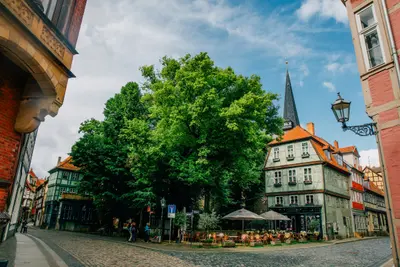
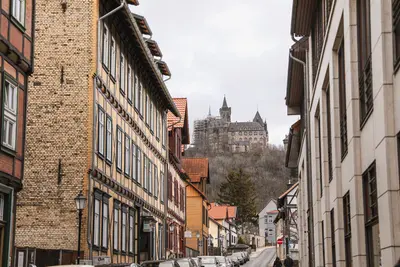
    Wernigerode is located on the northeastern flank of the Harz, about 12 kilometers east-northeast of the Brocken. Since 1910, the town has borne the motto "The Colorful Town in the Harz", coined by Hermann Löns. Above the half-timbered lanes towers the Neo-Gothic castle, which was the residence of the Counts of Stolberg-Wernigerode until 1929.Here starts the Harz Narrow-Gauge Railway, which travels via Schierke to the Brocken. In the Old Town, you'll find the Town Hall with its half-timbered towers, alongside the smallest house in town on Kochstraße and the Schiefe Haus, a former mill.
    Quedlinburg

    Quedlinburg

    Quedlinburg is located north of the Harz on the Bode and boasts over 2100 half-timbered houses from eight centuries. Since 1994, the Old Town, Castle Hill with the Collegiate Church, and the Münzenberg are listed as an ensemble on the UNESCO World Heritage list.The town was first mentioned in 922; King Heinrich I. was buried here after his death in 936. Perched on Castle Hill is the Collegiate Church of St. Servatius with its cathedral treasure; in the town, the Lyonel Feininger Gallery, opened in 1986, exhibits works by the Bauhaus artist.
    Harz & Saxony-Anhalt

    Harz & Saxony-Anhalt

    The Harz is the low mountain range in western Saxony-Anhalt. Its highest peak is the Brocken at 1141 meters, making it also the highest mountain in Northern Germany. The Harz National Park extends around the summit, accessible via the Brocken Railway of the Harz Narrow Gauge Railways, which departs from Wernigerode.Along the northern edge of the range are half-timbered towns like Wernigerode, known as the "colourful town on the Harz", and Quedlinburg, whose old town, boasting over 2100 half-timbered houses, has been a UNESCO World Heritage site since 1994. Further east, by the Elbe, Lutherstadt Wittenberg and its World Heritage Sites recall the beginnings of the Reformation.
    Wartburg

    Wartburg

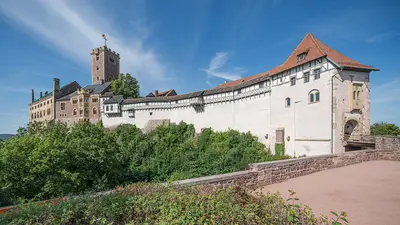
    Wartburg Castle towers approximately 220 meters above Eisenach on the edge of the Thuringian Forest and has been a UNESCO World Heritage site since 1999. According to legend, Louis the Springer founded the castle; its Romanesque Palas, dating from around 1156 to 1162, is considered the first of its architectural type in the German-speaking world. Elizabeth of Thuringia lived and worked here from 1211 to 1227.From May 4, 1521, to March 1, 1522, Martin Luther lived in hiding at the castle as "Junker Jörg" and translated the New Testament in just eleven weeks. On October 18, 1817, students gathered for the first Wartburg Festival, a demonstration calling for a nation-state with its own constitution.
    Erfurt

    Erfurt

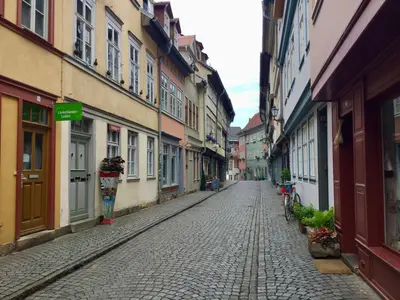
    Erfurt is located in the wide valley of the Gera and, with approximately 215,000 inhabitants, is the largest city and state capital of Thuringia. Landmarks include the ensemble of Mariendom and Severikirche on the Domberg, reachable via over 70 cathedral steps, and the Krämerbrücke, Europe's longest bridge continuously built with houses.Martin Luther studied here from 1501 to 1505. Since September 17, 2023, the city's Jewish-medieval heritage, with Alte Synagoge, Mikwe, and Steinernes Haus, has been part of the UNESCO World Heritage. Above the old town towers the baroque Petersberg Citadel.