ExploreTravel GuidesPlan a trip
    de|en
    All Places & RegionsAbout FernwehFAQPrivacy PolicyImprint
    ExploreTravel GuidesPlan a trip
    • Places in the region
    • Getting around
    • Nearby
    Utah

    United States

    Utah

    Region

    Utah lies between Nevada, Arizona, Colorado, Wyoming, and Idaho in the heart of the American West.

    1. Home
    2. Destinations
    3. United States
    4. Utah
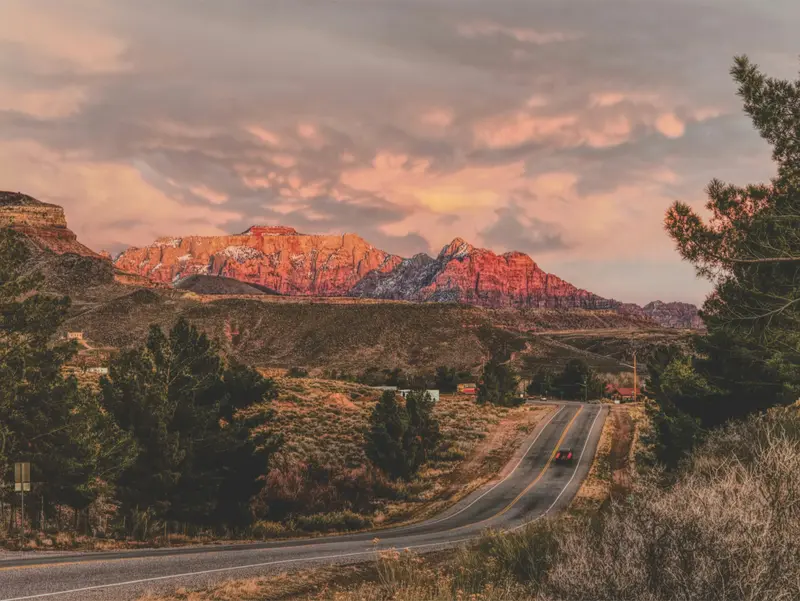
    Utah lies between Nevada, Arizona, Colorado, Wyoming, and Idaho in the heart of the American West. You travel here primarily for the five national parks in the south, known as the "Mighty Five," and for the ski resorts in the Wasatch Mountains near Salt Lake City.The capital, Salt Lake City, hosted the Winter Olympics in 2002, and they will take place again in Utah in 2034. Northwest of the city lies the Great Salt Lake, a remnant of the prehistoric Lake Bonneville. The state is predominantly dry; its highest peak is Kings Peak in the Uinta Mountains.In the south, the parks are close together: Zion with the Narrows of the Virgin River, Bryce Canyon with hundreds of Hoodoos, Capitol Reef along the Waterpocket Fold, as well as Arches and Canyonlands near Moab. Monument Valley and Lake Powell are in the border region with Arizona.

    Sights in Utah

    Discover the most important sights and attractions

    Bryce Canyon National Park
    National Park

    Bryce Canyon National Park

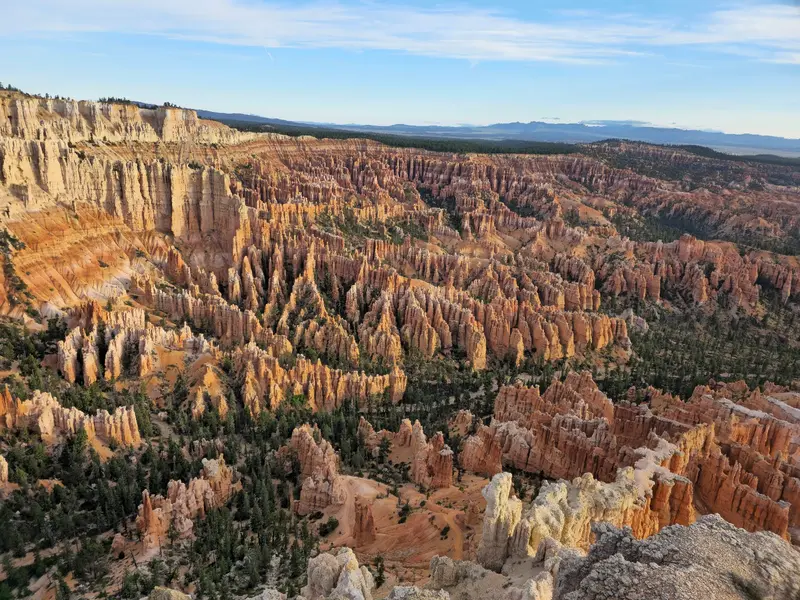
    Not a canyon in the true sense, but a series of natural amphitheaters full of orange-red rock spires, the Hoodoos. The Navajo Loop and the Queen's Garden Trail lead down right among the pillars. Due to the altitude of over 2,400 m, nights are cool even in summer.
    Open in Google Maps
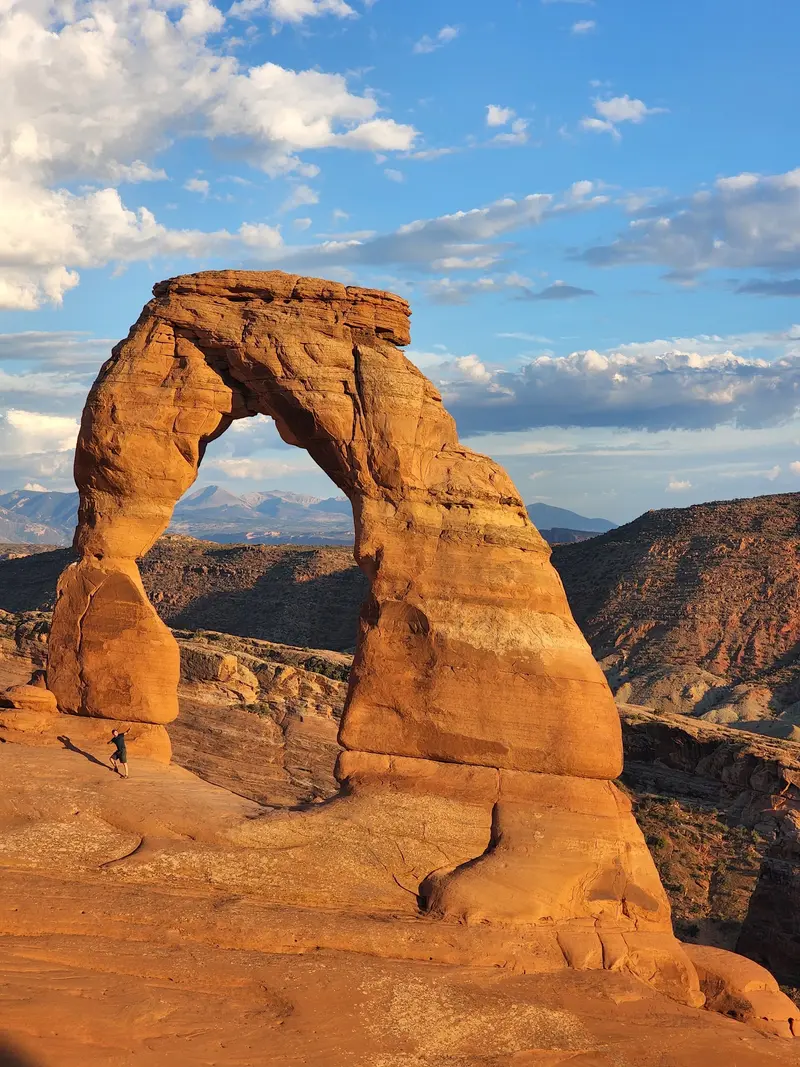
    Delicate Arch (Arches National Park)
    Attraction

    Delicate Arch (Arches National Park)

    The freestanding sandstone arch is Utah's landmark and the most famous of over 2,000 arches in Arches National Park near Moab. The trail to it is about 5 km long (round trip) and unshaded, go early or at sunset.
    Open in Google Maps
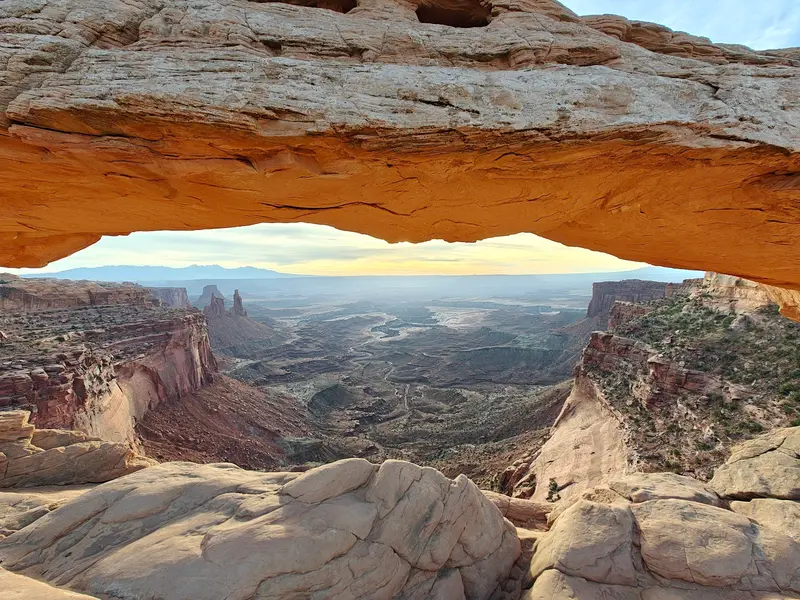
    Mesa Arch (Canyonlands National Park)
    Attraction

    Mesa Arch (Canyonlands National Park)

    A short path in the Island in the Sky area leads to this rock arch right on the cliff edge. At sunrise, its underside glows red over the canyons, making it a popular spot for photographers.
    Open in Google Maps
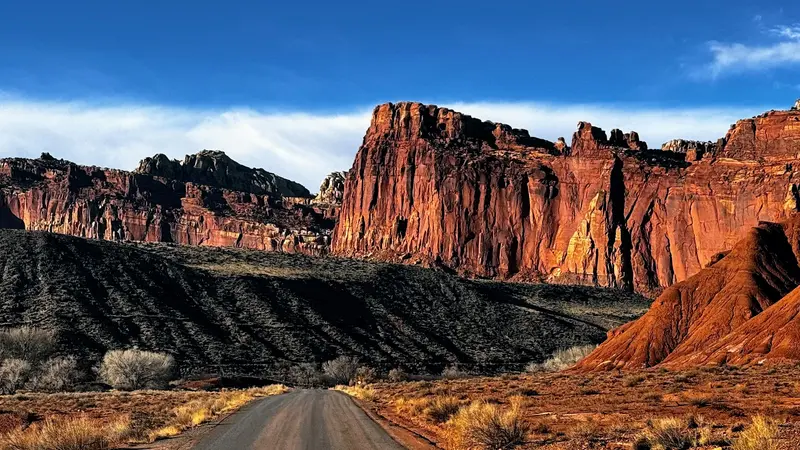
    Capitol Reef National Park
    National Park

    Capitol Reef National Park

    The least crowded of Utah's five national parks, defined by the roughly 160 km long rock fold Waterpocket Fold. In Fruita Valley, you can pick seasonal fruit from the historic orchards of Mormon settlers.
    Open in Google Maps
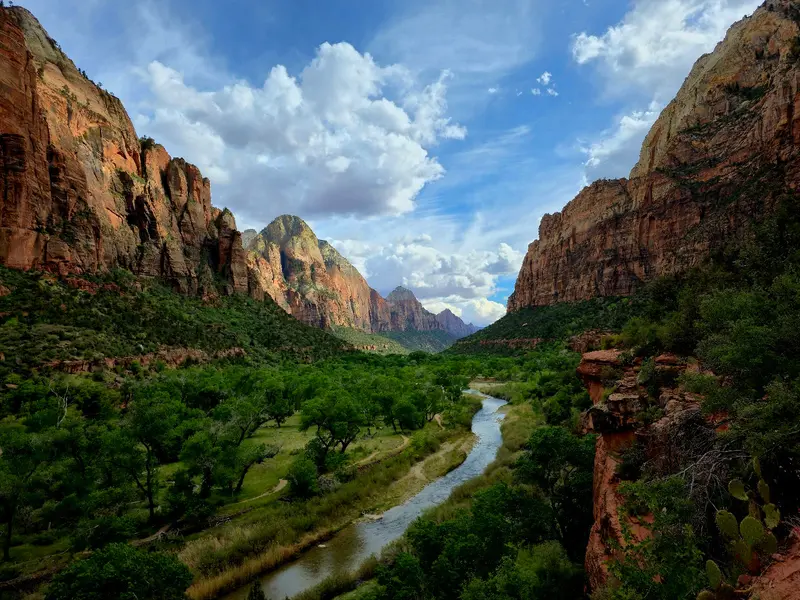
    Zion National Park
    National Park

    Zion National Park

    Utah's most-visited national park, featuring the Virgin River's steep-walled Zion Canyon. Most of the year, access to the Scenic Drive is by free park shuttle only. For Angels Landing, a lottery permit is required; The Narrows you wade in the river.
    Open in Google Maps

    Arrival and On the Way

    A rental car is essential for the national parks in the south. Many combine the route with Las Vegas or the Grand Canyon.Airports: Salt Lake City International (SLC). Las Vegas (LAS) is often more convenient for Zion and Bryce Canyon.Salt Lake City: The city's TRAX light rail, built for the 2002 Winter Games, operates here.Travel Time: Spring and autumn for the parks. In July, highs often rise to 29 to 38 °C. Salt Lake City gets about 150 centimeters of snow per season in winter.
    Nearby

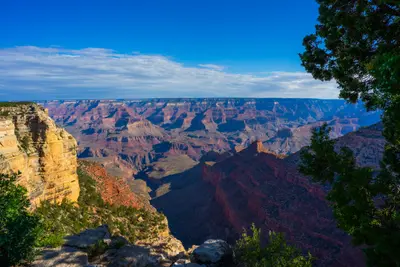
    Grand Canyon National Park

    Grand Canyon National Park

    The Grand Canyon National Park in Arizona protects the 446-kilometer-long canyon of the Colorado River, which is up to 29 kilometers wide and up to 1,857 meters deep. From the South Rim, about a 90-minute drive north of Flagstaff, you'll gaze upon a landscape that has been a UNESCO World Heritage site since 1979.The heart of the South Rim is Grand Canyon Village, home to the Hotel El Tovar, which opened in 1905. Hermit Road extends about 11 kilometers to viewpoints along the rim and is accessible only by shuttle bus from March to November. At Desert View stands the Watchtower, designed by Mary Colter in 1932. On the North Rim, over 2,400 meters high, a wildfire destroyed the Grand Canyon Lodge in 2025; there will be no accommodation there in 2026.Entry costs 35 US dollars per vehicle; visitors without US residency aged 16 and over pay an additional 100 dollars per person. This surcharge is waived with the America-the-Beautiful Pass for non-residents (250 dollars). An entry reservation is not required; payment is by card only.
    Downtown and Fremont Street

    Downtown and Fremont Street

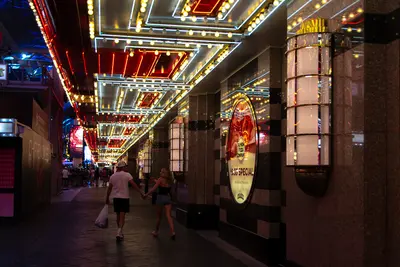
    Downtown is the old Las Vegas: The first casinos were located here, long before resorts grew on the Strip. The Golden Nugget opened in 1946, and even today, casinos line Fremont Street, appearing smaller, louder, and more affordable than their rivals to the south.Since 1995, a roughly 420-meter-long and 27-meter-high barrel vault canopy has spanned four city blocks. The Fremont Street Experience was updated in 2019 with over 49 million LEDs; in the evenings, light and music shows run on it, with bands playing on three stages. Beneath the canopy, people zip past on the SlotZilla zipline. The latest addition is Circa, which opened in 2020, an adults-only hotel with a massive sportsbook and a rooftop pool amphitheater. East of Las Vegas Boulevard, Fremont East begins, featuring bars, the Downtown Container Park, and the neon bar Atomic Liquors.During the day, two museums are worth visiting: The Mob Museum, housed in the former 1933 federal courthouse, tells the story of organized crime, while the Neon Museum displays over 200 decommissioned city signs.Come in the late afternoon, visit one of the museums, and stay for dinner and the first light show. Downtown is more compact than the Strip; almost everything is within walking distance.
    Las Vegas

    Las Vegas

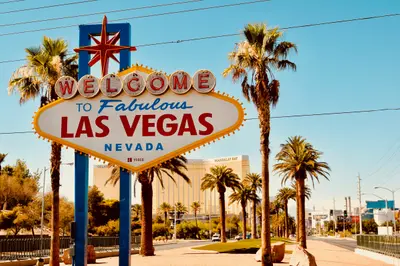
    Las Vegas is located in a basin of the Mojave Desert in Nevada and is connected to Los Angeles via Interstate 15. Founded in 1905, the city is known for its casino resorts and as a starting point for Grand Canyon scenic flights.The approximately 6.8-kilometer long Strip lies outside the city limits in Paradise and Winchester. There, resorts like Bellagio with its freely accessible water fountains, Caesars Palace, and The Venetian are located; the Sphere opened in 2023. The "Welcome to Fabulous Las Vegas" sign from 1959 is a popular photo motif. In Downtown, the Fremont Street Experience has covered five blocks with casinos since 1995, while the Neon Museum displays neon signs outdoors in the Neon Boneyard.Harry Reid International Airport is located just over 3 kilometers from the Strip. Along the resorts, the Monorail with seven stations and the Deuce bus operate; taxis can be taken from hotel stands. In July, average daily highs reach 40 degrees Celsius, and winters are short and mild.
    Arts District

    Arts District

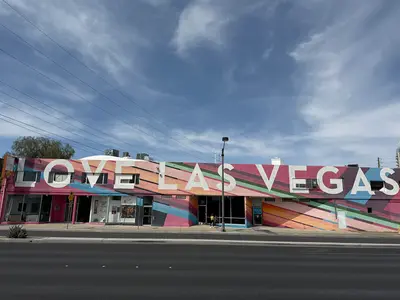
    Between Downtown and the Strip lies the district where Las Vegas looks least like itself: flat commercial buildings, murals, galleries, vintage shops, and breweries instead of casinos. Officially, it's called 18b The Las Vegas Arts District, named for its original 18 blocks. East Charleston Boulevard bisects it, and you'll find most shops and bars on Main Street and Commerce Street.It all began in 1997 with the Arts Factory, when artists moved into vacant spaces. In 2002, antique dealer Cindy Funkhouser launched the First Friday, a monthly art festival that still draws thousands. Since then, theaters, restaurants, and in 2014, Hop Nuts Brewing, the first of many breweries, have joined.By day, browse the shops of Antique Alley on Main Street for Tiki decor, comics, and old Las Vegas souvenirs; pop into the Arts Factory studios and Recycled Propaganda. By evening, it transforms into a nightlife hub: breweries, small cocktail bars, an indie theater, and live music at Swan Dive.The first Friday of the month is the busiest. Following a fatal incident at First Friday in October 2026, the festival's future is under discussion, so check 18b.org beforehand to confirm if and how it's taking place. The district is quieter and more relaxed on weekday afternoons.
    Center and North Strip

    Center and North Strip

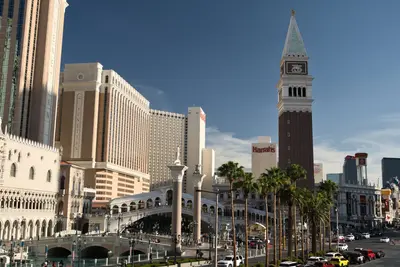
    North of Flamingo Road, the Strip transforms into its most iconic postcard scene: the Roman splendor of 1966's Caesars Palace, the 167-meter-tall High Roller observation wheel at LINQ, the canals and bell tower of the Venetian. Further north, it becomes more spacious, with greater distances between resorts, until the 350-meter-tall STRAT tower concludes the Strip.This area also marks the genesis of modern Las Vegas. The Flamingo opened in 1946 under Bugsy Siegel's direction, and the Wynn was built in 2005 on the legendary Desert Inn's site. The North Strip is a hub for new beginnings: Resorts World opened in 2021 on the former Stardust property, and the Fontainebleau, after years of construction halts, finally in December 2023. Since September 2023, the Sphere illuminates east of the Venetian, its LED exterior visible from much of the city.Much here is free: the flamingos in the Flamingo garden, the gondolas and St. Mark's Square at the Venetian, the Lake of Dreams light show at the Wynn. For a fee, you can ride the observation wheel, ascend to the STRAT's observation deck, or see one of the immersive films in the Sphere.The most beautiful time is dusk: That's when the Sphere changes its displays, and from the High Roller or the STRAT, you can see the Strip light up beneath you.