ExploreTravel GuidesPlan a trip
    de|en
    All Places & RegionsAbout FernwehFAQPrivacy PolicyImprint
    ExploreTravel GuidesPlan a trip
    • Places in the region
    • Getting around
    • Nearby
    Florida

    United States

    Florida

    Region

    Florida is the peninsula in the southeastern USA, between the Atlantic and Gulf of Mexico, bordered north by Georgia and Alabama.

    1. Home
    2. Destinations
    3. United States
    4. Florida
    Florida is the peninsula in the southeastern USA, between the Atlantic and Gulf of Mexico, bordered north by Georgia and Alabama. Visitors come for its approximately 2,170 km of coastline, subtropical to tropical nature, and space and colonial history.To the south, the Everglades National Park preserves over 6,100 km² of the largest tropical wilderness in the USA, a UNESCO World Heritage site since 1979. Southwest of Miami, the Florida Keys string together across 42 bridges to Key West, located about 150 km from Cuba. Roughly 110 km further west lies Dry Tortugas National Park with Fort Jefferson; Biscayne is the state's third national park.On the Atlantic coast, the Kennedy Space Center on Merritt Island showcases the Space Shuttle Atlantis and a Saturn V rocket. In the northeast, St. Augustine, founded in 1565, is recognized as the oldest continuously inhabited European settlement on the North American mainland. Inland, around Orlando, you'll find major theme parks such as Walt Disney World and Universal Studios.

    More places in Florida

    Miami

    Miami

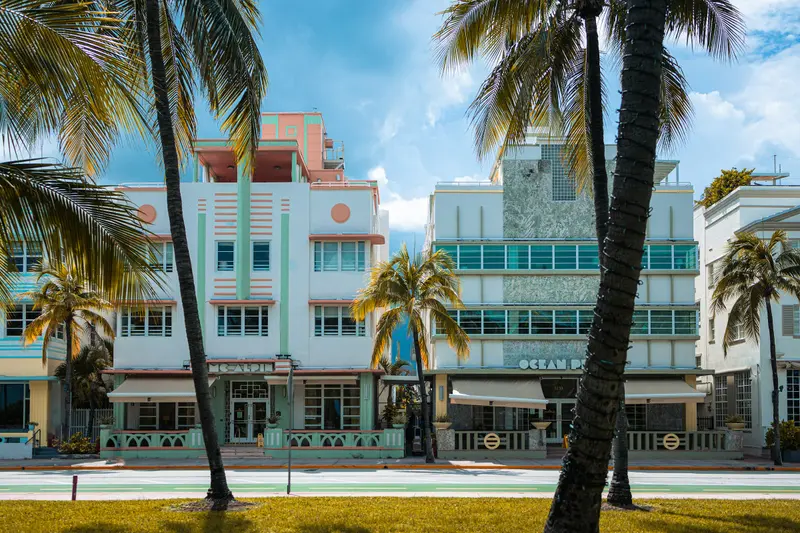
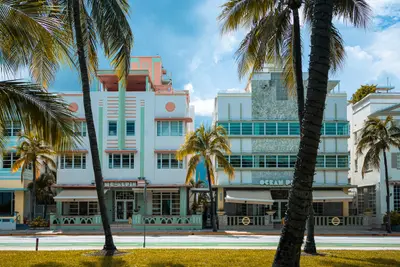
    Miami is situated in southeastern Florida on Biscayne Bay, with Miami Beach located on a barrier island just opposite. You visit for its beaches, Art Deco architecture, and Cuban-influenced districts.The Art Deco District in Miami Beach is home to around 960 historic buildings, which have been on the National Register of Historic Places since 1979. The hotels on Ocean Drive overlook Lummus Park and the beach. In Little Havana, locals play dominoes in Máximo Gómez Park, known as Domino Park, on Calle Ocho. In Wynwood, the Wynwood Walls have showcased murals and sculptures by over 130 artists since 2009; a ticket is required for entry.Miami International is the largest aviation hub between the USA and Latin America. In Downtown and Brickell, the Metromover operates for free. The warm dry season lasts from November to April, and hurricane season from June to late November.

    Sights in Florida

    Discover the most important sights and attractions

    Kennedy Space Center Visitor Complex
    Historic Landmark

    Kennedy Space Center Visitor Complex

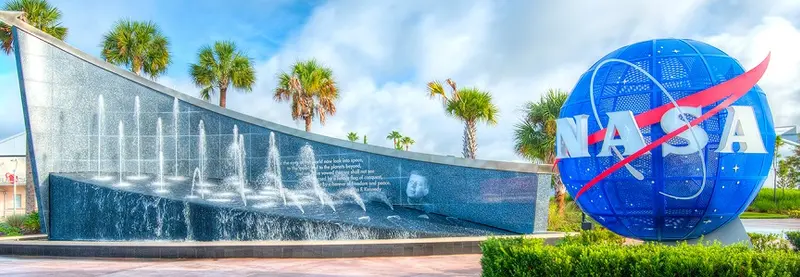
    Visitor Center at the spaceport on Merritt Island on the Atlantic coast, about an hour east of Orlando. See the Space Shuttle Atlantis and a Saturn V rocket, and with some luck, experience a rocket launch.
    Open in Google Maps
    Castillo de San Marcos
    Castle

    Castillo de San Marcos

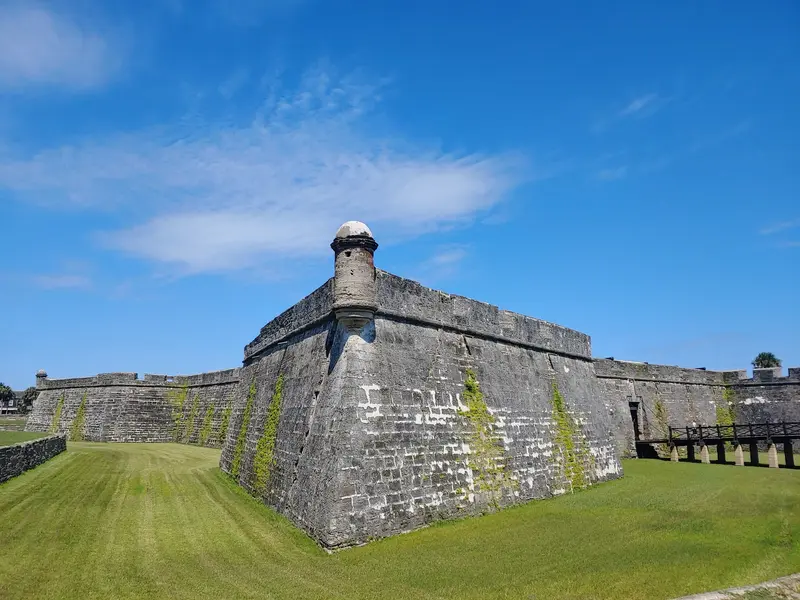
    St. Augustine, America's oldest continuously inhabited European city, saw its Spanish coquina fortress built from 1672. Cross the drawbridge to the gun deck for views of Matanzas Bay.
    Open in Google Maps
    Everglades National Park (Shark Valley)
    Attraction

    Everglades National Park (Shark Valley)

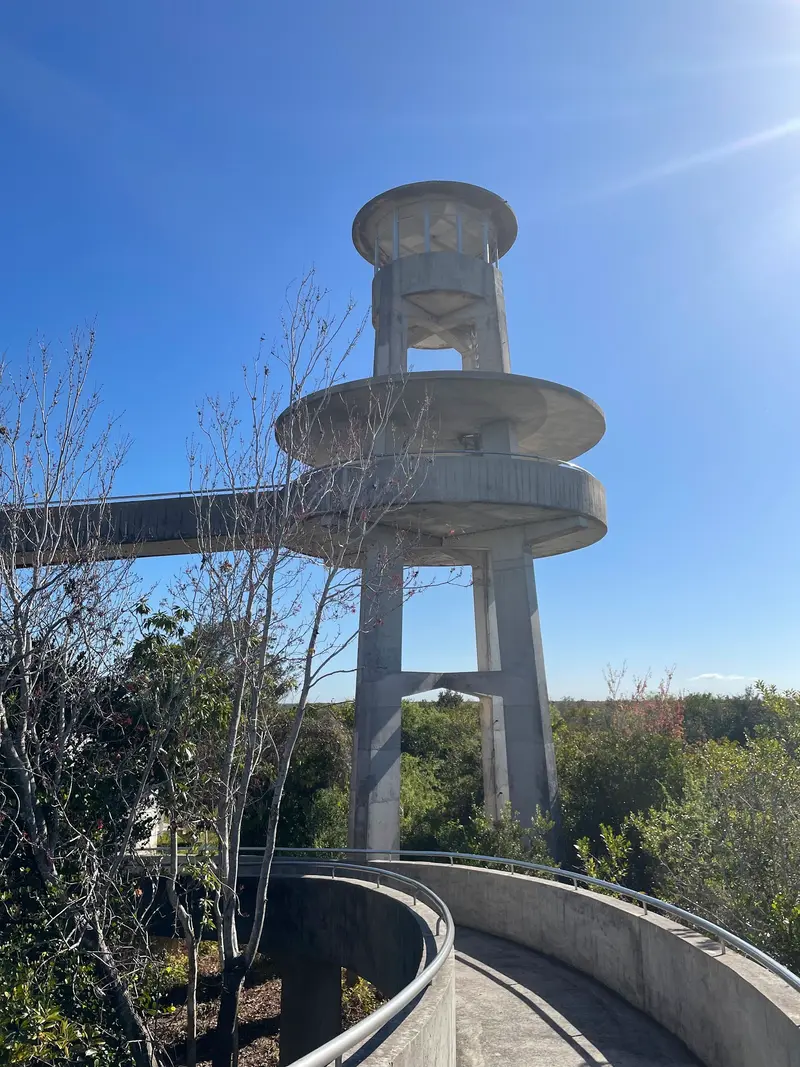
    About an hour west of Miami on the Tamiami Trail: A 24 km paved loop leads through Everglades grassland to an observation tower. You can explore it by rental bike or tram tour, almost always spotting alligators and water birds.
    Open in Google Maps
    Dry Tortugas National Park
    National Park

    Dry Tortugas National Park

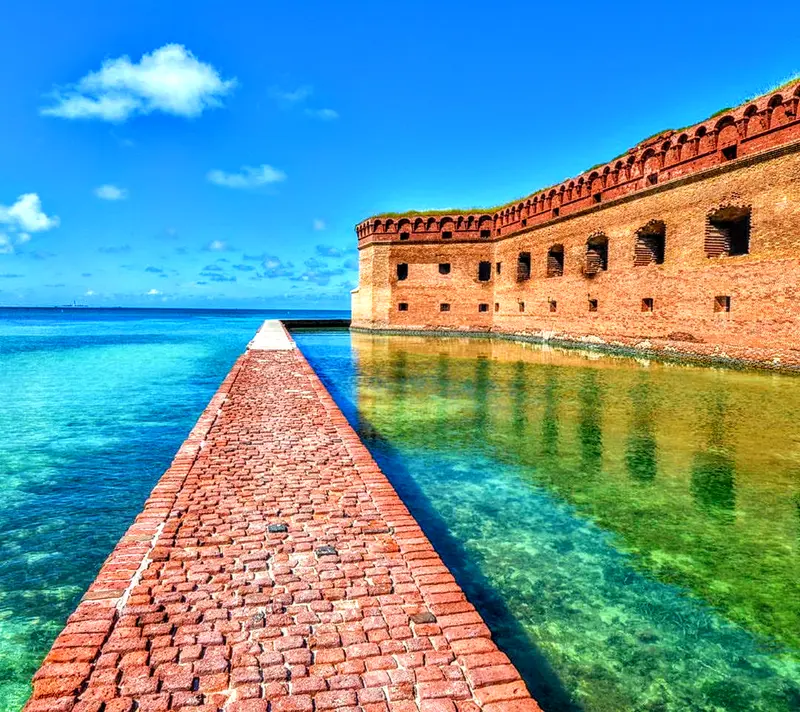
    Seven small islands about 110 km west of Key West, reachable only by ferry or seaplane. The main attraction is the unfinished 19th-century Fort Jefferson, all around you can snorkel in clear water.
    Open in Google Maps

    Arrival and On the Road

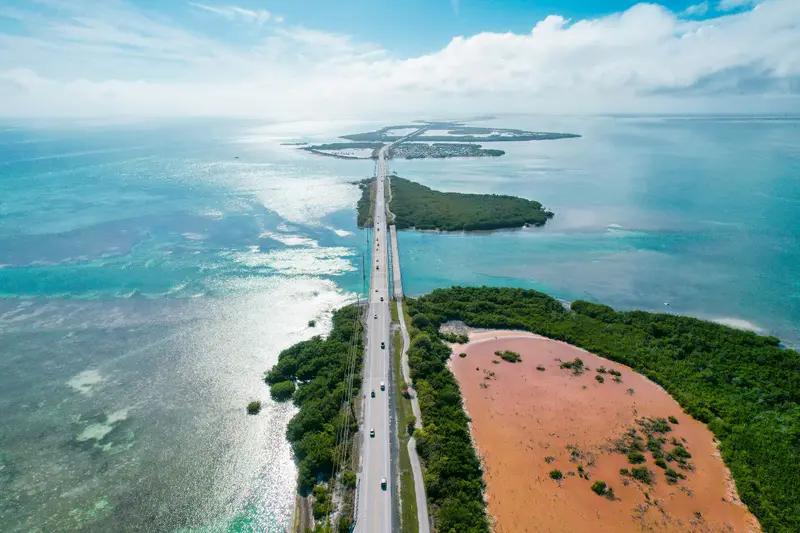
    You'll need a rental car for the Everglades, Keys, and coastal towns. The Everglades can be accessed via several entrances, including Shark Valley on the Tamiami Trail; Ernest F. Coe near Homestead, with its approximately 61-kilometer park road leading to Flamingo; and Gulf Coast near Everglades City.From Miami to Key West, the drive is approximately 266 km, with about 182 km of that on the Overseas Highway.Dry Tortugas can only be reached by boat or seaplane from Key West.Best Time to Visit: The dry season from December to March offers the most pleasant temperatures and fewest mosquitoes. Hurricane season runs from June to November.

    Nearby

    Wynwood and Design District

    North of Downtown lie two neighborhoods that have completely reinvented themselves in the last two decades. From the 1920s, Wynwood was a textile district; in the 1940s and 1950s, many families from Puerto Rico moved here, earning the neighborhood the nickname Little San Juan. When the clothing factories closed in the early 1990s, the warehouses stood empty.In 2009, real estate developer Tony Goldman, together with curator Jeffrey Deitch, had the exterior walls of several of his buildings painted by street artists: The Wynwood Walls were born. Today, almost every facade in the district is painted, interspersed with galleries, breweries, cafes, and bars.Directly north lies the Design District. Here, in the 1920s, T. V. Moore built a furniture store on a former pineapple farm; starting in the late 1990s, developer Craig Robins and his company Dacra acquired numerous buildings and brought in designers and later luxury brands like Louis Vuitton, Dior, and Hermès. Among the boutiques, there is much public art, such as Buckminster Fuller's Fly's Eye Dome, and the ICA Miami showcases contemporary art with free admission.Best time: Come in the afternoon when galleries and museums are open, and stay for the evening in Wynwood. The Wynwood Art Walk takes place on the second Saturday of the month.

    Coral Gables

    Coral Gables is a distinct city southwest of Downtown Miami and one of the first planned communities in the USA. Real estate developer George Merrick designed it during the 1920s Florida building boom, following the ideals of the City Beautiful movement; it was officially founded in 1925. The original plan prescribed the Mediterranean Revival style, and to this day, tiled roofs, arcades, fountains, and tree-lined streets define its image. Coral Gables bears the nickname The City Beautiful for good reason.At its heart lies Miracle Mile, the commercial street Merrick planned as the main axis. Right next to it, Giralda Avenue has been a pedestrian zone with restaurants since 2017. The Coral Gables Museum, housed in the old police and fire station, tells the city's history and serves as a visitor center.Two buildings from Merrick's era you shouldn't miss: the Venetian Pool, an outdoor swimming pool in a former rock quarry, and the Biltmore Hotel, whose tower, like the Freedom Tower in Downtown, is inspired by the Giralda in Seville. Further south are the University of Miami campus and the Fairchild Tropical Botanic Garden.Best Time: Mornings at the Venetian Pool before it gets crowded, lunch on Miracle Mile, and an afternoon stroll through Fairchild.

    Little Havana

    Located west of Downtown, Little Havana has been the heart of Cuban Miami since the 1960s. After the 1959 revolution, tens of thousands of Cuban exiles arrived in what were then the Riverside and Shenandoah neighborhoods, many expecting to stay only briefly. By 1970, over 85 percent of residents were Cuban. Since the late 1990s, many people from Nicaragua, Honduras, and other Central American countries have joined them, but most businesses are still run by Cubans.Its main artery is Calle Ocho, SW 8th Street. Here, older gentlemen play dominoes in Máximo Gómez Park, Ventanitas (the street windows of cafes) offer Cafecito to go, and stars on the Calle Ocho Walk of Fame commemorate icons like Celia Cruz and Gloria Estefan. The Cuban Memorial Boulevard features monuments to the fighters of the 1961 Bay of Pigs Invasion.Little Havana is not a museum district: You come here to eat, drink coffee, and listen. In the evenings, live bands play in bars like Ball & Chain, and on salsa nights, the dance floor is packed.Best Time: Late morning, when games are underway in the Domino Park. On the last Friday of each month, the district celebrates Viernes Culturales with music, art, and stalls on Calle Ocho between 14th and 17th Avenue, from noon until late, with free admission.
    Miami

    Miami

    Miami is situated in southeastern Florida on Biscayne Bay, with Miami Beach located on a barrier island just opposite. You visit for its beaches, Art Deco architecture, and Cuban-influenced districts.The Art Deco District in Miami Beach is home to around 960 historic buildings, which have been on the National Register of Historic Places since 1979. The hotels on Ocean Drive overlook Lummus Park and the beach. In Little Havana, locals play dominoes in Máximo Gómez Park, known as Domino Park, on Calle Ocho. In Wynwood, the Wynwood Walls have showcased murals and sculptures by over 130 artists since 2009; a ticket is required for entry.Miami International is the largest aviation hub between the USA and Latin America. In Downtown and Brickell, the Metromover operates for free. The warm dry season lasts from November to April, and hurricane season from June to late November.

    Downtown and Brickell

    Downtown Miami and the adjacent Brickell to the south form the city's center: skyscrapers, banks, hotels, and amidst them, parks along Biscayne Bay. Brickell is named after William and Mary Brickell; Mary Brickell had Brickell Avenue parceled for villas in the early 20th century. From the 1970s onwards, office towers replaced the mansions, and Brickell became one of the largest financial districts in the USA. Today, it's primarily apartment tower residents, and the streets are lively even in the evenings.Much of the action for visitors unfolds along the bay. Museum Park features the Pérez Art Museum with its hanging gardens and the Frost Museum of Science with a large aquarium. Further south are Bayfront Park, designed by sculptor Isamu Noguchi, and Bayside Marketplace with its shops and boat docks. Opposite, the Freedom Tower commemorates the 1960s, when Cuban refugees were registered here.The best part: The Metromover, a free, driverless elevated train. Glide above the streets, see the skyline from above, and get off wherever interests you.Best Time: Museums in the morning, followed by a Metromover ride. Bayfront Park is worthwhile in the late afternoon, and Brickell's rooftop bars in the evening.