Fernweh: Home
ExploreGuideDestinationsMy tripsMy trip
de|en
All Places & RegionsRound tripsNight trains in EuropeAll highlightsAbout FernwehFAQPrivacy PolicyImprint
Download on the App StoreGet it on Google Play
ExploreGuideDestinationsMy tripsMy trip
    • Neighborhoods & highlights
    • Recommendations
    • Eat & drink
    • Culture
    • Getting around
    • Accommodation
    • Plan trip
    • Nearby
    Medina of Marrakesh

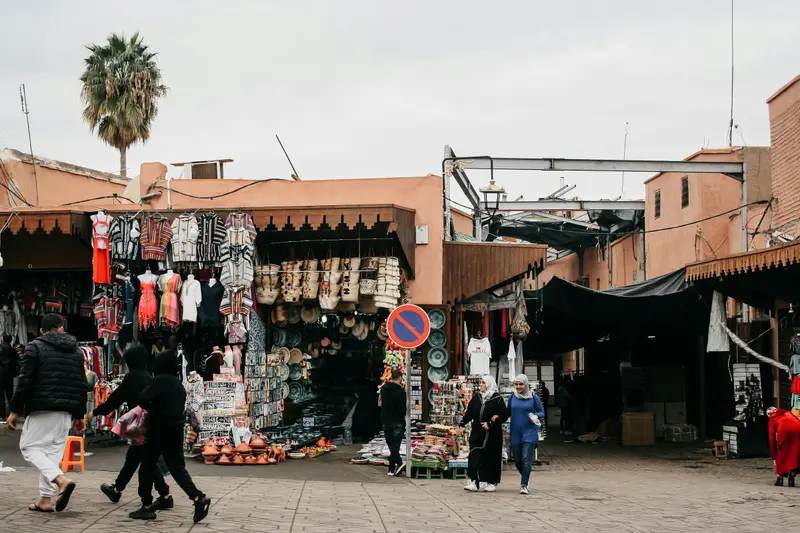
    Photo by Taneti on Unsplash

    Morocco

    Medina of Marrakesh

    City

    Die von roten Lehmmauern umschlossene Altstadt ist seit 1985 UNESCO-Welterbe und das Herz von Marrakesch.

    by Felix Gillen

    1. Home
    2. Destinations
    3. Morocco
    4. Marrakech
    5. Medina of Marrakesh
    Die von roten Lehmmauern umschlossene Altstadt ist seit 1985 UNESCO-Welterbe und das Herz von Marrakesch. Vom Platz Jemaa el-Fna ziehen sich die Souks nach Norden, im Süden liegen die Kasbah mit dem Tor Bab Agnaou und den Saadiergräbern sowie die Mellah, das frühere jüdische Viertel. Die Gassen sind eng und verwinkelt, Orientierung bieten der Platz, das Minarett der Koutoubia und die Hauptachse Souk Semmarine.Rund 19 Kilometer Lehmmauer mit 20 Toren umschließen die Medina. In den Souks arbeiten Handwerker grob nach Gewerken getrennt, etwa Leder, Teppiche, Metall und Keramik. Wichtige Bauten sind die Koutoubia mit ihrem 77 Meter hohen Minarett, die Medersa Ben Youssef, der Palais El Badi, der Bahia-Palast und die Saadiergräber.
    Morocco travel guideRound trips in MoroccoPlan a trip with Medina of Marrakesh

    Contents

    • Neighborhoods & highlights
    • Recommendations
    • Eat & drink
    • Culture
    • Getting around
    • Accommodation
    • Nearby

    Sights in Medina of Marrakesh

    Discover the most important sights and attractions

    Market

    1Souks (Souk Semmarine)

    Souk Semmarine is the main covered thoroughfare of the market quarter north of Jemaa el-Fna. From it branch off lanes of specialized souks, such as the blacksmiths' (Haddadine), the dyers' (Sebbaghin), or olive and spice merchants. Haggling is part of the experience; take your time and don't let self-proclaimed guides steer you into shops.
    Open in Google Maps
    Mellah (the former Jewish Quarter)

    TomiValny / Wikimedia Commons / CC BY-SA 4.0, mod.

    2Mellah (the former Jewish Quarter)

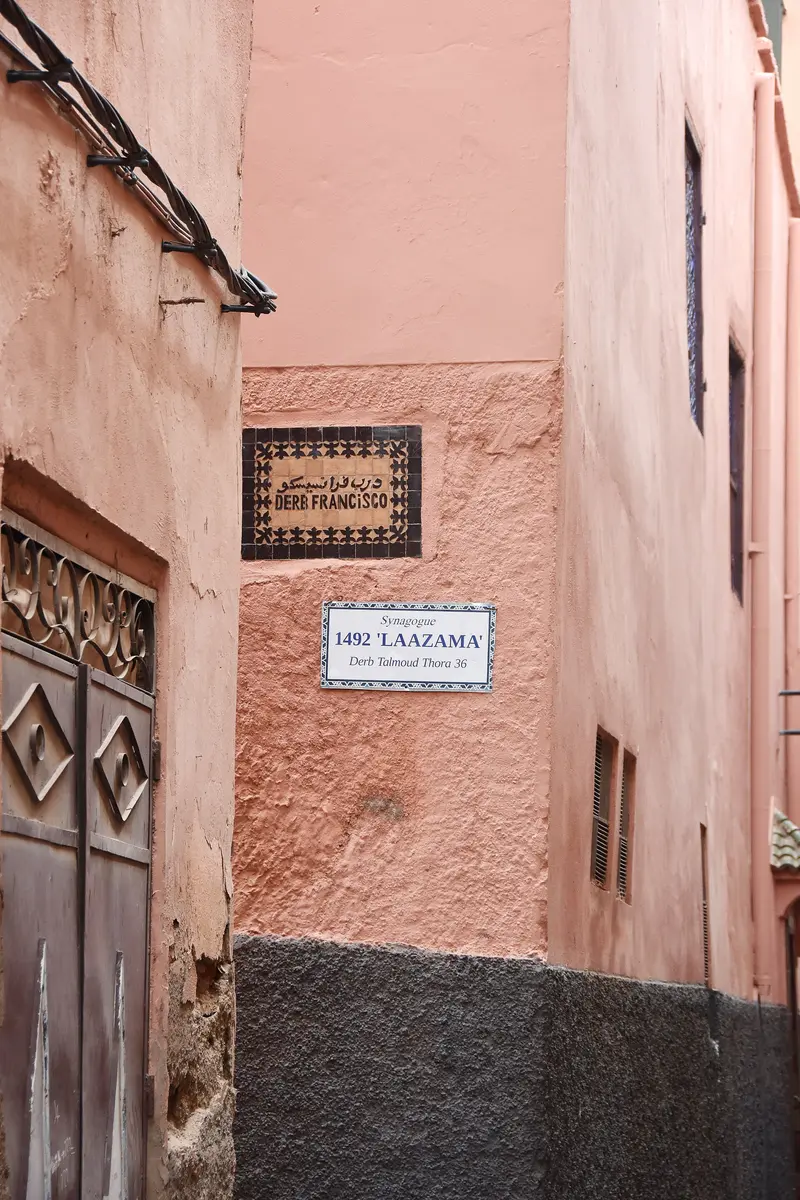
    The Saadians established the quarter east of Badi Palace for the Jewish community in the 1550s; it's now officially Hay Essalam. Its alleys contain the Slat al-Azama Synagogue, still in use today, and the Miâara Cemetery, Morocco's largest Jewish cemetery.
    Open in Google Maps
    Bab Agnaou

    Jakub Hałun / Wikimedia Commons / CC BY 4.0, mod.

    Historic Landmark

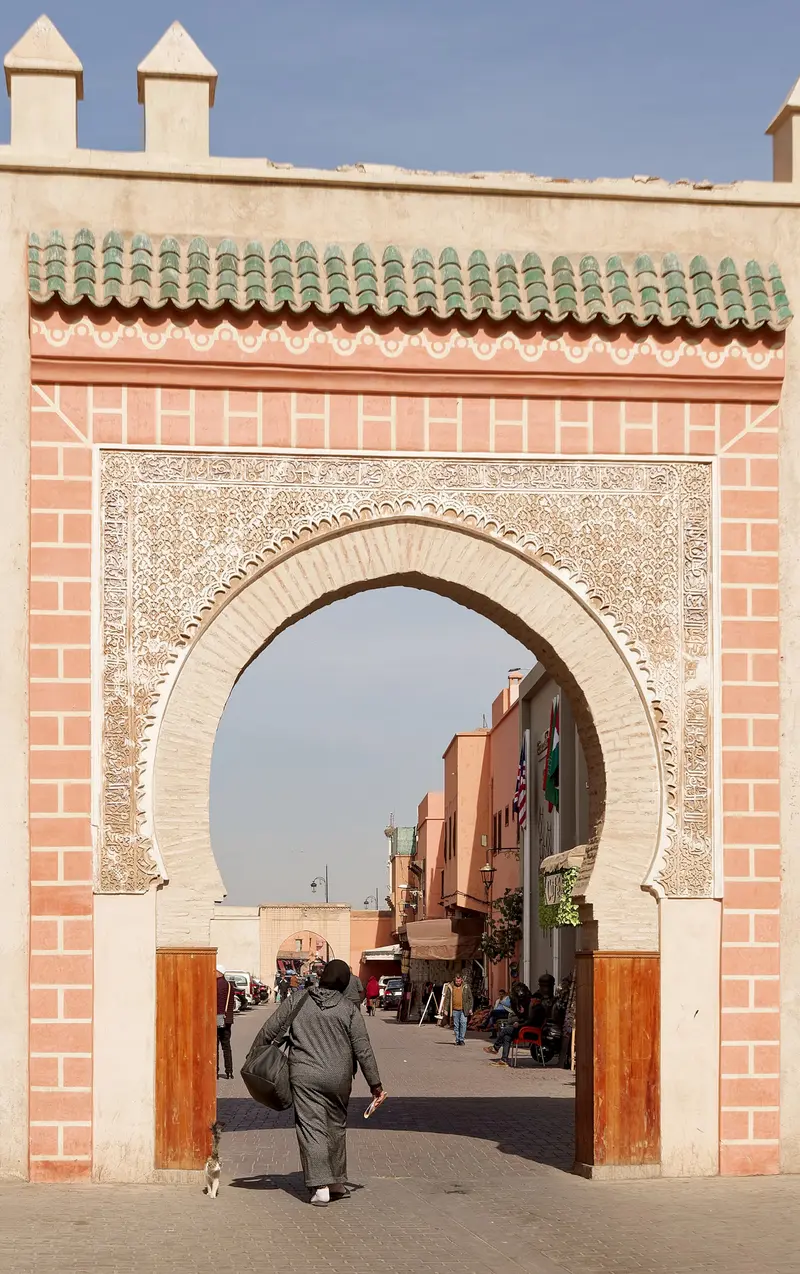
    3Bab Agnaou

    The stone gate, with finely carved arch friezes, was erected by Almohad Caliph Yaqub al-Mansur in the late 12th century as the Kasbah's main entrance. It's one of about 20 gates in the city wall, whose clay gave Marrakesh its 'Red City' moniker. Just beyond lie the Saadian Tombs.
    Open in Google Maps

    Restaurants in Medina of Marrakesh

    Culture in the Medina

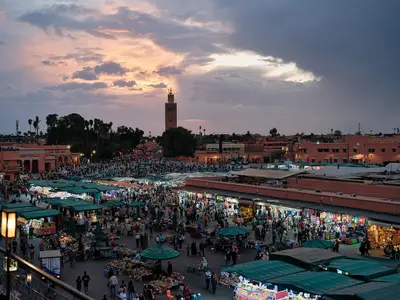
    Jemaa el-FnaDuring the day, juice and water vendors define the square; in the late afternoon, storytellers, musicians, and traditional medicine sellers arrive, followed by dozens of food stalls in the evenings. UNESCO added this cultural space to its List of Intangible Cultural Heritage in 2008.RiadsRiads are houses built around an open courtyard behind high walls, which offer privacy and cooling; the oldest documented ones date from the Saadian period in the 16th and 17th centuries.Medersa Ben YoussefThe former Quranic school is open daily 9 AM - 7 PM (during Ramadan until 4:30 PM), as per the official site. Admission for foreign adults: 50 Dh.

    Wandering in the Medina

    Getting ThereFrom Menara Airport, a shuttle runs every 20 minutes from 6 AM to 11:30 PM for 30 MAD. Petit taxis take you to the gates; insist on the meter and have small change ready.Getting AroundThe Medina is compact and best explored on foot. Watch out for mopeds, carts, and donkeys in the alleys; an offline map helps with orientation. The Medina is challenging for wheelchair users.Best Time of DayJemaa el-Fna is busiest in the early evening when the food stalls open.

    Accommodations in Medina of Marrakesh

    Find perfect stay in Medina of Marrakesh

    Booking.com* (Affiliate link)
    Search Hotels
    Agoda* (Affiliate link)
    Search Hotels
    Airbnb
    Vacation Rentals

    * Affiliate link: if you book through it, we earn a small commission. The price stays the same for you.

    Plan your trip to Medina of Marrakesh

    Save places, build a route and plan your city trip, all in one place.

    1. 1
      Sunrise over alpine peaks and a sea of clouds
      1234

      Round trip

      12 days · 4 stops

      Saved

      Pick a route

      Pick a ready-made one or save places and plan your own.

      Open bookmarks
    2. 2

      Trip to Medina of Marrakesh

      Live
      • 1Souks (Souk Semmarine)3 days
      • 2Mellah (the former Jewish Quarter)4 days
      • 3Bab Agnaou5 days
      Budget

      Plan your trip

      The planner sorts stops, days and budget. Plan together in real time.

      Start trip planning
    3. 3
      9:41 No signal
      Medina of Marrakesh
      Available offline

      Photo by Taneti on Unsplash

      Use it on the road

      Download the guide to your phone and use it on site, even offline.

    Nearby

    Marrakech

    Marrakech

    Marrakech is located at the foot of the High Atlas and, with over ten million passengers in 2025, is the most important destination for Morocco travellers. The Almoravids founded the city around 1070; its approximately 19-kilometre-long red clay walls with about 20 gates still enclose the Medina, which has been a UNESCO World Heritage site since 1985. Its focal point is the Jemaa el-Fna square, around which souks, palaces, and gardens are grouped.

    Herokk·CC BY-SA 4.0

    Marrakech & The High Atlas

    Marrakech & The High Atlas

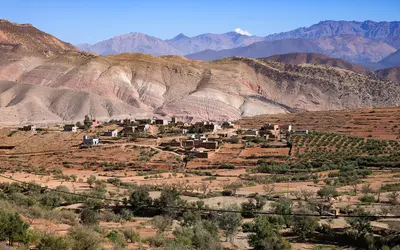
    Marrakesh is often the gateway to Morocco: The Medina has been a UNESCO World Heritage site since 1985. South of the city, the High Atlas rises to 4,167m at Toubkal, with valleys like Ourika Valley and mountain villages like Imlil.

    This Photo was taken by Timothy A. Gonsalves. Feel free to use my photos, but please mention me as the author. I would much appreciate if you send me an email tagooty@yahoo.com or write on my talk p·CC BY-SA 4.0

    Ourika Valley

    Ourika Valley

    The Ourika Valley stretches south of Marrakech into the High Atlas, alongside its namesake river. At the end of the road lies the village of Setti Fatma, above which seven waterfalls cascade over the rocks.

    Zahra IMEHLI·CC BY-SA 4.0

    Imlil & Toubkal

    Imlil & Toubkal

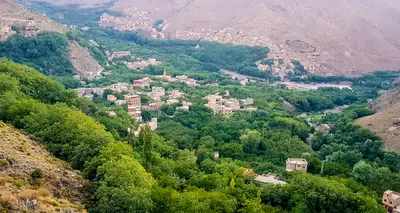
    Imlil is located at around 1,800 metres in the High Atlas, approximately 65 kilometres south of Marrakech, and serves as the starting point for climbing Toubkal. At 4,167 metres, it is the highest mountain in North Africa and the centrepiece of the Toubkal National Park, founded in 1942. Around the village, hiking trails lead to Berber villages and to the Sidi Chamharouch shrine, which non-Muslims are not permitted to enter.

    Mounir Neddi·CC BY-SA 4.0

    Aït-Ben-Haddou

    Aït-Ben-Haddou

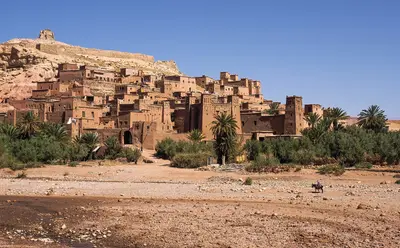
    The Ksar Aït-Ben-Haddou is a fortified mud-brick settlement in the Ounila Valley on the old caravan route between the Sahara and Marrakesh. Since 1987, it has been a UNESCO World Heritage site. The backdrop of mud-brick kasbahs on the hillside above the river served for films like Lawrence of Arabia and Gladiator.

    Petar Milošević·CC BY-SA 4.0

    Your next steps

    Medina of Marrakesh is in Morocco. Ways to carry on from here.

    • More in Morocco

      Highlights, areas, routes and the best time to travel for all of Morocco.

      Morocco travel guide
    • Round trips in Morocco

      Ready-made routes through Morocco, with stops, nights and a map.

      See the routes

    Sources & method

    • Photos: Wikimedia Commons, Unsplash. Each photo carries its credit.
    • Place data such as addresses and ratings comes from Google Maps.
    • The content is based on web research from public, traceable sources. How the content is made · The role of AI