Fernweh: Home
    ExploreTravel GuidesPlan a tripMy tripLast visited
    de|en
    All Places & RegionsAll highlightsAbout FernwehFAQPrivacy PolicyImprint
    ExploreTravel GuidesPlan a tripMy tripLast visited
    Ruma National Park
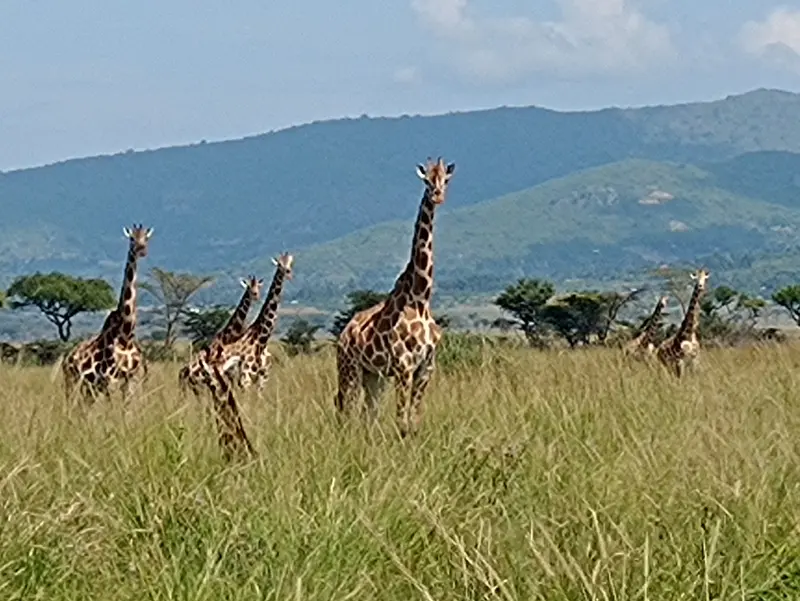
    Michiel Van Balen from Leuven, Belgium / Wikimedia Commons / CC BY 2.0

    Kenya

    Ruma National Park

    Point of Interest

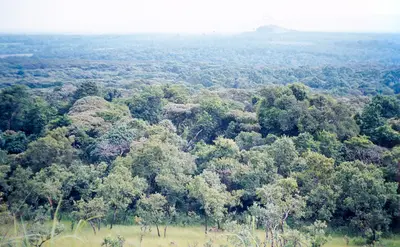
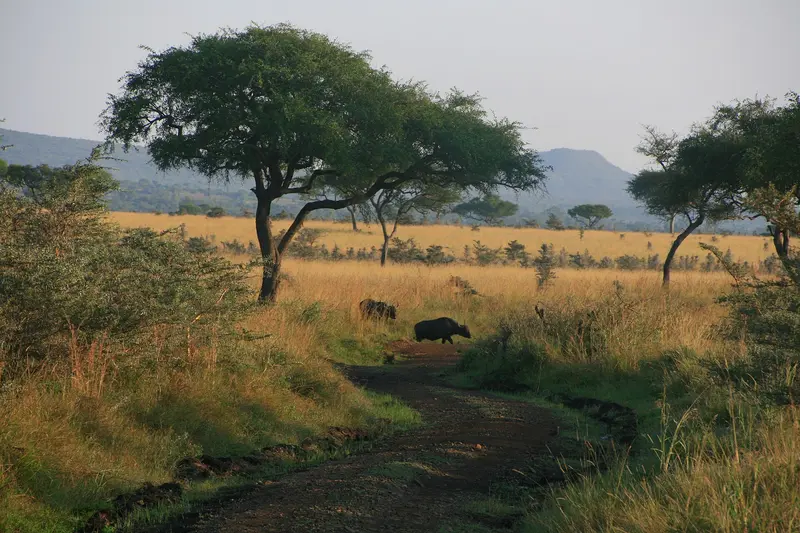
    Ruma National Park is located in the Lambwe Valley southwest of Homa Bay, not far from Lake Victoria. It is the only terrestrial national park in the former Nyanza Province and the last home of the roan antelope in Kenya.

    by Felix Gillen

    1. Home
    2. Destinations
    3. Kenya
    4. West Kenya & Lake Victoria
    5. Ruma National Park
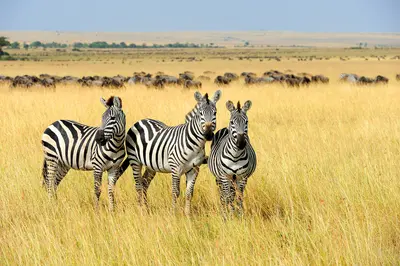
    Ruma National Park is located in the Lambwe Valley southwest of Homa Bay, not far from Lake Victoria. It is the only terrestrial national park in the former Nyanza Province and the last home of the roan antelope in Kenya.Across 120 square kilometers of savanna and bushland, you will also see Rothschild's giraffes, oribis, and topis.

    Sights in Ruma National Park

    Discover the most important sights and attractions
    Kamato Gate
    Park

    1Kamato Gate

    The park's main entrance is eight kilometres off the C19 Homa Bay–Mbita road, turning off at Kadio (Malela Junction). From here, game drives begin through the Lambwe Valley, home to Roan Antelopes, Rothschild's giraffes, and Oribis.
    Open in Google Maps
    Nyatoto Gate
    Park

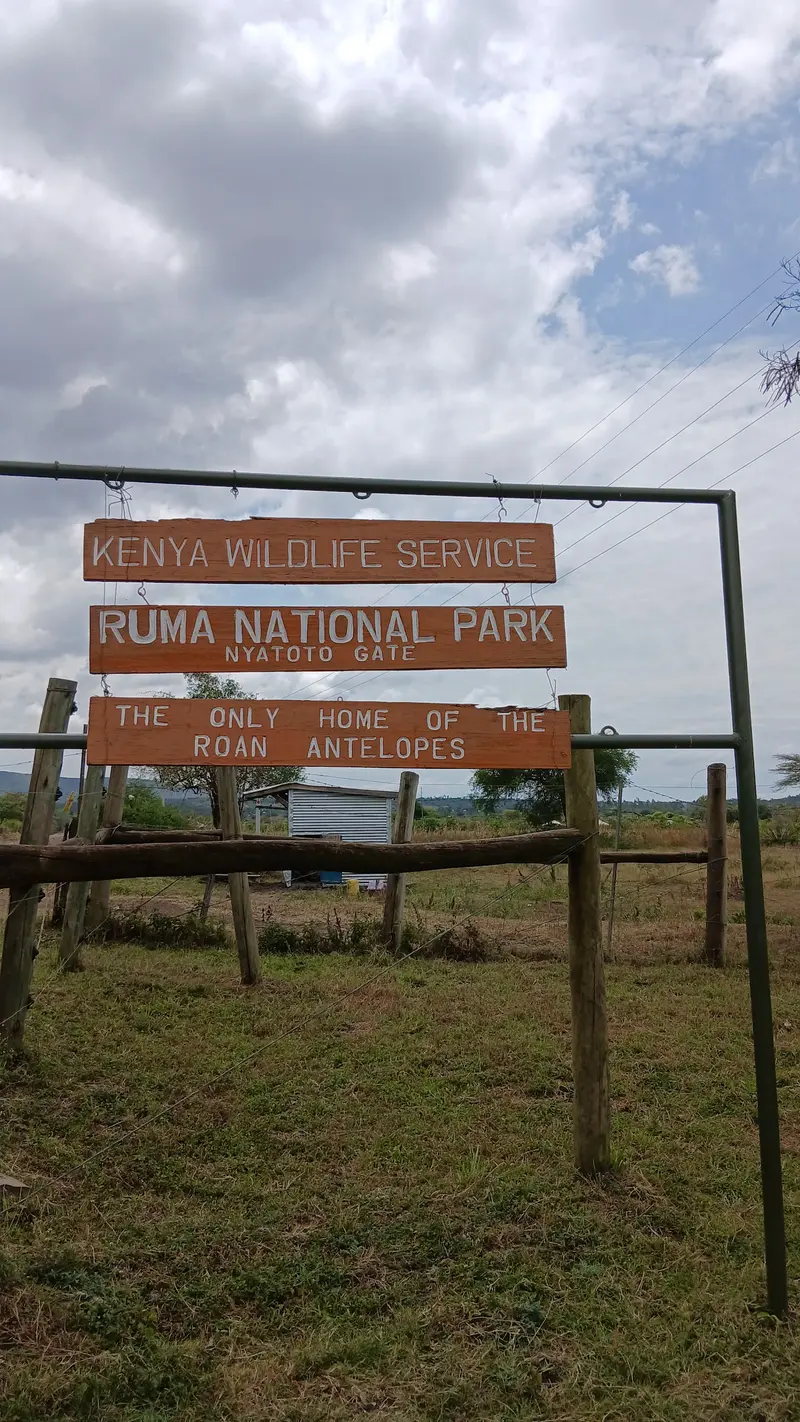
    2Nyatoto Gate

    The second northern park entrance. Before you go, check with Kenya Wildlife Service for gate status and track conditions.
    Open in Google Maps

    Restaurants in Ruma National Park

    1

    BJ's Ranch

    A simple eatery just outside Homa Bay on the road to Mbita, thus on the way to Ruma National Park. Relaxed atmosphere overlooking greenery, good for a meal before or after your game drive.
    Show on Google Maps

    Nature & History

    Roan Antelope's RefugeRuma is known as the 'last refuge of the roan antelope'. It hosts the country's only indigenous population, which according to available data comprises just a few dozen animals.From Game Reserve to National ParkThe area was initially protected as Lambwe Valley Game Reserve and later renamed Ruma. Today, the Kenya Wildlife Service manages the park.Birds and Other SpeciesBesides Rothschild's giraffes, oribis, Lelwel hartebeests, topis, and buffalo, over 400 bird species have been recorded. Ruma is designated an Important Bird Area, and the rare blue swallow can also be observed here as a migratory bird.

    Arrival & Practical

    Getting ThereFrom Homa Bay, drive 14 kilometers on the C19 towards Mbita, turn left at Kadio (Malela Junction), and after eight kilometers on the D213, you will reach Kamato Gate, the main entrance.A second access point is Nyatoto Gate.Inside the ParkA robust 4x4 vehicle is recommended year-round.Inside the park, you'll find the Oribi Guesthouse for self-caterers with three bedrooms, accommodating up to six people. It's best to bring provisions from Homa Bay.FeesNon-residents pay 40 US dollars per adult for 24 hours and 20 US dollars for children, effective October 1, 2025. Payments are cashless via eCitizen; check payment methods beforehand with the Kenya Wildlife Service.

    Accommodations in Ruma National Park

    Find perfect stay in Ruma National Park

    Booking.com* (Affiliate link)
    Search Hotels
    Agoda* (Affiliate link)
    Search Hotels
    Airbnb
    Vacation Rentals

    * Affiliate link: if you book through it, we earn a small commission. The price stays the same for you.
    Nearby

    Kisumu

    Kisumu

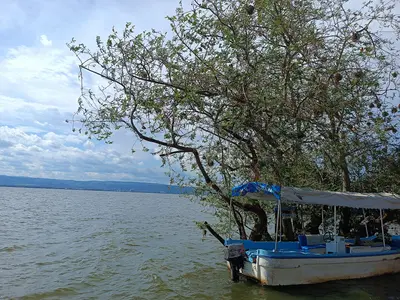
    Kisumu is located on the northeastern shore of Winam Gulf, a shallow arm of Lake Victoria, approximately 320 kilometers northwest of Nairobi. Kenya's third-largest city is the cultural center of the Luo people and the best starting point for boat trips to see hippos, fishing villages, and sunsets over the lake.The Kisumu Museum, featuring a reconstructed Luo homestead, the small Impala Sanctuary on the shore, and the fishing beach Dunga Beach, can easily be combined into a single day. For sunsets over the lake, many head to Hippo Point near Dunga, a few kilometers southwest of the center.
    West Kenya & Lake Victoria

    West Kenya & Lake Victoria

    West Kenya extends from Lake Victoria to the Ugandan border, away from the classic safari routes. Around Kisumu, Kenya's third-largest city, Luo culture, fishing villages, and lake boat trips combine with rainforest, volcanic caves, and a small savannah park.
    Kakamega Forest

    Kakamega Forest

    North of Kisumu, Kakamega Forest is considered Kenya's last remnant of the Guineo-Congolese rainforest, which once stretched from Central Africa to this region. At an altitude of 1,500 to 1,600 meters, it is home to primates and birds you usually find in Uganda or the Congo Basin.The forest can only be explored on foot: on trails to viewpoints like Buyangu and Lirhanda, to waterfalls along the Isiukhu, and with bird guides in the early morning.
    Masai Mara National Reserve

    Masai Mara National Reserve

    The Masai Mara National Reserve in southwestern Kenya is the country's most renowned wildlife sanctuary and the northern continuation of the Serengeti. Grassy savannas, acacias, and the Mara River form the backdrop for the Great Migration, as large herds of wildebeest and zebras arrive from Tanzania starting in July.Even outside the Migration, many animals remain year-round by the river and in the swamps. The Reserve is managed by Narok County, not the Kenya Wildlife Service.

    The Mara Conservancies are private protected areas on Maasai land, bordering the Masai Mara National Reserve to the north and east. Mara North, Olare Motorogi, and Mara Naboisho are particularly well-known, where only a few camps operate, keeping the number of vehicles at a sighting correspondingly small.Here, walking safaris with Maasai guides, night game drives, off-road driving, and bush dinners are possible, all of which are not permitted in the Reserve. From most camps, you can also drive into the Reserve.

    Sources & method

    • Photos: Wikimedia Commons, Google Maps. Each photo carries its credit.
    • Place data such as addresses and ratings comes from Google Maps.
    • The content is based on web research from public, traceable sources. How the content is made · The role of AI