ExploreTravel GuidesPlan a trip
    de|en
    All Places & RegionsAbout FernwehFAQPrivacy PolicyImprint
    ExploreTravel GuidesPlan a trip
    • Places in the region
    • Nearby
    Hamburg

    Germany

    Hamburg

    RegionUNESCO

    The Free and Hanseatic City of Hamburg lies where the Alster and Bille rivers flow into the Lower Elbe, about 100 kilometers before the Elbe's mouth into the North Sea.

    1. Home
    2. Destinations
    3. Germany
    4. Hamburg
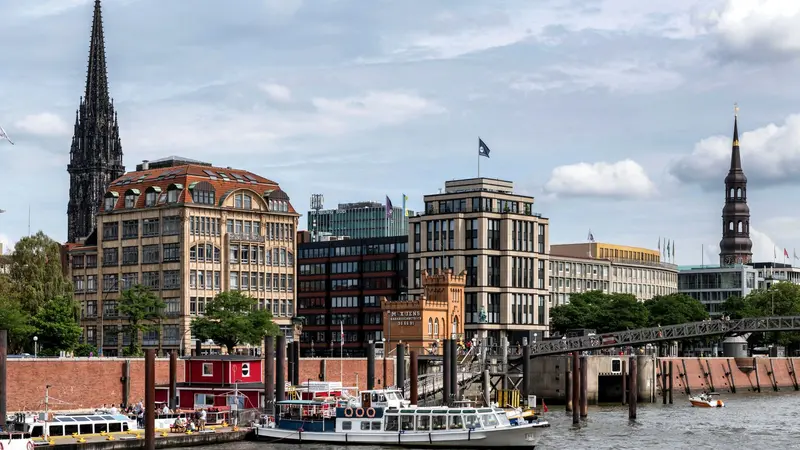
    The Free and Hanseatic City of Hamburg lies where the Alster and Bille rivers flow into the Lower Elbe, about 100 kilometers before the Elbe's mouth into the North Sea. As Germany's second-largest city, Hamburg is simultaneously a city-state and one of the world's most important port cities. Nearly 2500 bridges span its canals, waterways, and streams.For you, that means: brick warehouses and glass concert halls on the waterfront, barges and harbor ferries, the Inner and Outer Alster right in the city, and a nightlife that made history around the Reeperbahn in St. Pauli. Speicherstadt and Kontorhausviertel have been a UNESCO World Heritage site since 2015.

    More places in Hamburg
    Hamburg

    Hamburg

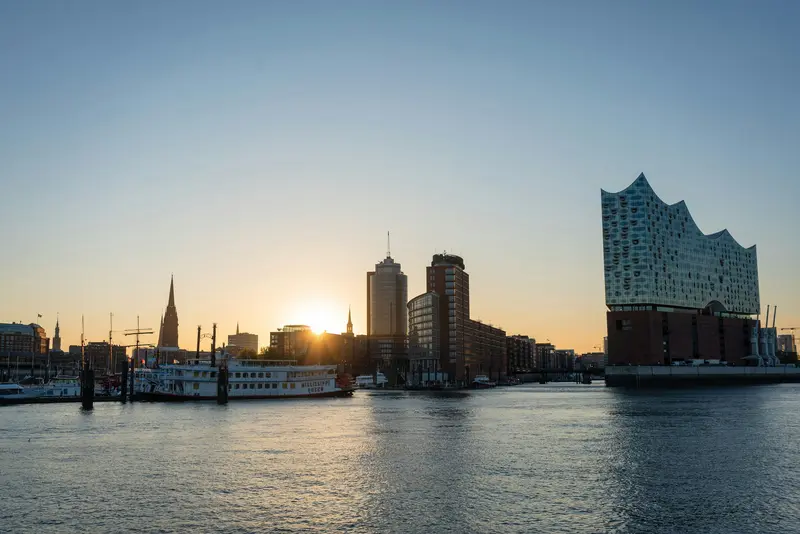
    Hamburg, Germany's second-largest city at 1.9 million inhabitants, lies on the Lower Elbe, where the Alster is dammed in the city center to form Binnenalster and Außenalster. Its port, a global transshipment hub, shapes the cityscape from Landungsbrücken to HafenCity.Here you'll experience the neo-Gothic brick ensemble of the Speicherstadt, the Elbphilharmonie (opened 2017), the baroque Michel, and the magnificent Rathaus. Evenings, St. Pauli beckons: Reeperbahn, Große Freiheit, and Hans-Albers-Platz form the city's best-known entertainment hub.
    Nearby

    Hamburg

    Hamburg

    Hamburg, Germany's second-largest city at 1.9 million inhabitants, lies on the Lower Elbe, where the Alster is dammed in the city center to form Binnenalster and Außenalster. Its port, a global transshipment hub, shapes the cityscape from Landungsbrücken to HafenCity.Here you'll experience the neo-Gothic brick ensemble of the Speicherstadt, the Elbphilharmonie (opened 2017), the baroque Michel, and the magnificent Rathaus. Evenings, St. Pauli beckons: Reeperbahn, Große Freiheit, and Hans-Albers-Platz form the city's best-known entertainment hub.

    Old Town & New Town

    Around Domplatz, Hammaburg was Hamburg's genesis; by 1188, a merchant settlement had emerged at Nikolaifleet. The Great Fire of 1842 destroyed large parts of the Old Town; during reconstruction, the Alsterarkaden were built. Today, office buildings, department stores, and Mönckebergstraße, the main shopping street, define the Old Town; west of the Alsterfleet lies the Neustadt.Stroll along Jungfernstieg by the Binnenalster, take an Alster boat tour from the pier, walk under the Alsterarkaden, and ride the panoramic lift 76 meters high in Mahnmal St. Nikolai. On Deichstraße at Nikolaifleet, where the 1842 fire began, stands a Baroque merchant house from 1686 at number 37. At Jungfernstieg station, the U1, U2, U4, and S1 and S3 S-Bahn lines stop.

    HafenCity & Speicherstadt

    The HafenCity has been developing since its groundbreaking on April 9, 2001, on the former Großer Grasbrook, a port area of approximately 157 hectares, which was released from the Free Port on January 1, 2003, to allow for residential construction. Since March 1, 2008, it has been its own district. To its north lies the Speicherstadt, opened in 1888, for which the residential quarters Kehrwieder and Wandrahm were cleared starting in 1883.You'll walk across the Magellan and Marco Polo Terraces along the water, visit the International Maritime Museum in Kaispeicher B, and learn at the Speicherstadtmuseum how storekeepers stored coffee, tea, and rubber. The U4 stops at the stations Überseequartier, HafenCity Universität, and Elbbrücken.

    St. Pauli

    St. Pauli, located directly on the Elbe between the city center and Altona, has been a Hamburg district since 1894. The former suburb of Hamburger Berg has borne this name since 1833. The Reeperbahn recalls the rope makers who settled here from 1633 and spun ship ropes. Today, the Kiez around Reeperbahn, Große Freiheit and Spielbudenplatz, FC St. Pauli with its Millerntor Stadium, and the harbor define the district, which is considered politically left-leaning, diverse, and tolerant.During the day, you can climb the Grüner Bunker on Feldstraße or visit Beatles-Platz, while evenings offer a choice between the theaters on Spielbudenplatz, live music clubs, and Kiez pubs. The U3 stops at Landungsbrücken, St. Pauli, and Feldstraße stations, and S-Bahn lines S1 and S3 stop at Reeperbahn station.

    Sternschanze

    Sternschanze, mostly known as Schanzenviertel, is Hamburg's smallest district at roughly half a square kilometre, gaining independence only on March 1, 2008. Its name dates back to a star-shaped defensive fortification established in 1682. Solid blocks of old buildings and the Rote Flora, occupied since 1989, define a quarter that has primarily drawn students and young people since the 1970s.Along Schulterblatt, the main commercial street, cafés, bakeries, restaurants, and shops line up. To take a breather, visit the approximately 12-hectare Sternschanzenpark, featuring the 59-meter-high water tower built in 1910. At Sternschanze U- and S-Bahn station in the north of the district, the U3 underground line, among others, makes a stop.