Fernweh: Home
    ExploreTravel GuidesPlan a tripMy tripLast visited
    de|en
    All Places & RegionsAll highlightsAbout FernwehFAQPrivacy PolicyImprint
    ExploreTravel GuidesPlan a tripMy tripLast visited

    Argentina

    Point of Interest

    The Iguazú Falls, on the border with Brazil, are among the largest waterfall systems on Earth: Spanning approximately 2.7 kilometers in width, the Río Iguazú plunges up to 82 meters deep in 150 to 300 individual cascades, depending on…

    by Felix Gillen

    1. Home
    2. Destinations
    3. Argentina
    4. Northeast: Misiones and Iberá
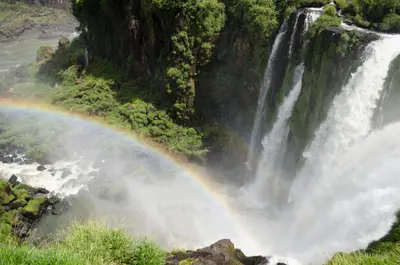
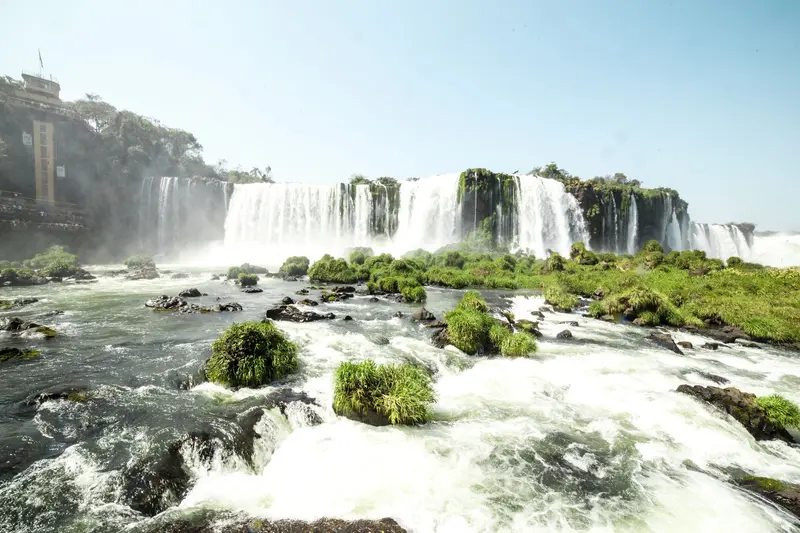
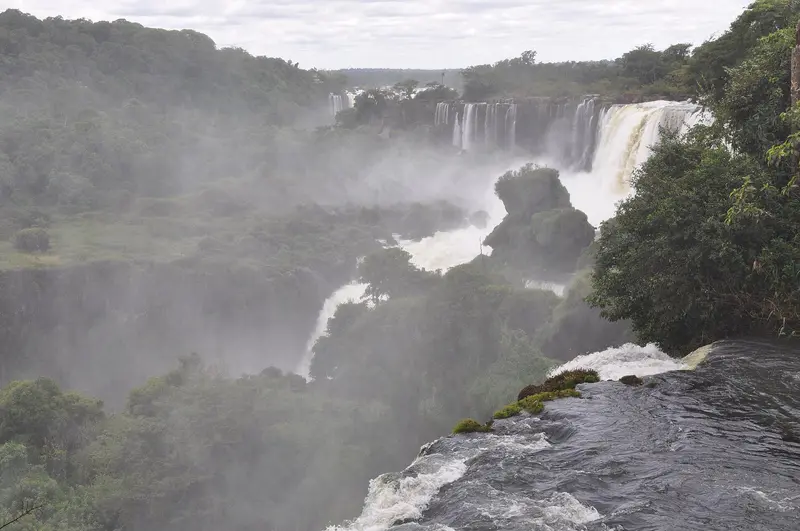
    The Iguazú Falls, on the border with Brazil, are among the largest waterfall systems on Earth: Spanning approximately 2.7 kilometers in width, the Río Iguazú plunges up to 82 meters deep in 150 to 300 individual cascades, depending on water levels. Around 80 percent of the falls are located on the Argentinian side, protected within the Parque Nacional Iguazú, which was founded in 1934 and has been a UNESCO World Heritage site since 1984.Within the park, walkways connect the Circuito Superior, offering panoramic views over the escarpment, and the Circuito Inferior, which leads closer to individual falls. The narrow-gauge railway, Tren Ecológico de la Selva, operates between the stations and is included in the admission fee. The name originates from the Guaraní language and means "big water."Current Notice (as of October 2026): The walkway to Garganta del Diablo, the most powerful fall, was preventatively dismantled due to exceptionally high water levels starting August 3, 2026. There is no set date for its reopening; Circuito Superior and Inferior remain open. Please check the National Park's official status before your visit.

    Sights in

    Discover the most important sights and attractions

    Superior Circuit
    Point of Interest

    1Superior Circuit

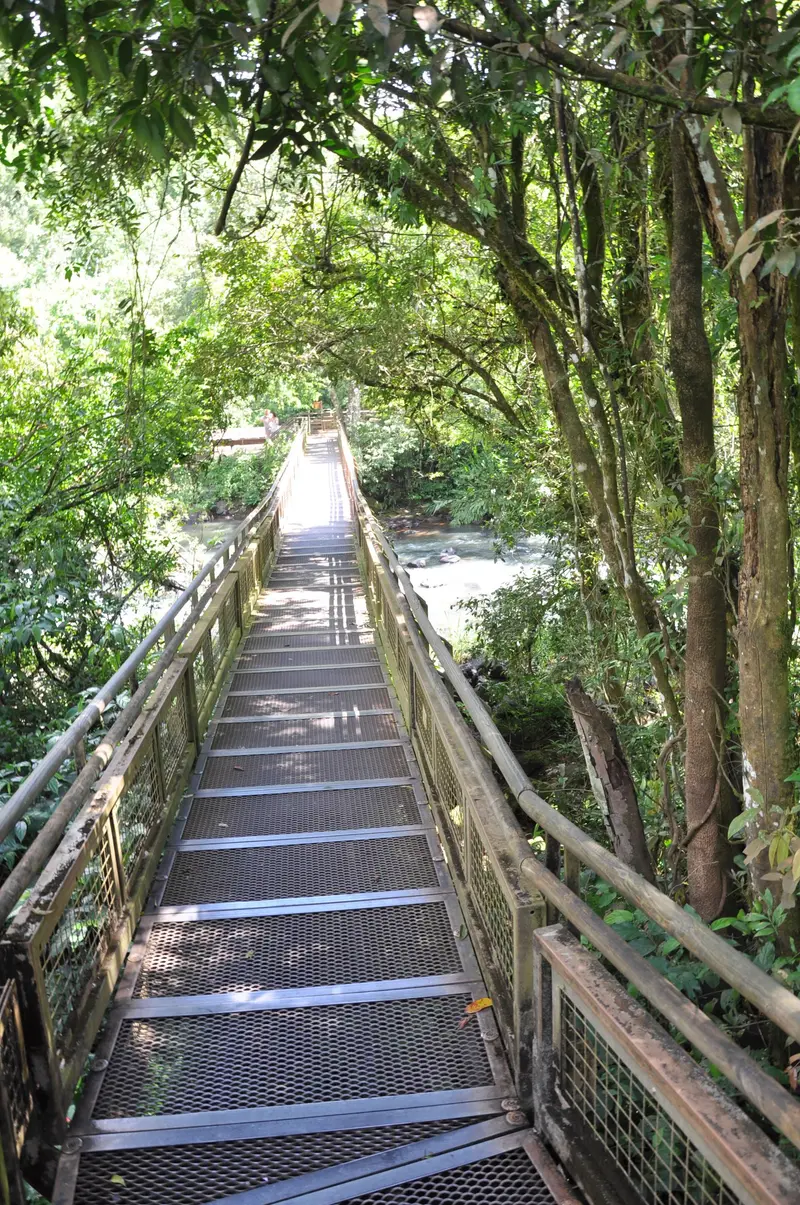
    The Upper Circuit leads along boardwalks for approximately 650 meters above the cliff edge, offering the best panoramic views of the Argentine side of the Falls. It starts near Cataratas Station of the Park Railway.
    Open in Google Maps
    The Lower Circuit
    Attraction

    2The Lower Circuit

    The 1.7 km lower circular path leads through the forest and over stairs close to individual falls, so you feel their force up close. Expect spray and bring rain protection for your camera and phone. Boat trips under the falls also depart from here, for an extra charge.
    Open in Google Maps
    Garganta del Diablo
    Attraction

    3Garganta del Diablo

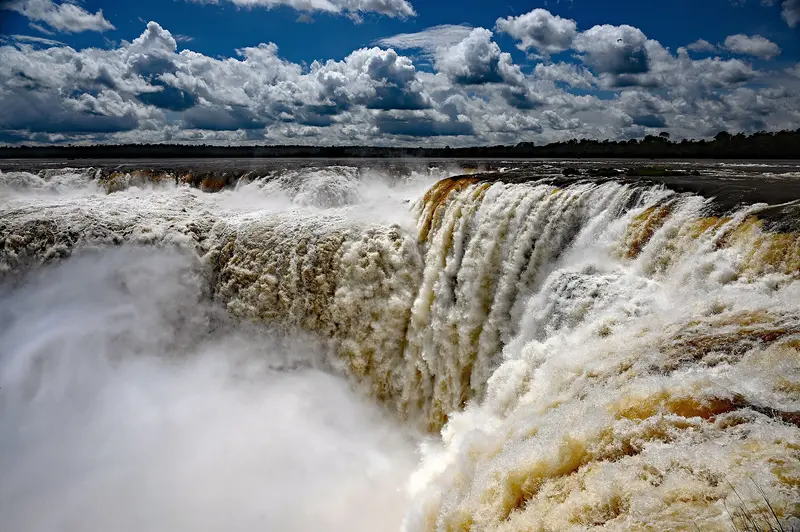
    The "Devil's Throat" is the most powerful section of the falls: in a U-shaped gorge, several falls plunge up to 82 meters deep, with the border to Brazil running right through its middle. Normally, you reach it via the park train and a good one-kilometer long walkway over the river. As of October 2026, this walkway is dismantled due to high water, and access is closed with no reopening date.
    Open in Google Maps

    Restaurants in

    Accommodations in

    Find perfect stay in

    Booking.com* (Affiliate link)
    Search Hotels
    Agoda* (Affiliate link)
    Search Hotels
    Airbnb
    Vacation Rentals

    * Affiliate link: if you book through it, we earn a small commission. The price stays the same for you.

    Nearby

    Puerto Iguazú

    Puerto Iguazú

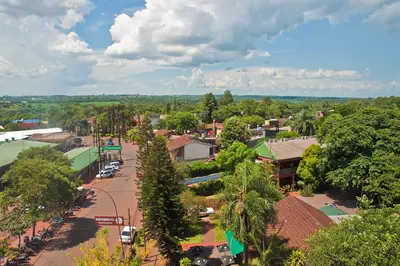
    Puerto Iguazú is the gateway to the waterfalls on the Argentinian side. This small town is located at the triple border, where the Río Iguazú flows into the Paraná, and Argentina, Brazil, and Paraguay meet. From the Hito Tres Fronteras viewpoint, you can gaze upon both neighboring countries.The national park is located about 17 kilometers outside; buses run regularly from the bus terminal. Cataratas del Iguazú Airport has connections to Buenos Aires and Córdoba. From here, the Brazilian side of the falls can also be visited; check Brazil's entry requirements for this. In July and over Easter, the town is particularly crowded due to Argentinian holidays.
    Northeast: Misiones and Iberá

    Northeast: Misiones and Iberá

    Argentina's subtropical northeast, between Paraguay and Brazil, is shaped by forests, red earth, and large rivers. The main destination is Iguazú Falls on the border with Brazil, visited from Puerto Iguazú. Further south in Misiones lie Jesuit reduction ruins, led by San Ignacio Miní, and in nearby Corrientes the Iberá Wetlands with caimans, capybaras, swamp deer.
    San Ignacio Miní

    San Ignacio Miní

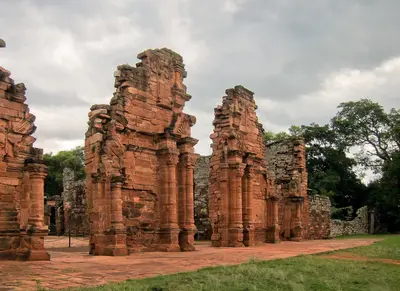
    The ruins of San Ignacio Miní, about 60 kilometers northeast of Posadas, are among Argentina's best-preserved Jesuit reductions. Here, Guaraní and Jesuit priests lived together until the order was expelled from the Spanish colonies in 1767. Mighty red sandstone walls with baroque architectural decoration, arranged around a large square with a church and Cabildo, remain.Since 1984, San Ignacio Miní, along with other reductions in Argentina and São Miguel in Brazil, has been part of the UNESCO World Heritage Site of the Jesuit Missions of the Guaraní. An exhibition room at the entrance explains its history; inquire locally about the evening light and sound show. From Puerto Iguazú, it's about 240 kilometers via Ruta Nacional 12.
    Esteros del Iberá

    Esteros del Iberá

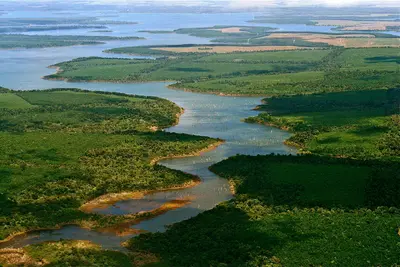
    The Esteros del Iberá in Corrientes province are, after Brazil's Pantanal, among South America's largest freshwater wetlands. Lagoons, floating islands, and grasslands provide habitat for caimans, capybaras, swamp and pampas deer, howler monkeys, and over 350 bird species. For years, vanished species have been reintroduced here, including giant anteaters and jaguars; jaguars now roam freely through the park once again.The most important starting point is Colonia Carlos Pellegrini, a village of around 900 inhabitants on Laguna Iberá. From there, boats depart onto the lagoon, and short trails lead into the surrounding area. Access from Mercedes or Ituzaingó is partly via gravel roads; inquire about their condition beforehand.

    Palermo

    Palermo is Buenos Aires' largest barrio and is divided into several unofficial sub-districts. Palermo Soho and Palermo Hollywood are the entertainment and design districts with boutiques, cafés, bars, and street art; around Plaza Serrano (officially Plazoleta Julio Cortázar), a handicraft market takes place on weekends. Palermo Chico, in contrast, is a quiet, upscale residential area with villas and museums.To the east are the Bosques de Palermo, officially Parque Tres de Febrero, the city's largest green space, featuring lakes, a rose garden, a planetarium, a botanical garden, and a Japanese garden. Admission to the park, the Rosedal, and the Botanical Garden is free.
    Sources & method

    • Photos: Wikimedia Commons, Pexels. Each photo carries its credit.
    • Place data such as addresses and ratings comes from Google Maps.
    • The content is based on web research from public, traceable sources. How the content is made · The role of AI