ExploreTravel GuidesPlan a trip
    de|en
    All Places & RegionsAbout FernwehFAQPrivacy PolicyImprint
    ExploreTravel GuidesPlan a trip
    • Places in the region
    • Round trips
    • Nearby
    Heidelberg & Neckar

    Germany

    Heidelberg & Neckar

    Region

    The Neckar links two distinct cities in Baden-Württemberg: Stuttgart, the state capital in its valley location, with the river flowing through its northeast, and Heidelberg, where it exits the Odenwald into the Upper Rhine Plain.

    1. Home
    2. Destinations
    3. Germany
    4. Heidelberg & Neckar
    The Neckar links two distinct cities in Baden-Württemberg: Stuttgart, the state capital in its valley location, with the river flowing through its northeast, and Heidelberg, where it exits the Odenwald into the Upper Rhine Plain. Heidelberg's castle ruin above the old town attracts, according to its administration, around a million guests annually.Here, experience the romance of Germany's oldest university city, alongside car city Stuttgart with its Mercedes-Benz and Porsche museums. Stuttgart's vineyards reach right into the city centre, and Wilhelma in Bad Cannstatt ranks among Germany's most visited zoos.
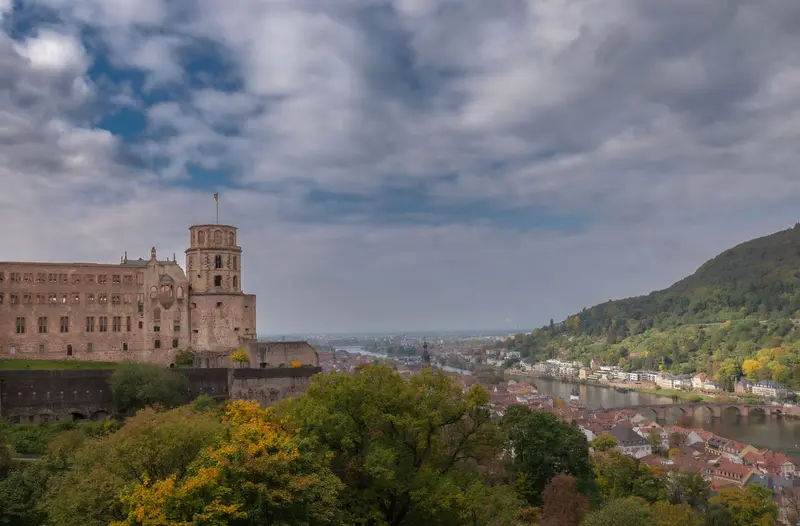
    Heidelberg

    Place 1 of 2

    Heidelberg

    Heidelberg is situated on the Neckar, precisely where the river exits the Odenwald and flows into the Upper Rhine Plain.

    Heidelberg, with approx. 155,000 residents, is Baden-Württemberg's fifth-largest city. Its Old Town lies narrowly between the Neckar and Königstuhl, with the approx. 1.6-kilometer-long Hauptstraße as its fully walkable backbone.

    Discover
    Stuttgart

    Place 2 of 2

    Stuttgart

    Stuttgart, with around 613,000 inhabitants, is Baden-Württemberg's largest city and has been its state capital since 1952. The city center lies in a valley basin; nearly 350 meters in altitude separate the lowest and highest points of the urban area.

    Stuttgart has around 613,000 inhabitants and is Baden-Württemberg's largest city; the region counts some 2.8 million people. The city center sits in a valley basin; on its slopes, stairs, the Stäffele, help you, and Stuttgart has Germany's only inner-city rack railway.

    Discover

    Round trips through this region

    Classics in 14 Days

    This 14-day journey combines Germany's great cities and landscapes from Berlin to Cologne. From the capital, via Dresden to Franconia, whose Bamberg Old Town is a UNESCO World Heritage site since 1993, and further via Nuremberg to Munich. Near Füssen, you visit Schloss Neuschwanstein; the route then leads via Heidelberg to Koblenz at the Moselle estuary, the north end of the Upper Middle Rhine Valley World Heritage site. The journey ends in Cologne; from the main station, you can reach Köln/Bonn Airport in 11 minutes by Regional-Express.

    14 Days
    10 stops
    Open jaw

    Nearby

    Heidelberg

    Heidelberg

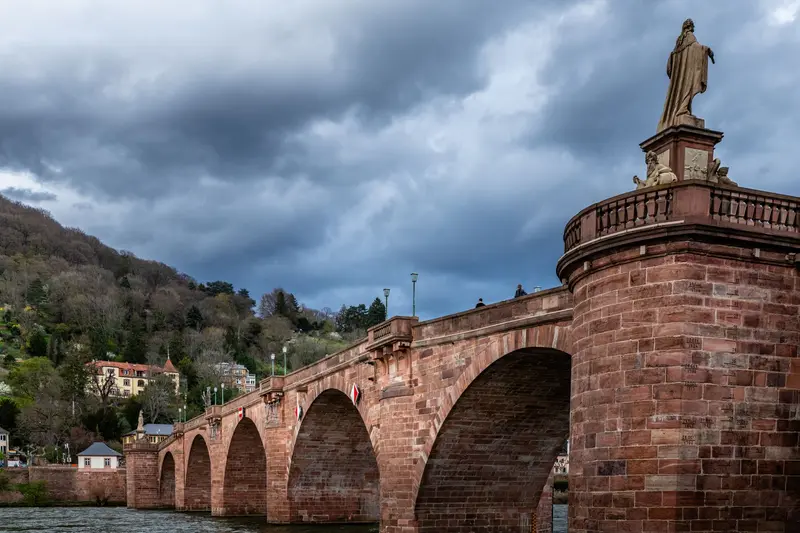
    Heidelberg is situated on the Neckar, precisely where the river exits the Odenwald and flows into the Upper Rhine Plain. The Old Town stretches narrowly between the river and the 568-meter-high Königstuhl, topped by the famous castle ruin, which French troops set ablaze in 1689 and blew up in 1693.Founded in 1386, Ruprecht-Karls-Universität is Germany's oldest university and continues to shape the city today. You can stroll along the approximately 1.6-kilometer-long Hauptstraße, one of Europe's longest pedestrian zones, cross the Alte Brücke, and look back at the castle and Old Town from the Philosophenweg on the opposite side of the Neckar.
    Stuttgart

    Stuttgart

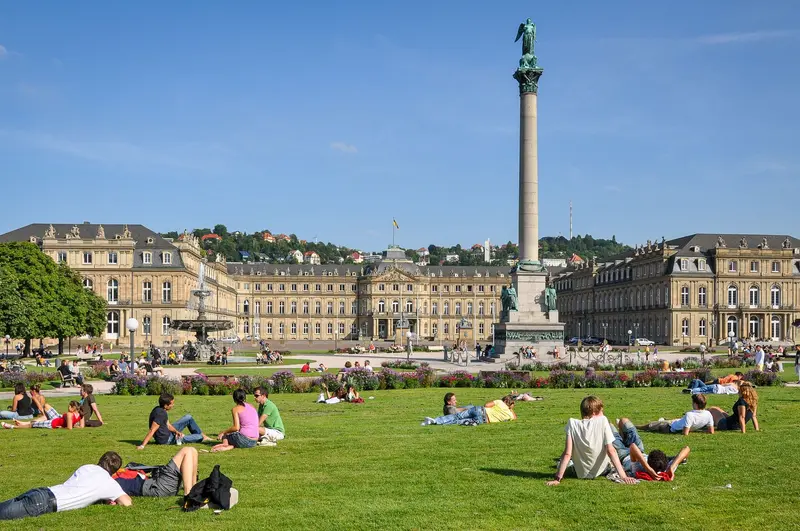
    Stuttgart, with around 613,000 inhabitants, is Baden-Württemberg's largest city and has been its state capital since 1952. The city center lies in a valley basin; nearly 350 meters in altitude separate the lowest and highest points of the urban area. Stairs, known as 'Stäffele,' connect the hillside areas, and wine grows on 423 hectares right in the city.In the city center, the Schlossplatz opens up, featuring the baroque New Palace. Stuttgart is world-renowned as a car city: The Mercedes-Benz Museum in Bad Cannstatt and the Porsche Museum in Zuffenhausen tell the story of two brands. Additionally, there's the Wilhelma, a zoological-botanical garden set in a historic Moorish-style complex.
    Speyer

    Speyer

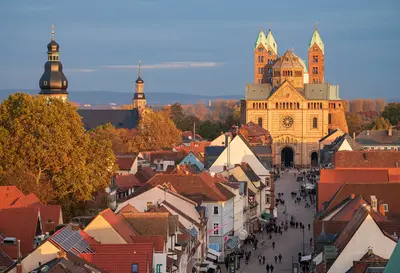
    Speyer is located on the Rhine, which here forms the border between Rhineland-Palatinate and Baden-Württemberg, just under 20 kilometers south of Mannheim. The city, with around 51,000 inhabitants, boasts two UNESCO World Heritage Sites: the Imperial Cathedral (Kaiserdom), consecrated in 1061, the largest preserved Romanesque church after the destruction of Cluny, and the Jewish Courtyard (Judenhof) with its synagogue ruins and Germany's oldest completely preserved mikveh.From Cathedral Square, Maximilianstraße, a pedestrian zone, leads to the 55-meter-high Altpörtel, the city's former western gate. Additionally, you'll find the Historical Museum of the Palatinate with its cathedral treasury, and the Technik Museum, where you can see, among other things, a Boeing 747 and the Buran prototype OK-GLI.
    Pfalz & German Wine Route

    Pfalz & German Wine Route

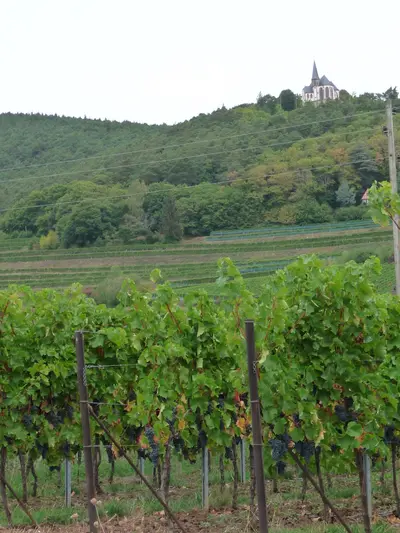
    The Palatinate in the south of Rhineland-Palatinate is Germany's second-largest wine region. Running through its heart since 1935 is the approximately 85-kilometer-long German Wine Route, stretching from the German Wine Gate in Schweigen on the French border to Bockenheim, always alongside the Haardtrand, the eastern edge of the Palatinate Forest.On your journey, you'll combine wine villages with rich history: By the Rhine, in Speyer, stands the Romanesque Imperial Cathedral, a UNESCO World Heritage site since 1981; above Neustadt an der Weinstraße, Hambach Castle towers, the site of the Hambach Festival of 1832; and in Bad Dürkheim awaits the Giant Cask from 1934.
    Baden-Baden

    Baden-Baden

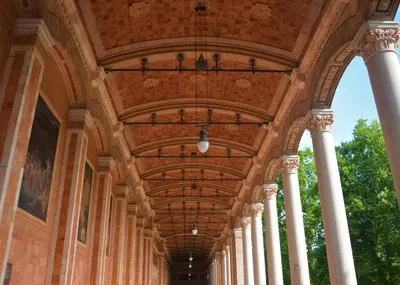
    Baden-Baden liegt am Westrand des Nordschwarzwalds im Tal der Oos und zählt seit Juli 2021 als eine der elf "Great Spa Towns of Europe" zum UNESCO-Welterbe. Schon die Römer badeten am Florentinerberg, wo heute das Friedrichsbad steht, und im 19. Jahrhundert wurde die Stadt zu einem der bekanntesten Kurorte Europas.Herz der Stadt ist das klassizistische Kurhaus von Friedrich Weinbrenner mit seiner Spielbank, dahinter beginnt die Lichtentaler Allee entlang der Oos. Für den Blick von oben fährt die Merkurbergbahn seit 1913 auf den 669 Meter hohen Merkur.