ExploreTravel GuidesPlan a trip
    de|en
    All Places & RegionsAbout FernwehFAQPrivacy PolicyImprint
    ExploreTravel GuidesPlan a trip
    • Places in the region
    • Nearby
    Münsterland & Westfalen
    Dietmar Rabich / Wikimedia Commons / CC BY-SA 4.0

    Germany

    Münsterland & Westfalen

    Region

    Münsterland, in the northwest of Westphalia, is a flat landscape of fields, pastures, small woodlands, and hedgerows, known as the Münsterland Park Landscape.

    1. Home
    2. Destinations
    3. Germany
    4. Münsterland & Westfalen
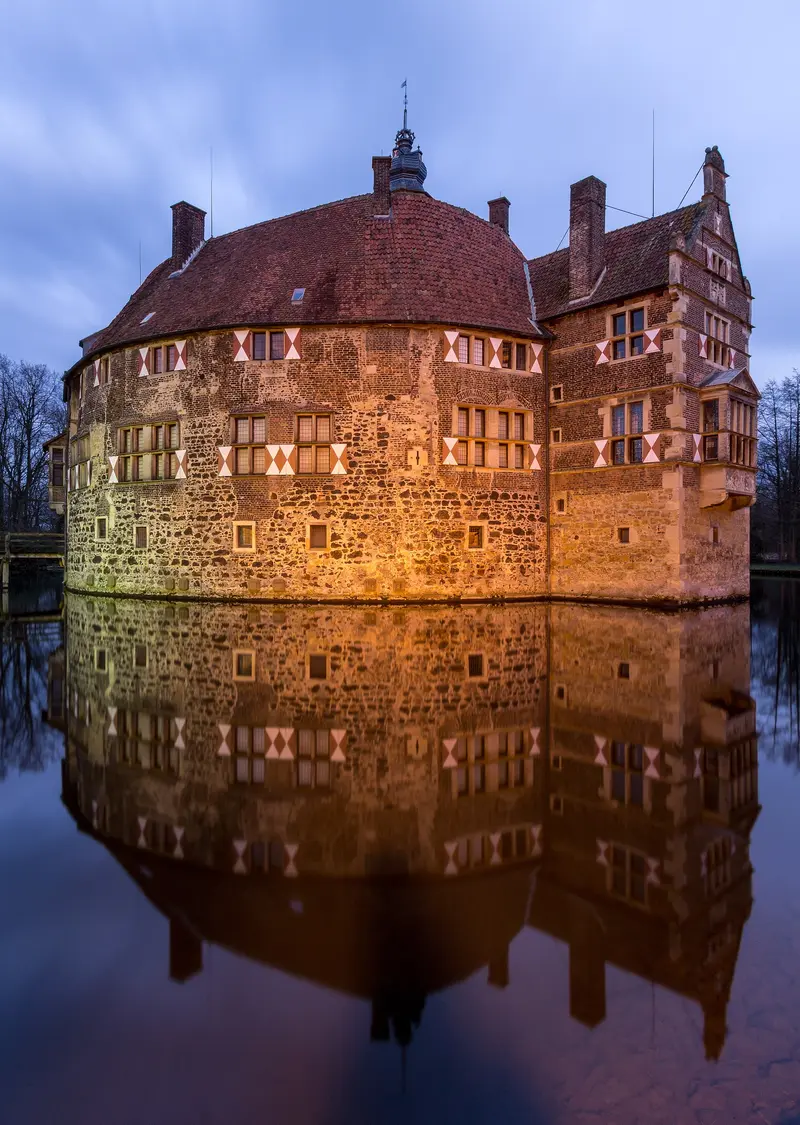
    Münsterland, in the northwest of Westphalia, is a flat landscape of fields, pastures, small woodlands, and hedgerows, known as the Münsterland Park Landscape. Typical features are moated castles and palaces such as Burg Vischering, Schloss Nordkirchen, or Burg Anholt. The region comprises the districts of Borken, Coesfeld, Steinfurt, and Warendorf, as well as the city of Münster.Because the terrain is so flat, the best way to explore the area is by bike, for instance, on the 100 Castles Route, which links the region's castles and stately homes. The focal point is Münster, the only major city in Münsterland, featuring the Prinzipalmarkt, Cathedral, and the Friedenssaal, where history was made in 1648.

    More places in Münsterland & Westfalen
    Münster

    Münster

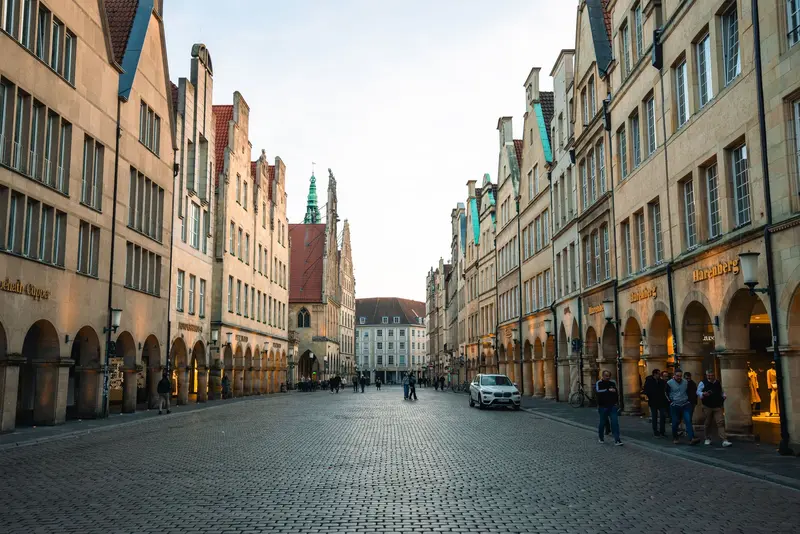
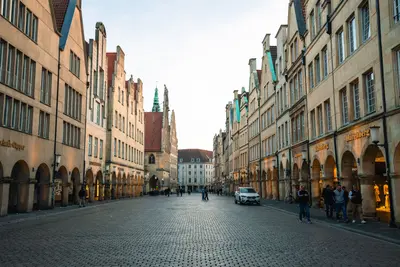
    Münster, with around 323,000 inhabitants, is the major city of the Münsterland region and a city of bicycles: The city counts approximately 500,000 bikes. In the Historic City Hall on Prinzipalmarkt, the Peace of Münster between Spain and the Netherlands was sworn on May 15, 1648, part of the Peace of Westphalia. Just around the corner stands St. Paul's Cathedral, consecrated in 1264.The Old Town, with its gabled houses and arcades, was rebuilt on its original plots after the Second World War. Around the city center runs the approximately 4.5-kilometer-long Promenade, exclusively for cyclists and pedestrians. Additionally, there's the Baroque Palace, today home to the university, the Aasee lake, and the LWL Museum of Art and Culture. Every ten years, the Skulptur Projekte transform the city into an open-air museum, next in 2027.
    Nearby

    Münster

    Münster

    Münster, with around 323,000 inhabitants, is the major city of the Münsterland region and a city of bicycles: The city counts approximately 500,000 bikes. In the Historic City Hall on Prinzipalmarkt, the Peace of Münster between Spain and the Netherlands was sworn on May 15, 1648, part of the Peace of Westphalia. Just around the corner stands St. Paul's Cathedral, consecrated in 1264.The Old Town, with its gabled houses and arcades, was rebuilt on its original plots after the Second World War. Around the city center runs the approximately 4.5-kilometer-long Promenade, exclusively for cyclists and pedestrians. Additionally, there's the Baroque Palace, today home to the university, the Aasee lake, and the LWL Museum of Art and Culture. Every ten years, the Skulptur Projekte transform the city into an open-air museum, next in 2027.
    Zeche Zollverein

    Zeche Zollverein

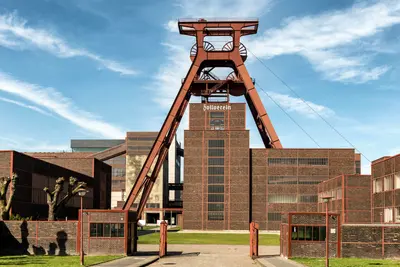
    The Zollverein Coal Mine in Essen-Stoppenberg, along with the Zollverein Coking Plant, has been a UNESCO World Heritage site since December 14, 2001. Its landmark is Shaft XII, which architects Fritz Schupp and Martin Kremmer designed in the New Objectivity style and which went into operation on February 1, 1932. Coal production ended on December 23, 1986, and the coking plant ran until 1993.In the former coal washery, the Ruhr Museum has been presenting the region's history since 2010. In the old boiler house, remodelled by Norman Foster and Heinrich Böll, the Red Dot Design Museum is located.
    Ruhr Area

    Ruhr Area

    The Ruhr Area is home to around 5.1 million people across 11 independent cities and 4 districts, including Duisburg, Essen, Bochum, and Dortmund. For over a century, coal and steel shaped the region, and in December 2018, Prosper-Haniel in Bottrop, Germany's last hard coal mine, ceased operations.Today, its industrial history is a major travel theme. The Route of Industrial Heritage connects the most important sites, especially the Zollverein Coal Mine Industrial Complex in Essen, a UNESCO World Heritage site since 2001. At Landschaftspark Duisburg-Nord, you can climb a blast furnace, and from Gasometer Oberhausen, you look out over the western Ruhr Area from a height of 117 meters. In 2010, the Ruhr Area was the European Capital of Culture.
    Gasometer Oberhausen

    Gasometer Oberhausen

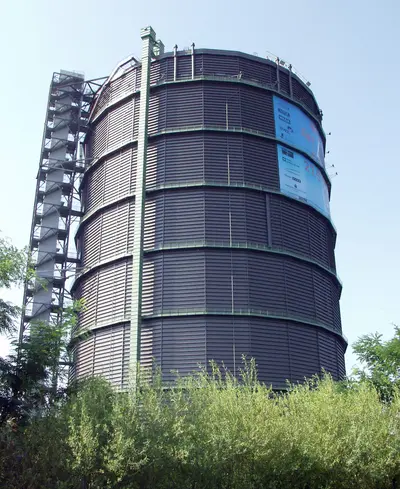
    The Gasometer Oberhausen is 117 meters high and measures almost 68 meters in diameter. It was built between 1927 and 1929 as a gas holder, and was operational until 1988. Since its conversion in 1993/94, it has been considered Europe's highest exhibition hall, with approximately 7,000 square meters across three levels.You can reach the roof by external lift or via 592 steps. On a clear day, the view extends up to 35 kilometers over the western Ruhr area.
    Landscape Park Duisburg-North

    Landscape Park Duisburg-North

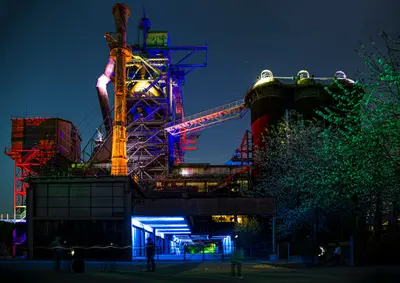
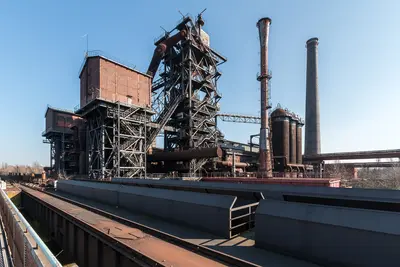
    An approximately 180-hectare park has emerged around an ironworks founded by August Thyssen in 1902 in Duisburg-Meiderich. The last blast furnace ceased operation in 1985, and the site has been publicly accessible since 1994.You can climb Blast Furnace 5 up to a viewing platform at a height of around 70 meters. In the former ore bunker, the Duisburg section of the Alpine Club has set up a climbing garden with approximately 400 routes and a via ferrata, and an old gasometer with 20,000 cubic meters of water serves as a diving center. In the evenings, Jonathan Park's light installation bathes the complex in colorful light.