Fernweh: Home
ExploreGuideDestinationsMy tripsMy trip
de|en
All Places & RegionsRound tripsNight trains in EuropeAll highlightsAbout FernwehFAQPrivacy PolicyImprint
Download on the App StoreGet it on Google Play
ExploreGuideDestinationsMy tripsMy trip
    • Places in the region
    • Culture
    • Getting around
    • Nearby
    Ladakh

    India

    Ladakh

    Region

    Ladakh ist ein Hochland im äußersten Norden Indiens zwischen Himalaya und Karakorum, geprägt von tibetisch-buddhistischen Klöstern, kargen Tälern und Hochgebirgsseen.

    by Felix Gillen

    1. Home
    2. Destinations
    3. India
    4. Ladakh
    Ladakh ist ein Hochland im äußersten Norden Indiens zwischen Himalaya und Karakorum, geprägt von tibetisch-buddhistischen Klöstern, kargen Tälern und Hochgebirgsseen. Du reist hierher wegen Klöstern wie Thiksey und Hemis, der Pässe und Seen wie Pangong Tso und des Nubra-Tals.Ladakh ist ein eigenes, dünn besiedeltes Unionsterritorium. Hauptort und Ausgangspunkt fast aller Touren ist Leh.Viele Ziele liegen nahe der Grenzen zu Pakistan und China. Das Auswärtige Amt rät, die westlichen Gebiete und die Grenzregionen zu Pakistan und China zu meiden. Für einige Gebiete Ladakhs, etwa das Nubra-Tal oder den Pangong Tso, können Genehmigungen nötig sein. Aktuelle Hinweise findest du beim Auswärtigen Amt.
    India travel guidePlan a trip with Ladakh

    Contents

    • Places in the region
    • Culture
    • Getting around
    • Nearby

    More places in Ladakh

    Leh

    Leh, the capital of Ladakh, is situated in the Indus Valley, overlooked by the ancient Royal Palace. It serves as the arrival point for most travelers and a base for excursions to monasteries, passes, and lakes.The historic center features Leh Palace, with Namgyal Tsemo Monastery above it. Across town, the white Shanti Stupa offers a prominent sight.Leh is situated at a high altitude. Information on health and acclimatization can be found on the website of the German Foreign Office. In September 2025, violent protests occurred in Leh; according to the German Foreign Office, the situation has since calmed. For current advisories, please consult the German Foreign Office.

    Sights in Ladakh

    Discover the most important sights and attractions

    Natural Feature

    Pangong Tso

    The long saltwater lake lies at high altitude and freezes over in winter. The Line of Actual Control between India and China runs through the lake, with a large part under Chinese administration. Note: Permits may be required for Pangong Tso; check the applicable rules for your passport before travel on the permit portal lahdclehpermit.in and with the Foreign Office. The Foreign Office advises avoiding border regions with Pakistan and China.
    Open in Google Maps
    Museum

    Hemis Abbey

    The Drukpa lineage monastery is located southeast of Leh and was re-established by King Sengge Namgyal. In the courtyard, a gallery displays paintings of the Mahasiddhas. During the Hemis Festival in honor of Padmasambhava, monks perform Cham masked dances. Practical: Check admission and opening hours on site.
    Open in Google Maps
    Place of Worship

    Thiksey Monastery

    The Gelug Monastery perches on a hill in the Indus Valley east of Leh. Due to its architecture, which resembles the Potala in Lhasa, it is also called "Mini Potala". A large Maitreya statue stands in the Maitreya Temple; during the Gustor Festival, the monks perform mask dances. Monks hold their morning prayers early each day; check admission and opening hours on site.
    Open in Google Maps
    Attraction

    Khardung La

    The high pass north of Leh is the road connection to the Nubra Valley. The road is often impacted by weather, avalanches, and damage. Practical: Permits may be required for onward travel to the Nubra Valley; check current rules before your trip on the permit portal lahdclehpermit.in and with the Auswärtiges Amt. High-altitude health advice can be found with the Auswärtiges Amt.
    Open in Google Maps
    Place of Worship

    Diskit Monastery

    The Gelug Monastery in the main town of the Nubra Valley is located north of Leh. Below it stands a large Maitreya statue, consecrated by the Dalai Lama. During the Dosmoche Festival, monks perform mask dances. Practical information: Permits may be required for the Nubra Valley. Check current passport rules before your trip on the Permit Portal lahdclehpermit.in and with the Foreign Office.
    Open in Google Maps
    Attraction

    Sand Dunes of Hunder (Nubra Valley)

    Between Hunder and Diskit in the Nubra Valley, sand dunes stretch. Two-humped Bactrian camels graze among the sea buckthorn bushes. Practical Info: Permits may be required for the Nubra Valley; check the applicable rules for your passport before your trip at the permit portal lahdclehpermit.in and with your Foreign Office.
    Open in Google Maps

    The Buddhist High Country

    Kingdom of the NamgyalThe Namgyal dynasty, whose name means "the Victorious ones", long ruled over Ladakh. King Sengge Namgyal had the Leh Palace built and re-founded the Hemis Monastery. The Treaty of Tingmosgang reduced Ladakh approximately to its present-day borders.Religion and MonasteriesLadakh is home to primarily Muslims, predominantly Shiites, and Buddhists. The Buddhist monasteries primarily belong to the Gelug school (Thiksey, Diskit) and the Drukpa lineage (Hemis). During monastery festivals like the Hemis Festival or Gustor in Thiksey, monks perform masked Cham dances.Politics TodayIn September 2025, violent clashes occurred in Leh during protests for a separate state. According to the Federal Foreign Office, the situation has since calmed down.

    Arrival, Permits, Practical Aspects

    ArrivalLeh Kushok Bakula Rimpochee Airport (Code IXL) is served by flights from Delhi. Due to mountain winds in the afternoon, flights operate in the mornings. By road, you can reach Leh via the Srinagar-Leh Highway over Zoji La, with an overnight stay in Kargil, or via the Leh-Manali Highway, which is only open seasonally.PermitsPermits may be required for some areas of Ladakh, such as the Nubra Valley or Pangong Tso. Before your trip, check the applicable rules for your passport on the official permit portal of the Leh administration (lahdclehpermit.in) and with the Federal Foreign Office (Auswärtiges Amt). According to the Federal Foreign Office, staying in restricted areas without a permit is punishable by law.Altitude, Travel Season, and SafetyLeh and many excursion destinations are located at high altitudes. Information on health and acclimatization can be found from the Federal Foreign Office. Winters are long and very cold. According to the Federal Foreign Office, there is no civilian air rescue service for emergencies at high altitudes, and satellite phones are prohibited. The Federal Foreign Office advises against visiting the western areas and border regions with Pakistan and China. For current advisories, consult the Federal Foreign Office.
    Nearby

    Amritsar

    Amritsar

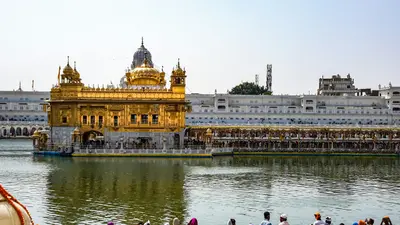
    Amritsar in the state of Punjab is the spiritual center of the Sikhs and the city of the Golden Temple. Here you experience one of India's most open pilgrimage sites, where every visitor is welcome and eats for free in the community kitchen.Around the temple, bazaars, dhabas, and sweet shops jostle for space. Just a few steps away, the Jallianwala Bagh commemorates the 1919 massacre. The Partition Museum in the old Town Hall tells the story of India's 1947 partition, which tore Punjab apart. Amritsar is also known for its cuisine: Amritsari Kulcha, fish, lassi, and dal.The city is located near the border with Pakistan. The German Federal Foreign Office advises against travel to the immediate border area with Pakistan; the border crossing is closed. You can find current information from the German Federal Foreign Office.

    Gaurav Patil·Unsplash

    Rishikesh

    Rishikesh

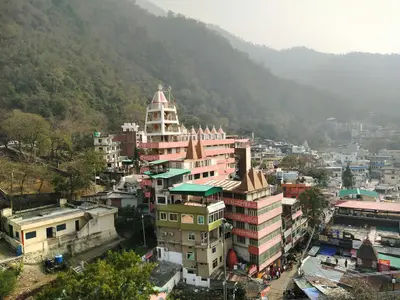
    Rishikesh is located in Uttarakhand, where the Ganges emerges from the foothills of the Himalayas. You come here for the ashrams, the evening Ganga Aarti on the river, and the suspension bridges over the Ganges.Many ashrams offer yoga and meditation courses. Rishikesh became world-famous when the Beatles meditated at Maharishi Mahesh Yogi's ashram and wrote many songs for the "White Album" there.Rishikesh is a vegetarian city, alcohol-free, where the sale of meat, fish, and eggs is forbidden. Nearby Haridwar, with its Har Ki Pauri Ghat, offers a great excursion.

    mohit rawat·Unsplash

    Old Delhi

    Old Delhi

    Old Delhi, the former Mughal capital Shahjahanabad in northern Delhi, is a dense tangle of bazaars, mosques, temples, and gurdwaras. If you want to see the Red Fort, the Jama Masjid, and the food stalls around Chandni Chowk, this is the right place. Shah Jahan had the city laid out between 1638 and 1649; in 1648, it officially received its name. The main artery, Chandni Chowk, stretches from the Red Fort to the Fatehpuri Mosque, with the Khari Baoli wholesale spice market located at its western end. Since its redevelopment in 2021, the section has been closed to cars during the day, making walking significantly more enjoyable. For Old Delhi, you'll need at least half a day, preferably a full day. Current security information, including for the Old City, can be found at the Federal Foreign Office.

    Jakub Hałun·CC BY-SA 4.0

    Delhi

    Delhi

    Delhi is India's capital and for most travelers the gateway to North India: you'll land here, and the classic routes to Agra and Rajasthan start here. The city combines the Mughal metropolis of Shahjahanabad, the British planned city of New Delhi, and centuries-old Sultanate structures in the south. Beyond Old and New Delhi, the city's south is particularly worthwhile: The Qutb Minar complex from the early 13th century is a UNESCO World Heritage site, and in Mehrauli Archaeological Park and around the Hauz Khas water reservoir, Sultanate-era ruins lie amidst greenery. Modern sacred buildings like the Bahai Lotus Temple and the Hindu temple complex Akshardham showcase an entirely different side of the city. Plan at least three full days for Delhi: one for Old Delhi, one for New Delhi with Humayun's Tomb, and one for the south with Qutb Minar and Mehrauli. The Metro connects almost all attractions.

    Naveen R Gowda·CC BY-SA 4.0

    New Delhi

    New Delhi is the capital city planned by the British in the early 20th century, featuring wide avenues, government buildings, and parks, making it the political heart of India. You come here for the India Gate, the Presidential Palace, and Humayun's Tomb, considered a precursor to the Taj Mahal. The grand ceremonial avenue Kartavya Path connects the India Gate with Rashtrapati Bhavan, the President's official residence. Around Connaught Place are the Sikh Temple Bangla Sahib and the stepwell Agrasen ki Baoli; further south, the tombs in Lodhi Garden, the Sufi shrine of Nizamuddin, and Humayun's Tomb, a UNESCO World Heritage site since 1993. A full day is enough for the highlights; with the National Museum and Rashtrapati Bhavan, you'll need two.

    Your next steps

    Ladakh is in India. Ways to carry on from here.

    • More in India

      Highlights, areas, routes and the best time to travel for all of India.

      India travel guide
    • Plan a trip with Ladakh

      The Guide asks about season, length and who is coming, and suggests a trip with Ladakh.

      Plan the trip

    Sources & method

    • Place data such as addresses and ratings comes from Google Maps.
    • The content is based on web research from public, traceable sources. How the content is made · The role of AI