Fernweh: Home
ExploreGuideDestinationsMy tripsMy trip
de|en
All Places & RegionsRound tripsNight trains in EuropeAll highlightsAbout FernwehFAQPrivacy PolicyImprint
Download on the App StoreGet it on Google Play
ExploreGuideDestinationsMy tripsMy trip
    • Neighborhoods & highlights
    • Recommendations
    • Tours
    • Eat & drink
    • Culture
    • Getting around
    • Accommodation
    • Plan trip
    • Nearby
    New Delhi

    A.Savin / Wikimedia Commons / FAL

    India

    New Delhi

    City

    New Delhi is the capital city planned by the British in the early 20th century, featuring wide avenues, government buildings, and parks, making it the political heart of India.

    by Felix Gillen

    1. Home
    2. Destinations
    3. India
    4. Delhi
    5. New Delhi
    New Delhi is the capital city planned by the British in the early 20th century, featuring wide avenues, government buildings, and parks, making it the political heart of India. You come here for the India Gate, the Presidential Palace, and Humayun's Tomb, considered a precursor to the Taj Mahal. The grand ceremonial avenue Kartavya Path connects the India Gate with Rashtrapati Bhavan, the President's official residence. Around Connaught Place are the Sikh Temple Bangla Sahib and the stepwell Agrasen ki Baoli; further south, the tombs in Lodhi Garden, the Sufi shrine of Nizamuddin, and Humayun's Tomb, a UNESCO World Heritage site since 1993. A full day is enough for the highlights; with the National Museum and Rashtrapati Bhavan, you'll need two.
    India travel guidePlan a trip with New Delhi

    Contents

    • Neighborhoods & highlights
    • Recommendations
    • Tours
    • Eat & drink
    • Culture
    • Getting around
    • Accommodation
    • Nearby

    Sights in New Delhi

    Discover the most important sights and attractions

    Humayun's Tomb

    Komal Sambhudas / Wikimedia Commons / CC0

    Historic Landmark

    1Humayun's Tomb

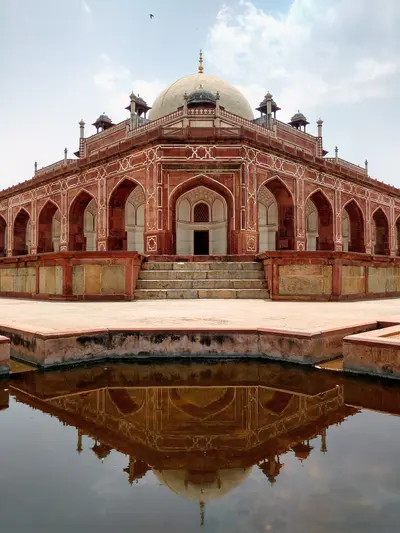
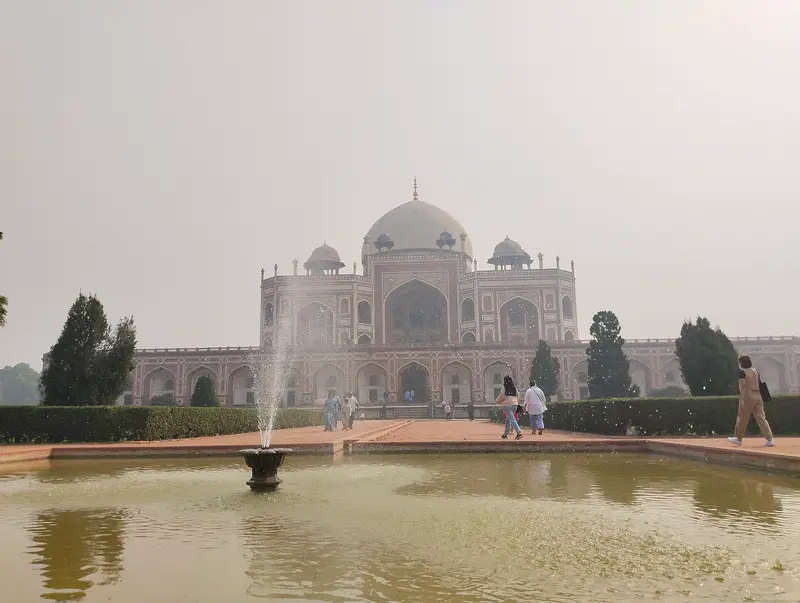
    The tomb of the second Mughal emperor was begun in 1569, commissioned by his widow and designed by the Persian architect Mirak Mirza Ghiyath. It is considered an architectural precursor to the Taj Mahal and has been a UNESCO World Heritage site since 1993. Practical info: Sunrise to 9 PM; Foreigners 600 Rs cash, 550 Rs online (as of November 2026). Metro: JLN Stadium or Jangpura.
    Open in Google Maps
    India Gate

    Nikhilb239 / Wikimedia Commons / CC BY-SA 4.0, mod.

    Historic Landmark

    2India Gate

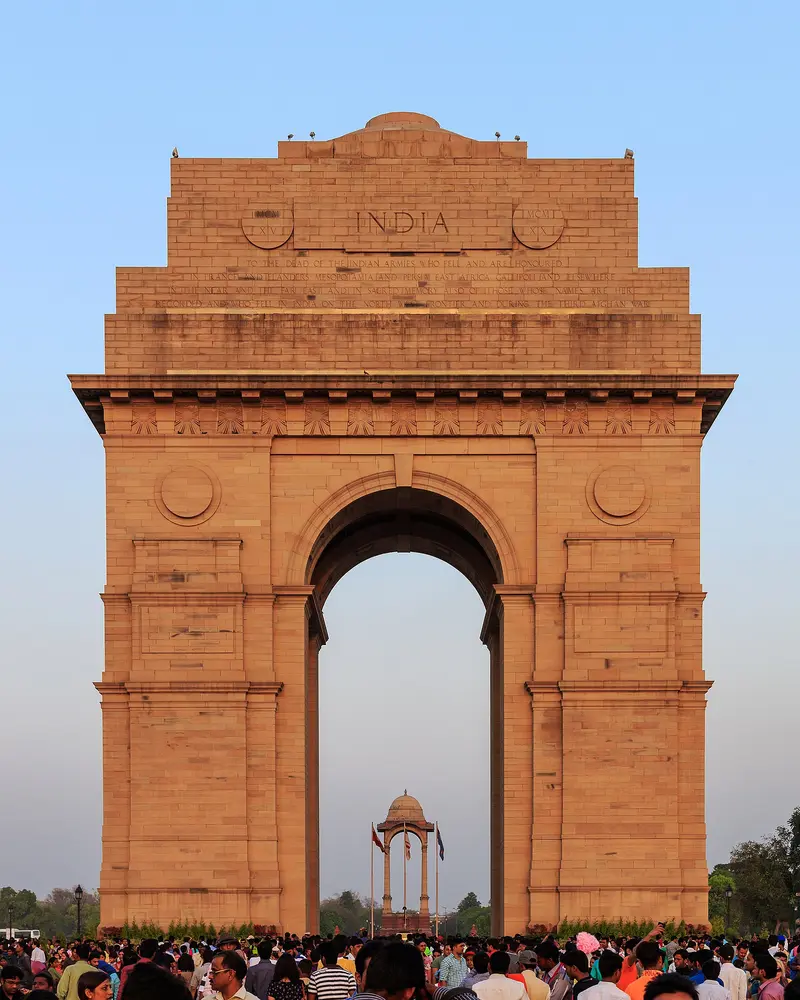
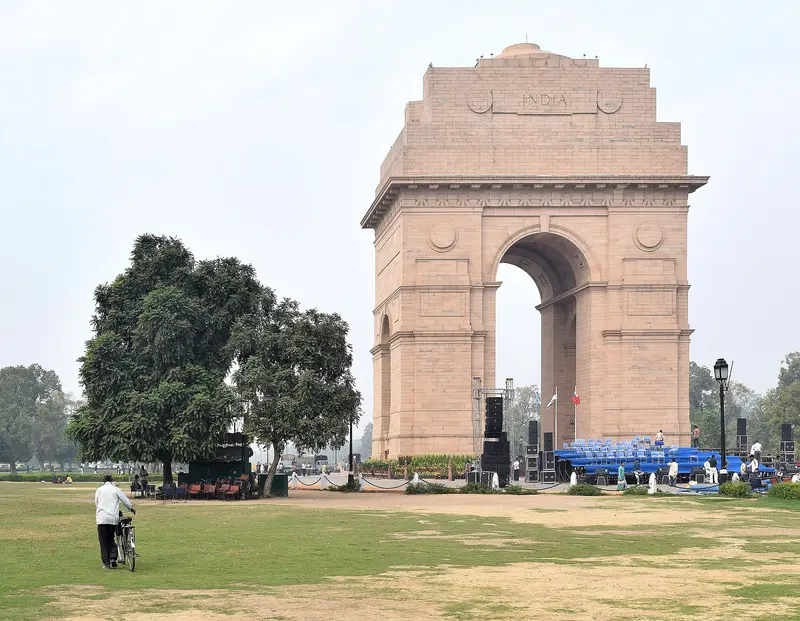
    The 42-meter-high memorial arch by Edwin Lutyens, inaugurated in 1931, commemorates some 70,000 soldiers of British India who fell between 1914 and 1921, including in the First World War and the Third Anglo-Afghan War. From here, the Kartavya Path leads west to Rashtrapati Bhavan; the National War Memorial is a short walk away. Practicalities: freely accessible, some areas are closed after dark.
    Open in Google Maps
    Attraction

    3Rashtrapati Bhavan

    The official residence of the Indian President at the western end of Kartavya Path can be visited on guided tours: Tour 1 covers the Main Building, Tour 2 the Museum Complex, Tour 3 the Gardens, which only open for the annual Garden Festival in February and March. The Changing of the Guard takes place on Saturdays at 8 AM. Booking: Online only, up to seven days in advance; 50 Rs per person per tour, children under 8 free; Foreigners upload a passport copy and bring the original passport. Check visiting days and time slots when booking, as rules have changed multiple times.
    Open in Google Maps
    Gurdwara Bangla Sahib

    A.Savin / Wikimedia Commons / FAL

    Place of Worship

    4Gurdwara Bangla Sahib

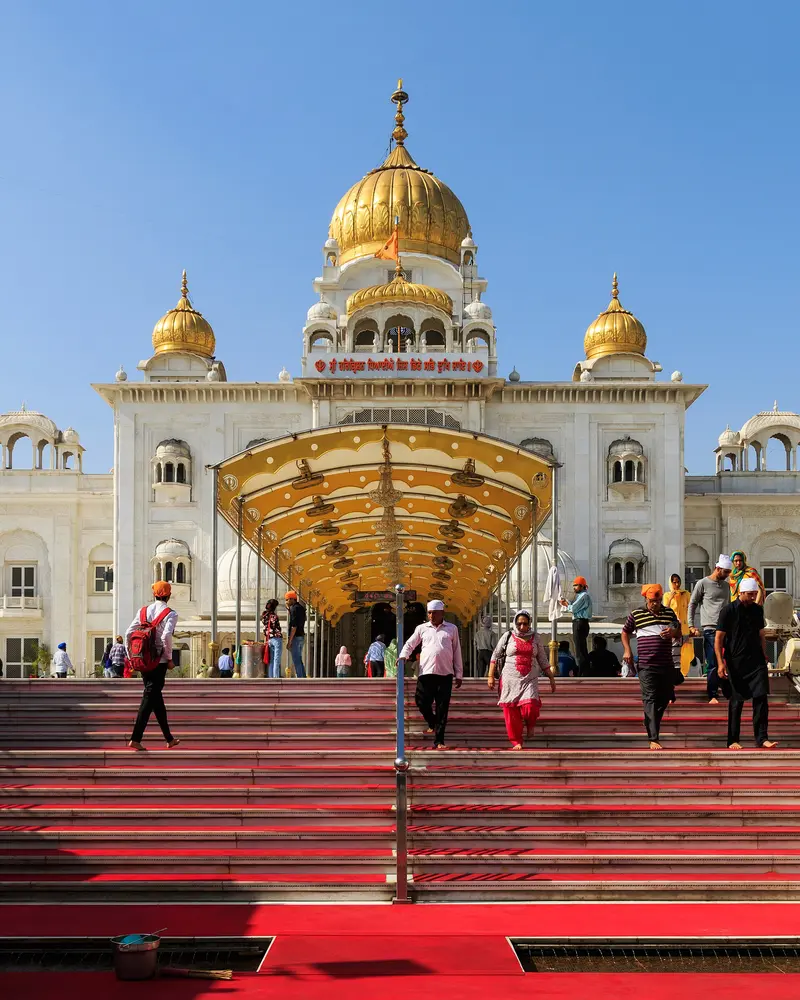
    The Sikh temple was once the palace of Raja Jai Singh; in 1664, Guru Har Krishan provided water from the palace well to the sick during a smallpox and cholera epidemic. In 1783, General Baghel Singh erected the first shrine. A walkway surrounds the holy pond (Sarovar), and thousands eat for free daily in the Langar. Practical: open 24/7, free entry; cover head and shoulders, remove shoes.
    Open in Google Maps
    Agrasen ki Baoli

    Slyronit / Wikimedia Commons / CC BY-SA 4.0, mod.

    Historic Landmark

    5Agrasen ki Baoli

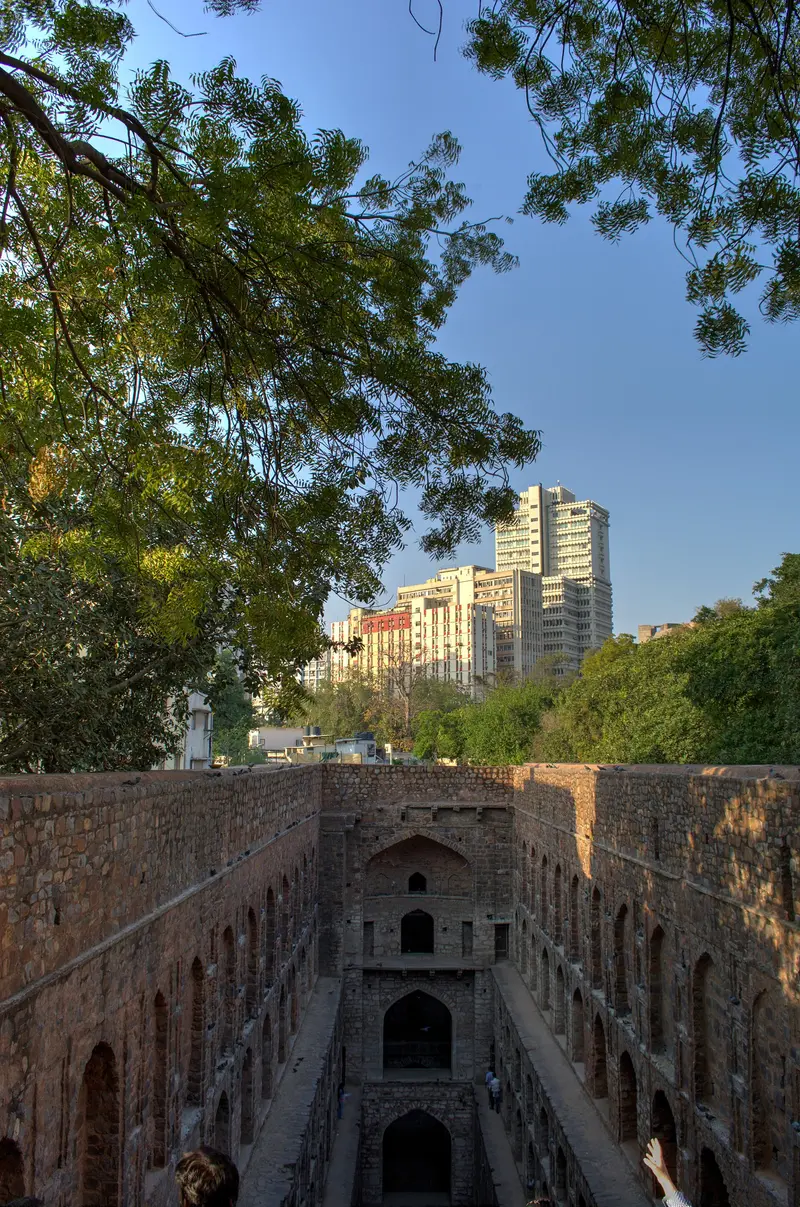
    The ASI-protected stepwell is tucked away amidst office buildings near Connaught Place; it is 60 meters long, 15 meters wide and features 103 steps. Its exact age remains undetermined. Opening Hours: daily 9 AM to 5:30 PM, as per Delhi Tourism; currently no admission fee. Metro: Mandi House or Janpath.
    Open in Google Maps
    Lodhi Garden

    Tarun Kumar Sambhariya / Wikimedia Commons / CC BY-SA 4.0, mod.

    6Lodhi Garden

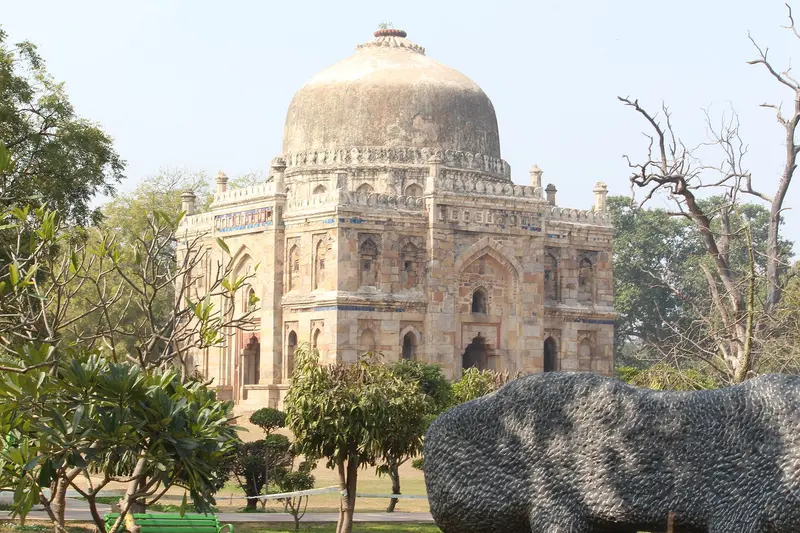
    The park on Lodi Road houses tombs of the Sayyid and Lodi Dynasties: the Tomb of Sikandar Lodi (1517-1518), the Sheesh Gumbad, the Tomb of Muhammad Shah Sayyid, and the Bara Gumbad from around 1490. In the mornings, it's a meeting point for walkers. Practical: Free entry, near Khan Market.
    Open in Google Maps

    Tours & experiences in New Delhi

    Search tours for New Delhi on GetYourGuide* (Affiliate link)On GetYourGuide, with reviews from other travellers

    * Affiliate link: if you book through it, we earn a small commission. The price stays the same for you.

    Restaurants in New Delhi

    1

    Indian Accent

    Modern Indian cuisine at The Lodhi Hotel on Lodhi Road, with seasonal ingredients and tasting menus, known for dishes like Blue-Cheese-Naan and Meetha-Achar-Pork-Ribs. Ranked 46th in Asia's 50 Best Restaurants 2025. Upscale.
    Show on Google Maps
    2

    Bukhara

    Since 1978, the ITC Maurya's restaurant in Chanakyapuri has been serving North-West Frontier cuisine from the Tandur: Dal Bukhara, Sikandari Raan, Burrah-Kebab, and Bukhara-Naan. Upscale.
    Show on Google Maps
    3

    Dum Pukht

    The restaurant at the ITC Maurya hotel in Chanakyapuri ranks 89th on the extended list of Asia's 50 Best Restaurants 2025. Upscale.
    Show on Google Maps
    4

    Saravana Bhavan

    South Indian vegetarian cuisine with Dosas and Idlis at Connaught Place. Affordable.
    Show on Google Maps
    5

    Andhra Bhavan Canteen

    Canteen at the Andhra Pradesh Bhawan on Ashoka Road, with unlimited refill Andhra Thalis; on weekends, Hyderabad-style Biryani. Inexpensive.
    Show on Google Maps
    6

    Cafe Lota

    Cafe at the National Crafts Museum on Pragati Maidan with outdoor seating and modern takes on regional Indian dishes, such as Palak Chaat; breakfast, brunch, and late lunch. Mid-range.
    Show on Google Maps

    Imperial City and Mughal Tombs

    The Mughal Tombs in the South Humayun's Tomb was begun in 1569, fourteen years after the emperor's death, commissioned by his widow; it was designed by the Persian architect Mirak Mirza Ghiyath. In today's Lodhi Garden stand even older structures, including the tomb of Sikandar Lodi from 1517 to 1518 and the Bara Gumbad from approximately 1490, which is considered Delhi's earliest complete dome. The City of Lutyens Edwin Lutyens designed India Gate, which was inaugurated by Lord Irwin in 1931. The 42-meter-high arch commemorates around 70,000 soldiers of British India who died between 1914 and 1921; approximately 13,300 names are inscribed. The National War Memorial is located very nearby. Faith in Everyday Life Gurdwara Bangla Sahib was once the palace of Raja Jai Singh. In 1664, the young Guru Har Krishan cared for the sick here during a smallpox and cholera epidemic. In the Langar, thousands receive a free meal daily, regardless of religion or origin. In the Dargah of Nizamuddin Auliya, a saint of the Chishti Sufi order, Qawwals sing on Thursdays.

    On the Road in New Delhi

    Arrival New Delhi Station is located at the main railway station and is the terminus of the Airport Express Line. For Humayun's Tomb, take the Metro to JLN Stadium or Jangpura; for Agrasen ki Baoli, Mandi House (Blue Line) or Janpath (Yellow Line). Hazrat Nizamuddin, the station for trains to Agra, is right near Humayun's Tomb. Getting Around Distances in New Delhi are large; combine Metro and auto-rickshaw. Easily walkable areas are Connaught Place with Bangla Sahib and Agrasen ki Baoli, as well as Humayun's Tomb with Sunder Nursery and Nizamuddin. Practical Tips Rashtrapati Bhavan: Visits only by online booking via visit.rashtrapatibhavan.gov.in, up to seven days in advance, 50 Rs per person per tour. Foreigners need their passport. National Museum: Closed on Mondays. Gurdwara Bangla Sahib: Open around the clock; cover head and shoulders. With Children: Colourful fish swim in the Sarovar of Bangla Sahib; Sunder Nursery and Lodhi Garden are suitable for green breaks. Low Budget/Free: India Gate, Bangla Sahib with Langar, Lodhi Garden, and Nizamuddin Dargah are free of charge.

    Accommodations in New Delhi

    Find perfect stay in New Delhi

    Booking.com* (Affiliate link)
    Search Hotels
    Agoda* (Affiliate link)
    Search Hotels
    Airbnb
    Vacation Rentals

    * Affiliate link: if you book through it, we earn a small commission. The price stays the same for you.

    Plan your trip to New Delhi

    Save places, build a route and plan your city trip, all in one place.

    1. 1
      Sunrise over alpine peaks and a sea of clouds
      1234

      Round trip

      12 days · 4 stops

      Saved

      Pick a route

      Pick a ready-made one or save places and plan your own.

      Open bookmarks
    2. 2

      Trip to New Delhi

      Live
      • 1Humayun's Tomb3 days
      • 2India Gate4 days
      • 3Rashtrapati Bhavan5 days
      Budget

      Plan your trip

      The planner sorts stops, days and budget. Plan together in real time.

      Start trip planning
    3. 3
      9:41 No signal
      New Delhi
      Available offline

      A.Savin / Wikimedia Commons / FAL

      Use it on the road

      Download the guide to your phone and use it on site, even offline.

    Nearby

    Delhi

    Delhi

    Delhi is India's capital and for most travelers the gateway to North India: you'll land here, and the classic routes to Agra and Rajasthan start here. The city combines the Mughal metropolis of Shahjahanabad, the British planned city of New Delhi, and centuries-old Sultanate structures in the south. Beyond Old and New Delhi, the city's south is particularly worthwhile: The Qutb Minar complex from the early 13th century is a UNESCO World Heritage site, and in Mehrauli Archaeological Park and around the Hauz Khas water reservoir, Sultanate-era ruins lie amidst greenery. Modern sacred buildings like the Bahai Lotus Temple and the Hindu temple complex Akshardham showcase an entirely different side of the city. Plan at least three full days for Delhi: one for Old Delhi, one for New Delhi with Humayun's Tomb, and one for the south with Qutb Minar and Mehrauli. The Metro connects almost all attractions.

    Naveen R Gowda·CC BY-SA 4.0

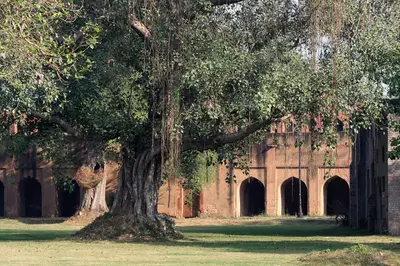
    Old Delhi

    Old Delhi

    Old Delhi, the former Mughal capital Shahjahanabad in northern Delhi, is a dense tangle of bazaars, mosques, temples, and gurdwaras. If you want to see the Red Fort, the Jama Masjid, and the food stalls around Chandni Chowk, this is the right place. Shah Jahan had the city laid out between 1638 and 1649; in 1648, it officially received its name. The main artery, Chandni Chowk, stretches from the Red Fort to the Fatehpuri Mosque, with the Khari Baoli wholesale spice market located at its western end. Since its redevelopment in 2021, the section has been closed to cars during the day, making walking significantly more enjoyable. For Old Delhi, you'll need at least half a day, preferably a full day. Current security information, including for the Old City, can be found at the Federal Foreign Office.

    Jakub Hałun·CC BY-SA 4.0

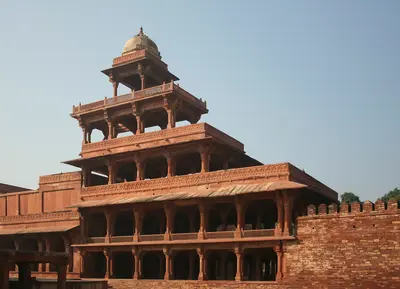
    Fatehpur Sikri

    Fatehpur Sikri

    Fatehpur Sikri, 36 to 40 kilometers west of Agra in Uttar Pradesh, is the abandoned planned city of the Mughal Emperor Akbar. The red sandstone palaces, courtyards, and grand mosque are among India's most impressive Mughal structures and have been a UNESCO World Heritage site since 1986. Akbar had the "City of Victory" built starting in 1571 on a ridge, in honor of the Sufi saint Salim Chishti. It served as capital for only about ten years; in 1585, the court moved to Lahore. The architecture combines Persian, Hindu, and Jain forms. Allow at least half a day. The complex consists of the Mosque Quarter, with Buland Darwaza and Salim Chishti's tomb (freely accessible), and the ticketed Palace Quarter.

    Diego Delso·CC BY-SA 4.0

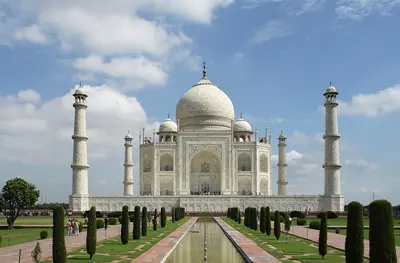
    Agra

    Agra

    Agra, in the state of Uttar Pradesh, around 200 kilometers southeast of Delhi, is the city of the Taj Mahal. Besides the famous tomb, attractions include the Agra Fort, the delicate Tomb of Itimad-ud-Daulah, and Akbar's Mausoleum in Sikandra, plus Fatehpur Sikri as a day trip. Agra was the capital of the Mughals before Delhi. Akbar built his fortress here between 1565 and 1573, and his grandson Shah Jahan had the Taj Mahal built starting in 1632 for his deceased wife Mumtaz Mahal. Many monuments are located on the banks of the Yamuna and can be easily combined in one day. Agra is a feasible day trip from Delhi by express train, but an overnight stay is worthwhile for the sunrise at the Taj. Note: The Taj Mahal is closed on Fridays.

    Yann; edited by Jim Carter·CC BY-SA 4.0

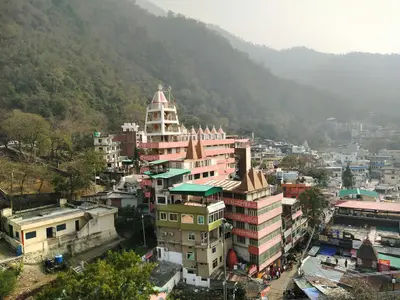
    Rishikesh

    Rishikesh

    Rishikesh is located in Uttarakhand, where the Ganges emerges from the foothills of the Himalayas. You come here for the ashrams, the evening Ganga Aarti on the river, and the suspension bridges over the Ganges.Many ashrams offer yoga and meditation courses. Rishikesh became world-famous when the Beatles meditated at Maharishi Mahesh Yogi's ashram and wrote many songs for the "White Album" there.Rishikesh is a vegetarian city, alcohol-free, where the sale of meat, fish, and eggs is forbidden. Nearby Haridwar, with its Har Ki Pauri Ghat, offers a great excursion.

    mohit rawat·Unsplash

    Your next steps

    New Delhi is in India. Ways to carry on from here.

    • More in India

      Highlights, areas, routes and the best time to travel for all of India.

      India travel guide

    Sources & method

    • Photos: Wikimedia Commons. Each photo carries its credit.
    • Place data such as addresses and ratings comes from Google Maps.
    • The content is based on web research from public, traceable sources. How the content is made · The role of AI