Fernweh: Home
ExploreGuideDestinationsMy tripsMy trip
de|en
All Places & RegionsRound tripsNight trains in EuropeAll highlightsAbout FernwehFAQPrivacy PolicyImprint
Download on the App StoreGet it on Google Play
ExploreGuideDestinationsMy tripsMy trip
    • Neighborhoods & highlights
    • Recommendations
    • Eat & drink
    • Culture
    • Getting around
    • Accommodation
    • Plan trip
    • Nearby
    Agra

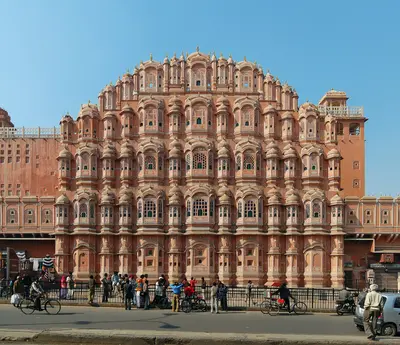
    Yann; edited by Jim Carter / Wikimedia Commons / CC BY-SA 4.0, mod.

    India

    Agra

    City

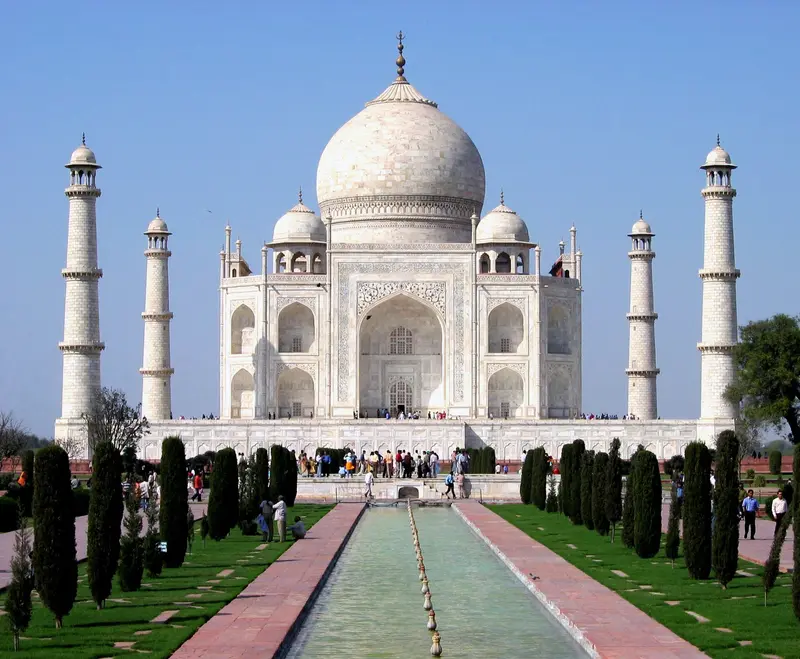
    Agra, in the state of Uttar Pradesh, around 200 kilometers southeast of Delhi, is the city of the Taj Mahal.

    by Felix Gillen

    1. Home
    2. Destinations
    3. India
    4. Agra
    Agra, in the state of Uttar Pradesh, around 200 kilometers southeast of Delhi, is the city of the Taj Mahal. Besides the famous tomb, attractions include the Agra Fort, the delicate Tomb of Itimad-ud-Daulah, and Akbar's Mausoleum in Sikandra, plus Fatehpur Sikri as a day trip. Agra was the capital of the Mughals before Delhi. Akbar built his fortress here between 1565 and 1573, and his grandson Shah Jahan had the Taj Mahal built starting in 1632 for his deceased wife Mumtaz Mahal. Many monuments are located on the banks of the Yamuna and can be easily combined in one day. Agra is a feasible day trip from Delhi by express train, but an overnight stay is worthwhile for the sunrise at the Taj. Note: The Taj Mahal is closed on Fridays.
    India travel guidePlan a trip with Agra

    Contents

    • Neighborhoods & highlights
    • Recommendations
    • Eat & drink
    • Culture
    • Getting around
    • Accommodation
    • Nearby

    More districts in Agra

    Fatehpur Sikri

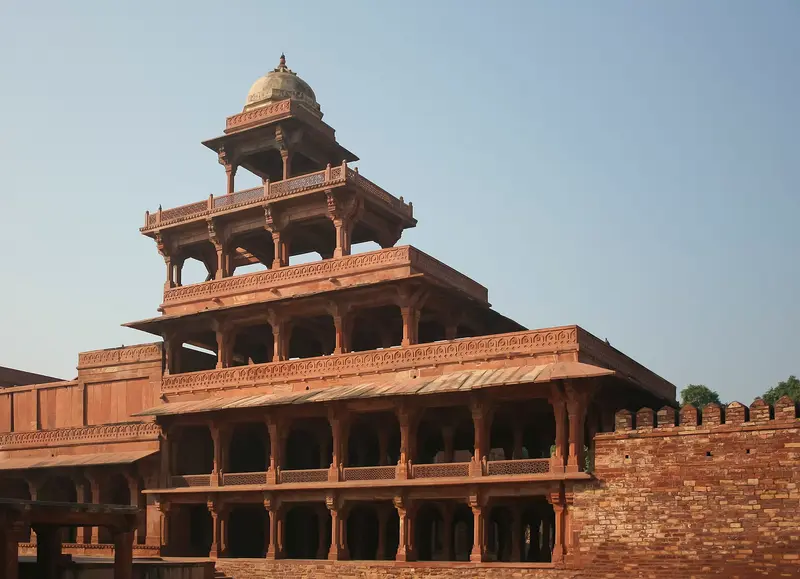
    Diego Delso·CC BY-SA 4.0

    Fatehpur Sikri

    Fatehpur Sikri, 36 to 40 kilometers west of Agra in Uttar Pradesh, is the abandoned planned city of the Mughal Emperor Akbar. The red sandstone palaces, courtyards, and grand mosque are among India's most impressive Mughal structures and have been a UNESCO World Heritage site since 1986. Akbar had the "City of Victory" built starting in 1571 on a ridge, in honor of the Sufi saint Salim Chishti. It served as capital for only about ten years; in 1585, the court moved to Lahore. The architecture combines Persian, Hindu, and Jain forms. Allow at least half a day. The complex consists of the Mosque Quarter, with Buland Darwaza and Salim Chishti's tomb (freely accessible), and the ticketed Palace Quarter.

    Sights in Agra

    Discover the most important sights and attractions

    Agra Fort

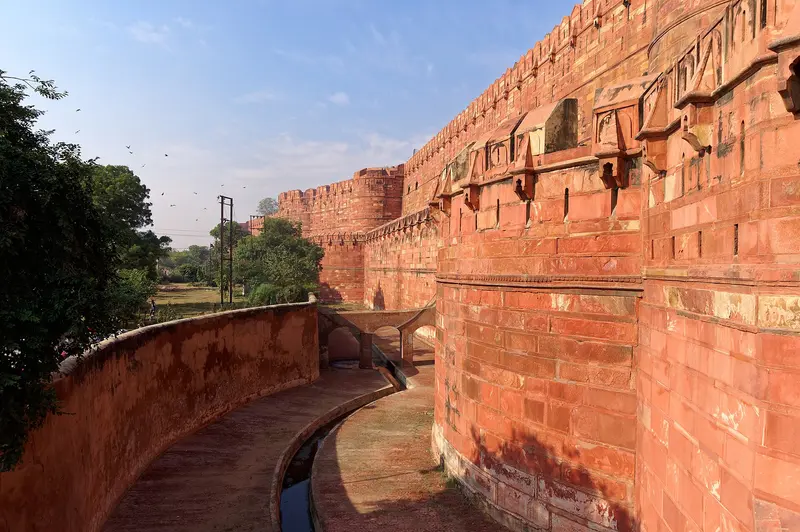
    Jakub Hałun / Wikimedia Commons / CC BY-SA 4.0, mod.

    Attraction

    1Agra Fort

    Akbar commissioned the construction of the red sandstone fortress between 1565 and 1573 on the Yamuna; approximately 4,000 craftsmen are said to have worked on it daily. Shah Jahan added white marble palaces such as Khas Mahal and Shish Mahal, along with the audience hall Diwan-i-Am (1628) and the Nagina and Mina Masjid mosques. A section is army property and is closed to visitors. UNESCO World Heritage Site. Opening Hours: Sunrise to sunset, entry exclusively via the Amar Singh Gate. Foreigners pay 600 Rs (ASI estimate; 550 Rs online), or 650 Rs weekdays / 600 Rs Fridays (per tajmahal.gov.in); children under 15 free (as of November 2026).
    Open in Google Maps
    Taj Mahal

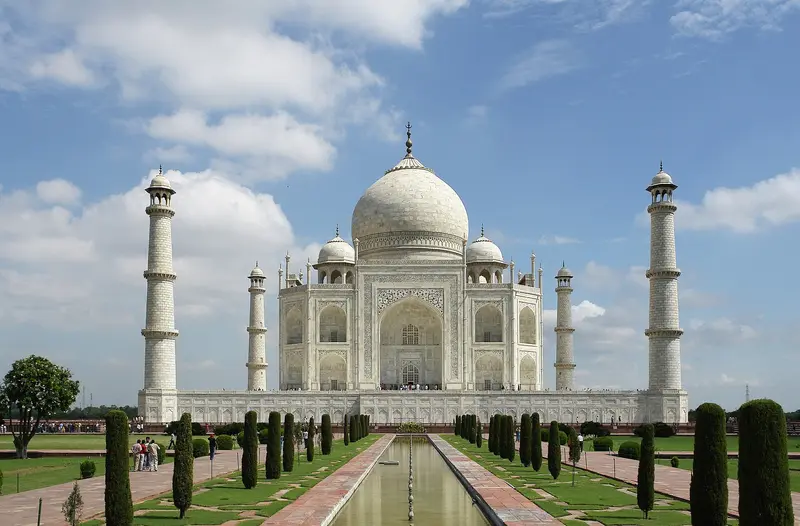
    “Taj Mahal in March 2004” by Dhirad, picture edited by J. A. Knudsen / Wikimedia Commons / CC BY-SA 3.0, mod.

    Attraction

    2Taj Mahal

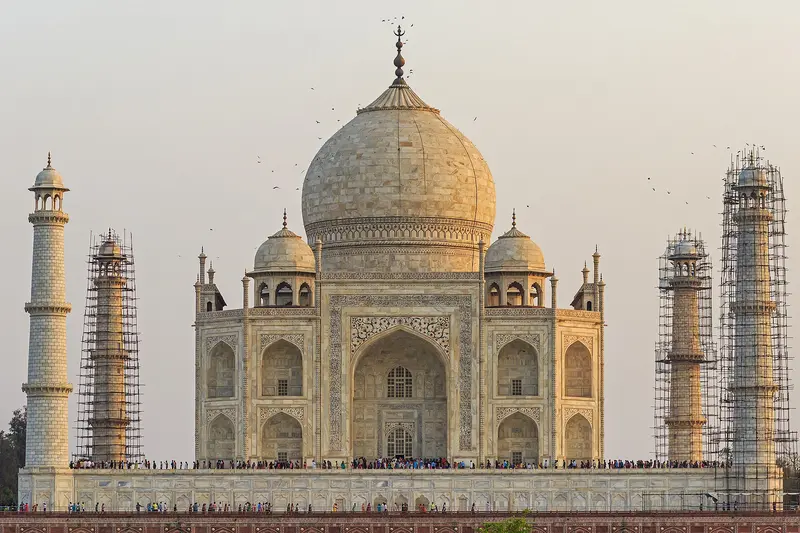
    Shah Jahan gab das Grabmal 1632 für seine 1631 verstorbene Frau Mumtaz Mahal in Auftrag; das Mausoleum aus weißem Marmor mit Pietra-dura-Intarsien und Kalligrafie aus Jaspis entstand in rund acht Jahren, der Gesamtkomplex war 1653 vollendet. Shah Jahan selbst ruht seit 1666 neben ihr. Das Taj Mahal ist UNESCO-Welterbe. Praxis: geöffnet 30 Minuten vor Sonnenaufgang bis 30 Minuten vor Sonnenuntergang, Kassen ab einer Stunde vor Sonnenaufgang bis 45 Minuten vor Sonnenuntergang; freitags geschlossen. Ausländer zahlen 1.100 Rs inklusive ASI- und ADA-Gebühr, online 50 Rs weniger; das Hauptmausoleum kostet zusätzlich 200 Rs, Kinder unter 15 Jahren sind frei (Stand November 2026). Eingänge sind Westtor (Parkplatz Amrood ka Teela) und Osttor (Parkplatz Shilpgram, meist längere Schlangen); das Südtor ist nur Ausgang. Nachtbesichtigung an fünf Nächten im Monat rund um Vollmond, nicht freitags und nicht im Ramadan, 20 bis 24 Uhr in Gruppen von maximal 50 Personen für je 30 Minuten; Ausländer 750 Rs, Kinder von 3 bis 15 Jahren 500 Rs (Stand November 2026), Buchung über asi.paygov.org.in.
    Open in Google Maps
    Mehtab Bagh

    A.Savin / Wikimedia Commons / FAL

    Park

    3Mehtab Bagh

    Babur established the square Charbagh garden, about 300 by 300 meters, on the Yamuna's north bank in the 1530s, directly opposite the Taj. From here, you get the closest view of the Taj across the river, especially beautiful at sunset. Admission: Foreigners 300 Rs (as of November 2026).
    Open in Google Maps
    Akbar's Tomb (Sikandra)

    Darshanavenugopal / Wikimedia Commons / CC BY-SA 4.0, mod.

    Historic Landmark

    4Akbar's Tomb (Sikandra)

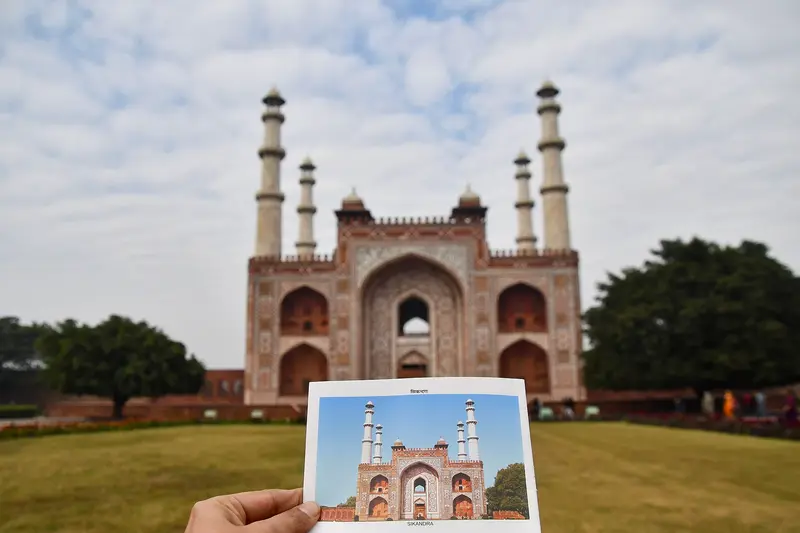
    Akbar began his mausoleum himself; his son Jahangir completed it in 1613. It is situated in a 119-acre Charbagh garden with four gates, combining red sandstone with white marble inlays. Admission: daily sunrise to sunset; Foreigners 310 Rs, Fridays 300 Rs, children under 15 free (as of November 2026). Approx. 10 kilometers from the center on the road to Delhi (NH 19).
    Open in Google Maps
    Historic Landmark

    5The Tomb of Mariam

    About one kilometer from Akbar's Tomb lies his wife Mariam-uz-Zamani. The visit combines well with Sikandra. Entry: Foreigners 300 Rs (As of November 2026).
    Open in Google Maps
    Museum

    6Taj Museum

    The small museum on the western edge of the Taj complex displays ivory portraits of Shah Jahan and Mumtaz Mahal, architectural drawings, and Mughal coins. Also worth seeing are celadon plates which, according to legend, change color when food is poisoned. Hours: Sat to Thu 10 AM to 5 PM, accessible with the Taj ticket at no extra charge.
    Open in Google Maps

    Restaurants in Agra

    1

    Esphahan

    Specialized Tandur Restaurant at The Oberoi Amarvilas, featuring Mughal cuisine from traditional recipes and fresh flatbreads, evenings by candlelight with traditional live music. Reservation required. Upscale.
    Show on Google Maps
    2

    Peshawri

    North West Frontier cuisine at ITC Mughal: Meat from open flame and tandoor, plus slow-cooked Dal; vegetarian options too. Daily 12:30-2:30 PM and 7:00-11:30 PM. Upscale.
    Show on Google Maps
    3

    Pinch of Spice

    North Indian curries and tandoor kebabs like Chicken Tikka and Paneer Lababdar on Fatehabad Road, plus some Chinese and European dishes; known for Paan shots to finish. Mid-range.
    Show on Google Maps
    4

    Shankara Vegis

    Vegetarian Thalis on a rooftop terrace in Taj Ganj overlooking the Taj. Affordable.
    Show on Google Maps

    Capital of the Mughals

    Akbar's Fort Akbar, the third Mughal emperor, had the Agra Fort built between 1565 and 1573 on the remains of an older complex called Badalgarh. Shah Jahan added the white marble palaces; the audience hall Diwan-i-Am was completed in 1628. The Fort is a UNESCO World Heritage site. The Taj Mahal Mumtaz Mahal, Shah Jahan's wife, died in 1631 after childbirth. The following year, the emperor commissioned the tomb; the mausoleum was built in around eight years with over 20,000 workers, the entire complex completed in 1653. Later, his son Aurangzeb deposed him and held him captive in Agra Fort; Shah Jahan died in 1666 and was buried next to Mumtaz Mahal. Tombs on the Yamuna Banks On the east bank of the Yamuna, Nur Jahan, Jahangir's wife, had her father Mirza Ghiyas Beg's tomb built between 1622 and 1628, known as the "Baby Taj" because of its marble inlays. Opposite the Taj, Babur had already laid out the Mehtab Bagh garden in the 1530s. In Sikandra, Jahangir completed his father Akbar's tomb in 1613.

    Getting to Agra & Useful Info

    Getting There Since 2016, the Gatimaan Express has connected Hazrat Nizamuddin in Delhi with Agra, covering the approximately 200 kilometers in about 100 minutes; it runs six days a week, not on Fridays. The Vande Bharat Express between Hazrat Nizamuddin and Rani Kamalapati (Bhopal) also stops at Agra Cantt; the journey takes a little over an hour and a half. Check current timetables with Indian Railways. On-site Agra Cantt railway station is about 5.5 kilometers from Agra Fort. You can travel between monuments by taxi or auto-rickshaw. For the Taj Mahal, electric vehicles, included in the ticket, shuttle from the parking lots at the East and West Gates. Practical Tips Closing Day: The Taj Mahal is closed every Friday. Other ASI monuments are open on Fridays and are slightly cheaper. Tickets: Online via asi.paygov.org.in or tajmahal.gov.in; foreigners save 50 Rs per Taj ticket online. A Taj ticket includes a toll fee from the Agra Development Authority, allowing you to visit other monuments cheaper on the same day. Best Time of Day: At opening, approximately 30 minutes before sunrise. Best travel time according to Lonely Planet: February to April, and September to November. Prohibited items at the Taj: large bags, tripods, food, tobacco, books; only take essentials. Time Needed: Taj Mahal about three hours, Agra Fort two hours; for Itimad-ud-Daulah, Chini ka Rauza, and Mehtab Bagh on the east bank, a few hours are sufficient. With Children: Children under 15 years have free admission to all ASI monuments.

    Accommodations in Agra

    Find perfect stay in Agra

    Booking.com* (Affiliate link)
    Search Hotels
    Agoda* (Affiliate link)
    Search Hotels
    Airbnb
    Vacation Rentals

    * Affiliate link: if you book through it, we earn a small commission. The price stays the same for you.

    Plan your trip to Agra

    Save places, build a route and plan your city trip, all in one place.

    1. 1
      Sunrise over alpine peaks and a sea of clouds
      1234

      Round trip

      12 days · 4 stops

      Saved

      Pick a route

      Pick a ready-made one or save places and plan your own.

      Open bookmarks
    2. 2

      Trip to Agra

      Live
      • 1Agra Fort3 days
      • 2Taj Mahal4 days
      • 3Mehtab Bagh5 days
      Budget

      Plan your trip

      The planner sorts stops, days and budget. Plan together in real time.

      Start trip planning
    3. 3
      9:41 No signal
      Agra
      Available offline

      Yann; edited by Jim Carter / Wikimedia Commons / CC BY-SA 4.0, mod.

      Use it on the road

      Download the guide to your phone and use it on site, even offline.

    Nearby

    New Delhi

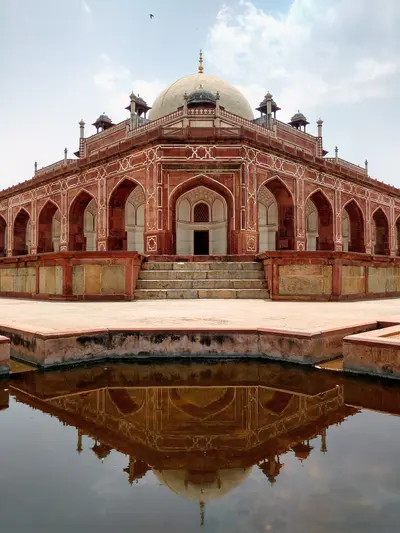
    New Delhi is the capital city planned by the British in the early 20th century, featuring wide avenues, government buildings, and parks, making it the political heart of India. You come here for the India Gate, the Presidential Palace, and Humayun's Tomb, considered a precursor to the Taj Mahal. The grand ceremonial avenue Kartavya Path connects the India Gate with Rashtrapati Bhavan, the President's official residence. Around Connaught Place are the Sikh Temple Bangla Sahib and the stepwell Agrasen ki Baoli; further south, the tombs in Lodhi Garden, the Sufi shrine of Nizamuddin, and Humayun's Tomb, a UNESCO World Heritage site since 1993. A full day is enough for the highlights; with the National Museum and Rashtrapati Bhavan, you'll need two.
    Delhi

    Delhi

    Delhi is India's capital and for most travelers the gateway to North India: you'll land here, and the classic routes to Agra and Rajasthan start here. The city combines the Mughal metropolis of Shahjahanabad, the British planned city of New Delhi, and centuries-old Sultanate structures in the south. Beyond Old and New Delhi, the city's south is particularly worthwhile: The Qutb Minar complex from the early 13th century is a UNESCO World Heritage site, and in Mehrauli Archaeological Park and around the Hauz Khas water reservoir, Sultanate-era ruins lie amidst greenery. Modern sacred buildings like the Bahai Lotus Temple and the Hindu temple complex Akshardham showcase an entirely different side of the city. Plan at least three full days for Delhi: one for Old Delhi, one for New Delhi with Humayun's Tomb, and one for the south with Qutb Minar and Mehrauli. The Metro connects almost all attractions.

    Naveen R Gowda·CC BY-SA 4.0

    Old Delhi

    Old Delhi

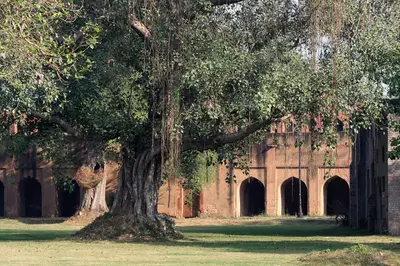
    Old Delhi, the former Mughal capital Shahjahanabad in northern Delhi, is a dense tangle of bazaars, mosques, temples, and gurdwaras. If you want to see the Red Fort, the Jama Masjid, and the food stalls around Chandni Chowk, this is the right place. Shah Jahan had the city laid out between 1638 and 1649; in 1648, it officially received its name. The main artery, Chandni Chowk, stretches from the Red Fort to the Fatehpuri Mosque, with the Khari Baoli wholesale spice market located at its western end. Since its redevelopment in 2021, the section has been closed to cars during the day, making walking significantly more enjoyable. For Old Delhi, you'll need at least half a day, preferably a full day. Current security information, including for the Old City, can be found at the Federal Foreign Office.

    Jakub Hałun·CC BY-SA 4.0

    Ranthambore

    Ranthambore

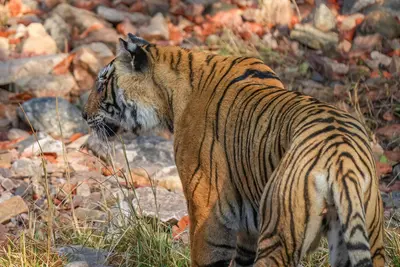
    Ranthambore National Park, near Sawai Madhopur in eastern Rajasthan, is one of India's most renowned locations for spotting tigers in the wild. Its dry forests shelter lakes, ruins, and Ranthambore Fort, which is a UNESCO World Heritage site.The protected area began as the Sawai Madhopur Game Sanctuary in 1955, became part of Project Tiger in the 1970s, and was designated a national park in 1980. Including the adjoining Kailadevi and Sawai Man Singh sanctuaries, it covers approximately 1,334 square kilometres, with the core zone spanning about 275 square kilometres.Make sure to plan more than one safari to increase your chances of a tiger encounter, and allocate an additional half-day for the fort.

    Giles Laurent·CC BY-SA 4.0

    Jaipur

    Jaipur

    Jaipur, the capital of Rajasthan, is located about 270 to 310 road kilometers southwest of Delhi and forms the Golden Triangle with Delhi and Agra. The pink-painted Old City, the Amer Fort-Palace, and the Jantar Mantar observatory make it the classic starting point for any Rajasthan trip.Maharaja Sawai Jai Singh II founded the city in 1727, relocating his capital here from Amer due to population growth and water scarcity. The grid street plan follows the Prastara Plan of Vastu Shastra; the main axes were designed as bazaars, and large squares, known as Chaupars, emerged at the intersections. The Old City has been on the UNESCO World Heritage list since 2019.The city received its pink hue in 1876 when Maharaja Ram Singh had it painted for the visit of the Prince of Wales. Plan at least two full days: one for Amer, Jaigarh, and Nahargarh in the hills, and one for the Old City and museums.

    Marcin Białek·CC BY-SA 4.0

    Your next steps

    Agra is in India. Ways to carry on from here.

    • More in India

      Highlights, areas, routes and the best time to travel for all of India.

      India travel guide

    Sources & method

    • Photos: Wikimedia Commons. Each photo carries its credit.
    • Place data such as addresses and ratings comes from Google Maps.
    • The content is based on web research from public, traceable sources. How the content is made · The role of AI