Fernweh: Home
ExploreGuideDestinationsMy tripsMy trip
de|en
All Places & RegionsRound tripsNight trains in EuropeAll highlightsAbout FernwehFAQPrivacy PolicyImprint
Download on the App StoreGet it on Google Play
ExploreGuideDestinationsMy tripsMy trip
    • Neighborhoods & highlights
    • Eat & drink
    • Culture
    • Getting around
    • Accommodation
    • Plan trip
    • Nearby
    Delhi

    Naveen R Gowda / Wikimedia Commons / CC BY-SA 4.0, mod.

    India

    Delhi

    City

    Delhi is India's capital and for most travelers the gateway to North India: you'll land here, and the classic routes to Agra and Rajasthan start here.

    by Felix Gillen

    1. Home
    2. Destinations
    3. India
    4. Delhi
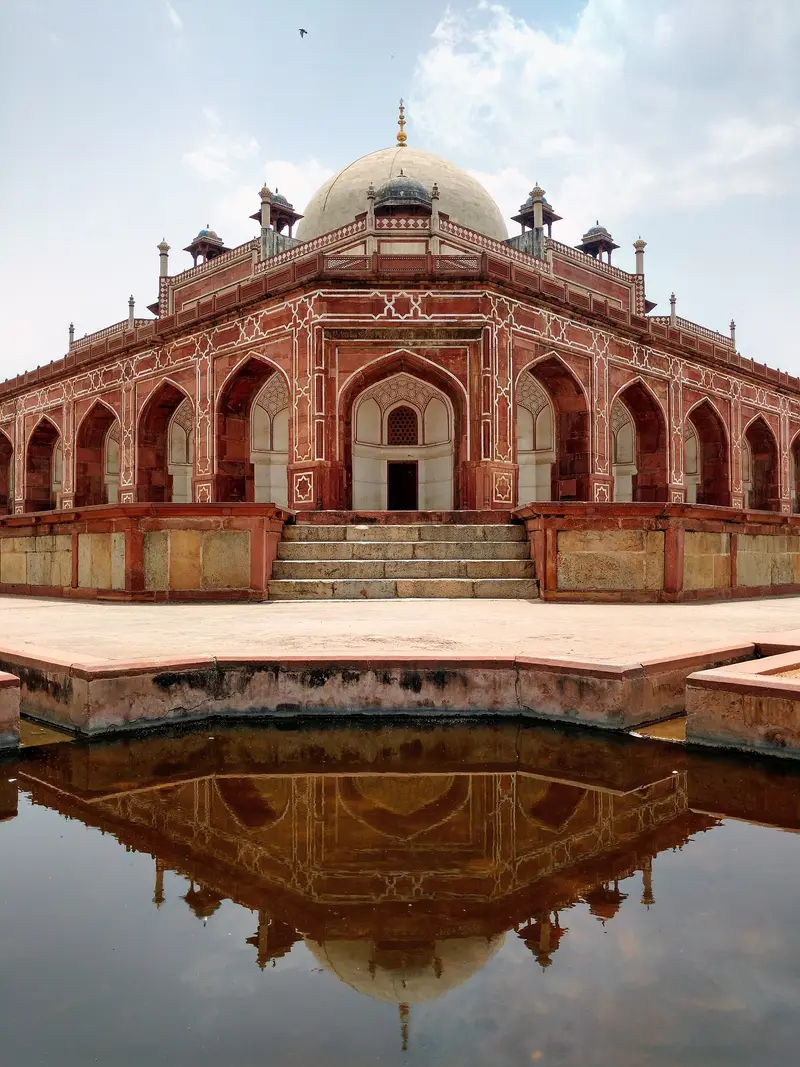
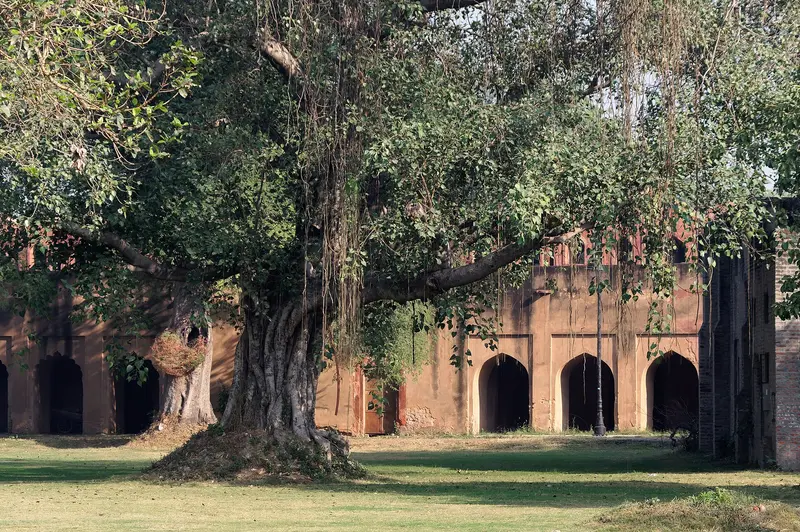
    Delhi is India's capital and for most travelers the gateway to North India: you'll land here, and the classic routes to Agra and Rajasthan start here. The city combines the Mughal metropolis of Shahjahanabad, the British planned city of New Delhi, and centuries-old Sultanate structures in the south. Beyond Old and New Delhi, the city's south is particularly worthwhile: The Qutb Minar complex from the early 13th century is a UNESCO World Heritage site, and in Mehrauli Archaeological Park and around the Hauz Khas water reservoir, Sultanate-era ruins lie amidst greenery. Modern sacred buildings like the Bahai Lotus Temple and the Hindu temple complex Akshardham showcase an entirely different side of the city. Plan at least three full days for Delhi: one for Old Delhi, one for New Delhi with Humayun's Tomb, and one for the south with Qutb Minar and Mehrauli. The Metro connects almost all attractions.
    India travel guidePlan a trip with Delhi

    Contents

    • Neighborhoods & highlights
    • Eat & drink
    • Culture
    • Getting around
    • Accommodation
    • Nearby
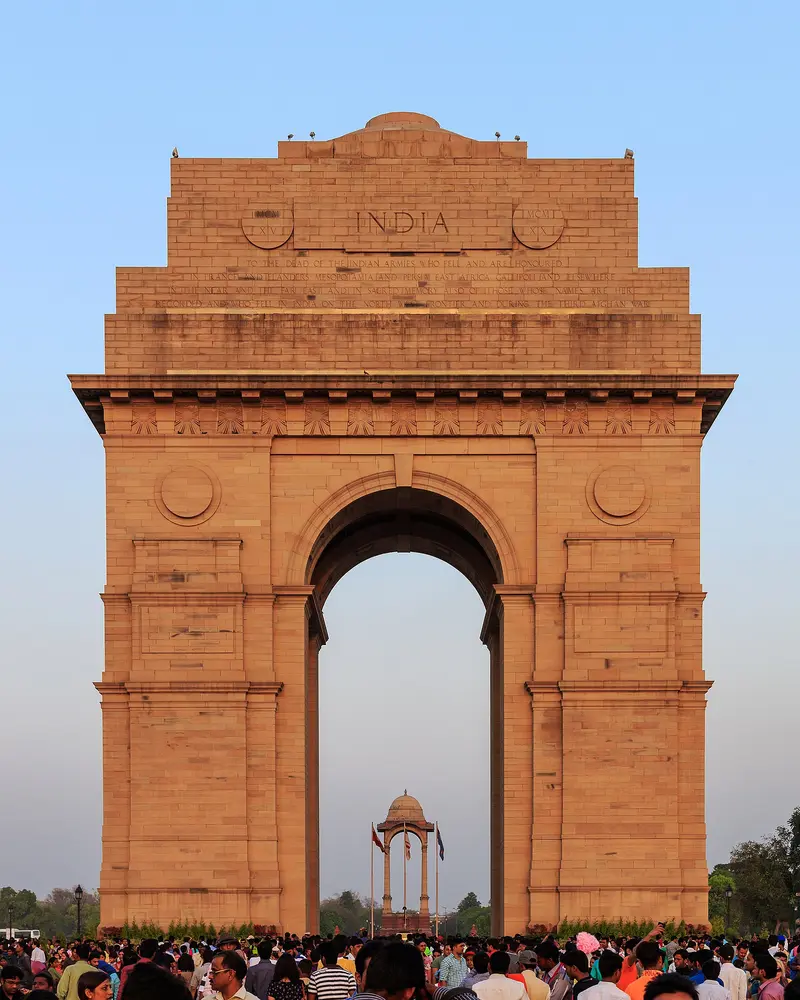
    New Delhi

    A.Savin / Wikimedia Commons / FAL

    District 1 of 2

    New Delhi

    New Delhi is the capital city planned by the British in the early 20th century, featuring wide avenues, government buildings, and parks, making it the political heart of India.

    Discover
    Old Delhi

    Jakub Hałun / Wikimedia Commons / CC BY-SA 4.0, mod.

    District 2 of 2

    Old Delhi

    Old Delhi, the former Mughal capital Shahjahanabad in northern Delhi, is a dense tangle of bazaars, mosques, temples, and gurdwaras. If you want to see the Red Fort, the Jama Masjid, and the food stalls around Chandni Chowk, this is the right place.

    Discover

    Sights in Delhi

    Discover the most important sights and attractions

    Lotus Temple

    A.Savin / Wikimedia Commons / FAL

    Place of Worship

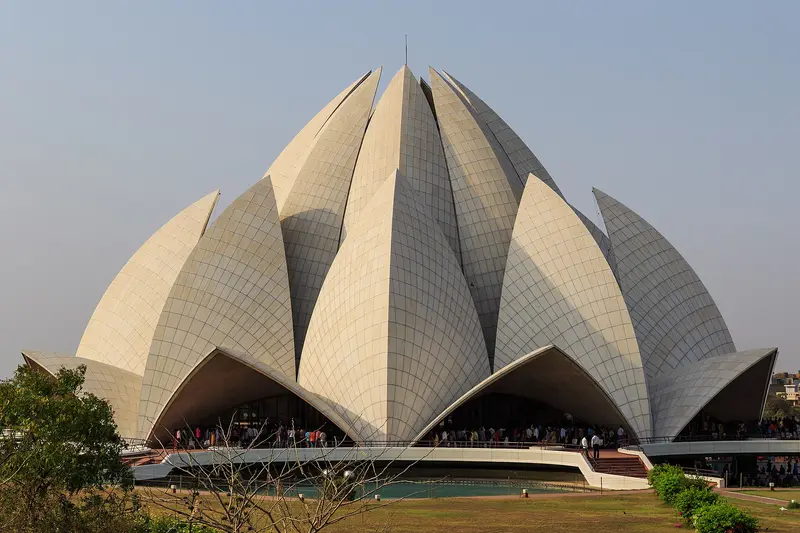
    1Lotus Temple

    The Baháʼí House of Worship, designed as an opening lotus blossom, was completed in 1986; nine water pools surround its petals. People of all religions are welcome for silent prayer, with short devotions held at 10 AM, 12 PM, 3 PM, and 5 PM. Operating hours: Tue to Sun, 8:30 AM to 5 PM according to the operator; closed on Mondays; admission free. Please remove shoes before the prayer hall, no photography inside, cover shoulders and knees.
    Open in Google Maps
    Swaminarayan Akshardham

    Immanuelle / Wikimedia Commons / CC BY 4.0, mod.

    Temple

    2Swaminarayan Akshardham

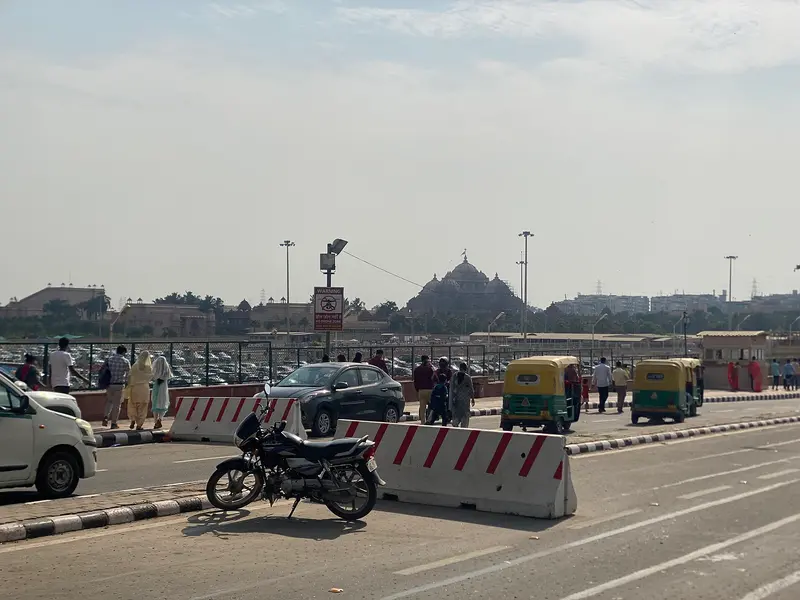
    The BAPS Hindu temple complex is built from Italian Carrara marble and pink sandstone, featuring 234 carved pillars, nine domes, and some 20,000 sculptures. Exhibitions, a boat ride through dioramas, and an evening water show complement the temple. Practical Info: Tue-Sun, entry 10 am-6:30 pm; closed Mon. Grounds and temple free; exhibitions 260 Rs, water show 110 Rs for adults (as of Nov 2026). No mobile phones, cameras, or food; clothing below the knee, shoulders covered. Metro: Akshardham.
    Open in Google Maps
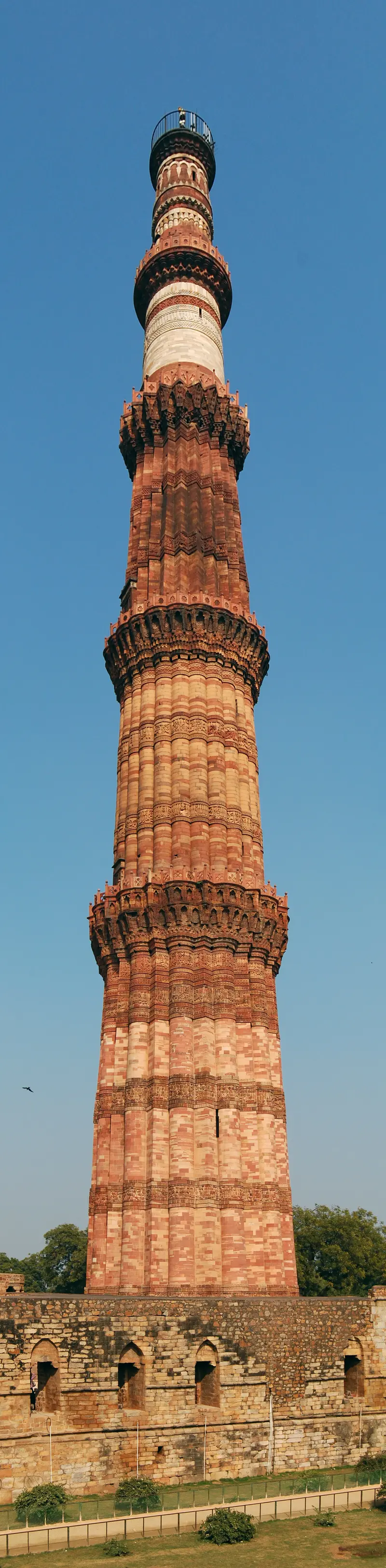
    Qutb Minar

    Sfu / Wikimedia Commons / CC BY-SA 4.0, mod.

    Attraction

    3Qutb Minar

    The approximately 72.5-meter-high tower of red and light sandstone is the landmark of the early Delhi Sultanate: Qutbu'd-Din Aibak laid the foundation stone in 1199, Iltutmish added three storeys between 1211 and 1236. The complex includes the Quwwat-ul-Islam Mosque, considered the oldest surviving mosque in North India, and an iron pillar from the Gupta period (4th century). The complex has been a UNESCO World Heritage site since 1993. Practical: Sunrise to 8 PM; Foreigners 600 Rs cash, 550 Rs online, children under 15 free (as of November 2026).
    Open in Google Maps
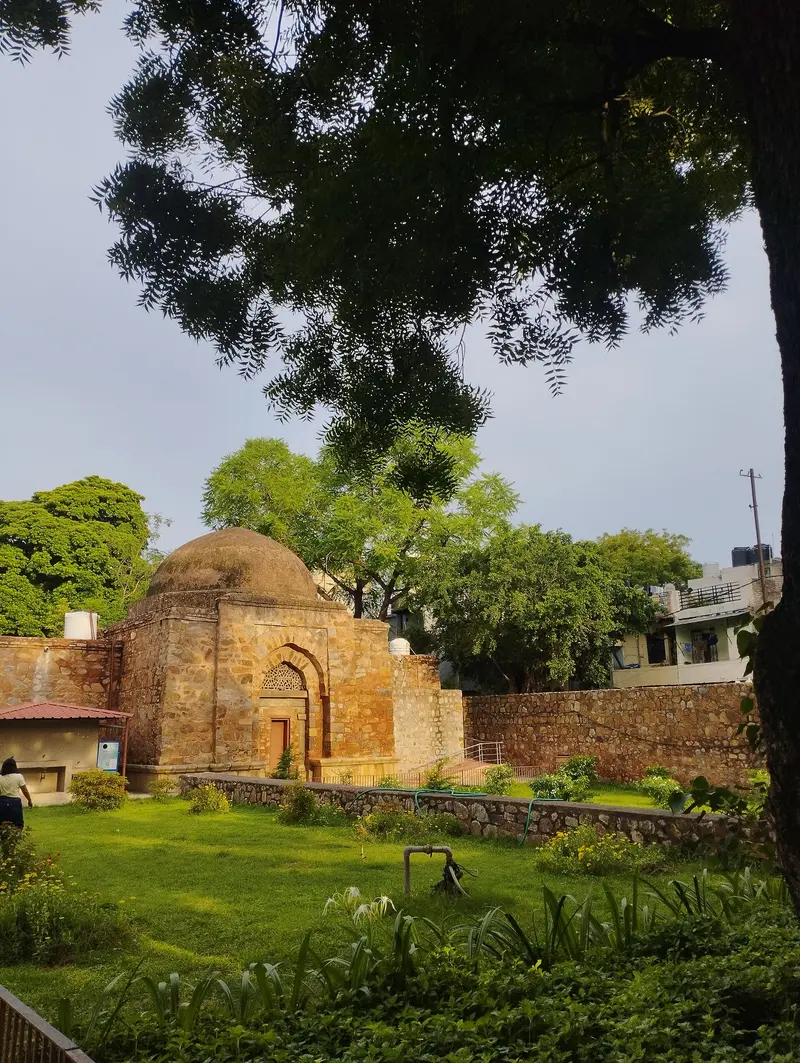
    Hauz Khas Complex

    Axshazxaf / Wikimedia Commons / CC BY-SA 4.0, mod.

    Place of Worship

    4Hauz Khas Complex

    Built in the 13th century under Alauddin Khalji, the water reservoir supplied the city of Siri; ruins of a mosque and a madrasa stand on its banks. Nearby lies Hauz Khas Village, with cafés and boutiques. Practical info: daily 10:30 AM to 7 PM, per Delhi Tourism; confirm entrance fees on-site. Metro: IIT (Magenta Line) or Hauz Khas.
    Open in Google Maps
    Historic Landmark

    5Mehrauli Archaeological Park

    The park grounds near the Qutb Minar are home to structures from several eras: the tomb of the Mamluk Sultan Balban, the Jamali-Kamali Mosque, and Rajon ki Baoli, according to Delhi Tourism one of Delhi's oldest and most beautiful stepwells. Metcalfe House, a Mughal tomb converted in the 19th century, is also located here. Tip: easily combined with the Qutb Minar; it's best to check opening hours and admission on site.
    Open in Google Maps

    Restaurants in Delhi

    1

    Olive Bar & Kitchen

    Mediterranean cuisine with an Italian focus in Mehrauli near the Qutb Complex: Burrata, wood-fired pizza, pasta, and risotto; known for its Sunday brunch. Mid-range to upscale.
    Show on Google Maps
    2

    Sagar Ratna

    The main branch in Defence Colony Market serves mostly vegetarian South Indian cuisine: Dosas, Mini-Idlis, and South Indian coffee. Affordable.
    Show on Google Maps

    Seven Cities, many Religions

    Capital of Many Dynasties On the territory of present-day Delhi, several ruling houses established their residences. With the Qutb Minar, Qutbu'd-Din Aibak laid the foundation stone in 1199 for one of the earliest structures of the Sultanate period; his successor Iltutmish added three more stories between 1211 and 1236. Under Alauddin Khalji, the royal water reservoir of Hauz Khas, which supplied the city of Siri, was built in the 13th century. Mughal City and British Planned City The Mughal emperor Shah Jahan moved his capital from Agra to Delhi and, starting in 1639, had the Red Fort and the city of Shahjahanabad, today's Old Delhi, constructed. In the 20th century, New Delhi was built to its south according to plans by Edwin Lutyens; the India Gate was inaugurated in 1931. Lived Diversity Delhi is a city of many faiths. Sikh Gurdwaras like Bangla Sahib and Sis Ganj Sahib, the Sufi shrine of Nizamuddin Auliya, the Jama Masjid, the Bahai Lotus Temple completed in 1986, and the Swaminarayan Akshardham Hindu temple complex are often only a few metro stations apart. For all religious sites, the rule is: cover shoulders and knees, and in Gurdwaras also the head.

    Getting to and around Delhi

    Getting There Indira Gandhi International Airport (DEL) is India's most important hub. The Delhi Metro's Airport Express Line (Orange Line) connects Terminal 3 to New Delhi Station at the main railway station; the journey takes around 15 to 19 minutes, with trains running from approximately 5 AM to 11:30 PM. Terminal 2 is accessible on foot from the T3 station, while Terminal 1 is on the Magenta Line. Long-distance trains primarily stop at New Delhi (NDLS) and Hazrat Nizamuddin (NZM); from Hazrat Nizamuddin, express trains depart for Agra. Getting Around Metro: The Delhi Metro network covers almost all major sights: Lal Qila (Violet Line) and Chandni Chowk as well as Chawri Bazar (Yellow Line) for Old Delhi, JLN Stadium and Jangpura for Humayun's Tomb, Akshardham for the temple complex, IIT (Magenta Line) for Hauz Khas. Tickets: QR tickets are also available via WhatsApp, and the DMRC Smartcard offers around 10 percent discount per journey. Auto-Rickshaws and E-Rickshaws are practical for short distances in Old Delhi. Practical Information Closing Days: Lotus Temple, Akshardham, and the National Museum are closed on Mondays. The Red Fort has been open on Mondays since February 2026. ASI Monuments: At Qutb Minar, Humayun's Tomb, and the Red Fort, foreign visitors pay Rs 600 cash or Rs 550 online; children under 15 years are free. Online tickets also save time at the counter. Akshardham: Mobile phones, cameras, and other electronics are not permitted; a free cloakroom is available before the security check. Low Budget/Free: Lotus Temple, Akshardham (grounds and temple), Gurdwaras, India Gate, and Lodhi Garden have no entry fee. Best Time of Day: Visit monuments early in the morning; many ASI sites open at sunrise. For current safety information, consult the Federal Foreign Office.

    Accommodations in Delhi

    Find perfect stay in Delhi

    Booking.com* (Affiliate link)
    Search Hotels
    Agoda* (Affiliate link)
    Search Hotels
    Airbnb
    Vacation Rentals

    * Affiliate link: if you book through it, we earn a small commission. The price stays the same for you.

    Plan your trip to Delhi

    Save places, build a route and plan your city trip, all in one place.

    1. 1
      Sunrise over alpine peaks and a sea of clouds
      1234

      Round trip

      12 days · 4 stops

      Saved

      Pick a route

      Pick a ready-made one or save places and plan your own.

      Open bookmarks
    2. 2

      Trip to Delhi

      Live
      • 1Lotus Temple3 days
      • 2Swaminarayan Akshardham4 days
      • 3Qutb Minar5 days
      Budget

      Plan your trip

      The planner sorts stops, days and budget. Plan together in real time.

      Start trip planning
    3. 3
      9:41 No signal
      Delhi
      Available offline

      Naveen R Gowda / Wikimedia Commons / CC BY-SA 4.0, mod.

      Use it on the road

      Download the guide to your phone and use it on site, even offline.

    Nearby

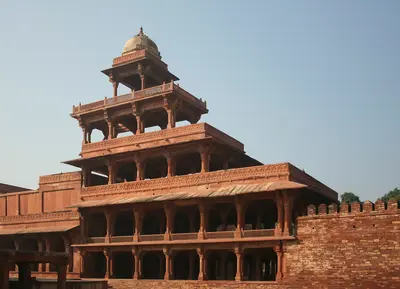
    Fatehpur Sikri

    Fatehpur Sikri

    Fatehpur Sikri, 36 to 40 kilometers west of Agra in Uttar Pradesh, is the abandoned planned city of the Mughal Emperor Akbar. The red sandstone palaces, courtyards, and grand mosque are among India's most impressive Mughal structures and have been a UNESCO World Heritage site since 1986. Akbar had the "City of Victory" built starting in 1571 on a ridge, in honor of the Sufi saint Salim Chishti. It served as capital for only about ten years; in 1585, the court moved to Lahore. The architecture combines Persian, Hindu, and Jain forms. Allow at least half a day. The complex consists of the Mosque Quarter, with Buland Darwaza and Salim Chishti's tomb (freely accessible), and the ticketed Palace Quarter.

    Diego Delso·CC BY-SA 4.0

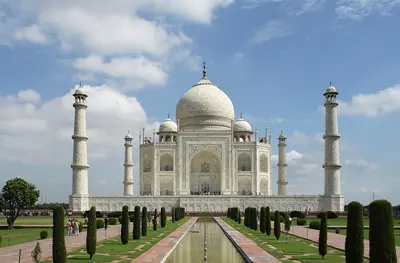
    Agra

    Agra

    Agra, in the state of Uttar Pradesh, around 200 kilometers southeast of Delhi, is the city of the Taj Mahal. Besides the famous tomb, attractions include the Agra Fort, the delicate Tomb of Itimad-ud-Daulah, and Akbar's Mausoleum in Sikandra, plus Fatehpur Sikri as a day trip. Agra was the capital of the Mughals before Delhi. Akbar built his fortress here between 1565 and 1573, and his grandson Shah Jahan had the Taj Mahal built starting in 1632 for his deceased wife Mumtaz Mahal. Many monuments are located on the banks of the Yamuna and can be easily combined in one day. Agra is a feasible day trip from Delhi by express train, but an overnight stay is worthwhile for the sunrise at the Taj. Note: The Taj Mahal is closed on Fridays.

    Yann; edited by Jim Carter·CC BY-SA 4.0

    Rishikesh

    Rishikesh

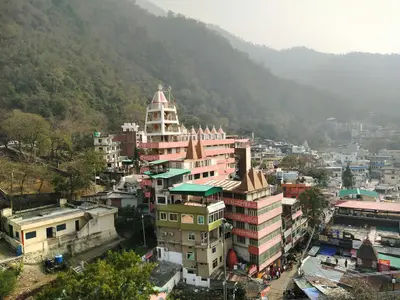
    Rishikesh is located in Uttarakhand, where the Ganges emerges from the foothills of the Himalayas. You come here for the ashrams, the evening Ganga Aarti on the river, and the suspension bridges over the Ganges.Many ashrams offer yoga and meditation courses. Rishikesh became world-famous when the Beatles meditated at Maharishi Mahesh Yogi's ashram and wrote many songs for the "White Album" there.Rishikesh is a vegetarian city, alcohol-free, where the sale of meat, fish, and eggs is forbidden. Nearby Haridwar, with its Har Ki Pauri Ghat, offers a great excursion.

    mohit rawat·Unsplash

    Jaipur

    Jaipur

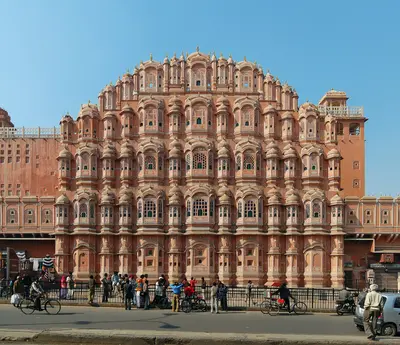
    Jaipur, the capital of Rajasthan, is located about 270 to 310 road kilometers southwest of Delhi and forms the Golden Triangle with Delhi and Agra. The pink-painted Old City, the Amer Fort-Palace, and the Jantar Mantar observatory make it the classic starting point for any Rajasthan trip.Maharaja Sawai Jai Singh II founded the city in 1727, relocating his capital here from Amer due to population growth and water scarcity. The grid street plan follows the Prastara Plan of Vastu Shastra; the main axes were designed as bazaars, and large squares, known as Chaupars, emerged at the intersections. The Old City has been on the UNESCO World Heritage list since 2019.The city received its pink hue in 1876 when Maharaja Ram Singh had it painted for the visit of the Prince of Wales. Plan at least two full days: one for Amer, Jaigarh, and Nahargarh in the hills, and one for the Old City and museums.

    Marcin Białek·CC BY-SA 4.0

    Ranthambore

    Ranthambore

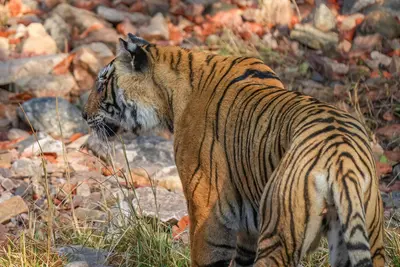
    Ranthambore National Park, near Sawai Madhopur in eastern Rajasthan, is one of India's most renowned locations for spotting tigers in the wild. Its dry forests shelter lakes, ruins, and Ranthambore Fort, which is a UNESCO World Heritage site.The protected area began as the Sawai Madhopur Game Sanctuary in 1955, became part of Project Tiger in the 1970s, and was designated a national park in 1980. Including the adjoining Kailadevi and Sawai Man Singh sanctuaries, it covers approximately 1,334 square kilometres, with the core zone spanning about 275 square kilometres.Make sure to plan more than one safari to increase your chances of a tiger encounter, and allocate an additional half-day for the fort.

    Giles Laurent·CC BY-SA 4.0

    Your next steps

    Delhi is in India. Ways to carry on from here.

    • More in India

      Highlights, areas, routes and the best time to travel for all of India.

      India travel guide

    Sources & method

    • Photos: Wikimedia Commons. Each photo carries its credit.
    • Place data such as addresses and ratings comes from Google Maps.
    • The content is based on web research from public, traceable sources. How the content is made · The role of AI