ExploreTravel GuidesMy Trips
    de|en
    All Places & RegionsAbout FernwehFAQPrivacy PolicyImprint
    ExploreTravel GuidesMy Trips
    Amed
    Village

    Amed

    Amed refers to a chain of fishing villages located on Bali's northeast coast. Dark pebble beaches, colorful outrigger boats, and coral reefs just offshore make it a prime destination for snorkelers and divers.

    More
    1. Home
    2. Destinations
    3. Indonesia
    4. Bali
    5. Amed
    Amed refers to a chain of fishing villages located on Bali's northeast coast. Dark pebble beaches, colorful outrigger boats, and coral reefs just offshore make it a prime destination for snorkelers and divers.
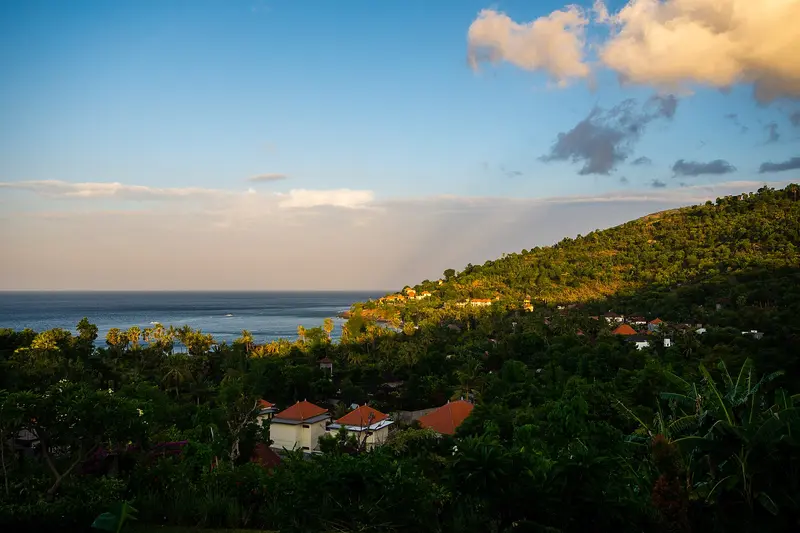
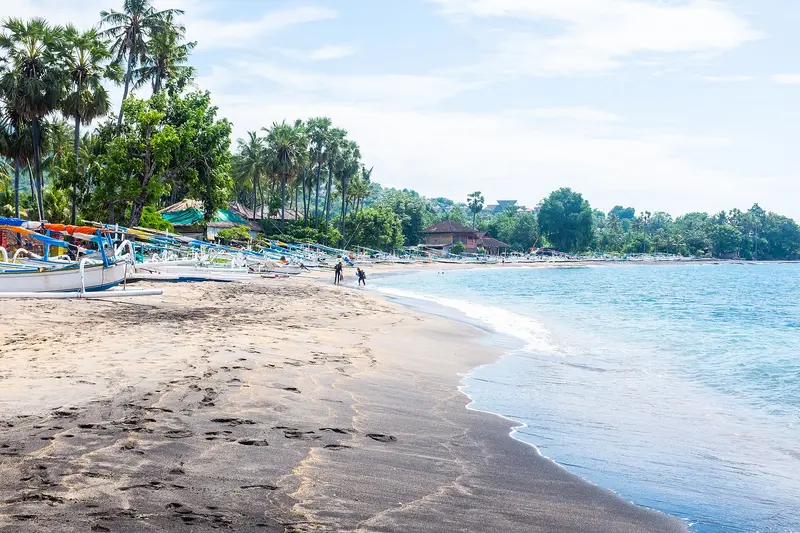
    Amed is the collective name for a series of small villages stretching about 15 kilometers along a winding coastal road in northeast Bali: Amed itself, Jemeluk, Bunutan, Lipah, Selang, and more. Between dry hills lie small coves with dark pebbles, where fishermen pull their outrigger boats onto the beach. Accommodations, dive schools, and warungs are loosely scattered along the road; there's no central hub. Most reefs lie directly offshore, and almost all accommodations rent snorkeling gear. On the horizon, with clear visibility, Rinjani on Lombok is visible; Agung rises behind you.

    Sights in Amed

    Discover the most important sights and attractions

    The Bay of Jemeluk
    Marklchaves / Wikimedia Commons / CC BY-SA 4.0
    Attraction

    The Bay of Jemeluk

    Kleine Bucht mit Fischerbooten und einem Riff direkt vor dem Ufer, einer der besten Schnorchelplätze Ameds. Vom Aussichtspunkt an der Straße oberhalb überblickst du die Bucht mit dem Agung im Hintergrund.
    Open in Google Maps
    Japanese Wreck (Banyuning)
    Attraction

    Japanese Wreck (Banyuning)

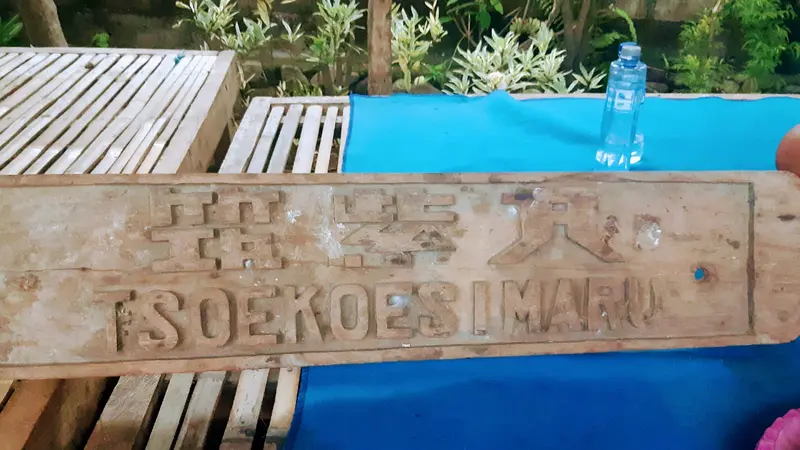
    A small shipwreck in shallow waters off Banyuning village, overgrown with corals and gorgonians. Easily seen while snorkeling.
    Open in Google Maps
    USAT Liberty (Tulamben)
    G patkar / Wikimedia Commons / CC BY-SA 3.0
    Attraction

    USAT Liberty (Tulamben)

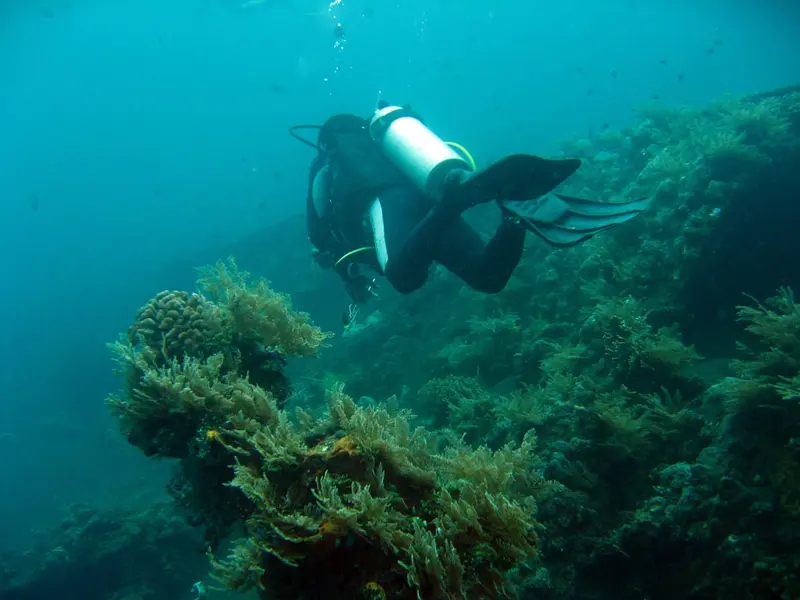
    US cargo ship, torpedoed in 1942 by a Japanese submarine and beached at Tulamben. During the 1963 eruption of Agung, it slid into the sea. Today, the approximately 120-meter long wreck lies at a depth of three to 30 meters and is one of Indonesia's most famous dive sites.
    Open in Google Maps

    Sights in Amed

    Discover the most important sights and attractions
    The Bay of Jemeluk
    Marklchaves / Wikimedia Commons / CC BY-SA 4.0
    Attraction

    1The Bay of Jemeluk

    Kleine Bucht mit Fischerbooten und einem Riff direkt vor dem Ufer, einer der besten Schnorchelplätze Ameds. Vom Aussichtspunkt an der Straße oberhalb überblickst du die Bucht mit dem Agung im Hintergrund.
    Open in Google Maps
    Japanese Wreck (Banyuning)
    Attraction

    2Japanese Wreck (Banyuning)

    A small shipwreck in shallow waters off Banyuning village, overgrown with corals and gorgonians. Easily seen while snorkeling.
    Open in Google Maps
    USAT Liberty (Tulamben)
    G patkar / Wikimedia Commons / CC BY-SA 3.0
    Attraction

    3USAT Liberty (Tulamben)

    US cargo ship, torpedoed in 1942 by a Japanese submarine and beached at Tulamben. During the 1963 eruption of Agung, it slid into the sea. Today, the approximately 120-meter long wreck lies at a depth of three to 30 meters and is one of Indonesia's most famous dive sites.
    Open in Google Maps

    Restaurants in Amed

    1

    Warung Lebah Sea View

    Simple restaurant on the coastal road with Indonesian dishes and grilled fish, tables with sea views.
    Show on Google Maps
    2

    Joli Best View Cafe

    Café and bar above Jemeluk Bay, with views of the sea and Agung, occasionally featuring live music in the evenings.
    Show on Google Maps
    3

    Zaitun Restaurant

    Restaurant an der Küstenstraße zwischen Amed und Jemeluk mit indonesischer und internationaler Küche.
    Show on Google Maps

    Food & Drink

    Enjoy meals in Warungs and small restaurants along the coastal road, many with sea views.

    Ikan Bakar

    Fresh fish from the morning catch, grilled and served with Sambal Matah.

    Amed Salt

    Das handgewonnene Meersalz der Region wird in kleinen Bambusbehältern verkauft und ist ein beliebtes Mitbringsel.

    Culture & Character

    Fischer und SalzbauernDie Ostküste ist eine der trockensten Gegenden Balis. Statt Reis wurde hier traditionell Salz gewonnen: In Amed trocknen Bauern Meerwasser in ausgehöhlten Palmstämmen, eine Technik, die heute nur noch wenige Familien beherrschen. Fischer fahren früh am Morgen mit ihren bunten Jukung-Booten hinaus, die Fischerei bestimmt den Alltag der Dörfer weiterhin.Der Tourismus kam spät und blieb kleinteilig. Große Hotels fehlen, und abends ist es still. Die Unterkünfte sind meist familiengeführte Bungalows an den Hängen über dem Meer.

    Exploring Locally

    Getting ThereFrom the Airport: 2.5 to 3.5 hours with a driver; approximately two hours from Ubud.Gilis: Fast boats between Amed and the Gili Islands are currently suspended, and the port is closed. Travel via Padang Bai; from there, boats take 1.5 to 2 hours (gilibookings.com, gilitickets.com, 12go.asia).Getting Around AmedA scooter is convenient for getting between the bays. The coastal road is narrow and steep.

    Trips & Activities

    Wreck of the USAT Liberty in Tulamben

    The wreck of a US transport ship lies approximately 20 minutes northwest in Tulamben, at three to 30 meters deep, directly accessible from the beach.

    Schnorcheln in Jemeluk

    Jemeluk Bay has a reef with corals and reef fish within swimming distance from the shore.

    Tirta Gangga and Lempuyang

    The Water Palace and the temple with the gate to Agung are just under an hour southwest.

    Accommodations in Amed

    Find perfect stay in Amed

    Booking.com* (Affiliate link)
    Search Hotels
    Agoda* (Affiliate link)
    Search Hotels
    Airbnb
    Vacation Rentals

    * Affiliate link: if you book through it, we earn a small commission. The price stays the same for you.
    Nearby

    Sidemen
    Paul Arps from The Netherlands / Wikimedia Commons / CC BY 2.0

    Sidemen

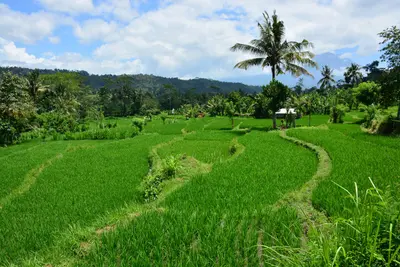
    Sidemen is located in a valley in eastern Bali, overlooked by the Gunung Agung volcano. Terraced rice fields, Songket weaving workshops, and quiet villages make the valley an alternative to bustling Ubud.
    Nusa Lembongan
    User:(WT-shared) Burmesedays / Wikimedia Commons / CC BY-SA 3.0

    Nusa Lembongan

    Nusa Lembongan is a small island between Bali and Nusa Penida. White bays, mangroves, seaweed farms, and a relaxed island life define it, and the neighboring island Nusa Ceningan is accessible via a yellow suspension bridge.
    Gili Trawangan

    Gili Trawangan

    Gili Trawangan is the largest and liveliest of the three Gili Islands. The east coast is lined with dive schools, restaurants, and bars, while the west and north are quieter. There are no cars or motorbikes; you get around on foot, by bicycle, or by Cidomo horse cart.
    Nusa Penida

    Nusa Penida

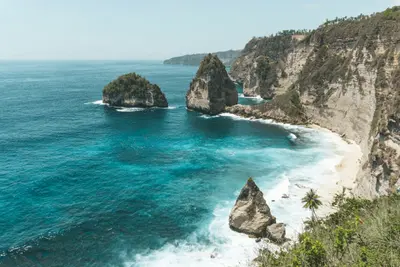
    Nusa Penida, southeast of Bali, is a barren limestone island with spectacular cliffs. Kelingking Beach, Diamond Beach, and the manta rays off Manta Point attract day visitors, while the island's interior remains rural.
    Gili Meno

    Gili Meno

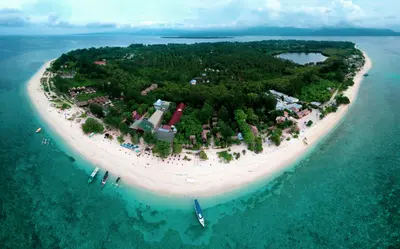
    Gili Meno is the smallest and quietest of the three Gili Islands. A circular path of a good four kilometers runs along white beaches, and inland lies a saltwater lake. In the evenings, there's hardly any music, but clear views of Rinjani and Agung.