ExploreTravel GuidesMy Trips
    de|en
    All Places & RegionsAbout FernwehFAQPrivacy PolicyImprint
    ExploreTravel GuidesMy Trips
    • Overview
    • Places in the region
    • Food culture
    • Best travel time
    • Culture
    • Getting around
    • Excursions
    • Nearby
    Bali
    Region

    Bali

    Bali is Indonesia's sole majority Hindu island. Temple festivals, offerings, and dance shape daily life, rice terraces and volcanoes the interior.

    More
    1. Home
    2. Destinations
    3. Indonesia
    4. Bali
    Bali is Indonesia's sole majority Hindu island. Temple festivals, offerings, and dance shape daily life, rice terraces and volcanoes the interior. The south is heavily touristed, the east and north much quieter.
    Bali is approximately 140 kilometers wide and can be broadly divided into four travel regions. The south, encompassing Seminyak, Canggu, Sanur, and the Bukit Peninsula, is the most developed, featuring beaches, surf spots, and the airport. Ubud and the Gianyar highlands form the cultural heart with temples, art, and rice terraces. The east, with Sidemen, Amed, and Mount Agung, is more rural and tranquil, while the central highlands around Munduk and its lakes are cool and green. Off the southeast coast lie Nusa Lembongan, Ceningan, and Penida. Allow more time for journeys than the distance suggests, as traffic in the south can be heavy.
    Nusa Penida

    Place 1 of 4

    Nusa Penida

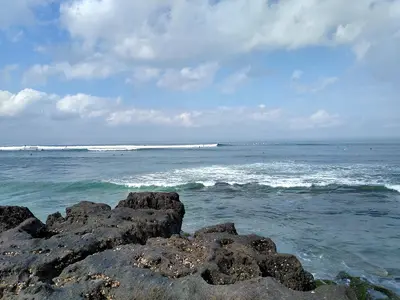
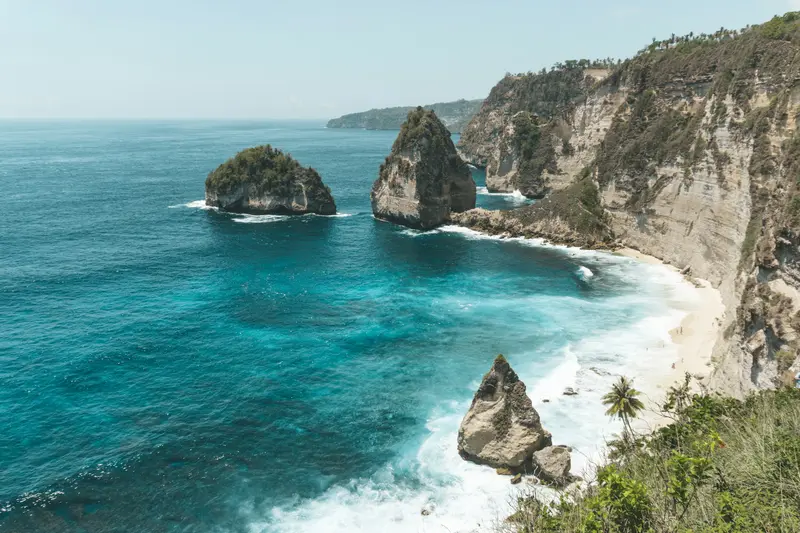
    Nusa Penida, southeast of Bali, is a barren limestone island with spectacular cliffs. Kelingking Beach, Diamond Beach, and the manta rays off Manta Point attract day visitors, while the island's interior remains rural.

    Nusa Penida, largest of the three Nusa Islands, spans ~200 sq km, part of Klungkung Regency. Sanur boats dock on the north coast at Toyapakeh and Sampalan, where most accommodations are.

    Discover
    Munduk

    Place 2 of 4

    Munduk

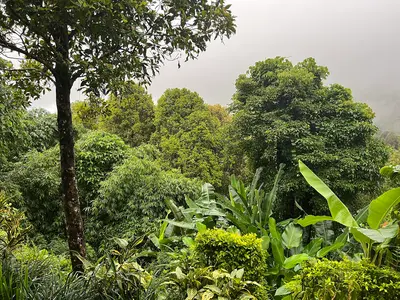
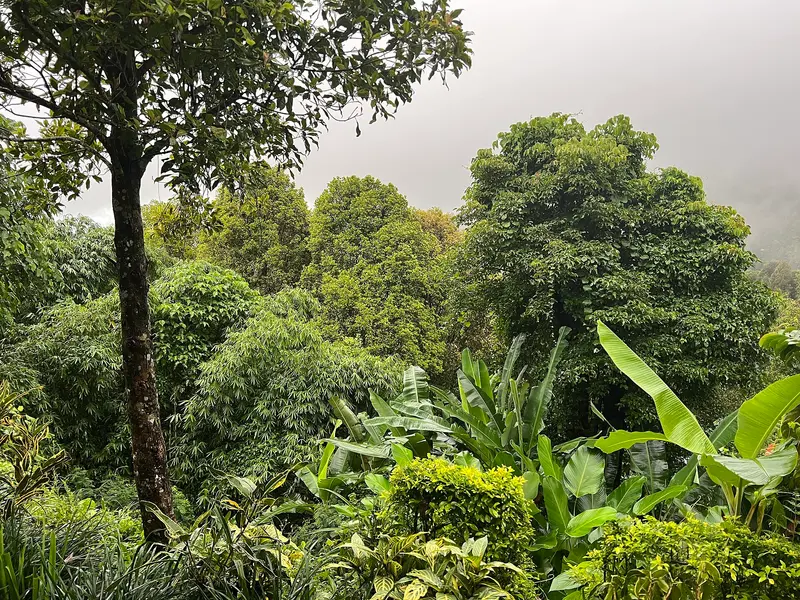
    Munduk is situated at about 800 meters in Bali's central highlands. Coffee and clove plantations, waterfalls, and the crater lakes Tamblingan and Buyan shape this cool, often misty landscape.

    Munduk lies on a mountain ridge in the northern central highlands, about two and a half hours from the airport. The village stretches along the road that leads from Lakes Beratan, Buyan, and Tamblingan down to the north coast towards Seririt.

    Discover
    Amed

    Place 3 of 4

    Amed

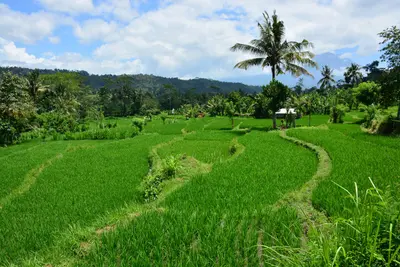
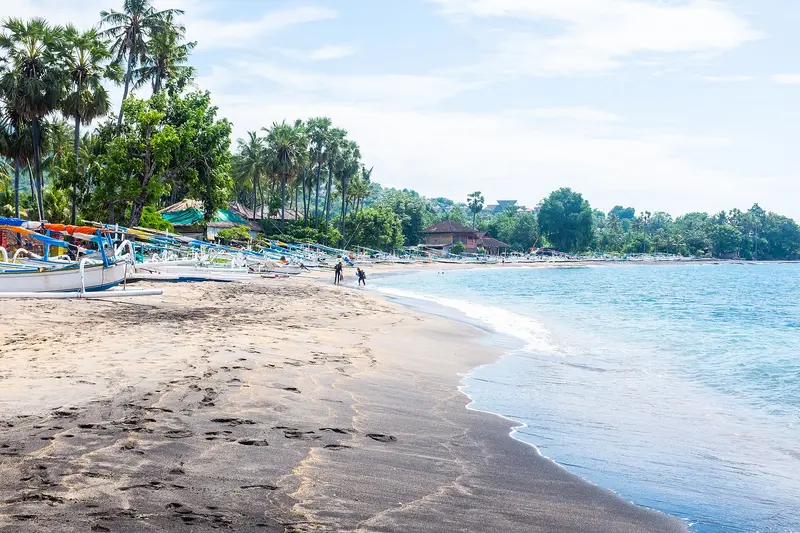
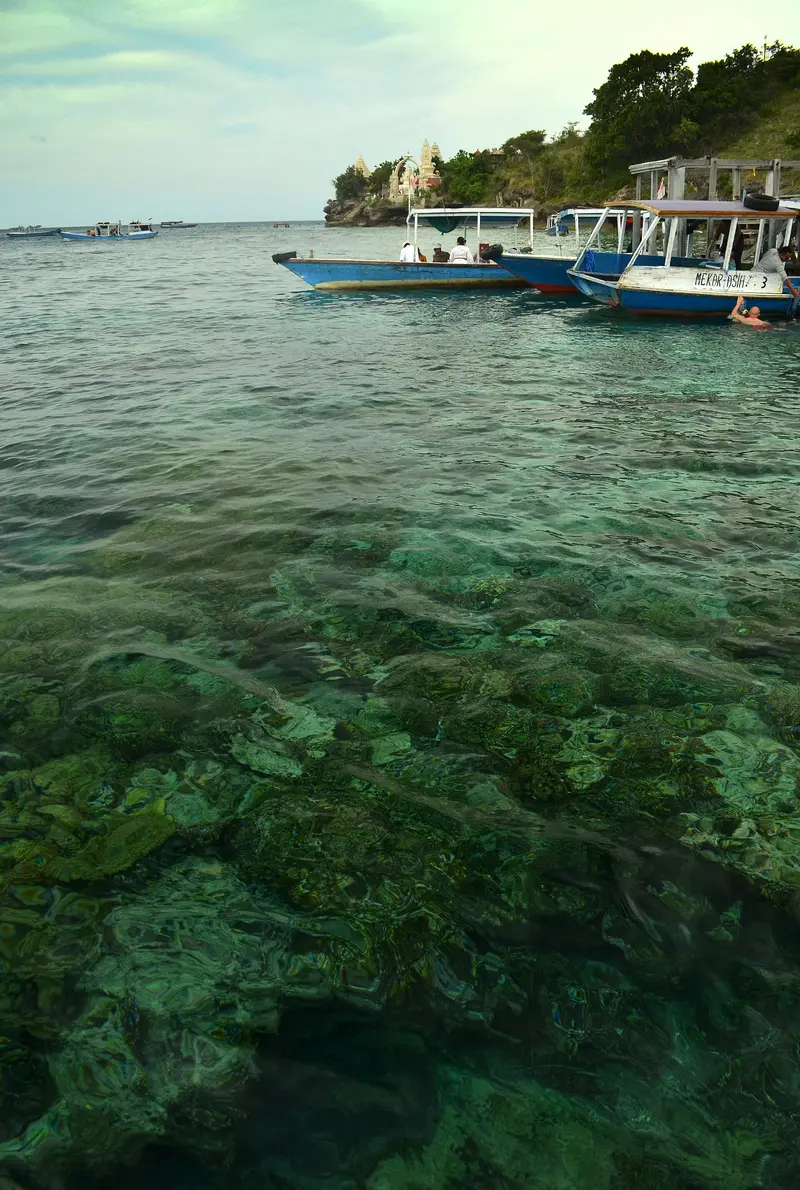
    Amed refers to a chain of fishing villages located on Bali's northeast coast. Dark pebble beaches, colorful outrigger boats, and coral reefs just offshore make it a prime destination for snorkelers and divers.

    Amed is the collective name for a series of small villages stretching about 15 kilometers along a winding coastal road in northeast Bali: Amed itself, Jemeluk, Bunutan, Lipah, Selang, and more. Between dry hills lie small coves with dark pebbles, where fishermen pull their outrigger boats onto the beach.

    Discover
    Ubud

    Place 4 of 4

    Ubud

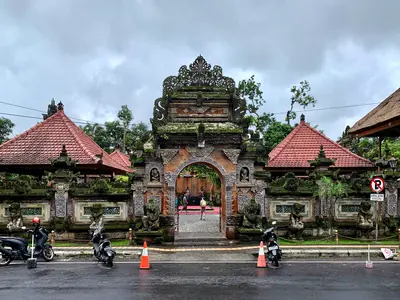
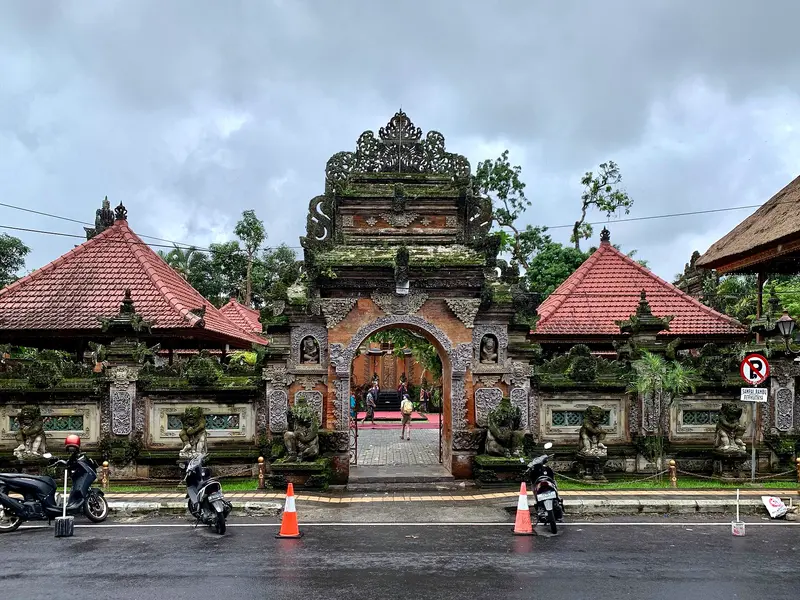
    Ubud, in the highlands of Gianyar, is considered Bali's cultural center. Palace, temples, art museums, and evening dance performances are close by, surrounded by rice terraces and river valleys.

    Ubud has grown from several villages and has tens of thousands of inhabitants. The center is the intersection at Puri Saren Palace and the market.

    Discover

    More places in Bali

    Seminyak
    Christophe95 / Wikimedia Commons / CC BY-SA 4.0

    Seminyak

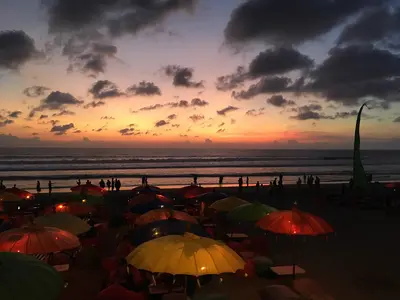
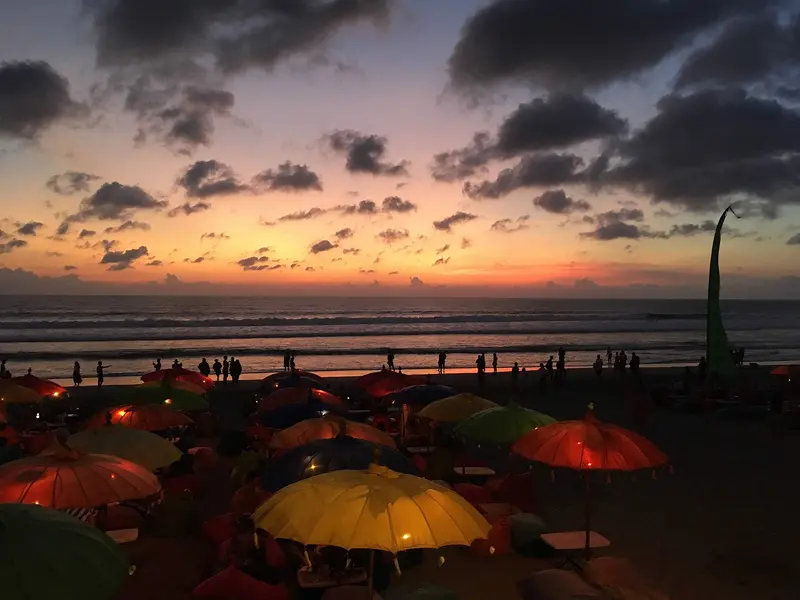
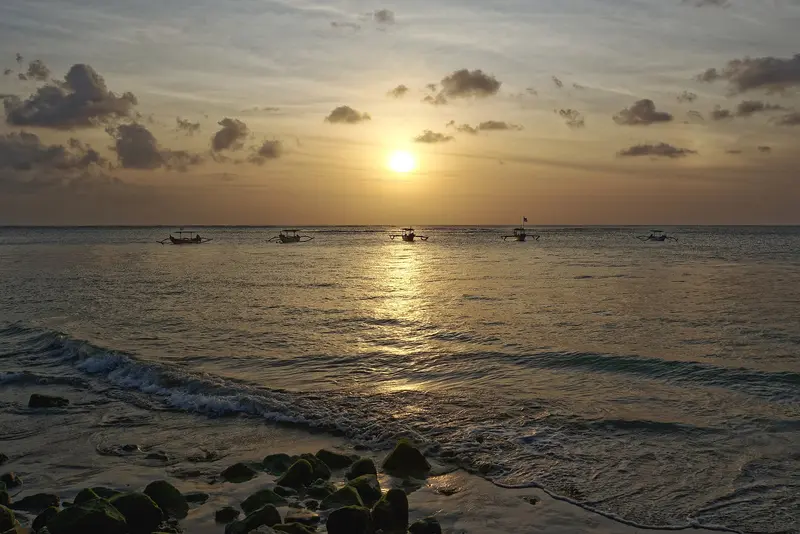
    Seminyak on the southwest coast is Bali's district for boutiques, restaurants, and beach clubs. The wide sandy beach merges seamlessly into Legian and Kuta, the sunset over the Indian Ocean is the daily ritual.
    Nusa Lembongan
    User:(WT-shared) Burmesedays / Wikimedia Commons / CC BY-SA 3.0

    Nusa Lembongan

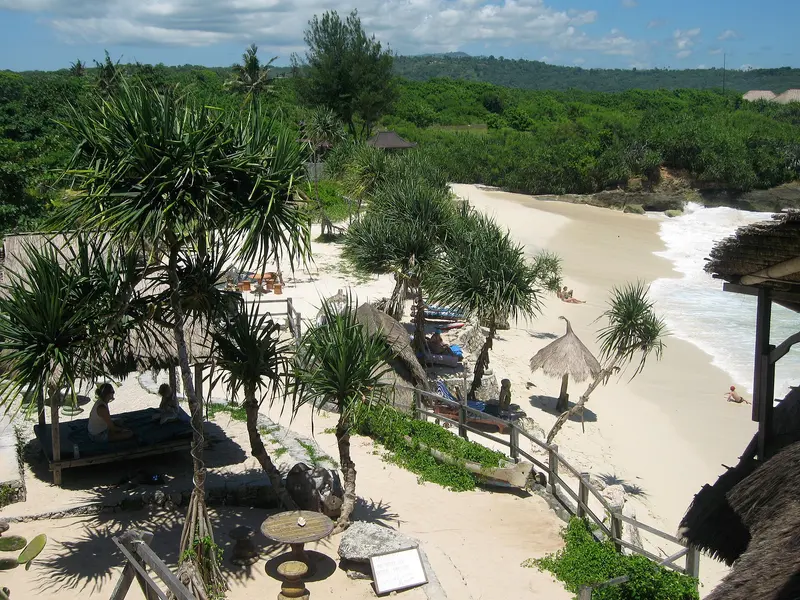
    Nusa Lembongan is a small island between Bali and Nusa Penida. White bays, mangroves, seaweed farms, and a relaxed island life define it, and the neighboring island Nusa Ceningan is accessible via a yellow suspension bridge.
    Lovina
    Andreia from Lisboa, Portugal, CC BY 2.0, via Wikimedia Commons

    Lovina

    Lovina on Bali's north coast is a quiet string of coastal villages with dark sandy beaches. It is known for its morning dolphin boat trips, hot springs, and waterfalls in the hinterland.
    Pemuteran and Menjangan
    Chafidwahyu, CC BY-SA 4.0, via Wikimedia Commons

    Pemuteran and Menjangan

    Pemuteran, in northwest Bali, is a quiet coastal village and a starting point for diving and snorkeling trips to Menjangan Island in West Bali National Park.
    Sidemen
    Paul Arps from The Netherlands / Wikimedia Commons / CC BY 2.0

    Sidemen

    Sidemen is located in a valley in eastern Bali, overlooked by the Gunung Agung volcano. Terraced rice fields, Songket weaving workshops, and quiet villages make the valley an alternative to bustling Ubud.
    Canggu

    Canggu

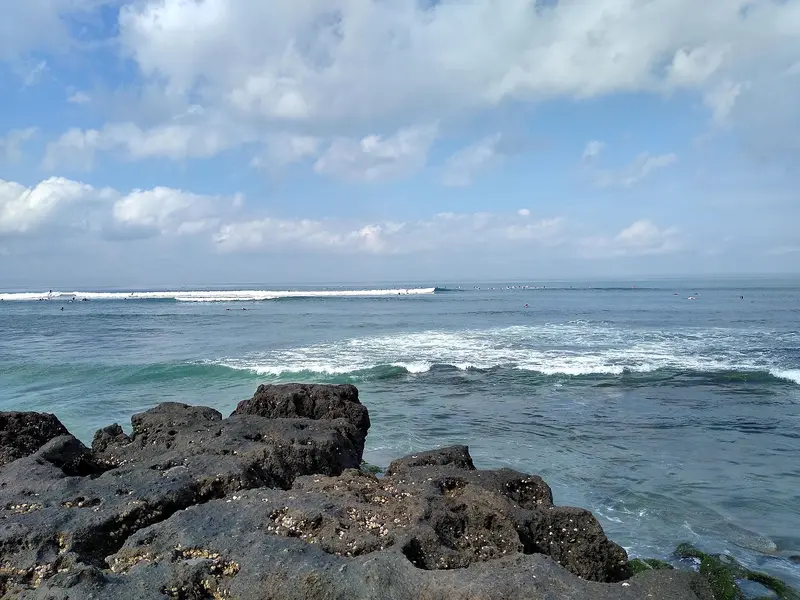
    Canggu, northwest of Seminyak, has grown from a surf village into a hub for surfers, café-goers, and digital nomads. Black sand beaches with consistent waves alternate with rice paddies and densely developed streets.
    Kuta and Legian
    Jakub Hałun / Wikimedia Commons / CC BY-SA 4.0

    Kuta and Legian

    Kuta and Legian are Bali's oldest beach resorts, located directly north of the airport. A long sandy beach with beginner waves, numerous accommodations, shopping streets, and nightlife characterize the area.
    Uluwatu and Bukit Peninsula
    CEphoto, Uwe Aranas / Wikimedia Commons / CC BY-SA 3.0

    Uluwatu and Bukit Peninsula

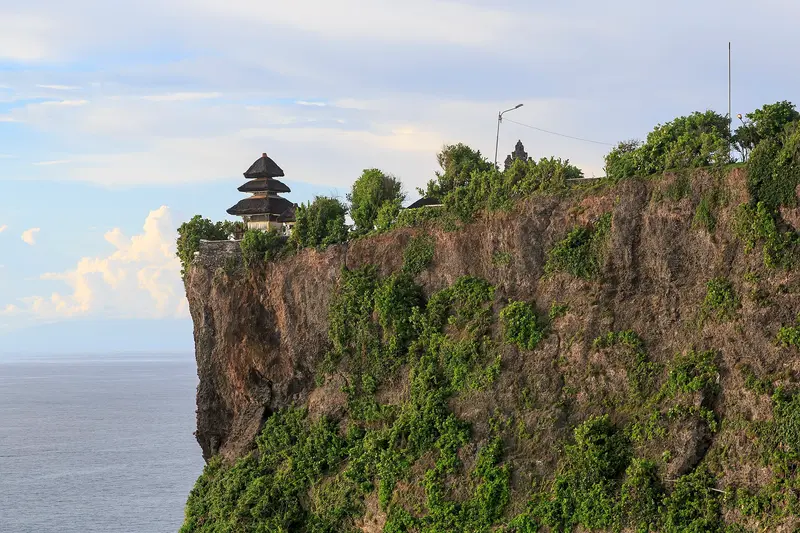
    Bali's southernmost limestone peninsula, Bukit, plunges in steep cliffs to the sea. Between the rocks lie small coves with bright sand, world-class surf spots, and perched on a cliff, the Pura Luhur Uluwatu temple.
    Sanur

    Sanur

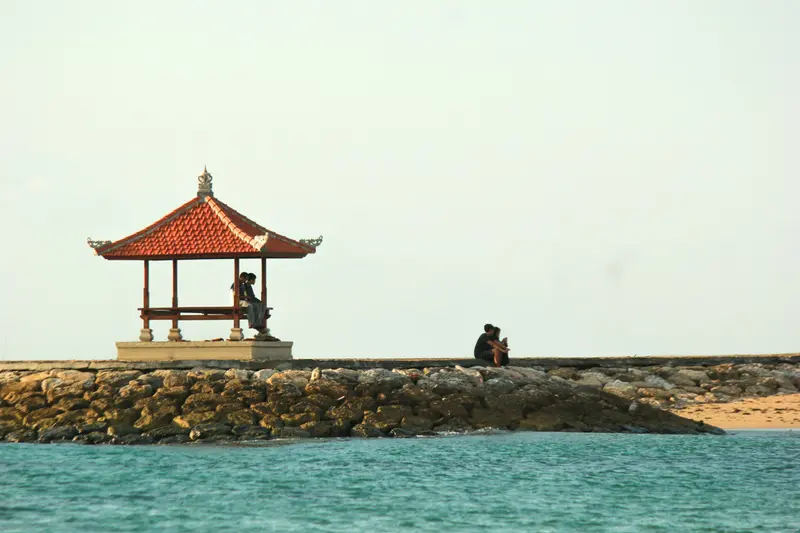
    Sanur, on the southern east coast, is one of Bali's oldest resorts. An offshore reef keeps the waves at bay; a beach promenade connects hotels, Warungs, and fishing boats. From here, boats depart for Nusa Lembongan and Nusa Penida.

    Sights in Bali

    Discover the most important sights and attractions

    Pura Besakih
    CEphoto, Uwe Aranas / Wikimedia Commons / CC BY-SA 3.0
    Temple

    Pura Besakih

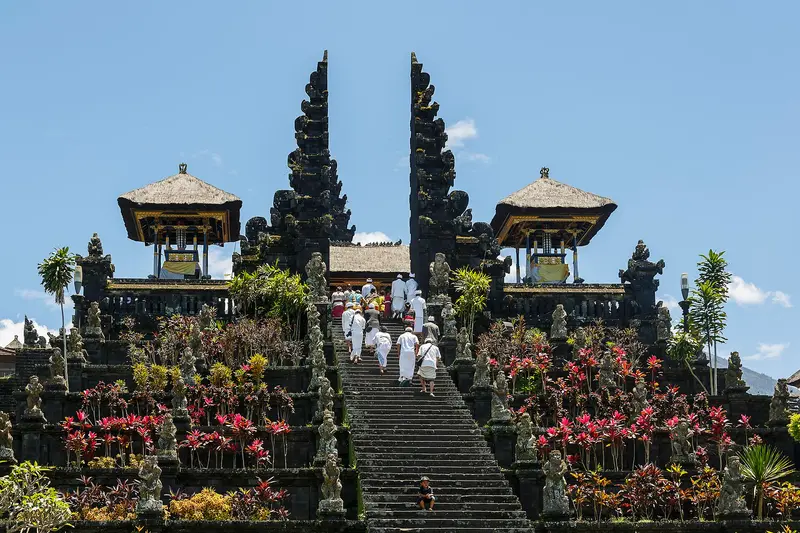
    Bali’s “Mother Temple” is located at an altitude of approximately 1,000 meters on the slopes of Gunung Agung. The complex comprises over 20 individual temples on ascending terraces; the main temple, Penataran Agung, is dedicated to Shiva. At the entrance, guides jostle for attention; the entrance ticket covers the shuttle and a sarong.
    Open in Google Maps
    Pura Tanah Lot
    Jakub Hałun / Wikimedia Commons / CC BY-SA 4.0
    Temple

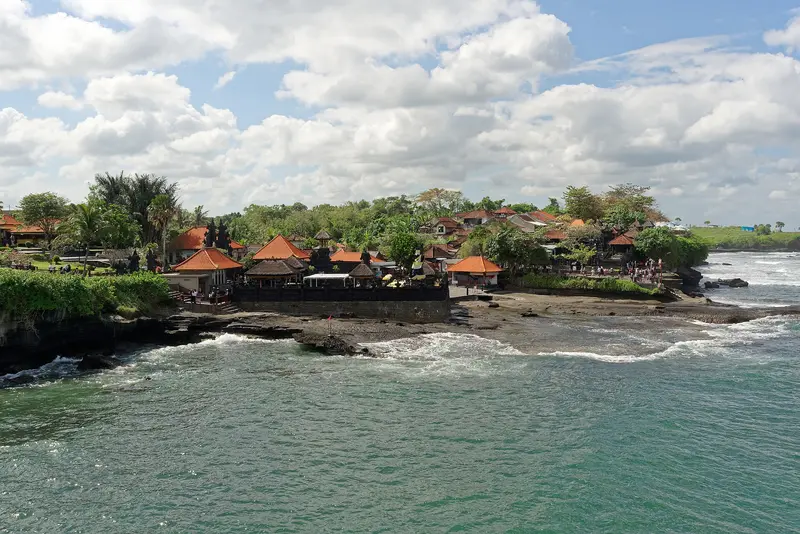
    Pura Tanah Lot

    Sea temple on a rock off the west coast, accessible on foot at low tide. The interior is reserved for worshippers. At sunset it's very crowded; mornings are quieter.
    Open in Google Maps
    Pura Lempuyang
    Julia Kado / Wikimedia Commons / CC BY-SA 4.0
    Temple

    Pura Lempuyang

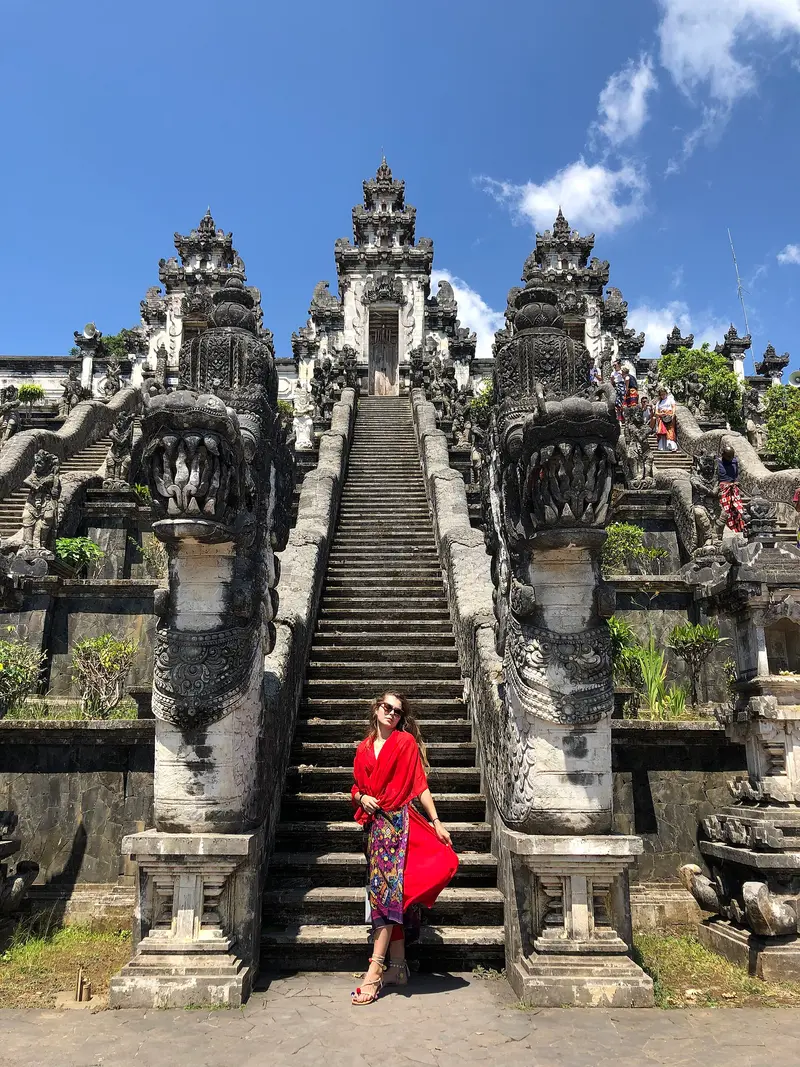
    Temple complex on the slopes of Lempuyang in East Bali. The split gate of the lower Penataran Agung temple frames Gunung Agung on a clear day; long waits are common for photos. Around 1,700 steps lead to the uppermost temple.
    Open in Google Maps
    Tirta Gangga
    Bair175 / Wikimedia Commons / CC BY-SA 3.0
    Attraction

    Tirta Gangga

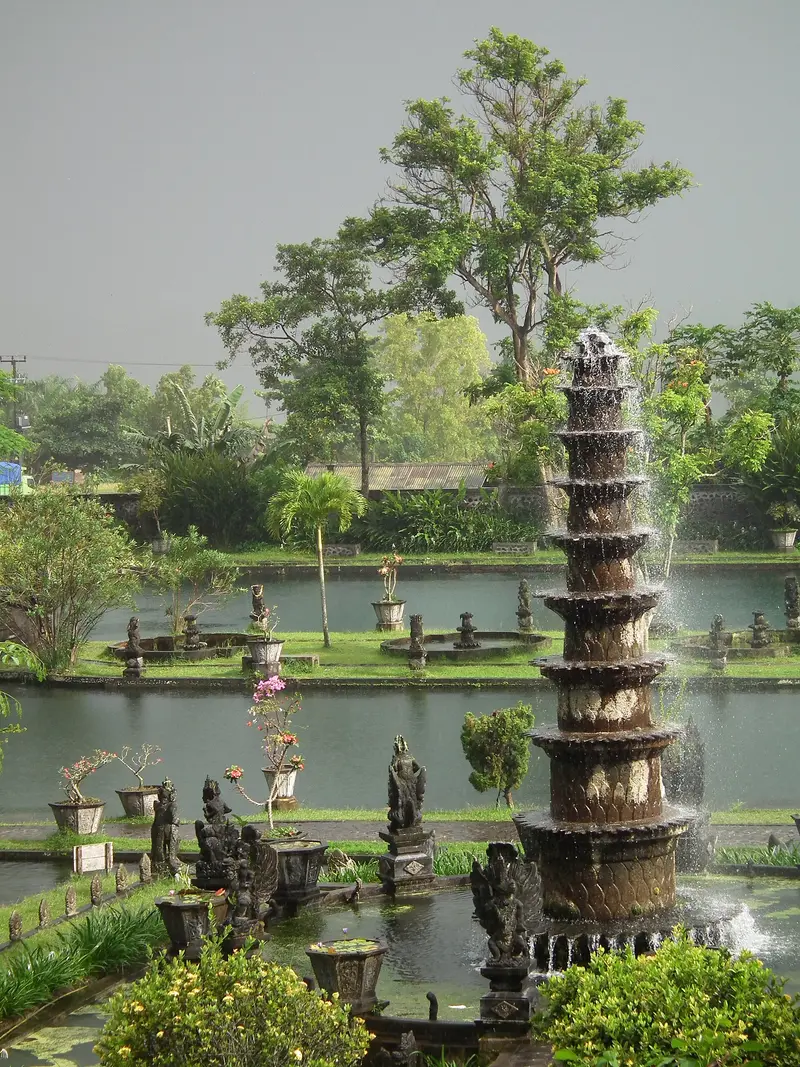
    Water Palace of the last Raja of Karangasem from the 20th century. Stepping stones lead through ponds with koi carp; an eleven-tiered fountain and spring-fed pools invite you to bathe.
    Open in Google Maps
    Rice Terraces of Jatiluwih
    Attraction

    Rice Terraces of Jatiluwih

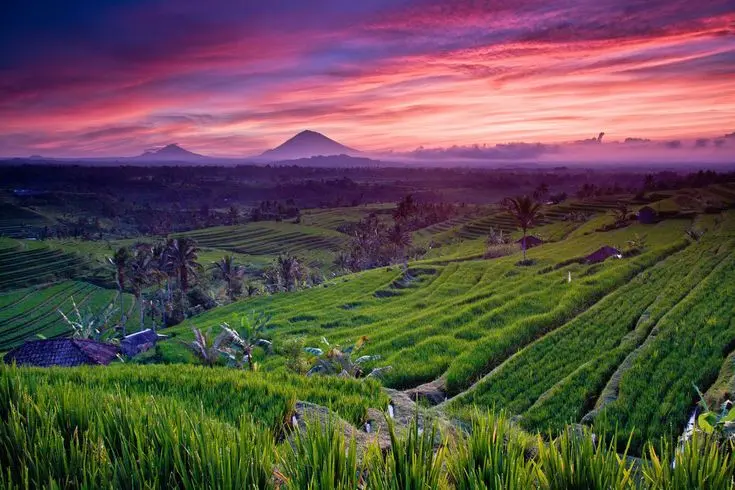
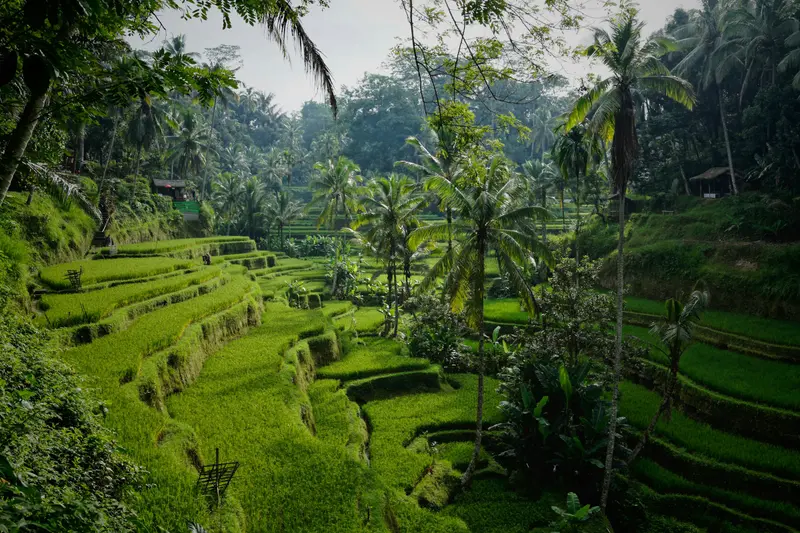
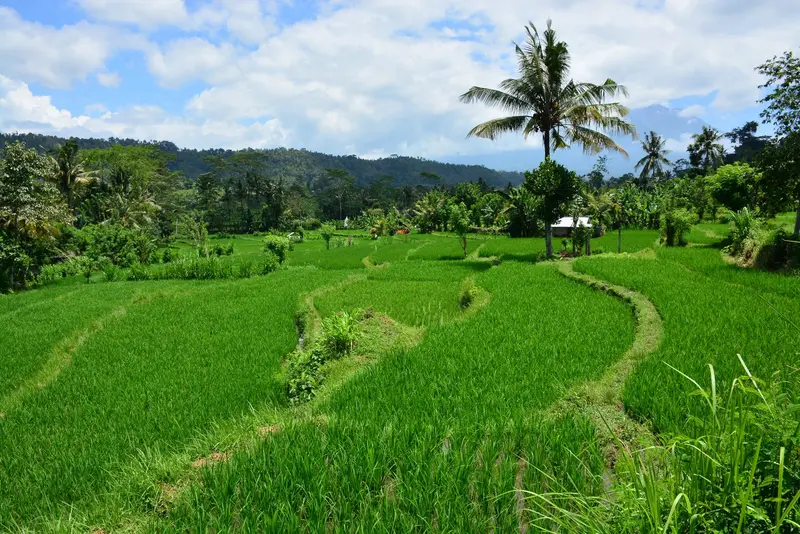
    Extensive rice terraces at the foot of Batukaru in the west of the island, part of the UNESCO World Heritage Subak Cultural Landscape. Marked trails of one to three hours lead through the fields and irrigation canals.
    Open in Google Maps
    Gunung Batur
    Eka343 / Wikimedia Commons / CC BY-SA 4.0

    Gunung Batur

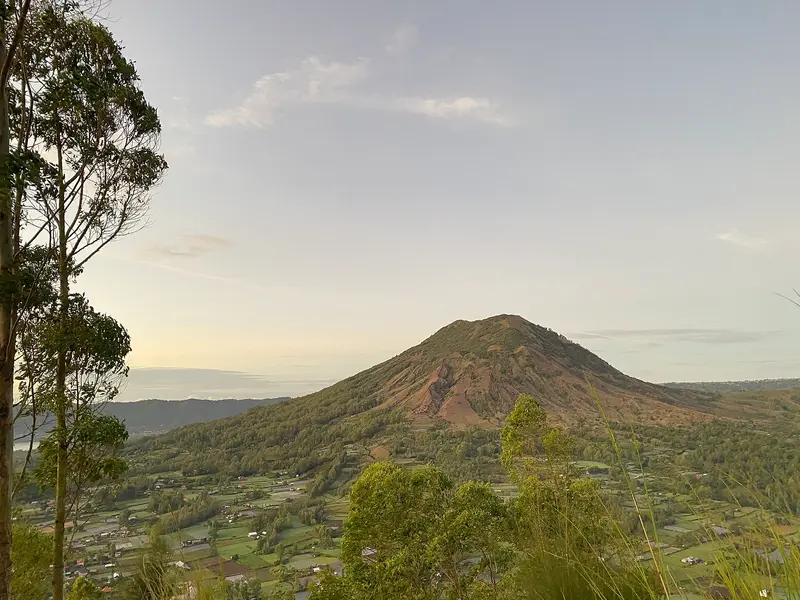
    An active 1,717-meter volcano in a large caldera with a crater lake in the island's north. Guided tours depart around 4 AM and reach the crater rim for sunrise with views of Agung and Rinjani. Hot springs are found by the lakeshore.
    Open in Google Maps

    Food and Drinks

    Balinese cuisine is spicy and uses the basic paste Base Genep made from shallots, garlic, galangal, turmeric, ginger, and chili.

    Babi Guling

    Spit-roasted suckling pig with spiced stuffing, served with rice, Lawar and crispy skin. Classic lunch in specialized Warungs.

    Bebek Betutu

    Duck, spice-rubbed, wrapped in banana leaves and slow-cooked for many hours. Often pre-ordered.

    Sate Lilit

    Minced fish or chicken with coconut and spices, formed around lemongrass stalks and grilled.

    Nasi Campur Bali

    Rice with small portions of Sate, vegetables, egg, peanuts and Sambal Matah, a raw chili-shallot salsa.

    Best Time to Visit

    When is the best time for your trip?

    May
    June
    July
    September
    October
    26–28°C·45–90 mm(moderate rain)
    May-October is dry with low humidity. May, June, September are best, less crowded than July-August. December-February often brings heavy rain, with the West Coast seeing rougher seas and more beach debris.
    Figures for Denpasar in the south, rounded. In the highlands around Munduk and Bedugul, it's five to eight degrees cooler and significantly rainier; the northeast around Amed is the driest.

    Seasons

    Jan
    Feb
    Mar
    Apr
    May
    Jun
    Jul
    Aug
    Sep
    Oct
    Nov
    Dec
    Dry season
    High season
    Wet season
    Best Time to Visit
    ▶Show detailed monthly data
    MonthTemp (°C)Rain (mm)Sun (h)
    January28.03406.0
    February28.02756.0
    March28.02357.0
    April28.0908.0
    May27.0908.0
    June27.0558.0
    July26.0558.0
    August26.0259.0
    September27.0459.0
    October28.0658.0
    November28.01807.0
    December28.02756.0

    Culture and Religion

    Island of TemplesApproximately 85 percent of Balinese are Hindus. Their religion combines elements from India with ancestor worship and local nature deities. Every village has several temples, every courtyard a household shrine, and daily small offering baskets made of palm leaves (Canang Sari) with flowers and rice are laid out. Temple festivals (Odalan) take place according to the 210-day Pawukon calendar, as do the holidays Galungan and Kuningan.On Nyepi, the New Year's Day in March, the island falls silent for 24 hours: no traffic, no lights, even the airport closes, and travelers must remain in their accommodation. On the eve, giant demon figures (Ogoh-Ogoh) parade through the streets. The communal irrigation system Subak, which connects rice fields via temples and canals, has been a UNESCO World Heritage site since 2012.

    Getting There & Around

    ArrivalAirport: Ngurah Rai International Airport (DPS) is located in the south between Kuta and Jimbaran. Upon arrival, a Bali tourism levy of 150,000 IDR is payable.Travel Times from the Airport: Kuta 15 to 45 minutes, Seminyak 45 to 90 minutes, Sanur 45 to 75 minutes, Uluwatu 1 to 1.5 hours, Canggu 1 to 2.5 hours, Ubud 1.5 to 3 hours, Padang Bai approximately 1.5 hours, Amed and Munduk 2.5 to 3.5 hours, Lovina approximately 3 hours, Gilimanuk approximately 5 hours. Between 3 PM and 7 PM, allow at least 45 minutes extra.ConnectionsNusa Penida and Lembongan: Fast boats from Sanur in 30 to 45 minutes (baliferries.com, sanurharbour.com, 12go.asia).Gilis: Fast boats from Padang Bai in 1.5 to 2 hours, from Serangan or Sanur in 2.5 to 3 hours (gilibookings.com, gilitickets.com). Boats from Amed are currently suspended.Lombok: ASDP ferry from Padang Bai to Lembar in 4 to 5 hours, plus loading wait time.Java: ASDP ferry from Gilimanuk to Ketapang near Banyuwangi operates 24/7, 30 to 60 minutes.Ferry Tickets: As of May 2025, all ASDP ferry tickets can only be booked online via ferizy.com.Flights: To Labuan Bajo approximately 1 hour 10 minutes, to Sumba (Tambolaka, Waingapu) 1 hour 15 to 1 hour 30.On the IslandDrivers: Private drivers, booked daily or per trip, are the most common way to explore the island.Shuttle Buses: Kura-Kura Bus operates between Kuta and Ubud (kura2bus.com), Perama serves many destinations on the island (peramatour.com).Apps: Grab and Gojek work in the south and in Ubud; in some areas, local driver communities resist pick-ups.Scooters: Widely used, but traffic is dense and accidents are frequent. Without a valid motorcycle license, you risk fines and insurance issues.

    Trips & Activities

    Temple Tour

    Besakih on Agung, Tanah Lot on the west coast, Ulun Danu Beratan in the highlands, and Lempuyang in the east can be combined on day tours with a driver. At all temples, a sarong and sash are compulsory.

    Rice terraces

    Jatiluwih in the west is part of the Subak World Heritage, Tegallalang north of Ubud the most famous but also busiest terrace.

    Volcano hiking

    Experience Batur's (1,717 m) sunrise with a guided two-hour ascent; Agung (3,031 m) is a significantly tougher night climb.

    Diving and Snorkeling

    The wreck of the USAT Liberty near Tulamben, the reefs off Amed, and the manta rays off Nusa Penida are among the most famous spots.

    Nearby

    Ubud
    Chainwit. / Wikimedia Commons / CC BY-SA 4.0

    Ubud

    Ubud, in the highlands of Gianyar, is considered Bali's cultural center. Palace, temples, art museums, and evening dance performances are close by, surrounded by rice terraces and river valleys.
    Munduk
    Mike Dickison / Wikimedia Commons / CC BY 4.0

    Munduk

    Munduk is situated at about 800 meters in Bali's central highlands. Coffee and clove plantations, waterfalls, and the crater lakes Tamblingan and Buyan shape this cool, often misty landscape.
    Canggu

    Canggu

    Canggu, northwest of Seminyak, has grown from a surf village into a hub for surfers, café-goers, and digital nomads. Black sand beaches with consistent waves alternate with rice paddies and densely developed streets.
    Sidemen
    Paul Arps from The Netherlands / Wikimedia Commons / CC BY 2.0

    Sidemen

    Sidemen is located in a valley in eastern Bali, overlooked by the Gunung Agung volcano. Terraced rice fields, Songket weaving workshops, and quiet villages make the valley an alternative to bustling Ubud.
    Seminyak
    Christophe95 / Wikimedia Commons / CC BY-SA 4.0

    Seminyak

    Seminyak on the southwest coast is Bali's district for boutiques, restaurants, and beach clubs. The wide sandy beach merges seamlessly into Legian and Kuta, the sunset over the Indian Ocean is the daily ritual.