Fernweh: Home
    ExploreTravel GuidesPlan a tripMy tripLast visited
    de|en
    All Places & RegionsAll highlightsAbout FernwehFAQPrivacy PolicyImprint
    ExploreTravel GuidesPlan a tripMy tripLast visited
    • Overview
    • Places in the region
    • Food culture
    • Culture
    • Getting around
    • Nearby
    Ajman & Umm al-Qaiwain

    United Arab Emirates

    Ajman & Umm al-Qaiwain

    Region

    This region brings together the two smallest emirates: Ajman, the smallest in area at approximately 260 km², and Umm al-Qaiwain, the least populated.

    by Felix Gillen

    1. Home
    2. Destinations
    3. United Arab Emirates
    4. Ajman & Umm al-Qaiwain
    This region brings together the two smallest emirates: Ajman, the smallest in area at approximately 260 km², and Umm al-Qaiwain, the least populated. Both are located on the Persian Gulf north of Sharjah and offer forts with museums, mangroves, and quiet beaches.
    ProfileAjman has a population of around 583,000 (2024) and, in addition to its capital, has the inland enclaves of Manama and Masfout. Umm al-Qaiwain has no significant oil or gas reserves; its economy is supported by tourism, fishing, and trade.What to SeeIn Ajman: the Museum in the old Fort, the Corniche, the Dhow Yard, and the Al Zorah mangroves. In Umm al-Qaiwain: the National Museum in Fort Al Ali, kayaking in the mangroves, and kitesurfing at Kite Beach.TransportThe E400 bus connects Dubai with Ajman. For Umm al-Qaiwain, its beaches, and the enclaves, you will need a car.
    Ajman

    Place 1 of 2

    Ajman

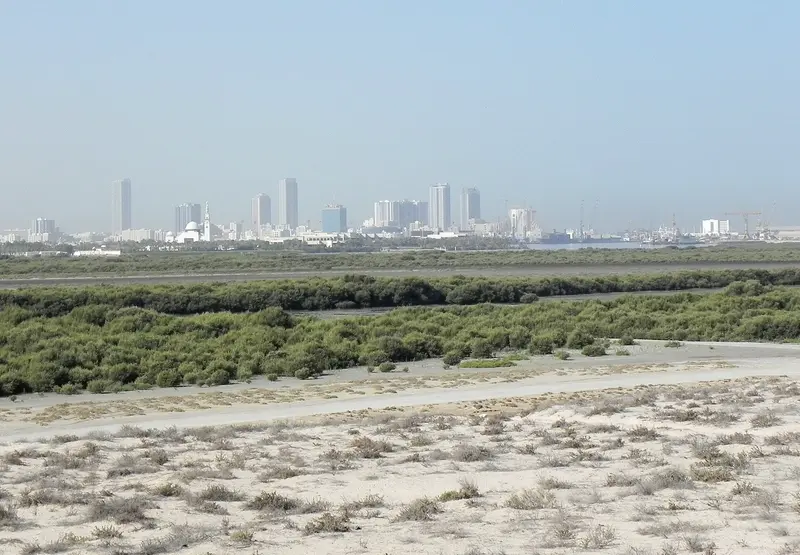
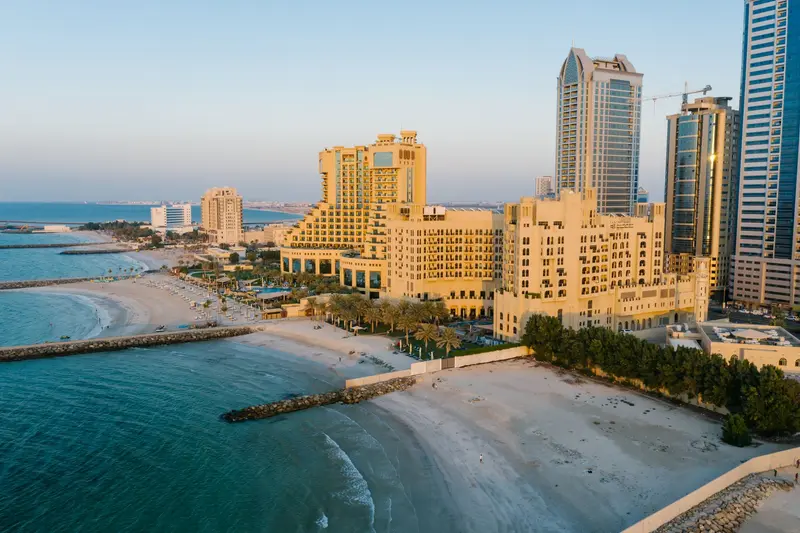
    Ajman is the capital of the smallest emirate by area, situated on the Persian Gulf north of Sharjah. At its heart is a fort, presumably built in the late 18th century, now the Ajman Museum, just a few steps from the Corniche and Souks.

    Discover
    Peter Dowley from Dubai, United Arab Emirates / Wikimedia Commons / CC BY 2.0

    Place 2 of 2

    Umm al-Qaiwain is the capital of the least populated emirate and lies on the Persian Gulf between Ajman and Ras al-Khaimah. The compact old town lies on a peninsula; at its entrance stands Fort Al Ali with the National Museum.

    Discover

    Food and drink

    In Ajman and Umm al-Qaiwain, dining often revolves around fish. Both cities have fish markets where you can buy the catch of the day and have it prepared right away.

    Ajman fish market

    The market on Sheikh Rashid bin Saeed Al Maktoum Street in Al Rashidiya, near the creek, opens mornings and evenings, and the catch is auctioned from 6pm. Simple stalls fillet, season and grill your fish on the spot. Haggling is expected.

    Umm al-Qaiwain fish market

    The market lies on the waterfront in the Al Khor district. Counters scale and cut the fish, and grill stations cook the catch. The choice is best early in the morning.

    Fish from the Gulf

    The markets sell hammour, sheri, kingfish, barracuda, prawns, crabs and lobster, among others. Fixed prices are rare, and bargaining is part of it.

    Culture and History

    Ruling FamiliesThe Al Nuaimi family has ruled Ajman since 1810, and the Al Mualla family has ruled Umm al-Qaiwain. The forts in both capitals were once the rulers' seats – in Umm al-Qaiwain until 1969 – and are now museums.ArchaeologyThe Ajman Museum displays finds from the Al Muwaihat burial ground, dating to around 3000 BC. In Umm al-Qaiwain, you'll find the ancient port city of Ed-Dur, and on Siniya Island, a monastery from the 6th and 7th centuries.

    Getting There & Around

    By BusThe RTA Bus E400 travels from Union Square in Dubai to Al Musalla Bus Station in Ajman (12 Dirham, 50 to 60 minutes), while the E411 departs from Etisalat Bus Station in Al Qusais.By CarYou can reach Umm al-Qaiwain by car from Sharjah and Ajman along the coast. Ajman's exclaves are located inland: Manama about 60 km east, Masfout about 110 km southeast of the capital in the Hajar Mountains.
    Nearby

    Ajman

    Ajman

    Ajman is the capital of the smallest emirate by area, situated on the Persian Gulf north of Sharjah. At its heart is a fort, presumably built in the late 18th century, now the Ajman Museum, just a few steps from the Corniche and Souks. On Ajman Creek is a dhow shipyard, and on the outskirts, the Al Zorah mangrove area.
    Sharjah Emirate

    Sharjah Emirate

    The Emirate of Sharjah is the third-largest of the United Arab Emirates and has coastlines on the Persian Gulf and the Gulf of Oman. Beyond the capital Sharjah, the emirate includes the Mleiha desert with the UNESCO World Heritage site Faya, and the east coast enclaves of Khor Fakkan, Kalba, and Dibba al-Hisn.
    Sharjah

    Sharjah

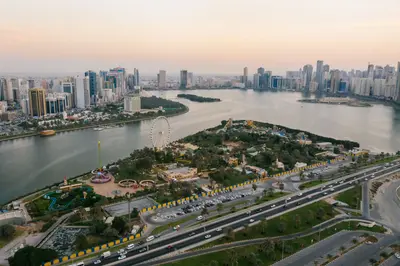
    Sharjah is the capital of the namesake emirate and is situated on the Persian Gulf, directly bordering Dubai. The city prides itself as a cultural hub of the Emirates: in 2019, it was UNESCO World Book Capital, and surrounding the restored old town, Heart of Sharjah, are museums and the buildings of the Sharjah Art Foundation. Alcohol is not served in the emirate, even in hotels.

    Umm al-Qaiwain is the capital of the least populated emirate and lies on the Persian Gulf between Ajman and Ras al-Khaimah. The compact old town lies on a peninsula; at its entrance stands Fort Al Ali with the National Museum. Beyond it opens the Khor al-Beidah lagoon with mangroves you can explore by kayak, and Siniya Island.
    Dubai Emirate

    Dubai Emirate

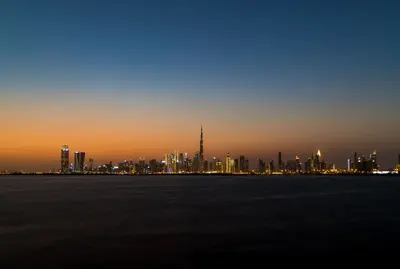
    The Dubai Emirate is located on the coast of the Persian Gulf and comprises, in addition to the eponymous city, the exclave of Hatta in the Hajar Mountains. Approximately 4.8 million people live here (as of September 2026). Between the Old Town on Dubai Creek, the skyscrapers of Downtown, and the reservoirs of Hatta, there is approximately a ninety-minute drive.

    Sources & method

    • Photos: Unsplash. Each photo carries its credit.
    • The content is based on web research from public, traceable sources. How the content is made · The role of AI