Fernweh: Home
ExploreGuideDestinationsMy tripsMy trip
de|en
All Places & RegionsRound tripsNight trains in EuropeAll highlightsAbout FernwehFAQPrivacy PolicyImprint
Download on the App StoreGet it on Google Play
ExploreGuideDestinationsMy tripsMy trip
    • Culture
    • Getting around
    • Nearby
    Pantanal

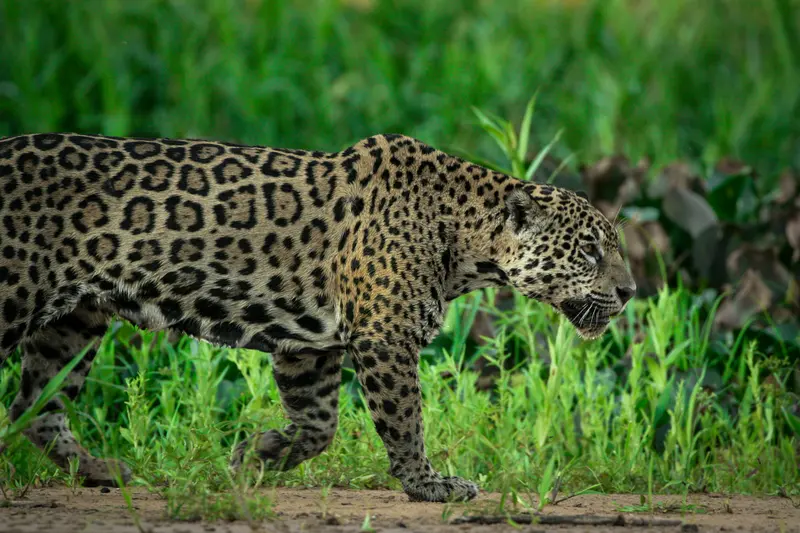
    Photo by David Waite on Unsplash

    Brazil

    Pantanal

    Region

    The Pantanal in southwestern Brazil, bordering Bolivia and Paraguay, is one of the largest wetlands on Earth and known for wild jaguar sightings.

    by Felix Gillen

    1. Home
    2. Destinations
    3. Brazil
    4. Pantanal
    The Pantanal in southwestern Brazil, bordering Bolivia and Paraguay, is one of the largest wetlands on Earth and known for wild jaguar sightings. During the dry season, animals gather at the remaining water sources; alongside jaguars, Giant Anteaters and Hyacinth Macaws also live here. A portion of it is listed as the Pantanal Conservation Area on the UNESCO World Heritage list.On the Brazilian side, according to Embrapa, the Pantanal covers approximately 138,000 square kilometers, with almost two-thirds of that in Mato Grosso do Sul. The northern Pantanal can be reached via Cuiabá and the unpaved Transpantaneira road, and the southern via Campo Grande or Corumbá, often combined with Bonito.
    Brazil travel guideRound trips in BrazilPlan a trip with Pantanal

    Contents

    • Culture
    • Getting around
    • Nearby

    Protected Area and Landscape

    World Heritage and Ramsar SiteThe Pantanal Conservation Area comprises approximately 188,000 hectares across four protected areas, including the Pantanal Matogrossense National Park, also protected as a Ramsar Wetland since 1993; this is only about 1.3 percent of the Brazilian Pantanal. Within the National Park, the Serra do Amolar rises to approximately 900 meters.Fires and DroughtThe IUCN assesses the World Heritage site's condition as 'significant concern', mainly due to fires and drought: in 2020, approximately 40,000 square kilometers burned.

    Arrival & Best Travel Time

    North: TranspantaneiraCuiabá Airport (CGB) in Várzea Grande, approx. 10 km from the city center; Azul, GOL, and LATAM fly direct to São Paulo Guarulhos (a good 2 hours).From Cuiabá, it's about an hour and a half to Poconé, where the Transpantaneira (MT-060) begins: 147 km of unpaved road with many narrow bridges to Porto Jofre on the Cuiabá River, according to National Geographic, the best place for jaguar sightings during the dry season.Drive slowly: Animals cross the road, dust obstructs visibility. During the dry season, a regular car is usually sufficient; in the rainy season, you'll need 4WD.SouthCampo Grande Airport (CGR) is located approx. 7 km from the city center; Miranda is considered a central base in the southern Pantanal, from Corumbá, you can continue by boat or via the Estrada Parque.Best Time to VisitThe dry season is best for wildlife viewing; National Geographic suggests July to October, Lonely Planet April to September. In Cuiabá, an average of only about 10 mm of rain falls in July. Between May and September, according to FCDO, forest fires may occur.

    Nearby
    Chaco and Mennonite Colonies

    Chaco and Mennonite Colonies

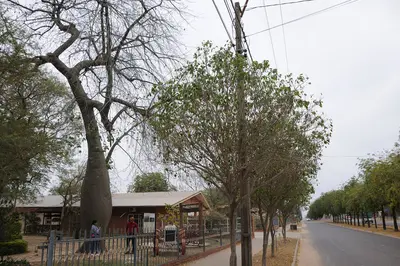
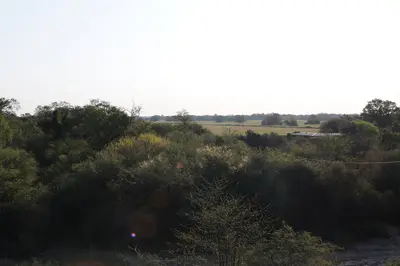
    The Chaco covers about 60 percent of Paraguay's area but is only sparsely populated. In the Central Chaco, about 450 km northwest of Asunción along the Transchaco highway, Mennonites founded the colonies Menno, Fernheim, and Neuland, with the towns Loma Plata, Filadelfia, and Neu-Halbstadt, starting in 1927; Plautdietsch and High German are still spoken there today. Museums recount the settlement, Fortín Boquerón commemorates the Chaco War, and waterfowl inhabit salt lagoons like Laguna Capitán.

    Josep M. Gracia·CC BY-SA 4.0

    Philadelphia

    Philadelphia

    Filadelfia, about 470 km from Asunción, is the center of the Fernheim Mennonite colony in the Central Chaco. Founded in 1930 by Soviet Union refugees, the colony designated Filadelfia its administrative seat in 1931. Several museums, including Museo Jakob Unger (displaying Chaco animals, fossils, and pre-Columbian artifacts), make Filadelfia a good base for the Central Chaco.

    Josep M. Gracia·CC BY-SA 4.0

    Sucre

    Sucre

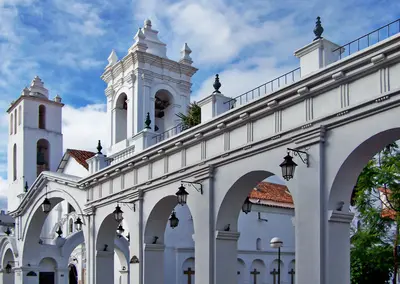
    Sucre is Bolivia's constitutional capital, a whitewashed colonial city located at around 2,790 m. Its old town has been a UNESCO World Heritage site since 1991, where the country's independence was declared on August 6, 1825.You visit the Casa de la Libertad, 16th-century churches, and the rooftop terraces of San Felipe Neri, take in views of the city from La Recoleta, and on the outskirts, see thousands of dinosaur footprints on a rock face. On Sundays, a trip to Tarabuco Market is worthwhile.

    Tom D'Arby·Pexels

    Asunción

    Asunción

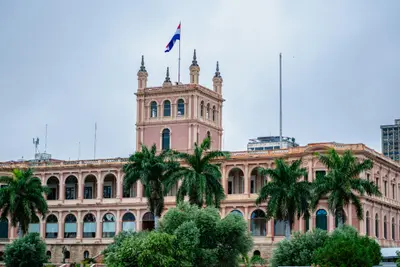
    Asunción is the capital of Paraguay and lies on a bay of the Río Paraguay; according to the 2022 census, the city itself has around 462,000 inhabitants. The historic center with Government Palace Palacio de López, Panteón Nacional de los Héroes, Cathedral and Casa de la Independencia is easily explored on foot; many museums are free. Along the river runs the Costanera, a promenade with bike and walking path.

    Tobias Meza·Unsplash

    San Bernardino and Lago Ypacaraí

    San Bernardino and Lago Ypacaraí

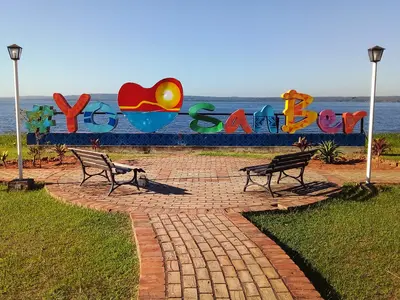
    San Bernardino, on Lago Ypacaraí, founded in 1881 by German and Swiss settlers, is now a summer resort for capital residents; its main season runs December to mid-February. Around the lake lie the towns of the Circuito de Oro: Areguá, with ceramics and handicrafts; Itauguá, city of Ñandutí lace; and the pilgrimage town of Caacupé.

    Ulises Icardi·CC BY-SA 4.0

    Your next steps

    Pantanal is in Brazil. Ways to carry on from here.

    • More in Brazil

      Highlights, areas, routes and the best time to travel for all of Brazil.

      Brazil travel guide
    • Round trips in Brazil

      Ready-made routes through Brazil, with stops, nights and a map.

      See the routes
    • Plan a trip with Pantanal

      The Guide asks about season, length and who is coming, and suggests a trip with Pantanal.

      Plan the trip

    Sources & method

    • Photos: Unsplash. Each photo carries its credit.
    • The content is based on web research from public, traceable sources. How the content is made · The role of AI