Fernweh: Home
ExploreGuideDestinationsMy tripsMy trip
de|en
All Places & RegionsRound tripsNight trains in EuropeAll highlightsAbout FernwehFAQPrivacy PolicyImprint
Download on the App StoreGet it on Google Play
ExploreGuideDestinationsMy tripsMy trip
    • Neighborhoods & highlights
    • Tours
    • Eat & drink
    • Culture
    • Getting around
    • Accommodation
    • Plan trip
    • Round trips
    • Nearby
    Sucre

    Photo by Tom D'Arby on Pexels

    Bolivia

    Sucre

    CityUNESCOCulture

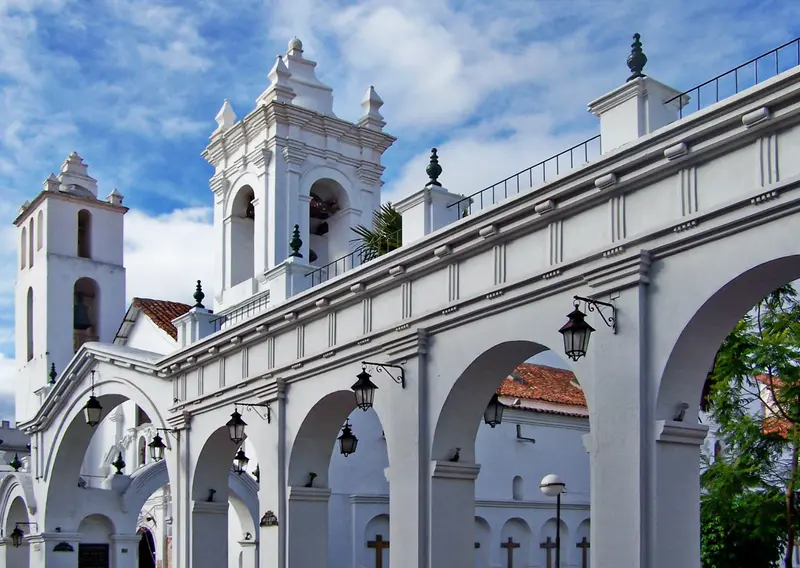
    Sucre is Bolivia's constitutional capital, a whitewashed colonial city located at around 2,790 m. Its old town has been a UNESCO World Heritage site since 1991, where the country's independence was declared on August 6, 1825.

    by Felix Gillen

    1. Home
    2. Destinations
    3. Bolivia
    4. Sucre
    Sucre is Bolivia's constitutional capital, a whitewashed colonial city located at around 2,790 m. Its old town has been a UNESCO World Heritage site since 1991, where the country's independence was declared on August 6, 1825.You visit the Casa de la Libertad, 16th-century churches, and the rooftop terraces of San Felipe Neri, take in views of the city from La Recoleta, and on the outskirts, see thousands of dinosaur footprints on a rock face. On Sundays, a trip to Tarabuco Market is worthwhile.
    Bolivia travel guideSee the round tripPlan a trip with Sucre

    Contents

    • Neighborhoods & highlights
    • Tours
    • Eat & drink
    • Culture
    • Getting around
    • Accommodation
    • Round trips
    • Nearby

    Sights in Sucre

    Discover the most important sights and attractions

    Museum

    1Cretaceous Park Cal Orck'o

    On a steep rock face about 5 km outside the city, several thousand dinosaur footprints, preserved from approximately 68 million years ago, were discovered in 1994 in a cement factory. Open Tuesday to Sunday from 9 AM to 5 PM, with guided tours directly to the tracks at 12 PM and 1 PM. Since 2003, the site has been on the UNESCO Tentative List.

    Open in Google Maps
    Museum

    2Museum of Indigenous Art ASUR

    In seven halls, the museum displays the weaving art of the Jalq'a and from Tarabuco from the Sucre region.
    Open in Google Maps
    Church

    3Monasterio de La Recoleta

    The quiet monastery lies on a rise outside the center. From the square in front, you gaze from the Mirador over the white roofs, stunning at sunset.
    Open in Google Maps
    Museum

    4Metropolitan Cathedral and Museum of the Cathedral

    Construction of the cathedral began in 1559, taking around 250 years per UNESCO. Beside the church, you can visit the Museo de la Catedral.
    Open in Google Maps

    Tours & experiences in Sucre

    Search tours for Sucre on GetYourGuide* (Affiliate link)On GetYourGuide, with reviews from other travellers

    * Affiliate link: if you book through it, we earn a small commission. The price stays the same for you.

    Restaurants in Sucre

    1

    El Huerto

    A garden restaurant highlighted by Lonely Planet for its cuisine and very good service.
    Show on Google Maps
    2

    Condor Café

    Non-profit vegetarian café with an affordable lunch menu, recommended by Fodor's and Culture Trip.
    Show on Google Maps
    3

    Salteñería El Patio

    Typically local: Salteñas before noon, often sold out by midday.
    Show on Google Maps

    History and Artisanship

    City of IndependenceSucre was founded in 1538 as Ciudad de la Plata de la Nueva Toledo. UNESCO highlights the blend of local building traditions with European styles from the 16th to 19th centuries. The Act of Independence from 1825 is housed in the Casa de la Libertad, a former Jesuit building.Regional Textile ArtThe region is known for the weaving art of the Jalq'a and Tarabuco peoples, showcased in seven halls at the Museo de Arte Indígena ASUR. In Tarabuco, the Pujllay festival is celebrated on the third Sunday in March, recognized by UNESCO as intangible heritage.CuisineTypical Sucre dishes include Chorizo chuquisaqueño and Salteñas in the morning, and Mondongo for lunch.

    Travel and Getting Around

    Getting ThereBuses travel from Potosí to Sucre in about three to four hours.In the CityExplore the Old Town on foot; it’s an uphill walk to Mirador La Recoleta. The Dino Bus takes you to Parque Cretácico, about 5 km outside the city.Practical TipsMany museums close earlier on Saturdays; check opening times in advance.Tarabuco is about 65 km away, a 1.5-hour drive; its market is liveliest early on Sunday.

    Accommodations in Sucre

    Find perfect stay in Sucre

    Booking.com* (Affiliate link)
    Search Hotels
    Agoda* (Affiliate link)
    Search Hotels
    Airbnb
    Vacation Rentals

    * Affiliate link: if you book through it, we earn a small commission. The price stays the same for you.

    Plan your trip to Sucre

    Save places, build a route and plan your city trip, all in one place.

    1. 1
      Sunrise over alpine peaks and a sea of clouds
      1234

      Round trip

      12 days · 4 stops

      Saved

      Pick a route

      Pick a ready-made one or save places and plan your own.

      Open bookmarks
    2. 2

      Trip to Sucre

      Live
      • 1Cretaceous Park Cal Orck'o3 days
      • 2Museum of Indigenous Art ASUR4 days
      • 3Monasterio de La Recoleta5 days
      Budget

      Plan your trip

      The planner sorts stops, days and budget. Plan together in real time.

      Start trip planning
    3. 3
      9:41 No signal
      Sucre
      Available offline

      Photo by Tom D'Arby on Pexels

      Use it on the road

      Download the guide to your phone and use it on site, even offline.

    Round trips with Sucre

    Classic Bolivia: Lake Titicaca, Salar de Uyuni and Colonial Cities

    Classic Bolivia: Lake Titicaca, Salar de Uyuni and Colonial Cities

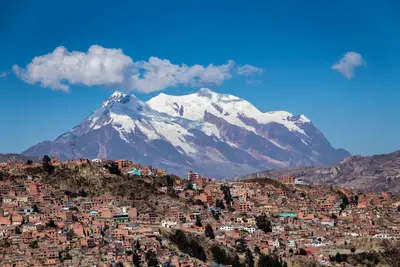
    The route connects the major destinations of the Bolivian highlands: La Paz with cable car and Tiwanaku, Lake Titicaca with Copacabana and the Isla del Sol, the Salar de Uyuni with the Lagoon Route, and finally the World Heritage cities Potosí and Sucre. All stages are traveled by bus, boat, or guided 4x4.

    13 Days
    8 stops
    Open jaw

    Nair Cristopher Sánchez Muñoz·Pexels

    Nearby

    Potosí

    Potosí

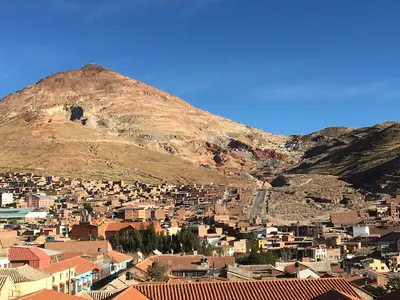
    Potosí is located at approximately 4,000 m (13,000 ft) at the foot of Cerro Rico, the Silver Mountain, which made the city one of the world's largest industrial centers from 1545. Its old town has been a UNESCO World Heritage site since 1987 and on the Red List of Endangered World Heritage since 2014.At the Casa Nacional de Moneda, you'll see how silver was turned into coins, and in the alleys, churches and colonial buildings from its heyday. Potosí is central to understanding South America's colonial history, and is three to four bus hours from Sucre.

    Jbmurray·CC BY-SA 4.0

    Uyuni

    Uyuni

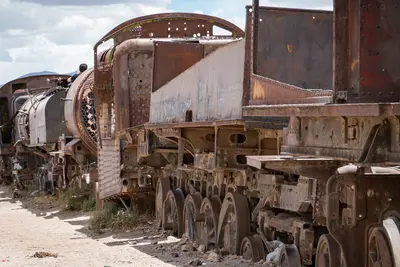
    The small town of Uyuni, at around 3,700 m in the Potosí Department, is the starting point for tours to the Salar de Uyuni and along the Lagoon Route south. This is where 4x4s depart, and where planes, night buses, and trains from the north arrive.On the town's edge, old steam locomotives and wagons rust at the Train Cemetery. By the Salar, Colchani's salt workers process their salt. The Foreign Office lists Uyuni among locations needing increased caution due to crime.

    PsamatheM·CC BY-SA 4.0

    Salar de Uyuni

    Salar de Uyuni

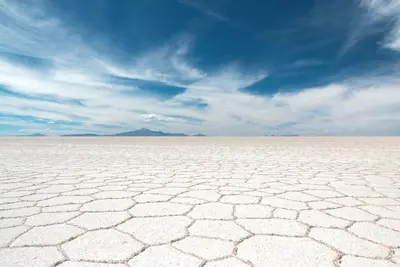
    The Salar de Uyuni in southwestern Bolivia is a salt flat covering approximately 10,582 km² at about 3,656 meters, a white, seemingly endless surface to the horizon. It is the country's most famous travel destination and the starting point for tours to the highland lagoons.In the dry season, you drive across the hard salt crust to the cactus island Incahuasi, and in the rainy season, a thin layer of water transforms the Salar into a giant mirror. Beneath the crust lie vast lithium reserves.

    Samuel Scrimshaw·Unsplash

    Salar de Surire

    Salar de Surire

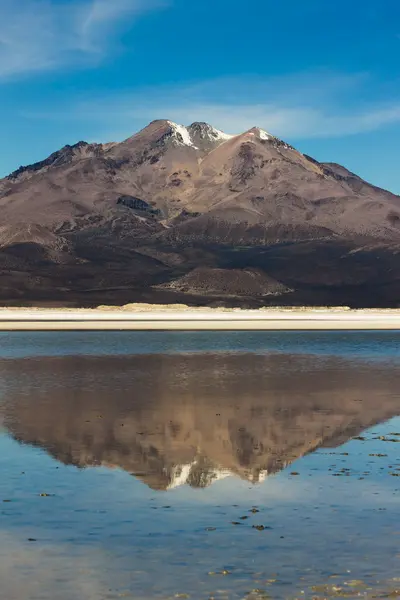
    The Salar de Surire lies at around 4,200 meters, south of Lauca National Park. The white salt flat with its shallow lagoons is a breeding ground for three flamingo species and has been protected as a Ramsar wetland since 1996.

    Chris malebran·CC BY-SA 4.0

    Coroico and the Yungas

    Coroico and the Yungas

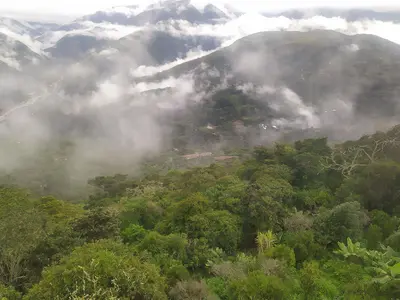
    Coroico is located at around 1,500 to 1,700 m in the Yungas, the subtropical valleys on the eastern slopes of the Andes, and is just two to four hours' drive from La Paz. Here, you exchange the cold highland air for green slopes and a mild climate.Famous is the old Yungas Road, also known as Camino de la Muerte (Death Road): approximately 64 km of gravel track that descends over 3,000 vertical meters from La Cumbre Pass at about 4,650 m. Since the opening of a paved bypass, it is primarily used by cyclists for guided descents.

    Alhen·CC BY-SA 4.0

    Your next steps

    Sucre is in Bolivia. Ways to carry on from here.

    • More in Bolivia

      Highlights, areas, routes and the best time to travel for all of Bolivia.

      Bolivia travel guide
    • Round trips with Sucre

      One route passes through Sucre, with stops, nights and a map.

      See the round trip

    Sources & method

    • Photos: Pexels. Each photo carries its credit.
    • Place data such as addresses and ratings comes from Google Maps.
    • The content is based on web research from public, traceable sources. How the content is made · The role of AI