Fernweh: Home
    ExploreTravel GuidesPlan a tripMy tripLast visited
    de|en
    All Places & RegionsAll highlightsAbout FernwehFAQPrivacy PolicyImprint
    ExploreTravel GuidesPlan a tripMy tripLast visited
    Glacier National Park

    United States

    Glacier National Park

    Point of InterestNatureMountains

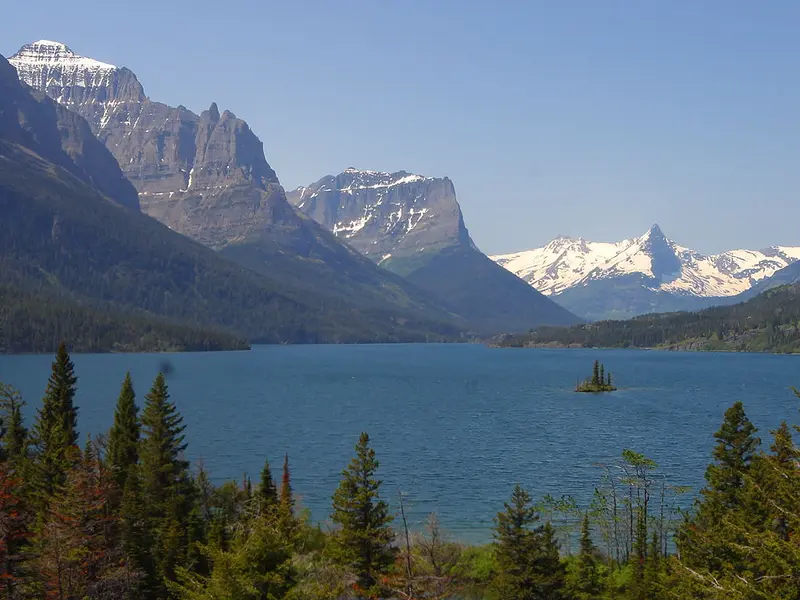
    Glacier National Park in northwestern Montana stretches to the Canadian border, protecting about one million acres (4,100 km²) of high mountains, alpine lakes, and forests.

    by Felix Gillen

    1. Home
    2. Destinations
    3. United States
    4. Glacier National Park
    Glacier National Park in northwestern Montana stretches to the Canadian border, protecting about one million acres (4,100 km²) of high mountains, alpine lakes, and forests. You come for the Going-to-the-Sun Road over the Continental Divide, the hiking trails above the treeline, and the wildlife, from mountain goats to grizzlies.Completed in 1932, the Going-to-the-Sun Road crosses the park for about 50 miles (80 km), reaching 6,646 feet (2,026 m) at Logan Pass. To the west lies the 10-mile (16 km) long Lake McDonald, and to the east Many Glacier on Swiftcurrent Lake. In the mid-19th century the area had around 150 glaciers; by 2010, only 25 remained active.Practical infoEntrance fee: In summer you pay a per-vehicle fee valid for 7 days, and the entrances do not accept cash. Non-US residents aged 16 and over pay an additional $100 per person unless they hold an America the Beautiful Pass. Current fees are listed at nps.gov/glac.Access rules: The rules for the Going-to-the-Sun Road change from season to season. Depending on the year, you may need a vehicle reservation, parking time at Logan Pass may be limited, and the shuttle may require tickets booked in advance. Check the current requirements at nps.gov/glac before your trip.Season: The alpine section of the Going-to-the-Sun Road has no fixed opening date; it opens only once plowing is complete. The road is usually fully open by early July, and in recent years it has opened between mid-June and mid-July. It generally stays open until the third Monday in October.Vehicles: Between Avalanche Creek and Rising Sun, vehicles longer than 21 feet (6.4 m) or wider than 8 feet (2.4 m), including mirrors, are prohibited.

    Sights in Glacier National Park

    Discover the most important sights and attractions

    Lake McDonald
    Natural Feature

    1Lake McDonald

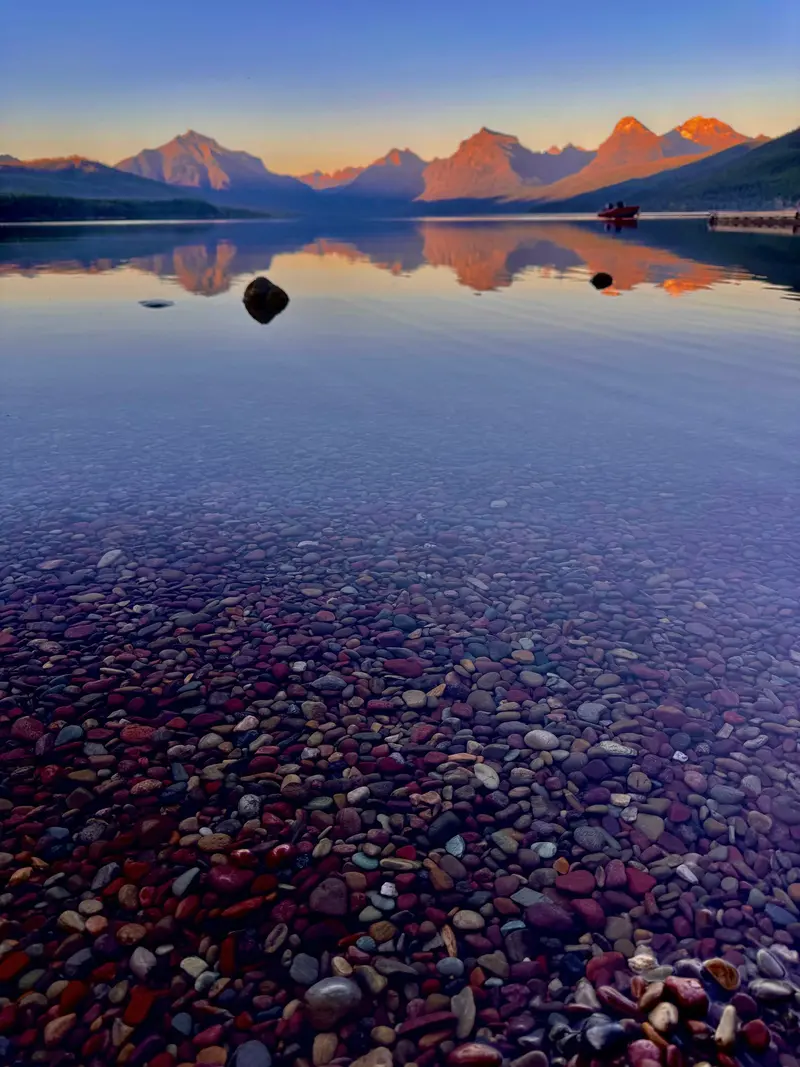
    The park's largest lake is about 10 miles (16 km) long, over a mile wide, and up to 472 feet (144 m) deep. At its western end is Apgar with a visitor center, and about 5 miles (8 km) east of it on the Going-to-the-Sun Road is the 1913/14 Lake McDonald Lodge, styled as a rustic hunting lodge.
    Open in Google Maps
    Hidden Lake Overlook
    Attraction

    2Hidden Lake Overlook

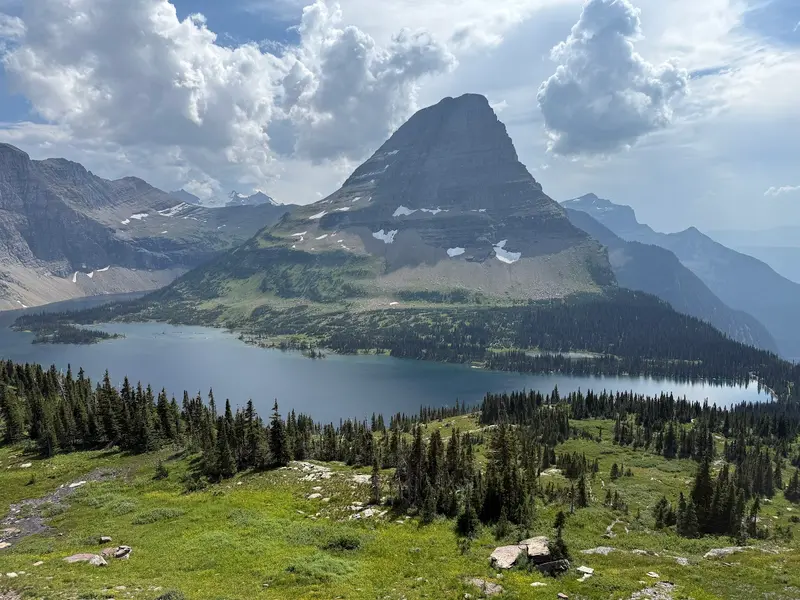
    The path starts behind the Logan Pass Visitor Center and soon leads to a boardwalk that helps traverse snow, mud, and meltwater, often persisting into summer. To the overlook above Hidden Lake, it's 2.7 miles (4.3 km) round trip with about 540 feet (165 m) of ascent. Mountain goats are common here; with luck, you might also spot bighorn sheep and marmots.
    Open in Google Maps
    Avalanche Lake
    Attraction

    3Avalanche Lake

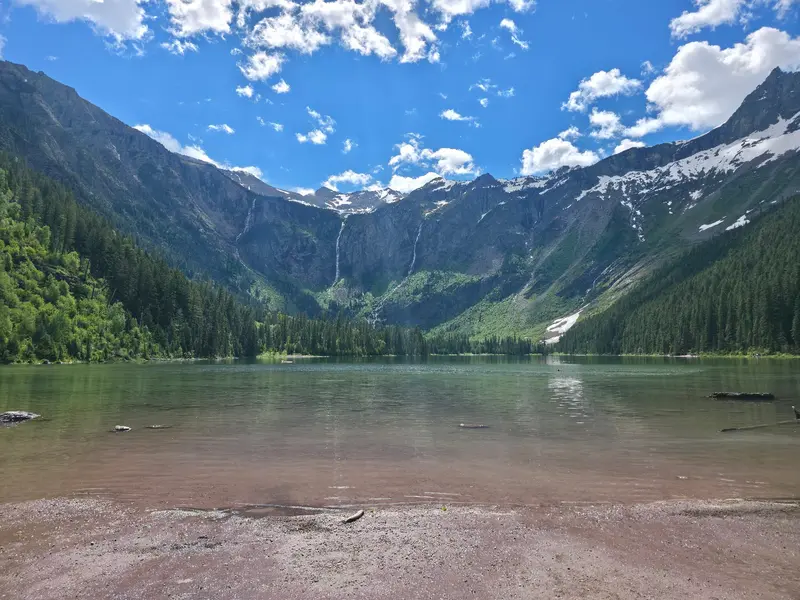
    From the Trail of the Cedars on the Going-to-the-Sun Road, the path leads through old cedar forest and along a gorge with waterfalls to Avalanche Lake, about 2.3 miles (3.7 km) one way. At the lake, you'll see steep rock faces with waterfalls. The parking lot at the trailhead is small, come early.
    Open in Google Maps
    Many Glacier Hotel
    Point of Interest

    4Many Glacier Hotel

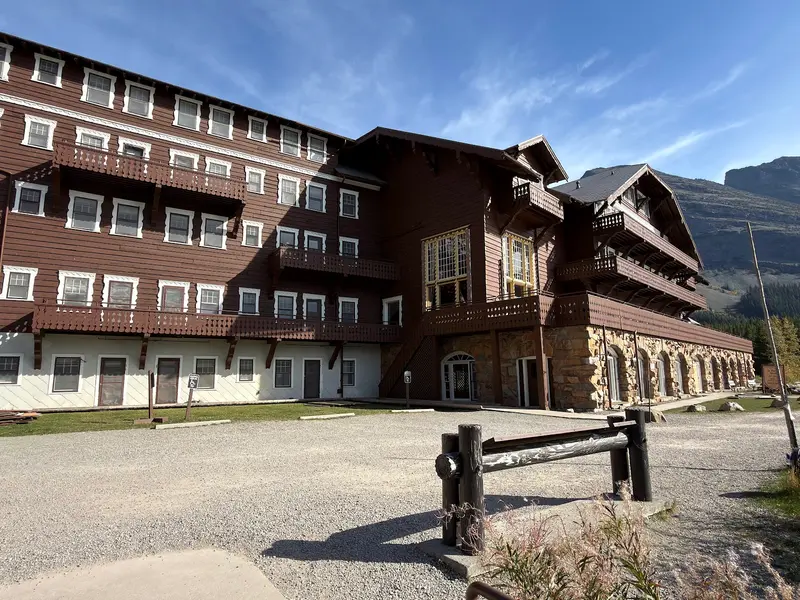
    The hotel, built in Swiss chalet style, was opened by the Great Northern Railway on July 4, 1915, on the east shore of Swiftcurrent Lake, near Swiftcurrent Falls. It is part of the National Historic Landmark of Great Northern buildings in the park and is open from early June to mid-September. You can reach Many Glacier via its own entrance on the east side of the park.
    Open in Google Maps

    Restaurants in Glacier National Park

    Culture and History

    Blackfeet and KootenaiOn its east side the park borders the Blackfeet Indian Reservation. In 1895 the Blackfeet Nation, under Chief White Calf, sold about 800,000 acres of mountain land to the U.S. government for $1.5 million, which set today's boundary. At the west end of Lake McDonald near Apgar, the Kootenai had a campsite where they held ceremonies.America's SwitzerlandThe park was established on May 11, 1910. In the 1910s the Great Northern Railway built Swiss-style hotels and chalets to market Glacier as “America's Switzerland,” among them Many Glacier Hotel and Glacier Park Lodge. The red 1930s touring buses known as “Red Jammers” still carry visitors today.Peace Park and World Heritage SiteIn 1932 Glacier and Canada's Waterton Lakes National Park became the world's first International Peace Park. The area has been a UNESCO World Heritage Site since 1995.

    Getting There and Getting Around

    The nearest airport is Glacier Park International near Kalispell, about 30 miles (48 km) west of the West Entrance. From Kalispell it is about 33 miles (53 km) on Highway 2 to West Glacier. Amtrak's Empire Builder stops year-round in West Glacier and Essex, and in summer also in East Glacier Park.Entrances: The West Entrance at West Glacier leads to Apgar, Lake McDonald and the Going-to-the-Sun Road. On the east side are the St. Mary, Many Glacier and Two Medicine entrances.Going-to-the-Sun Road: Without stops, allow about two hours end to end. The Logan Pass parking lot, 32 miles (51 km) from the West Entrance, is often full by sunrise.Shuttle: Whether a shuttle runs on the Going-to-the-Sun Road, which stops it serves and whether you need a ticket through Recreation.gov is set by the park each season. Current details are at nps.gov/glac.Wait times: At peak times, expect lines of up to 30 minutes at the West Entrance.

    Accommodations in Glacier National Park

    Find perfect stay in Glacier National Park

    Booking.com* (Affiliate link)
    Search Hotels
    Agoda* (Affiliate link)
    Search Hotels
    Airbnb
    Vacation Rentals

    * Affiliate link: if you book through it, we earn a small commission. The price stays the same for you.

    Campgrounds in Glacier National Park

    Find perfect campground in Glacier National Park

    Search via Google Maps
    Campgrounds nearby (15km)
    Camping.info
    Find Campgrounds
    Park4Night
    RV Parks & Camping

    Nearby

    Calgary

    Calgary

    Calgary is the largest city in Alberta and is located where the prairie transitions into the foothills of the Rocky Mountains. The city is known for the Calgary Stampede in July and, with its airport, is the main gateway to Banff, which lies approximately 130 km to the west.
    Kootenay National Park

    Kootenay National Park

    This diverse national park, east of the main chain of the Rockies, features dramatic canyons, colorful mineral springs and alpine meadows and is a UNESCO World Heritage site.
    Banff

    Banff

    A vibrant mountain town in the heart of Banff National Park, serving as a central hub for outdoor adventures, shopping, and relaxation.
    Banff National Park

    Banff National Park

    Founded in 1885, Banff National Park is Canada's oldest national park and part of the UNESCO World Heritage Rocky Mountain Parks. Covering approximately 6,600 km², it encompasses the town of Banff, Lake Louise, Moraine Lake, and the southern section of the Icefields Parkway.
    The Canadian Rockies

    The Canadian Rockies

    The Canadian Rockies are a majestic mountain range known for their breathtaking alpine scenery, turquoise lakes, and abundant wildlife. As a UNESCO World Heritage site, they offer unforgettable experiences for outdoor enthusiasts and nature lovers, from spectacular hikes to picturesque scenic drives.

    Sources & method

    • Photos: Wikimedia Commons, Google Maps. Each photo carries its credit.
    • Place data such as addresses and ratings comes from Google Maps.
    • The content is based on web research from public, traceable sources. How the content is made · The role of AI