ExploreTravel GuidesPlan a trip
    de|en
    All Places & RegionsAbout FernwehFAQPrivacy PolicyImprint
    ExploreTravel GuidesPlan a trip
    • Neighborhoods & highlights
    • Eat & drink
    • Food culture
    • Culture
    • Nightlife
    • Getting around
    • Accommodation
    • Plan trip
    • Nearby
    Köln

    Germany

    Köln

    CityCultureUNESCO

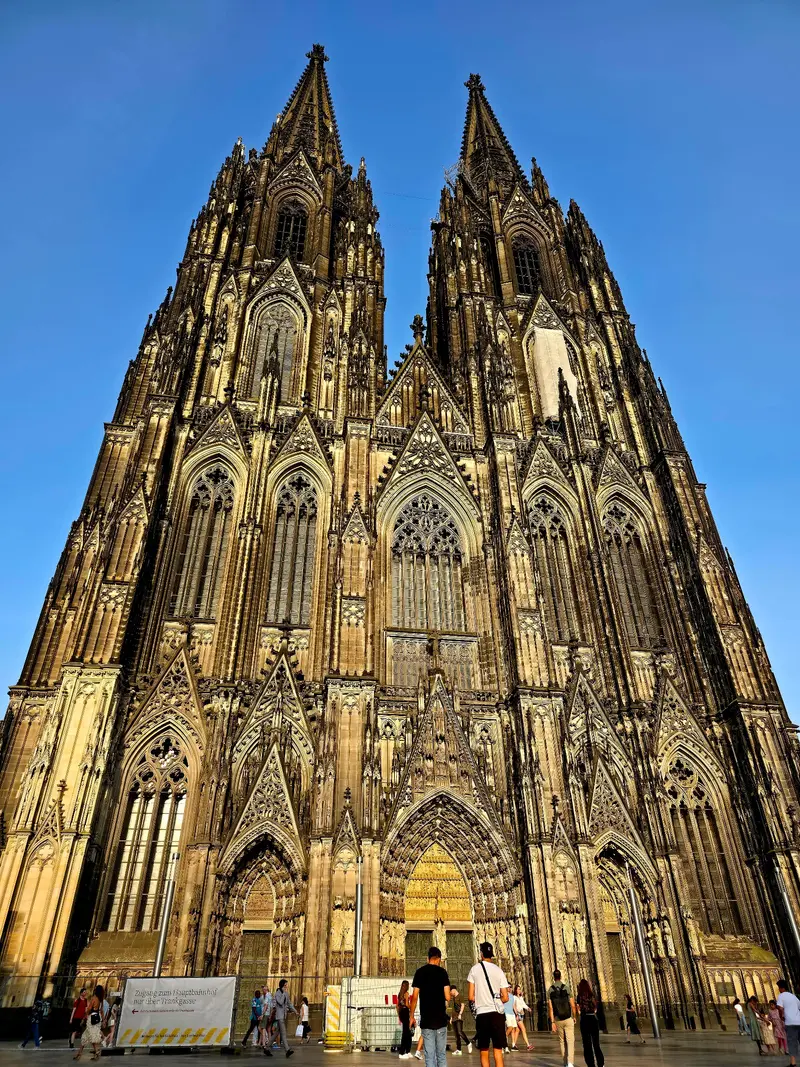
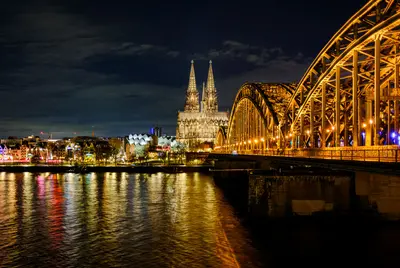
    With over a million inhabitants, Cologne is Germany's fourth-largest city and the center of the Rhineland. Its landmark is the Cathedral (Dom), which was built from 1248 to 1880 and whose spires rise a good 157 meters.

    1. Home
    2. Destinations
    3. Germany
    4. Cologne & Rhineland
    5. Köln
    With over a million inhabitants, Cologne is Germany's fourth-largest city and the center of the Rhineland. Its landmark is the Cathedral (Dom), which was built from 1248 to 1880 and whose spires rise a good 157 meters. Since 1996, it has been a UNESCO World Heritage site and preserves the relics of the Three Magi.Around the Dom, you'll find twelve Romanesque churches, museums like the Museum Ludwig with one of the world's largest Picasso collections, and the Old Town by the Rhine with its breweries. There, you drink Kölsch from a tall, slender glass, served by a Köbes. Between Weiberfastnacht (Women's Carnival) and Ash Wednesday, the city is dominated by Carnival.
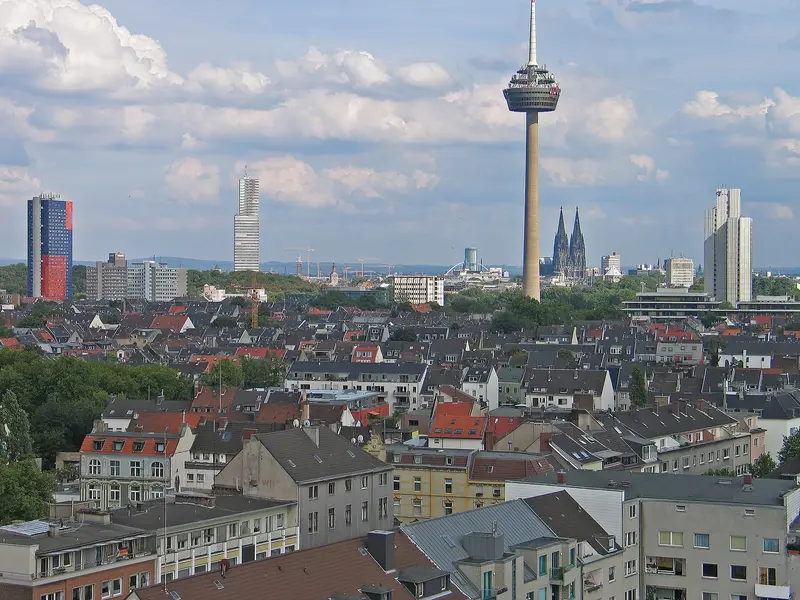
    Cologne has over a million residents, yet its main attractions are clustered together. The main station is right next to the Cathedral, and from there you can reach the Old Town in just a few minutes, nestled between Groß St. Martin, Rathausplatz, and Heumarkt. Following the Rhine southwards, you'll find the Rheinauhafen with its Kranhäuser and the Chocolate Museum. West of the Old Town, around Brüsseler Platz, lies the Belgian Quarter with its cafés and small shops. For nightlife, also worth exploring are the Kwartier Latäng on Zülpicher Straße, Ehrenfeld with its clubs, and the pubs of the Südstadt. And from Deutz, on the opposite side of the Rhine, you get views of the Old Town and Cathedral.
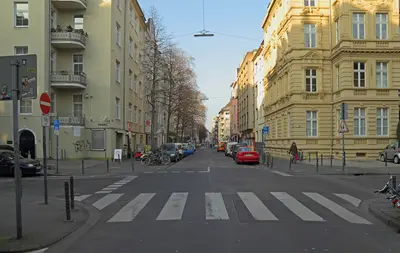
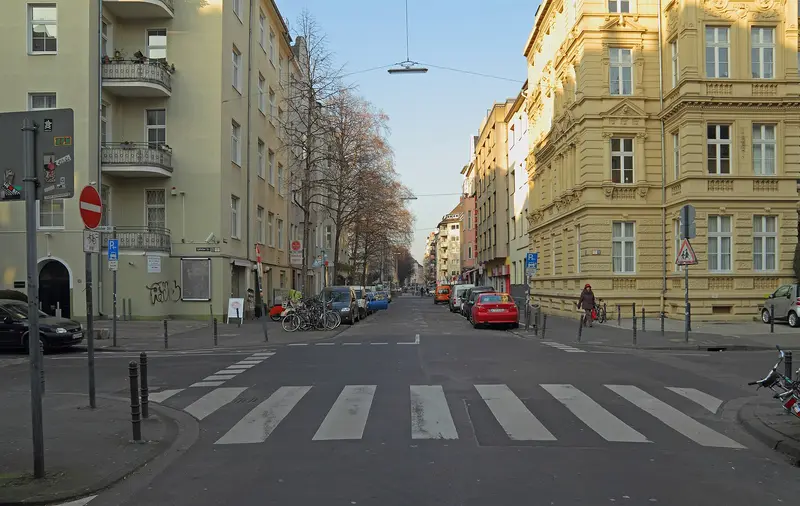
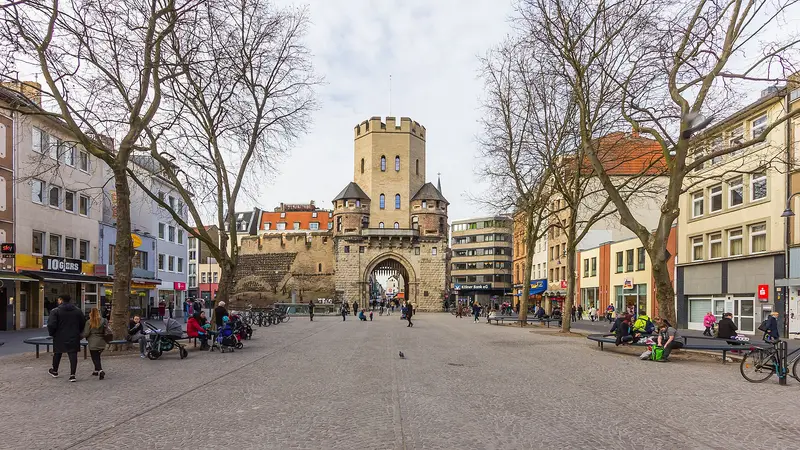
    The Belgian Quarter
    A.Savin / Wikimedia Commons / CC BY-SA 3.0

    District 1 of 4

    The Belgian Quarter

    The Belgisches Viertel is located in the southern part of Neustadt-Nord, west of the Ringe. After the demolition of the medieval city wall from 1881 onwards, construction began here, with the first houses built in 1884.

    The Belgian Quarter is located west of the Ringe in Neustadt-Nord and is one of Cologne's trendiest districts. Among houses built from 1884 onwards, you'll find boutiques, galleries, and cafés.

    Discover
    Kwartier Latäng
    Raimond Spekking / Wikimedia Commons / CC BY-SA 4.0

    District 2 of 4

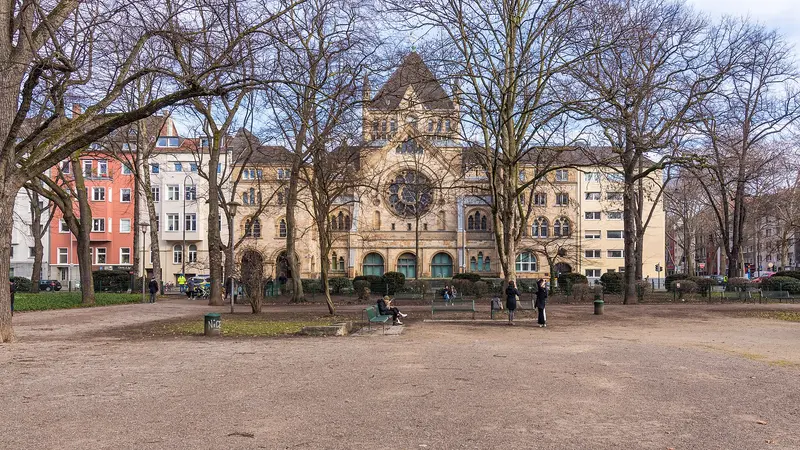
    Kwartier Latäng

    The Kwartier Latäng is Cologne's student quarter, its name alluding to Paris's Quartier Latin. It is located in Neustadt-Süd between the University, Synagogue, and Zülpicher Straße.

    Kwartier Latäng is the Cologne student district around Zülpicher Straße and Rathenauplatz. By day, the nearby university dominates the scene; in the evenings, pubs, bars, and clubs fill.

    Discover
    Südstadt
    Raimond Spekking / Wikimedia Commons / CC BY-SA 4.0

    District 3 of 4

    Südstadt

    Als Südstadt bezeichnen die Kölner den südlichen Teil des Severinsviertels zusammen mit dem östlichen Teil der Neustadt-Süd. Auf Kölsch heißt das Severinsviertel Vringsveedel, benannt ist es nach der Kirche St. Severin, die 1237 geweiht wurde.

    The Südstadt is a Veedel with a distinctly Kölsch character, with Severinstraße as its shopping street and Chlodwigplatz as a meeting point. Medieval buildings like the Severinstorburg, the Bayenturm, and St. Severin Church tell the story of the old city limits.

    Discover
    Ehrenfeld
    Superbass / Wikimedia Commons / CC BY-SA 3.0

    District 4 of 4

    Ehrenfeld

    Ehrenfeld originated as a settlement outside Cologne's gates from 1845, became an independent municipality in 1867, received town rights in 1879, and has belonged to Cologne since 1888.

    Ehrenfeld, independent 19th-century industrial city, became part of Cologne in 1888. Street art, small stages, and clubs in old factories and rail arches now define the district.

    Discover

    More districts in Köln

    Old City

    Old City

    Cologne's Old Town, on the left bank of the Rhine, is considered the city's birthplace: Even before the year 50, when Cologne was elevated to Colonia Claudia Ara Agrippinensium, there was a settlement here, and the Roman harbour was located around Groß St. Martin. It is bordered by the Rhine and the semi-circular Ringe, while the axis formed by Hahnenstraße, Neumarkt, and Cäcilienstraße separates Altstadt-Nord and Altstadt-Süd.Here you'll find Alter Markt and Heumarkt, the City Hall, and the alleys of the Martinsviertel with their breweries, as well as museums and Romanesque churches. The Hauptbahnhof, the city's most important railway hub, is itself located in Altstadt-Nord; from there you can walk.
    Deutz

    Deutz

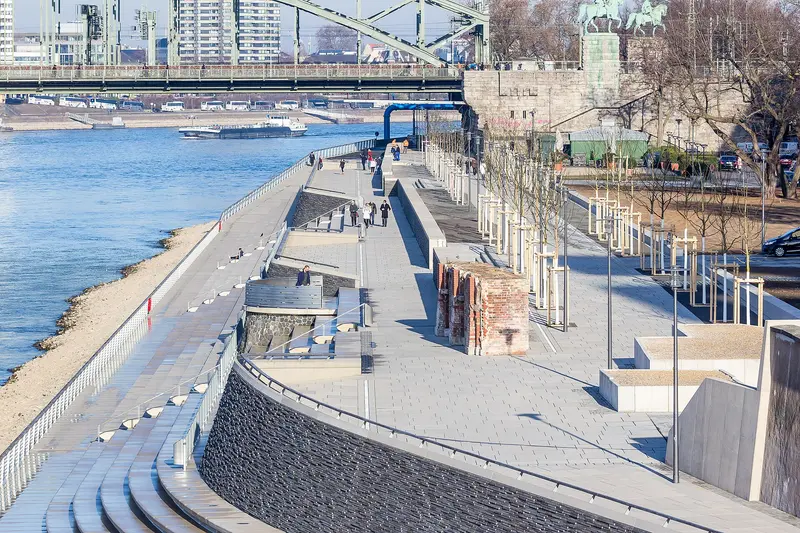
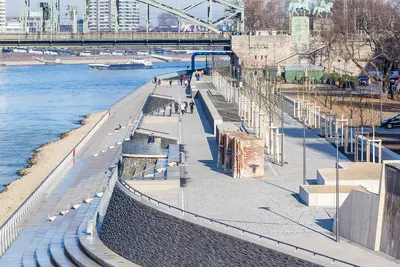
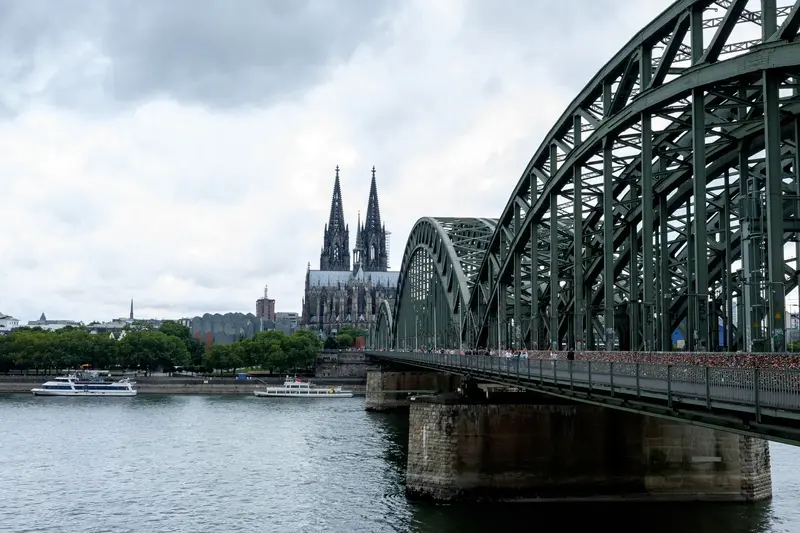
    Deutz is on the Rhine's right bank, opposite the Old Town. You cross from the Cathedral via the Hohenzollern Bridge's pedestrian and cycle path. Around 310, Emperor Constantine built the Divitia fort here to protect a Rhine bridge. The formerly independent town was incorporated into Cologne in 1888. Today, Koelnmesse (first halls 1922) and the Lanxess Arena define the district.At the Rheinboulevard, opened 2015, sit directly by the water facing the Old Town. North of it, the Rheinpark adjoins, and the KölnTriangle's 29th floor offers city views. Köln Messe/Deutz station serves many trains and tram lines 1, 3, 4, and 9.

    Sights in Köln

    Discover the most important sights and attractions

    Museum Ludwig
    Museum

    1Museum Ludwig

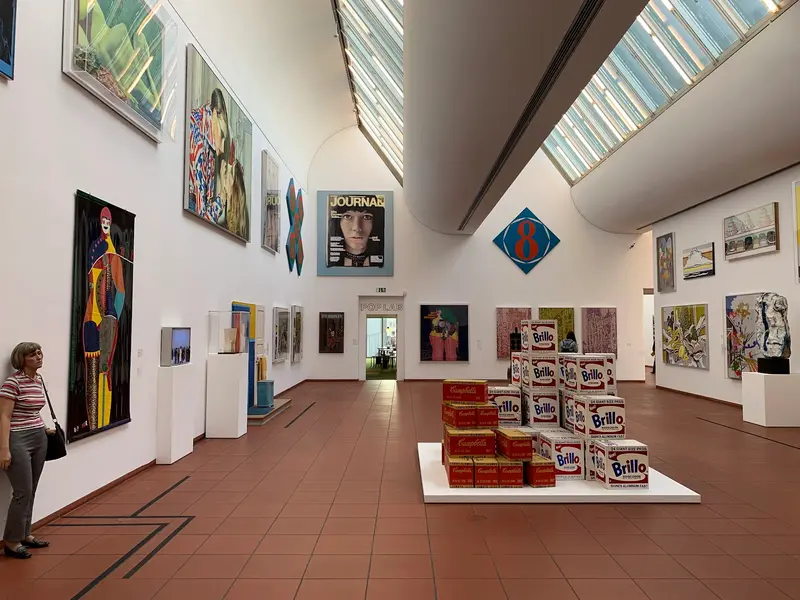
    The museum next to the Dom displays 20th and 21st-century art from the Irene and Peter Ludwig collection, including the world's third-largest Picasso collection. On the first Thursday of each month, it's open until 10 PM.
    Open in Google Maps
    Cologne Dom
    Museum

    2Cologne Dom

    Built 1248-1880, the Gothic cathedral's towers are a good 157m high. It houses the Three Kings' relics; UNESCO World Heritage since 1996. From July 1, 2026, interior visits cost €12 (adults); children up to 13 free. The South Tower can be climbed.
    Open in Google Maps
    Gt. St. Martin
    Church

    3Gt. St. Martin

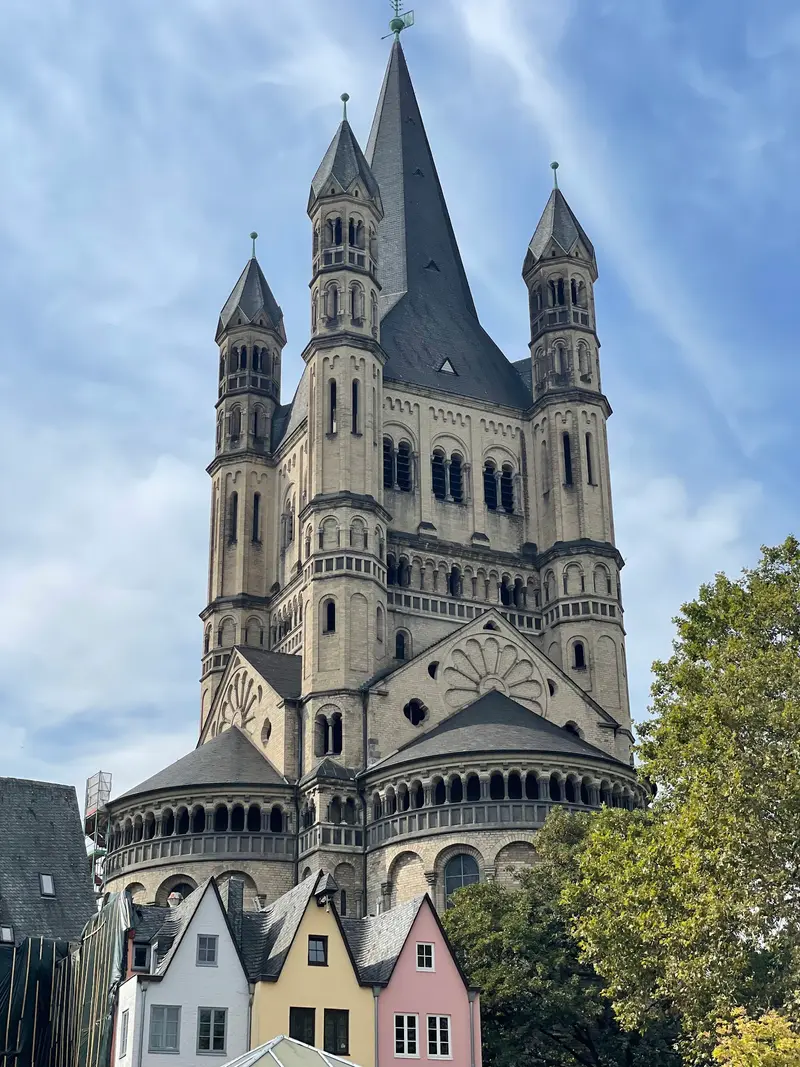
    The Romanesque church, with its striking tower, shapes the Old Town panorama on the Rhine and is one of the twelve great Romanesque churches within the former city wall.
    Open in Google Maps
    St. Gereon
    Church

    4St. Gereon

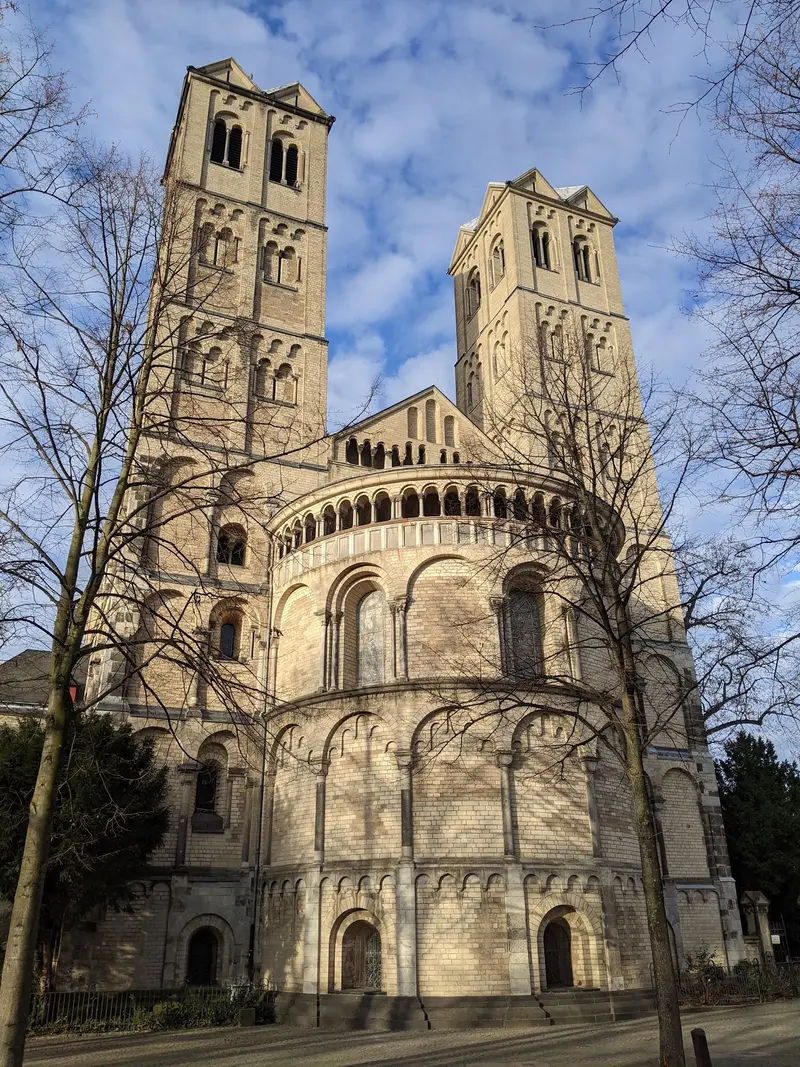
    One of the city's twelve Romanesque churches, known for its large ten-sided dome.
    Open in Google Maps
    Crane Houses in Rheinauhafen
    Attraction

    5Crane Houses in Rheinauhafen

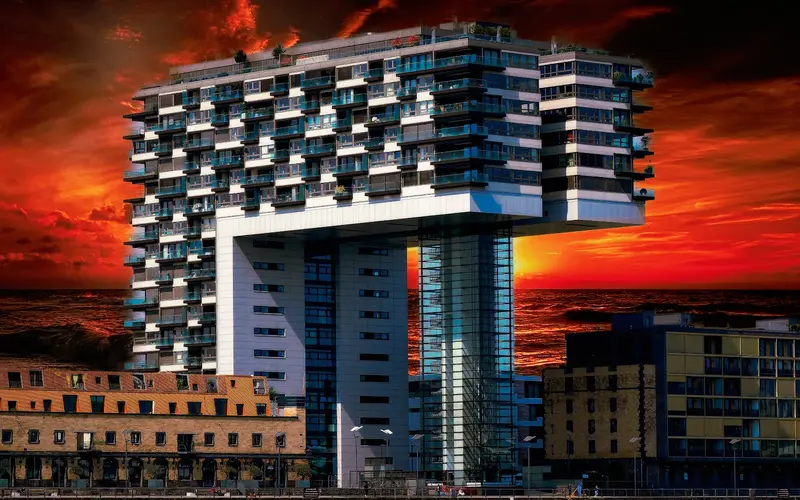
    After the port closed around 2000, a new district emerged on the Rhine. The Kranhäuser incorporate bridge construction techniques and are a popular photo motif. The Chocolate Museum is located at the northern tip of the Rheinauhafen.
    Open in Google Maps
    Flora and Botanical Garden
    Attraction

    6Flora and Botanical Garden

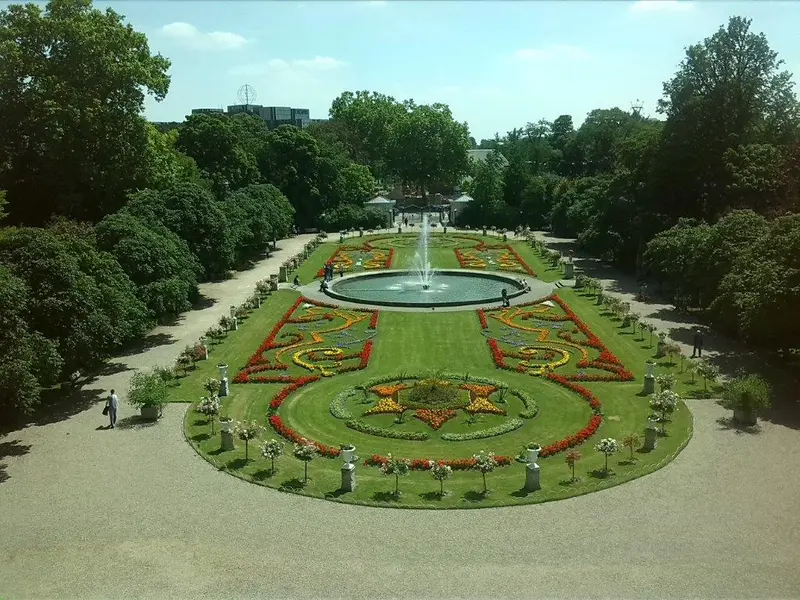
    The late 19th-century garden showcases over 10,000 plant species from all climate zones, plus greenhouses. A tranquil contrast to the city center.
    Open in Google Maps

    Restaurants in Köln

    1

    Takumi

    Simple Japanese eatery for ramen, small dishes, teriyaki, and sake.
    Show on Google Maps
    2

    Mandali

    Vegetarian spot with falafel, shawarma variations and Middle Eastern cuisine on Zülpicher Straße.
    Show on Google Maps
    3

    Lommerzheim

    Historic brewpub in Deutz on the right Rhine bank, with rustic decor, Rhenish cuisine and beer garden.
    Show on Google Maps
    4

    Max Stark

    Cozy vintage-style brewpub with traditional German cuisine paired with Kölsch and other drinks.
    Show on Google Maps
    5

    Coffeesaurus

    Café with its own coffee roastery, breakfast, baked goods, and seasonal, regional dishes in a relaxed atmosphere.
    Show on Google Maps

    Food & Drink in Cologne

    At the brewery restaurant, Rhenish cuisine classics are served with Kölsch.

    Kölsch

    The bright, top-fermented beer is served in a slender 0.2-liter Stange; the Köbes delivers it in a Kranz holding up to 19 glasses. Since 1997, Kölsch holds protected EU geographical indication status; per the Kölsch Convention, only Cologne-area beer may bear this name.

    Halve Hahn

    Despite the name, no chicken is involved: It's half a rye bun with butter, a thick slice of medium-aged Gouda, mustard, and a gherkin, sometimes with onion rings. One explanation traces the name back to a joke at a Cologne birthday party in 1877.

    Heaven & Earth

    Mashed potatoes with apple pieces: The apples come from the tree, so from heaven, the potatoes from the earth. In Cologne, fried Blutwurst and roasted onions are served with it.

    Rhenish Sauerbraten

    Originally made from horse meat, today mostly from beef, which marinates for several days in a sour marinade. The sauce is seasoned sweet and sour, for instance with beet syrup, apple syrup or Aachener Printen, and served with potato dumplings and applesauce or red cabbage.

    Reibekuchen

    In the Rhineland, they're called Kartoffelpuffer; in Cologne, also Riefkooche. Grated potatoes and onions are fried crisp in hot fat, served with applesauce or sugar beet syrup.

    Culture and Way of Life

    Cathedral and Romanesque ChurchesThe Cathedral's foundation stone was laid in 1248, but it was only completed in 1880. Gerhard Richter's 2007 window in the south transept comprises 11,263 squares in 72 colours. Within the former city wall, there are also twelve large Romanesque churches from the 10th to 12th centuries, including St. Gereon and Groß St. Martin.Brauhaus and KölschKölsch, a pale, top-fermented beer, is traditionally served in a slender 0.2-litre 'Stange'. At the Brauhaus, a 'Köbes' (the local term for waiter) serves you. The 1986 Kölsch Convention dictates what can be called Kölsch.CarnivalHighlights of the season are Weiberfastnacht on Thursday, the Rosenmontagszug, and the Nubbelverbrennung before Ash Wednesday.

    Nightlife

    1

    Früh am Dom Brewpub

    Traditional brewpub a few steps from the Dom, with Kölsch on tap and traditional cuisine.
    Show on Google Maps
    2

    Sünner Brewery in the Whale

    Brewhouse with its own Kölsch in a stepped-gable house in the Old Town.
    Show on Google Maps
    3

    Päffgen Brewery

    Quaint house brewery on Friesenstraße with old wood paneling and freshly tapped Kölsch.
    Show on Google Maps
    4

    Gaffel am Dom

    Traditional brewpub near the Cathedral with regional dishes, garden terrace, and live music.
    Show on Google Maps
    5

    Jameson Pub

    Irish Pub with beer, whiskey, hearty dishes, sports broadcasts and live entertainment.
    Show on Google Maps

    Arrival and Around

    Train: Köln Hauptbahnhof is right by the Dom. From here, long-distance trains run in many directions, as do regional and S-Bahn services to Bonn and Düsseldorf. Aachen is about a 50-minute regional train ride away.In the City: Explore the city center on foot. For longer journeys, use the Stadtbahn and buses.Dom Visits: From July 1, 2026, the interior will be chargeable for tourist visits. No visits are possible during services.

    Accommodations in Köln

    Find perfect stay in Köln

    Booking.com* (Affiliate link)
    Search Hotels
    Agoda* (Affiliate link)
    Search Hotels
    Airbnb
    Vacation Rentals

    * Affiliate link: if you book through it, we earn a small commission. The price stays the same for you.

    Campgrounds in Köln

    Find perfect campground in Köln

    Search via Google Maps
    Campgrounds nearby (15km)
    Camping.info
    Find Campgrounds
    Park4Night
    RV Parks & Camping

    Plan your trip to Köln

    Save places, build a route and plan your city trip, all in one place.

    1. 1
      1234

      Round trip

      12 days · 4 stops

      Saved

      Pick a route

      Pick a ready-made one or save places and plan your own.

      Open bookmarks
    2. 2

      Trip to Köln

      Live
      • 1Museum Ludwig3 days
      • 2Cologne Dom4 days
      • 3Gt. St. Martin5 days
      Budget

      Plan your trip

      The planner sorts stops, days and budget. Plan together in real time.

      Start trip planning
    3. 3
      9:41 No signal
      Available offline

      Use it on the road

      Download the guide to your phone and use it on site, even offline.

    Nearby

    Cologne & Rhineland

    Cologne & Rhineland

    In the Rhineland, some of Germany's most vibrant cities line the river. Cologne, with its Cathedral (a UNESCO World Heritage site since 1996) and twelve Romanesque churches, is the hub; upstream lies Bonn, Beethoven's birthplace and, until 1999, the seat of the Bundestag and government. Downstream follows Düsseldorf, the state capital of North Rhine-Westphalia.To the west, on the border with Belgium and the Netherlands, lies Aachen with Charlemagne's Cathedral, which became the first German monument on the World Heritage List in 1978. The cities are closely connected by rail, and an old rivalry runs between Cologne and Düsseldorf, most clearly evident in their beer: Kölsch here, Altbier there.
    Old City

    Old City

    Cologne's Old Town, on the left bank of the Rhine, is considered the city's birthplace: Even before the year 50, when Cologne was elevated to Colonia Claudia Ara Agrippinensium, there was a settlement here, and the Roman harbour was located around Groß St. Martin. It is bordered by the Rhine and the semi-circular Ringe, while the axis formed by Hahnenstraße, Neumarkt, and Cäcilienstraße separates Altstadt-Nord and Altstadt-Süd.Here you'll find Alter Markt and Heumarkt, the City Hall, and the alleys of the Martinsviertel with their breweries, as well as museums and Romanesque churches. The Hauptbahnhof, the city's most important railway hub, is itself located in Altstadt-Nord; from there you can walk.
    Deutz

    Deutz

    Deutz is on the Rhine's right bank, opposite the Old Town. You cross from the Cathedral via the Hohenzollern Bridge's pedestrian and cycle path. Around 310, Emperor Constantine built the Divitia fort here to protect a Rhine bridge. The formerly independent town was incorporated into Cologne in 1888. Today, Koelnmesse (first halls 1922) and the Lanxess Arena define the district.At the Rheinboulevard, opened 2015, sit directly by the water facing the Old Town. North of it, the Rheinpark adjoins, and the KölnTriangle's 29th floor offers city views. Köln Messe/Deutz station serves many trains and tram lines 1, 3, 4, and 9.
    The Belgian Quarter

    The Belgian Quarter

    The Belgisches Viertel is located in the southern part of Neustadt-Nord, west of the Ringe. After the demolition of the medieval city wall from 1881 onwards, construction began here, with the first houses built in 1884. The streets bear the names of Belgian cities and provinces like Antwerp, Brussels, Liège, Brabant, and Limburg, hence the district's name.Today, it is one of the city's trendy districts, featuring boutiques, galleries, goldsmiths, cafés, bars, and pubs; in the evenings, people gather at Brüsseler Platz. The district is bounded by Venloer Straße, Aachener Straße, and Moltkestraße, with Friesenplatz on the Ring forming the northeastern corner. From there, you're right in the middle of it in just a few steps.
    Kwartier Latäng

    Kwartier Latäng

    The Kwartier Latäng is Cologne's student quarter, its name alluding to Paris's Quartier Latin. It is located in Neustadt-Süd between the University, Synagogue, and Zülpicher Straße. Its focal point is Rathenauplatz, where streets converge in a star shape. It was originally called Königsplatz and was laid out during the city's expansion in the late 19th century.The heart of the district is Zülpicher Straße, with its snack bars, cocktail bars, pubs, and clubs; you'll also find plenty of gastronomy on Kyffhäuserstraße. During Karneval, young revellers gather here from the season's opening on 11.11. until the Nubbelverbrennung. During the day, the 'Mäuerchen' at Bahnhof Süd is a popular meeting point.