ExploreTravel GuidesPlan a trip
    de|en
    All Places & RegionsAbout FernwehFAQPrivacy PolicyImprint
    ExploreTravel GuidesPlan a trip
    • Places in the region
    • Round trips
    • Nearby
    Cologne & Rhineland

    Germany

    Cologne & Rhineland

    RegionCulture

    In the Rhineland, some of Germany's most vibrant cities line the river.

    1. Home
    2. Destinations
    3. Germany
    4. Cologne & Rhineland
    In the Rhineland, some of Germany's most vibrant cities line the river. Cologne, with its Cathedral (a UNESCO World Heritage site since 1996) and twelve Romanesque churches, is the hub; upstream lies Bonn, Beethoven's birthplace and, until 1999, the seat of the Bundestag and government. Downstream follows Düsseldorf, the state capital of North Rhine-Westphalia.To the west, on the border with Belgium and the Netherlands, lies Aachen with Charlemagne's Cathedral, which became the first German monument on the World Heritage List in 1978. The cities are closely connected by rail, and an old rivalry runs between Cologne and Düsseldorf, most clearly evident in their beer: Kölsch here, Altbier there.
    Aachen

    Place 1 of 4

    Aachen

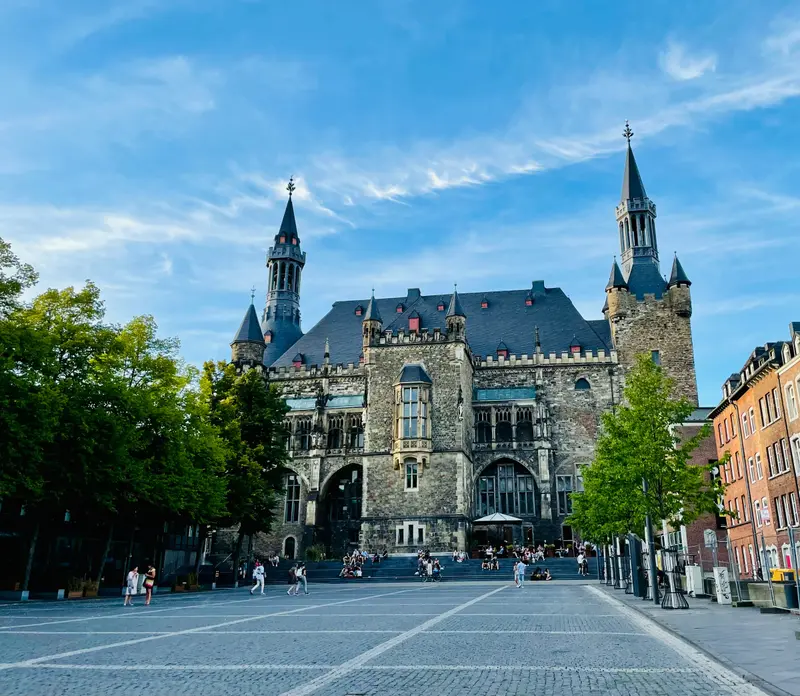
    Aachen is located in Germany's westernmost tip, bordering Belgium and the Netherlands. Around 800, Charlemagne had his Palatine Chapel built here, the core of today's Cathedral.

    Aachen has around 249,000 inhabitants and is located in the tri-border region with Belgium and the Netherlands. Its focal point is the Cathedral (Dom), a UNESCO World Heritage site since 1978: Charlemagne was buried here in 814, and between 936 and 1531, 30 kings were crowned.

    Discover
    Düsseldorf

    Place 2 of 4

    Düsseldorf

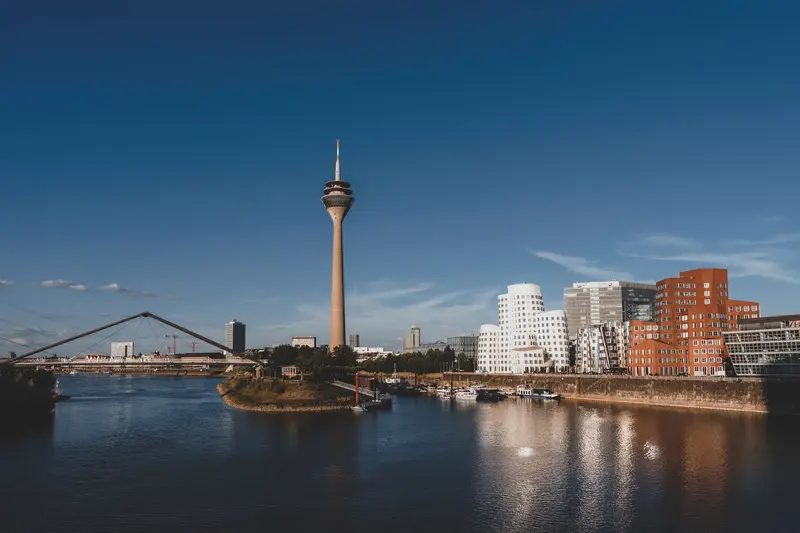
    Düsseldorf is the state capital of North Rhine-Westphalia and, with around 642,000 inhabitants, the second-largest city in the state.

    With around 642,000 inhabitants, Düsseldorf is the state capital of Nordrhein-Westfalen. The Old Town, with its many pubs, is known as the "longest bar in the world," serving top-fermented Altbier from house breweries.

    Discover
    Köln

    Place 3 of 4

    Köln

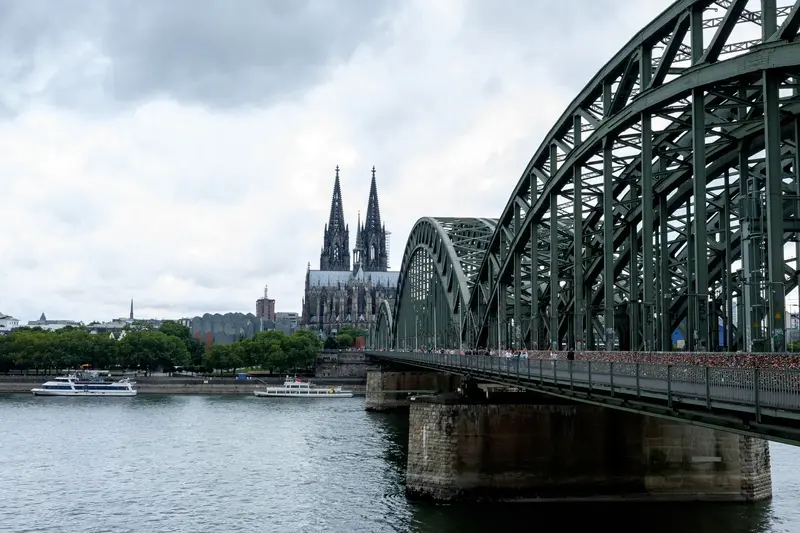
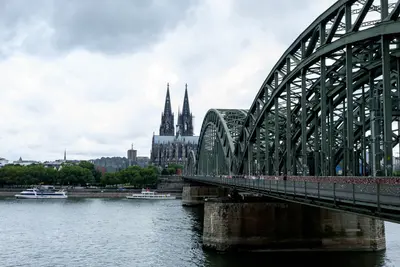
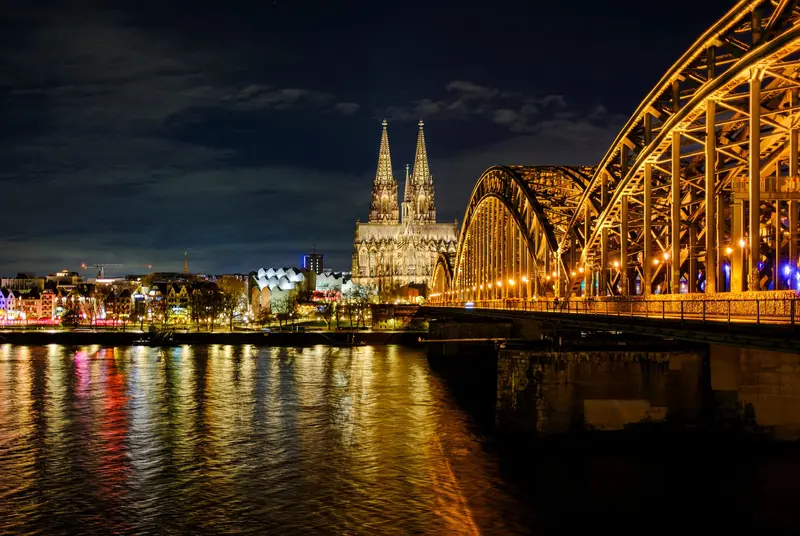
    With over a million inhabitants, Cologne is Germany's fourth-largest city and the center of the Rhineland. Its landmark is the Cathedral (Dom), which was built from 1248 to 1880 and whose spires rise a good 157 meters.

    Cologne has over a million residents, yet its main attractions are clustered together. The main station is right next to the Cathedral, and from there you can reach the Old Town in just a few minutes, nestled between Groß St. Martin, Rathausplatz, and Heumarkt.

    Discover
    Bonn

    Place 4 of 4

    Bonn

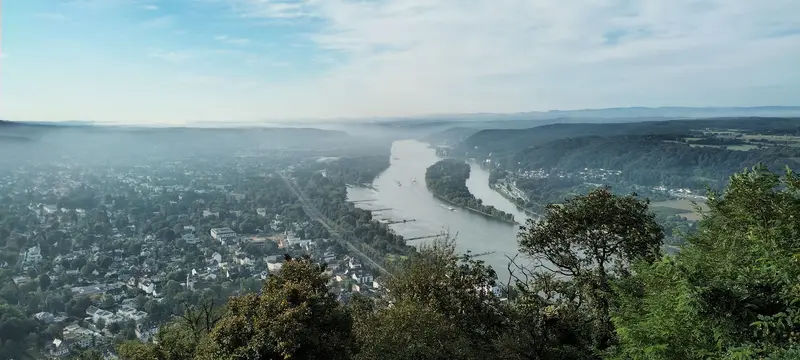
    Bonn is located on the Rhine south of Cologne and was the seat of the Bundestag, Bundesrat, and Federal Government from 1949 to 1999.

    Bonn has around 314,000 inhabitants and was from 1949 to 1999 the seat of the Bundestag, Bundesrat, and Federal Government. You can easily explore the compact city center around the Minster and Market on foot.

    Discover

    Round trips through this region

    Classics in 14 Days

    This 14-day journey combines Germany's great cities and landscapes from Berlin to Cologne. From the capital, via Dresden to Franconia, whose Bamberg Old Town is a UNESCO World Heritage site since 1993, and further via Nuremberg to Munich. Near Füssen, you visit Schloss Neuschwanstein; the route then leads via Heidelberg to Koblenz at the Moselle estuary, the north end of the Upper Middle Rhine Valley World Heritage site. The journey ends in Cologne; from the main station, you can reach Köln/Bonn Airport in 11 minutes by Regional-Express.

    14 Days
    10 stops
    Open jaw

    Rhein, Mosel and Castles

    In a week, you'll follow the Rhine from Cologne to Koblenz, then into the Upper Middle Rhine Valley, a UNESCO World Heritage site since 2002. From Bacharach, you'll explore the Loreley, a 132-meter high slate rock face near St. Goarshausen. Afterward, switch to the Moselle in Cochem with its Reichsburg, then hike to Eltz Castle, owned by the Eltz family for over 800 years. The journey ends in Trier, where Roman structures like Porta Nigra and Imperial Baths have been World Heritage sites since 1986.

    7 Days
    7 stops
    Open jaw

    Nearby

    Köln

    Köln

    With over a million inhabitants, Cologne is Germany's fourth-largest city and the center of the Rhineland. Its landmark is the Cathedral (Dom), which was built from 1248 to 1880 and whose spires rise a good 157 meters. Since 1996, it has been a UNESCO World Heritage site and preserves the relics of the Three Magi.Around the Dom, you'll find twelve Romanesque churches, museums like the Museum Ludwig with one of the world's largest Picasso collections, and the Old Town by the Rhine with its breweries. There, you drink Kölsch from a tall, slender glass, served by a Köbes. Between Weiberfastnacht (Women's Carnival) and Ash Wednesday, the city is dominated by Carnival.
    Old City

    Old City

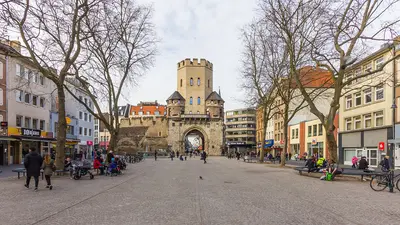
    Cologne's Old Town, on the left bank of the Rhine, is considered the city's birthplace: Even before the year 50, when Cologne was elevated to Colonia Claudia Ara Agrippinensium, there was a settlement here, and the Roman harbour was located around Groß St. Martin. It is bordered by the Rhine and the semi-circular Ringe, while the axis formed by Hahnenstraße, Neumarkt, and Cäcilienstraße separates Altstadt-Nord and Altstadt-Süd.Here you'll find Alter Markt and Heumarkt, the City Hall, and the alleys of the Martinsviertel with their breweries, as well as museums and Romanesque churches. The Hauptbahnhof, the city's most important railway hub, is itself located in Altstadt-Nord; from there you can walk.
    Deutz

    Deutz

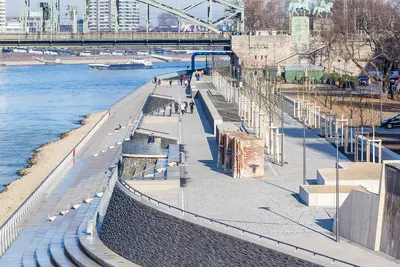
    Deutz is on the Rhine's right bank, opposite the Old Town. You cross from the Cathedral via the Hohenzollern Bridge's pedestrian and cycle path. Around 310, Emperor Constantine built the Divitia fort here to protect a Rhine bridge. The formerly independent town was incorporated into Cologne in 1888. Today, Koelnmesse (first halls 1922) and the Lanxess Arena define the district.At the Rheinboulevard, opened 2015, sit directly by the water facing the Old Town. North of it, the Rheinpark adjoins, and the KölnTriangle's 29th floor offers city views. Köln Messe/Deutz station serves many trains and tram lines 1, 3, 4, and 9.
    Südstadt

    Südstadt

    Als Südstadt bezeichnen die Kölner den südlichen Teil des Severinsviertels zusammen mit dem östlichen Teil der Neustadt-Süd. Auf Kölsch heißt das Severinsviertel Vringsveedel, benannt ist es nach der Kirche St. Severin, die 1237 geweiht wurde. Bis 1881 begrenzte die mittelalterliche Stadtmauer das Viertel, erhalten sind unter anderem die Severinstorburg und der Bayenturm am Rhein.Die Severinstraße ist die Einkaufsstraße des Viertels, seit den 1970er-Jahren wuchs hier eine lebendige Kneipenszene. Am Chlodwigplatz vor dem Severinstor findest du viele Kneipen und Restaurants, außerdem ist das Viertel traditionell Start- oder Zielpunkt des Rosenmontagszugs. Mit den Linien 15, 16 und 17 fährst du bis zur Haltestelle Chlodwigplatz.
    The Belgian Quarter

    The Belgian Quarter

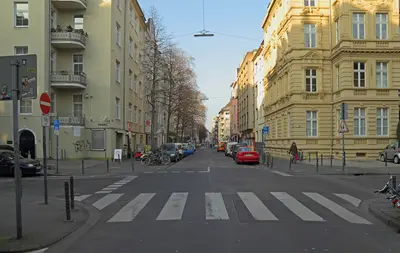
    The Belgisches Viertel is located in the southern part of Neustadt-Nord, west of the Ringe. After the demolition of the medieval city wall from 1881 onwards, construction began here, with the first houses built in 1884. The streets bear the names of Belgian cities and provinces like Antwerp, Brussels, Liège, Brabant, and Limburg, hence the district's name.Today, it is one of the city's trendy districts, featuring boutiques, galleries, goldsmiths, cafés, bars, and pubs; in the evenings, people gather at Brüsseler Platz. The district is bounded by Venloer Straße, Aachener Straße, and Moltkestraße, with Friesenplatz on the Ring forming the northeastern corner. From there, you're right in the middle of it in just a few steps.