ExploreTravel GuidesPlan a trip
    de|en
    All Places & RegionsAbout FernwehFAQPrivacy PolicyImprint
    ExploreTravel GuidesPlan a trip
    • Neighborhoods & highlights
    • Eat & drink
    • Culture
    • Getting around
    • Accommodation
    • Plan trip
    • Nearby
    Bonn

    Germany

    Bonn

    City

    Bonn is located on the Rhine south of Cologne and was the seat of the Bundestag, Bundesrat, and Federal Government from 1949 to 1999.

    1. Home
    2. Destinations
    3. Germany
    4. Cologne & Rhineland
    5. Bonn
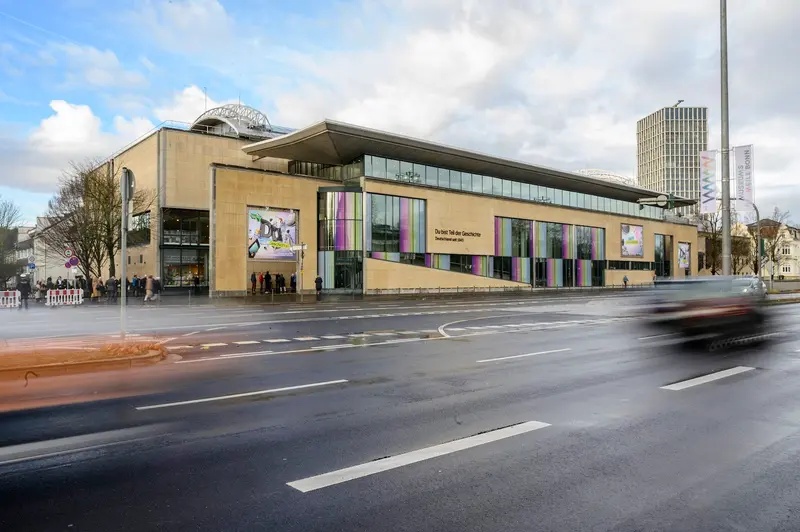
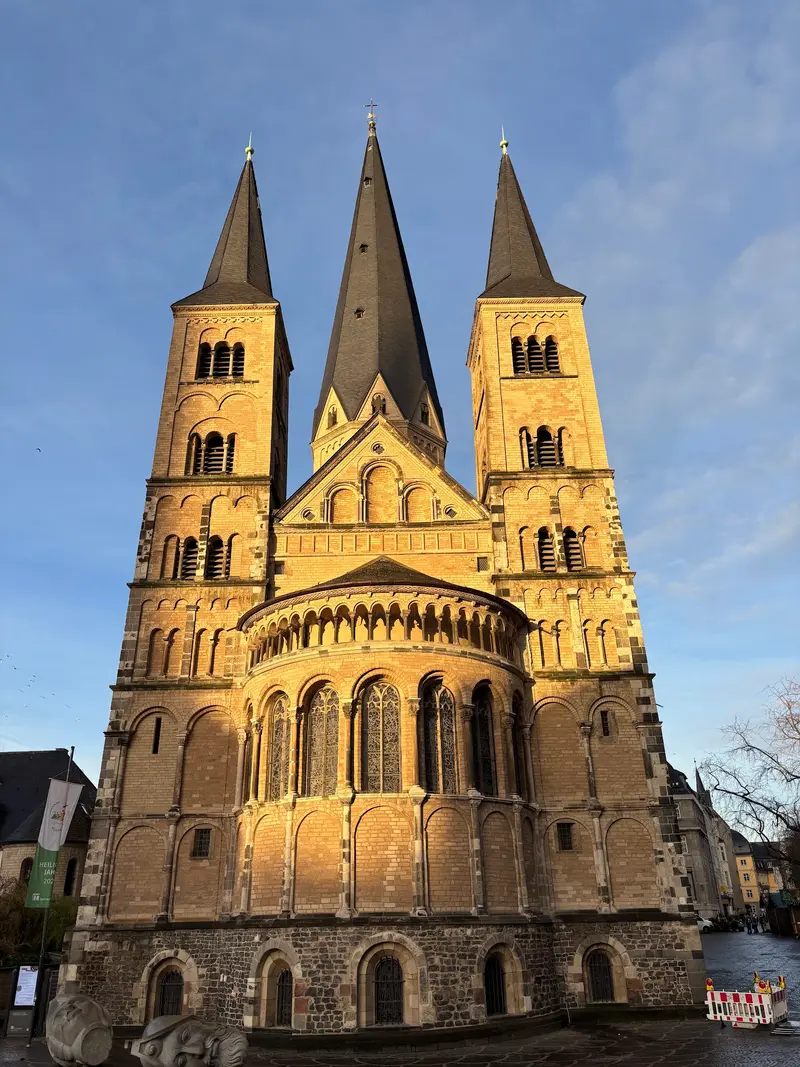
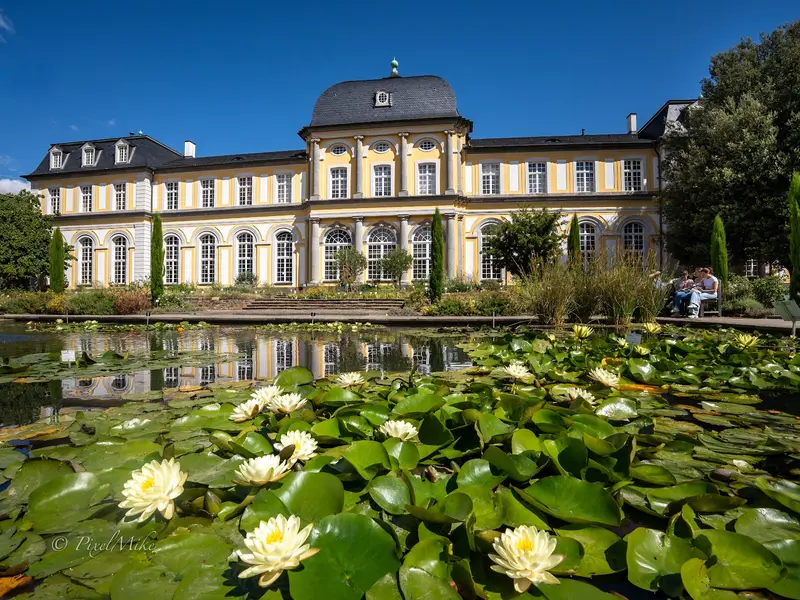
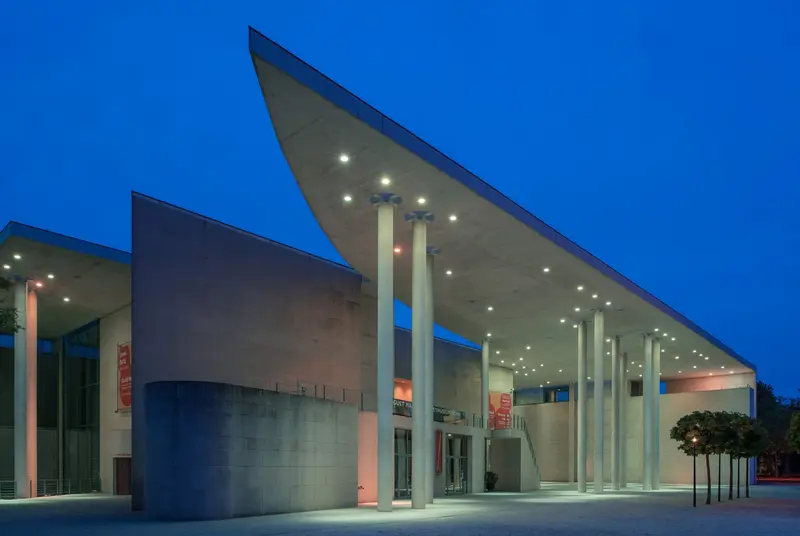
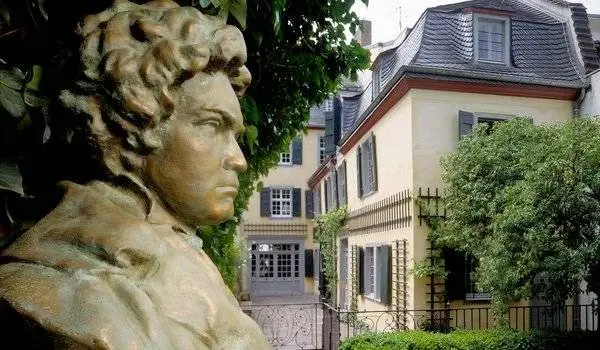
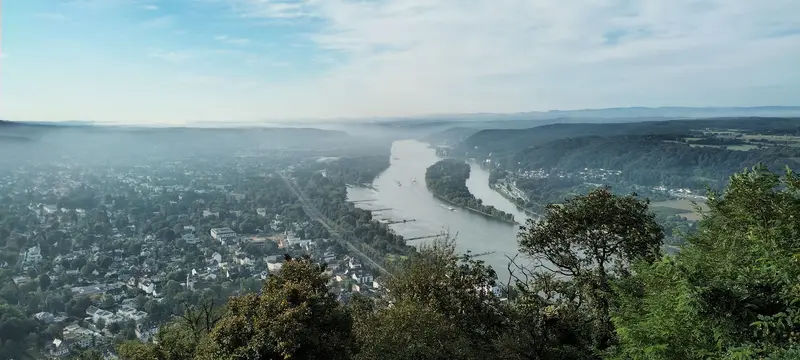
    Bonn is located on the Rhine south of Cologne and was the seat of the Bundestag, Bundesrat, and Federal Government from 1949 to 1999. This city of approximately 314,000 residents is also the birthplace of Ludwig van Beethoven: He was born in December 1770 at the Beethoven-Haus on Bonngasse, which today houses the world's largest Beethoven collection.Along the Museumsmeile, the Haus der Geschichte and the Kunstmuseum tell the story of the Federal Republic and 20th-century art. In the city center stand the Minster and Poppelsdorfer Palace, which today belongs to the university. A popular excursion leads to Drachenfels in the Siebengebirge.
    Bonn has around 314,000 inhabitants and was from 1949 to 1999 the seat of the Bundestag, Bundesrat, and Federal Government. You can easily explore the compact city center around the Minster and Market on foot. Ludwig van Beethoven was born in December 1770 at Bonngasse 20; today, the Beethoven-Haus stands there with the largest Beethoven collection. South of the center, along the Museumsmeile, the Haus der Geschichte and the Kunstmuseum are lined up. For an excursion, the Drachenfels in the Siebengebirge on the other side of the Rhine is worth visiting.

    Sights in Bonn

    Discover the most important sights and attractions

    Beethoven House
    Museum

    1Beethoven House

    Ludwig van Beethoven was born in this house at Bonngasse 20 in December 1770. The museum, located here since 1893, holds the world's largest Beethoven collection, including manuscripts, ear trumpets, and his last piano.
    Open in Google Maps
    Center for History
    Museum

    2Center for History

    The museum on the Museum Mile tells the story of Germany after 1945, fitting for the former capital of the Federal Republic.
    Open in Google Maps
    Bonn Minster
    Church

    3Bonn Minster

    The main Catholic church downtown stands on foundations around a thousand years old and is a landmark of Bonn.
    Open in Google Maps
    Poppelsdorfer Palace
    Castle

    4Poppelsdorfer Palace

    The 18th-century castle now belongs to the University of Bonn and is located by the Botanic Garden. Inside, you'll find a mineralogical museum.
    Open in Google Maps
    Art Museum Bonn
    Museum

    5Art Museum Bonn

    Art museum on the Museum Mile in a concrete landmark, featuring 20th-century art and the Rhenish Expressionists.
    Open in Google Maps

    Restaurants in Bonn

    1

    Royal India

    Indian restaurant on Kesselgasse, right in the middle of Bonn city center.
    Show on Google Maps
    2

    Hanedan

    Turkish restaurant on Bornheimer Straße in Bonner Weststadt.
    Show on Google Maps
    3

    Mr and Mrs Humus

    Bright cafe with predominantly vegetarian dishes such as flatbread, hummus, and falafel.
    Show on Google Maps

    Culture in Bonn

    Bonn is shaped by two legacies: Beethoven and the Bonner Republik. The Beethoven-Haus has been a museum since 1893, housing the largest collection dedicated to the composer. The Haus der Geschichte on the Museumsmeile shows how the Federal Republic was governed from here from 1949 to 1999. Additionally, you'll find the Bonner Münster in the Old Town and Poppelsdorfer Schloss, whose adjacent park has been the University's Botanical Garden since 1818.

    On the road in Bonn

    The Old Town is small enough for walks. Cologne is quickly reached by regional train. Stadtbahnlinie 66 runs to Königswinter at the foot of the Drachenfels via Bonn Hbf. From there, the Drachenfelsbahn (an 1883 rack railway) takes you about 1.6 km to the summit. It runs from January to mid-November.

    Accommodations in Bonn

    Find perfect stay in Bonn

    Booking.com* (Affiliate link)
    Search Hotels
    Agoda* (Affiliate link)
    Search Hotels
    Airbnb
    Vacation Rentals

    * Affiliate link: if you book through it, we earn a small commission. The price stays the same for you.

    Campgrounds in Bonn

    Find perfect campground in Bonn

    Search via Google Maps
    Campgrounds nearby (15km)
    Camping.info
    Find Campgrounds
    Park4Night
    RV Parks & Camping

    Plan your trip to Bonn

    Save places, build a route and plan your city trip, all in one place.

    1. 1
      1234

      Round trip

      12 days · 4 stops

      Saved

      Pick a route

      Pick a ready-made one or save places and plan your own.

      Open bookmarks
    2. 2

      Trip to Bonn

      Live
      • 1Beethoven House3 days
      • 2Center for History4 days
      • 3Bonn Minster5 days
      Budget

      Plan your trip

      The planner sorts stops, days and budget. Plan together in real time.

      Start trip planning
    3. 3
      9:41 No signal
      Available offline

      Use it on the road

      Download the guide to your phone and use it on site, even offline.

    Nearby

    Südstadt

    Südstadt

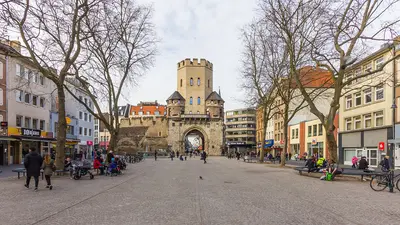
    Als Südstadt bezeichnen die Kölner den südlichen Teil des Severinsviertels zusammen mit dem östlichen Teil der Neustadt-Süd. Auf Kölsch heißt das Severinsviertel Vringsveedel, benannt ist es nach der Kirche St. Severin, die 1237 geweiht wurde. Bis 1881 begrenzte die mittelalterliche Stadtmauer das Viertel, erhalten sind unter anderem die Severinstorburg und der Bayenturm am Rhein.Die Severinstraße ist die Einkaufsstraße des Viertels, seit den 1970er-Jahren wuchs hier eine lebendige Kneipenszene. Am Chlodwigplatz vor dem Severinstor findest du viele Kneipen und Restaurants, außerdem ist das Viertel traditionell Start- oder Zielpunkt des Rosenmontagszugs. Mit den Linien 15, 16 und 17 fährst du bis zur Haltestelle Chlodwigplatz.
    Deutz

    Deutz

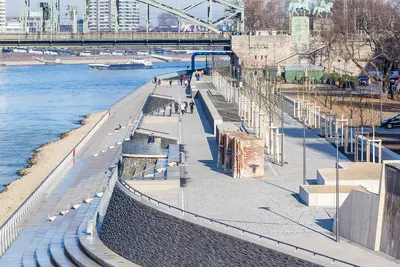
    Deutz is on the Rhine's right bank, opposite the Old Town. You cross from the Cathedral via the Hohenzollern Bridge's pedestrian and cycle path. Around 310, Emperor Constantine built the Divitia fort here to protect a Rhine bridge. The formerly independent town was incorporated into Cologne in 1888. Today, Koelnmesse (first halls 1922) and the Lanxess Arena define the district.At the Rheinboulevard, opened 2015, sit directly by the water facing the Old Town. North of it, the Rheinpark adjoins, and the KölnTriangle's 29th floor offers city views. Köln Messe/Deutz station serves many trains and tram lines 1, 3, 4, and 9.
    Kwartier Latäng

    Kwartier Latäng

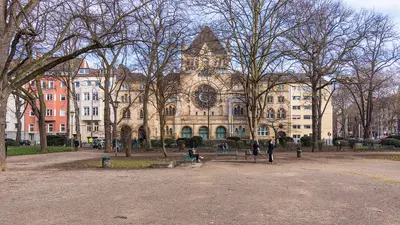
    The Kwartier Latäng is Cologne's student quarter, its name alluding to Paris's Quartier Latin. It is located in Neustadt-Süd between the University, Synagogue, and Zülpicher Straße. Its focal point is Rathenauplatz, where streets converge in a star shape. It was originally called Königsplatz and was laid out during the city's expansion in the late 19th century.The heart of the district is Zülpicher Straße, with its snack bars, cocktail bars, pubs, and clubs; you'll also find plenty of gastronomy on Kyffhäuserstraße. During Karneval, young revellers gather here from the season's opening on 11.11. until the Nubbelverbrennung. During the day, the 'Mäuerchen' at Bahnhof Süd is a popular meeting point.
    Old City

    Old City

    Cologne's Old Town, on the left bank of the Rhine, is considered the city's birthplace: Even before the year 50, when Cologne was elevated to Colonia Claudia Ara Agrippinensium, there was a settlement here, and the Roman harbour was located around Groß St. Martin. It is bordered by the Rhine and the semi-circular Ringe, while the axis formed by Hahnenstraße, Neumarkt, and Cäcilienstraße separates Altstadt-Nord and Altstadt-Süd.Here you'll find Alter Markt and Heumarkt, the City Hall, and the alleys of the Martinsviertel with their breweries, as well as museums and Romanesque churches. The Hauptbahnhof, the city's most important railway hub, is itself located in Altstadt-Nord; from there you can walk.
    Cologne & Rhineland

    Cologne & Rhineland

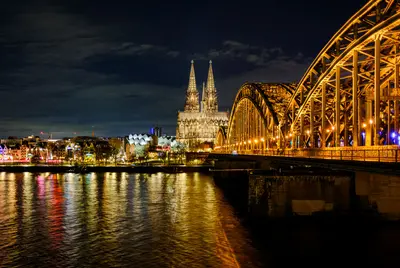
    In the Rhineland, some of Germany's most vibrant cities line the river. Cologne, with its Cathedral (a UNESCO World Heritage site since 1996) and twelve Romanesque churches, is the hub; upstream lies Bonn, Beethoven's birthplace and, until 1999, the seat of the Bundestag and government. Downstream follows Düsseldorf, the state capital of North Rhine-Westphalia.To the west, on the border with Belgium and the Netherlands, lies Aachen with Charlemagne's Cathedral, which became the first German monument on the World Heritage List in 1978. The cities are closely connected by rail, and an old rivalry runs between Cologne and Düsseldorf, most clearly evident in their beer: Kölsch here, Altbier there.