ExploreTravel GuidesPlan a trip
    de|en
    All Places & RegionsAbout FernwehFAQPrivacy PolicyImprint
    ExploreTravel GuidesPlan a trip
    • Neighborhoods & highlights
    • Eat & drink
    • Nightlife
    • Accommodation
    • Plan trip
    • Nearby
    Stuttgart-North

    Germany

    Stuttgart-North

    City

    Stuttgart-Nord stretches from Doggenburg over Gähkopf and Killesberg to Pragsattel.

    1. Home
    2. Destinations
    3. Germany
    4. Stuttgart
    5. Stuttgart-North
    Stuttgart-Nord stretches from Doggenburg over Gähkopf and Killesberg to Pragsattel. The biggest draw is Höhenpark Killesberg: created for the 1939 Reichsgartenschau on a former quarry, it later hosted the Deutsche Gartenschau in 1950 and the Internationale Gartenbauausstellung in 1993. The Weißenhofsiedlung, also in the district, was built for the 1927 Werkbund Exhibition “Die Wohnung”; its Le Corbusier-designed houses have been a UNESCO World Heritage site since 2016.In the park, ride the Killesbergbahn – a park railway operating since 1939, running steam locomotives on Sundays and public holidays. Visit goats, ponies, and alpacas, or climb the approximately 40-meter-high Killesberg Tower. Panoramic views in all directions are offered from the Bismarckturm on Gähkopf, the district's highest point. The U5 Stadtbahn stops at Killesberg station; bus routes 43 and 44 also operate here.
    Stuttgart-North stretches from the valley basin up to Killesberg. There you'll find Killesberg Park with a park railway, animal enclosures, and the Killesberg Tower. In the district, you'll also find the Weißenhof Estate from 1927 and the Bismarck Tower with panoramic views. The U5 light rail takes you to the Killesberg stop.

    Sights in Stuttgart-North

    Discover the most important sights and attractions

    Killesberg Hilltop Park
    Park

    1Killesberg Hilltop Park

    The approximately 50-hectare park was created for the Reich Garden Show in 1939 on a disused quarry. Here runs the Killesbergbahn, there are animal enclosures, an elevated outdoor pool from 1938 and the Killesberg Tower.
    Open in Google Maps
    Killesbergturm
    Attraction

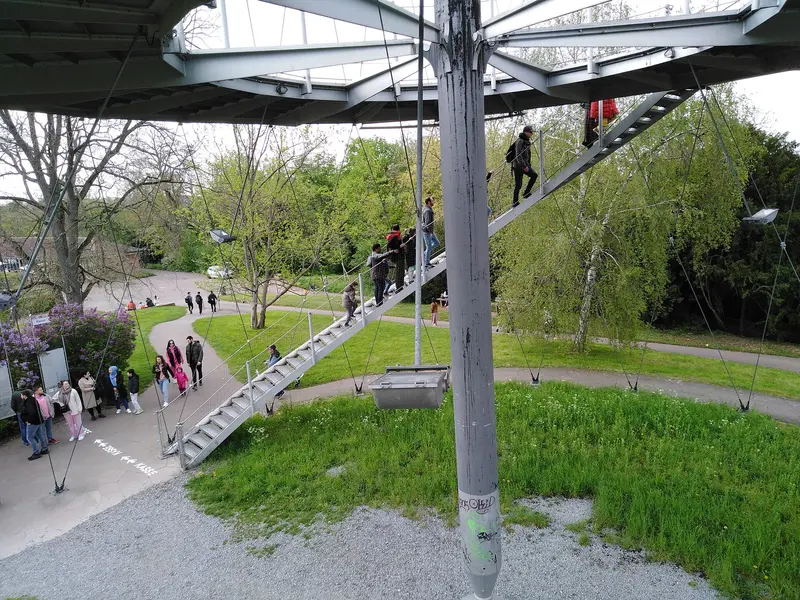
    2Killesbergturm

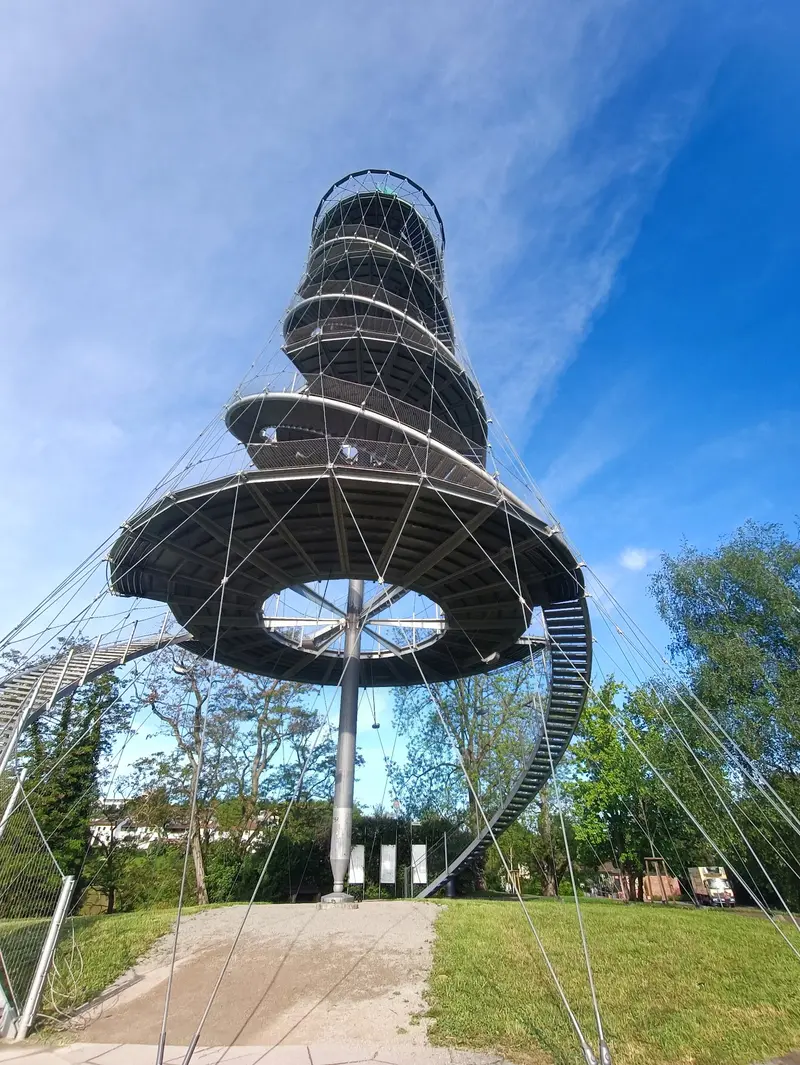
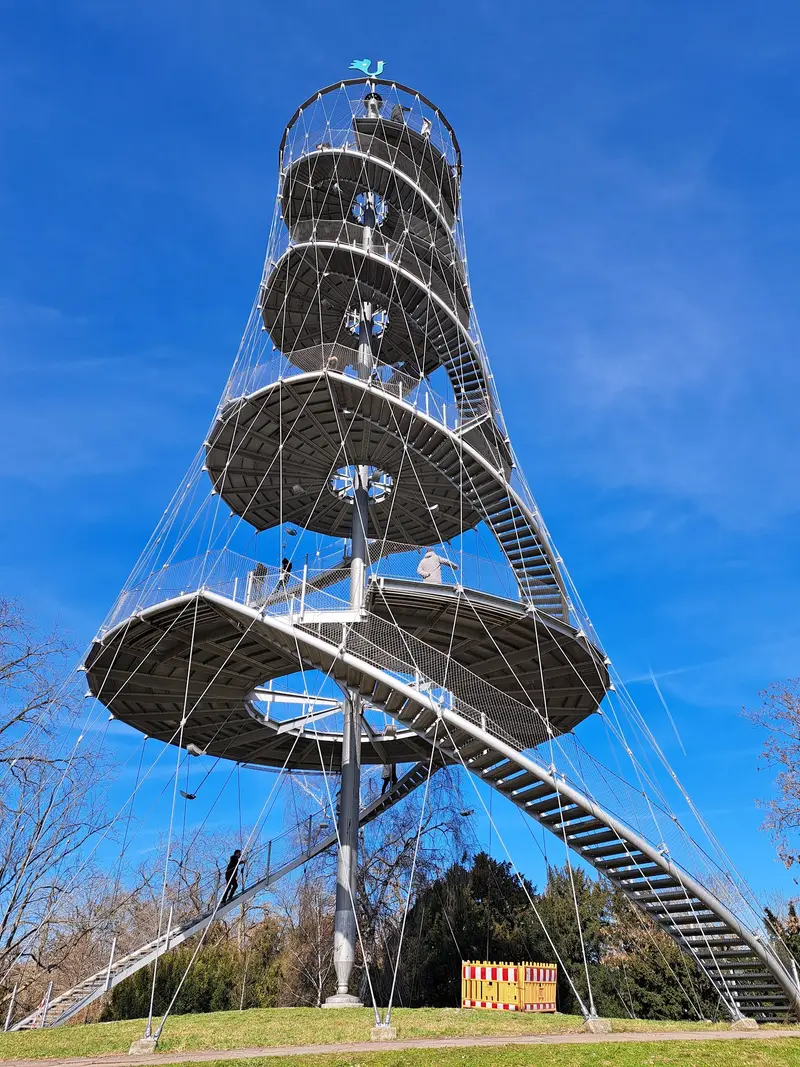
    Jörg Schlaich's viewing tower, opened in 2001, features a 43-rope net and is 40.4 meters tall (without weathervane). Four platforms are reached via stairs; the highest is at 31 meters. There is no elevator.
    Open in Google Maps
    Prague Cemetery
    Attraction

    3Prague Cemetery

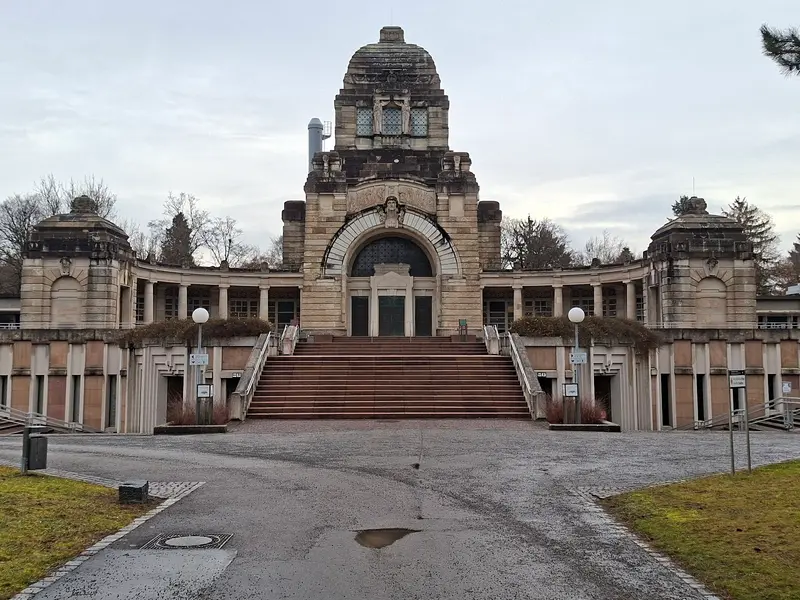
    Opened in 1873, the approx. 20-hectare cemetery is Stuttgart's third largest. Its Art Nouveau ceremonial hall (1905-1907) is where Eduard Mörike and Ferdinand von Zeppelin, among others, are buried.
    Open in Google Maps

    Restaurants in Stuttgart-North

    1

    Restaurant Wine Bar Killesberg

    Restaurant with wine tavern, café and beer garden by the Killesberg Höhenfreibad, serving German and French cuisine.
    Show on Google Maps
    2

    Restaurant Weissenhof

    An elegant restaurant that creatively prepares Austrian and Swabian dishes from regional products.
    Show on Google Maps

    Nightlife

    1

    Biergarten Killesberg

    Beer garden with drinks and food on Stresemannstraße by Höhenpark Killesberg.
    Show on Google Maps
    2

    Central Signal Box

    Bar and pub on the Nordbahnhofstraße.
    Show on Google Maps

    Accommodations in Stuttgart-North

    Find perfect stay in Stuttgart-North

    Booking.com* (Affiliate link)
    Search Hotels
    Agoda* (Affiliate link)
    Search Hotels
    Airbnb
    Vacation Rentals

    * Affiliate link: if you book through it, we earn a small commission. The price stays the same for you.

    Campgrounds in Stuttgart-North

    Find perfect campground in Stuttgart-North

    Search via Google Maps
    Campgrounds nearby (15km)
    Camping.info
    Find Campgrounds
    Park4Night
    RV Parks & Camping

    Plan your trip to Stuttgart-North

    Save places, build a route and plan your city trip, all in one place.

    1. 1
      1234

      Round trip

      12 days · 4 stops

      Saved

      Pick a route

      Pick a ready-made one or save places and plan your own.

      Open bookmarks
    2. 2

      Trip to Stuttgart-North

      Live
      • 1Killesberg Hilltop Park3 days
      • 2Killesbergturm4 days
      • 3Prague Cemetery5 days
      Budget

      Plan your trip

      The planner sorts stops, days and budget. Plan together in real time.

      Start trip planning
    3. 3
      9:41 No signal
      Available offline

      Use it on the road

      Download the guide to your phone and use it on site, even offline.

    Nearby

    Stuttgart

    Stuttgart

    Stuttgart, with around 613,000 inhabitants, is Baden-Württemberg's largest city and has been its state capital since 1952. The city center lies in a valley basin; nearly 350 meters in altitude separate the lowest and highest points of the urban area. Stairs, known as 'Stäffele,' connect the hillside areas, and wine grows on 423 hectares right in the city.In the city center, the Schlossplatz opens up, featuring the baroque New Palace. Stuttgart is world-renowned as a car city: The Mercedes-Benz Museum in Bad Cannstatt and the Porsche Museum in Zuffenhausen tell the story of two brands. Additionally, there's the Wilhelma, a zoological-botanical garden set in a historic Moorish-style complex.
    Stuttgart-Center

    Stuttgart-Center

    Stuttgart-Mitte ist der innerste Stadtbezirk und liegt auf dem Grund des Talkessels. Durch das Zentrum zieht sich die Königstraße, eine der längsten Fußgängerzonen Europas, und der Schlossplatz mit Königsbau, Neuem Schloss und Kunstmuseum bildet das repräsentative Herz. Am Schillerplatz stehen Altes Schloss und Stiftskirche, an der Konrad-Adenauer-Straße reihen sich Staatsgalerie, Haus der Geschichte und Staatstheater zur Kulturmeile. Im Süden der Altstadt liegt das Bohnenviertel, benannt nach den Bohnen, die seine ärmeren Bewohner früher zwischen den Häusern zogen. Nach einem Wettbewerb von 1976 wurde es behutsam saniert, alte Häuser blieben dabei möglichst erhalten.Du bummelst über die Königstraße, kaufst in der Markthalle ein und ziehst abends durch die Altstadt rund um den Hans-im-Glück-Brunnen, einen beliebten Treffpunkt der Kneipenszene. Im Bohnenviertel findest du Weinstuben, Cafés, Galerien, Antiquariate und kleine Läden. Alle S-Bahn-Linien halten am Hauptbahnhof und an der Station Stadtmitte, von dort erreichst du die meisten Ziele zu Fuß.
    Stuttgart-West

    Stuttgart-West

    Stuttgart-West occupies the western part of the valley basin and is considered one of Germany's largest contiguous old building districts. The valley floor was developed between 1850 and 1900, the slopes from 1920 onwards. Because the district was spared widespread destruction during World War II, four- to five-story Gründerzeit buildings with facades ranging from Neo-Gothic to Art Nouveau still define its appearance today. The Feuersee is the centerpiece, created in 1701 as a firefighting pond, and gained its current form during the construction of the Neo-Gothic Johanneskirche.There are no large department stores here, but instead small shops, craft businesses, and eateries on many street corners. For a view over the city, climb up to the Birkenkopf, the rubble hill nicknamed Monte Scherbelino. The district also includes the forests of the Rot- und Schwarzwildpark with the Bärensee, and Solitude Palace. All S-Bahn lines stop at the Feuersee and Schwabstraße stations, and Stadtbahn lines U2, U4, and U9 also run through the district.
    Bad Cannstatt

    Bad Cannstatt

    Bad Cannstatt lies on both sides of the Neckar, Stuttgart's largest and oldest district. Around 90 AD, Romans built a cavalry fort on the Alteburg; Cannstatt gained town rights in 1330, and in 1905, the Oberamtsstadt merged with Stuttgart. Many Old Town buildings largely survived the war, including the 1463 Klösterle and the 1491 Old Town Hall. The place has held the title 'Bad' since 1933, its mineral springs still feeding several mineral baths.Bathe at Mineralbad Cannstatt, stroll through Rosensteinpark to Schloss Rosenstein and its Natural History Museum, then visit the Wilhelma. In April, Stuttgart holds its Spring Festival on the Cannstatter Wasen, followed by the Cannstatter Volksfest from late September. S-Bahn lines S1, S2, and S3 serve Bad Cannstatt station, with numerous Stadtbahn lines also crossing the district.
    Untertürkheim

    Untertürkheim

    Untertürkheim is located on the right bank of the Neckar in eastern Stuttgart and was first mentioned in 1121 as “Durinkheim”. In 1903, the Daimler-Motoren-Gesellschaft automobile factory settled here, and since 2006, Untertürkheim has once again been the headquarters of the Mercedes-Benz Group. Viticulture shapes the district on the slopes of the Neckar valley, with numerous wineries, some with traditional Besenwirtschaften (seasonal wine taverns), and the cooperative presses in Untertürkheim and Rotenberg.High above the vineyards of Rotenberg stands the Sepulchral Chapel on Württemberg, which King Wilhelm I had built between 1820 and 1824 for his deceased wife Katharina. From there, you hike through the vines, stop at a Besen if one is open, and sample the wines from Weinmanufaktur Untertürkheim. The S-Bahn line S1 stops at Untertürkheim station, the Stadtbahn U13 stops at Karl-Benz-Platz, and the U4 terminates at Wilhelm-Wunder-Steg.