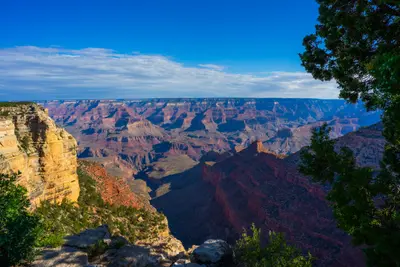
Arizona is located in the Southwest USA, bordering California, Nevada, Utah, New Mexico, and Mexico.
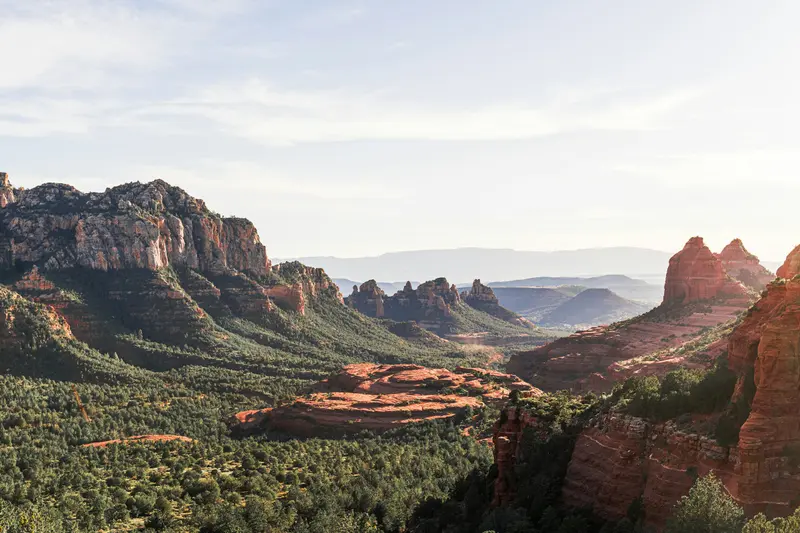
Arizona is located in the Southwest USA, bordering California, Nevada, Utah, New Mexico, and Mexico. You travel here for the Grand Canyon, the red rock landscapes in the north, and the Sonora Desert with its Saguaro cacti around Phoenix and Tucson.The capital, Phoenix, is also the largest city. The lower-lying south has a desert climate with hot summers, while the Colorado Plateau in the north is cooler and gets snow in winter. The highest peak is Humphreys Peak near Flagstaff, at 3,852 meters. A large part of the northeast is occupied by the Navajo Nation, the largest tribal nation in the USA. Its territory includes Monument Valley and Antelope Canyon.Besides the Grand Canyon, Arizona has two other national parks: Petrified Forest, featuring petrified wood approximately 225 million years old, and Saguaro near Tucson. Sedona is known for its red sandstone formations.
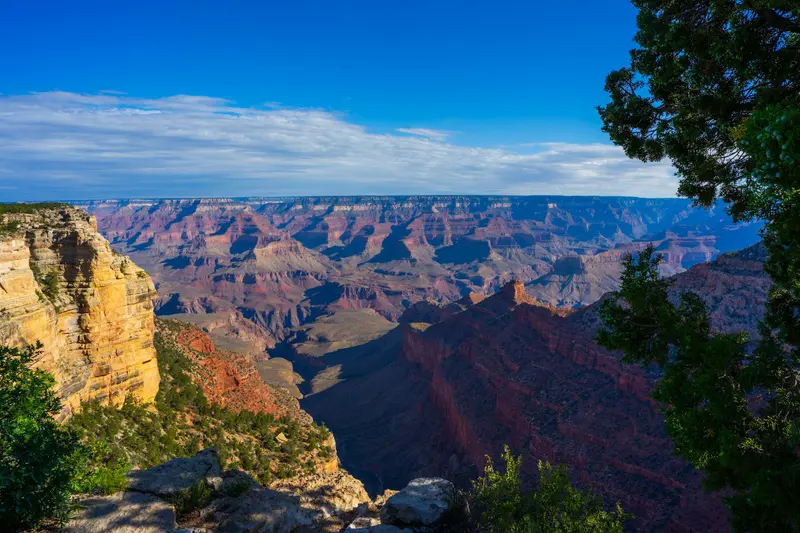
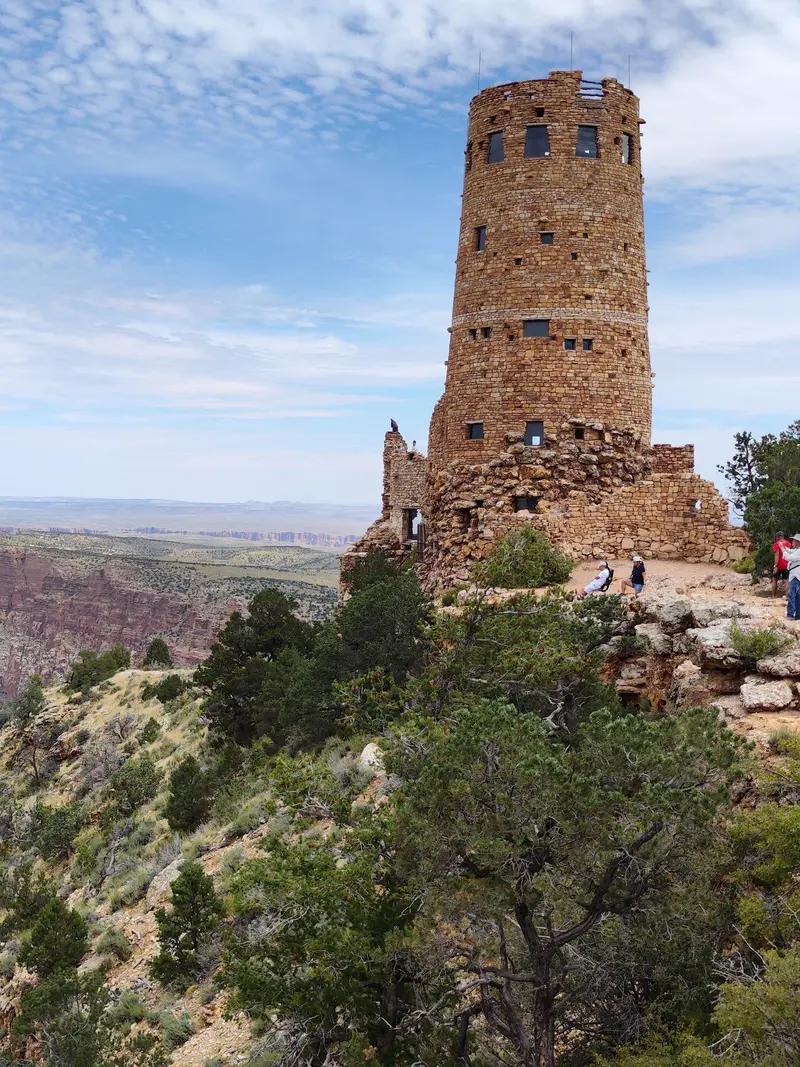
The Grand Canyon National Park in Arizona protects the 446-kilometer-long canyon of the Colorado River, which is up to 29 kilometers wide and up to 1,857 meters deep. From the South Rim, about a 90-minute drive north of Flagstaff, you'll gaze upon a landscape that has been a UNESCO World Heritage site since 1979.The heart of the South Rim is Grand Canyon Village, home to the Hotel El Tovar, which opened in 1905. Hermit Road extends about 11 kilometers to viewpoints along the rim and is accessible only by shuttle bus from March to November. At Desert View stands the Watchtower, designed by Mary Colter in 1932. On the North Rim, over 2,400 meters high, a wildfire destroyed the Grand Canyon Lodge in 2025; there will be no accommodation there in 2026.Entry costs 35 US dollars per vehicle; visitors without US residency aged 16 and over pay an additional 100 dollars per person. This surcharge is waived with the America-the-Beautiful Pass for non-residents (250 dollars). An entry reservation is not required; payment is by card only.
Sights in Arizona
Discover the most important sights and attractions
Historic Landmark
Desert View Watchtower
At the east end of the South Rim in Grand Canyon National Park, Mary Colter designed the approximately 21 m tall tower, completed in 1932. Its peak is at 2,293 m and is the highest point on the South Rim; inside, murals by Fred Kabotie display regional motifs.
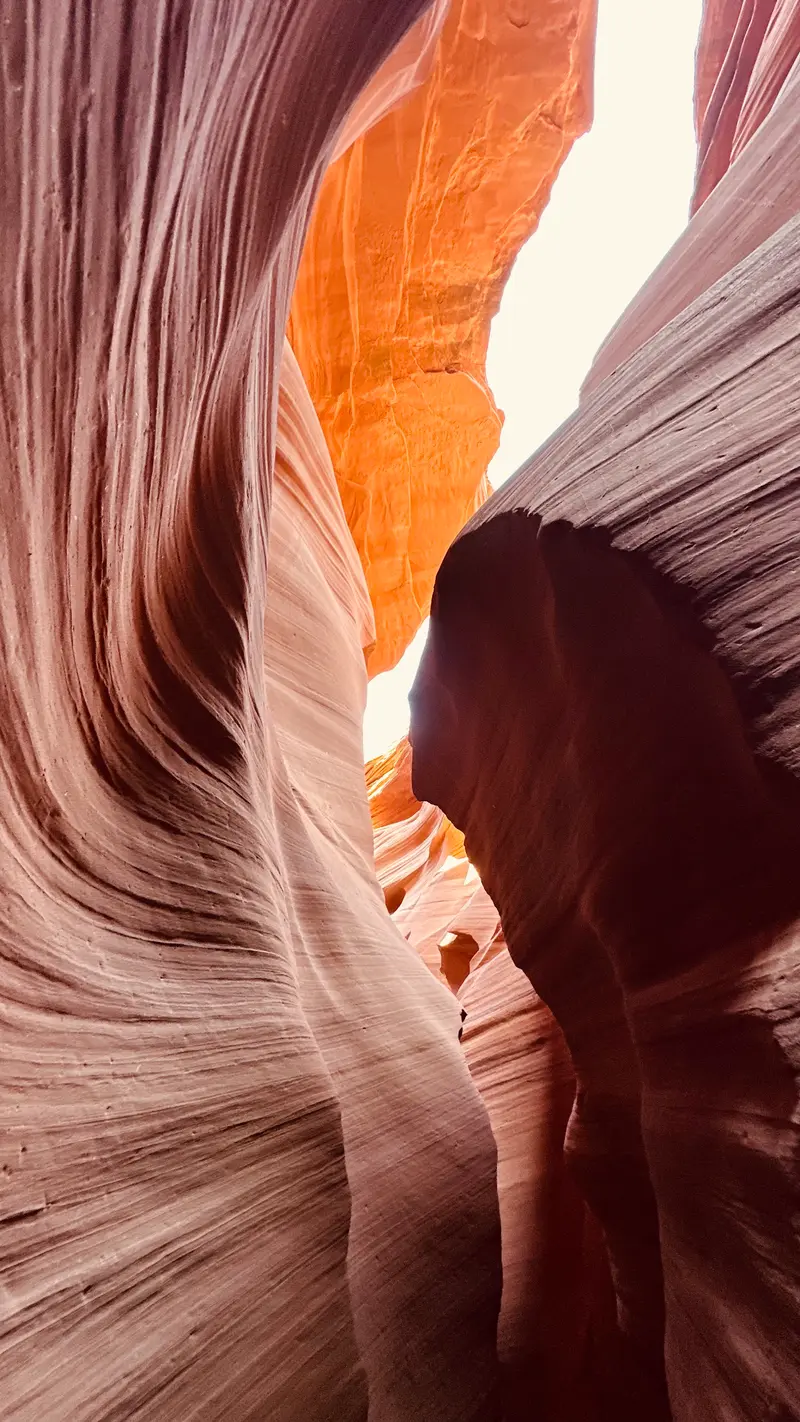
Narrow slot canyon near Page, where the light makes the red, polished sandstone glow. It is located on Navajo land and is only accessible with a booked tour; tours are often booked weeks in advance.
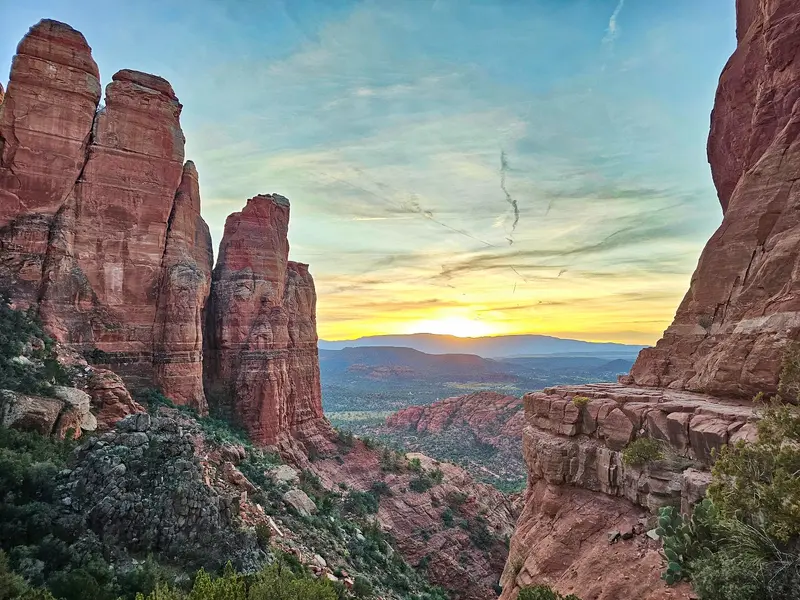
The most striking of the red rock formations around Sedona. A short, steep climbing trail leads from the trailhead on Back O' Beyond Road to a saddle with sweeping views over the Red Rock Country.
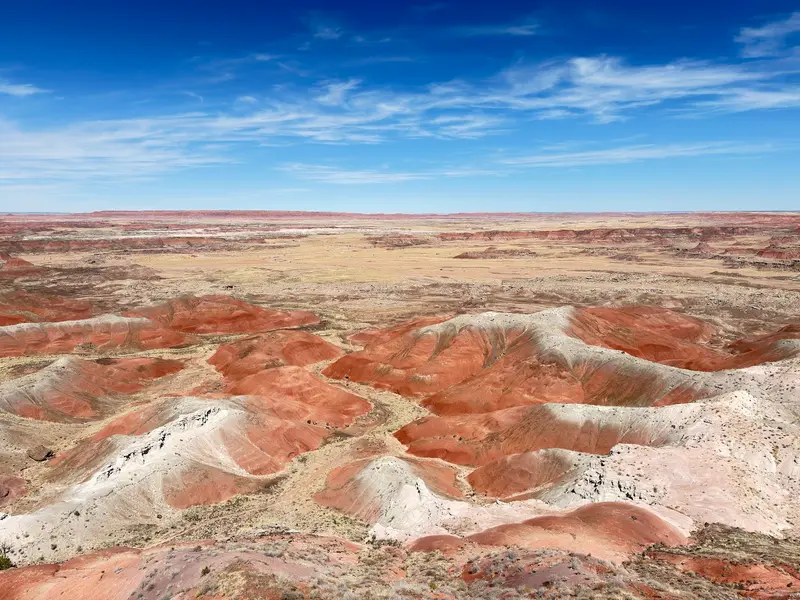
Petrified logs, over 200 million years old, are scattered here among the colorful hills of the Painted Desert. A park road connects both entrances; short paths lead to the most beautiful spots.
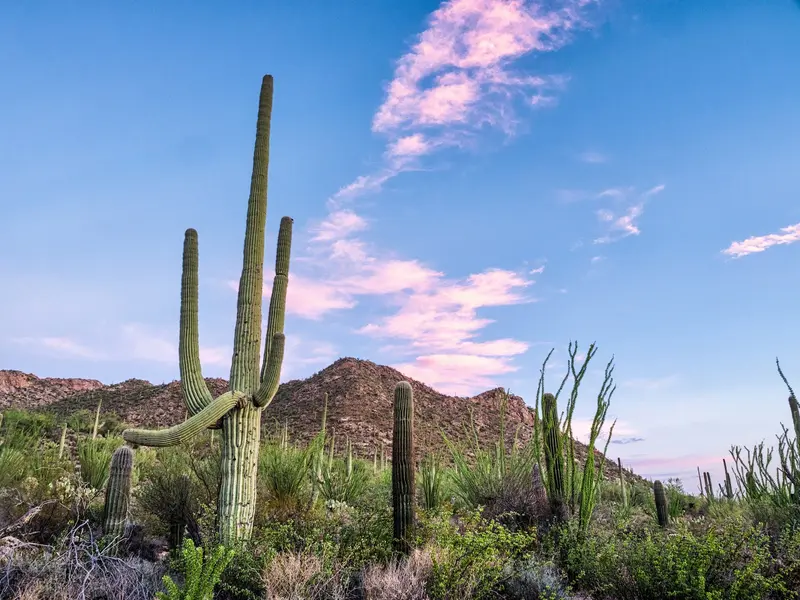
Two park units east and west of Tucson protect Saguaro cactus forests, the USA's largest cacti. The scenic drives in the western part are especially atmospheric at sunset.
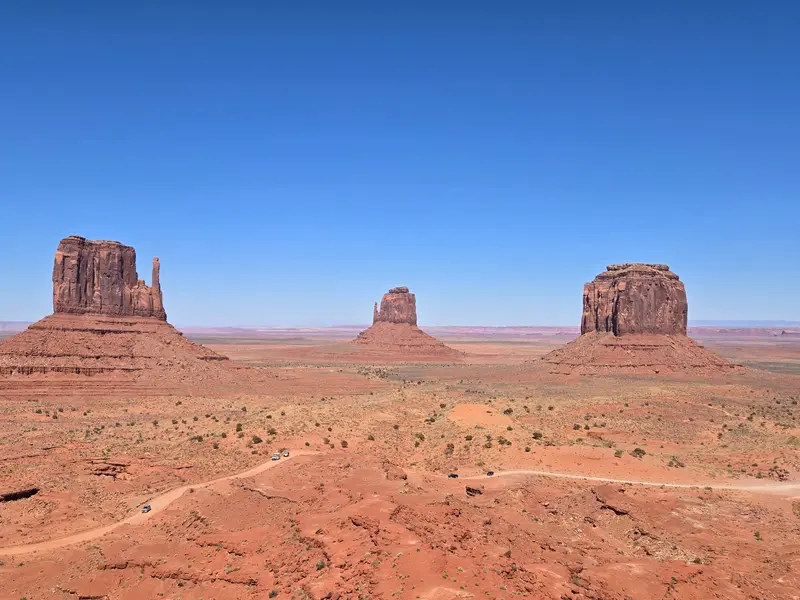
The red mesas bordering Utah are in the Navajo Nation, world-famous since John Ford's Westerns. A 27 km unpaved loop leads from the visitor center through the valley. You only get deeper with Navajo guides.
The main airport is Phoenix Sky Harbor (PHX). Many travelers also arrive via Las Vegas. For your road trip, you'll need a rental car.Distances: Sedona is about 192 kilometers from Phoenix Airport and 42 kilometers from Flagstaff Airport.Time Zone: Arizona does not observe Daylight Saving Time, but the Navajo Nation does. So, different times apply there in summer.Navajo Territory: You can only enter Antelope Canyon with a guided tour, and you pay a fee for the track in Monument Valley.Travel Season: For the south, autumn to spring; for the north, spring to autumn. In summer, the monsoon brings thunderstorms.