ExploreTravel GuidesPlan a trip
    de|en
    All Places & RegionsAbout FernwehFAQPrivacy PolicyImprint
    ExploreTravel GuidesPlan a trip
    • Neighborhoods & highlights
    • Eat & drink
    • Nightlife
    • Accommodation
    • Plan trip
    • Nearby
    Westend & Banking Quarter

    Germany

    Westend & Banking Quarter

    City

    The Westend originated in the mid-19th century as a bourgeois villa district, with Paris serving as a model for the city's boulevards and star-shaped squares.

    1. Home
    2. Destinations
    3. Germany
    4. Frankfurt am Main
    5. Westend & Banking Quarter
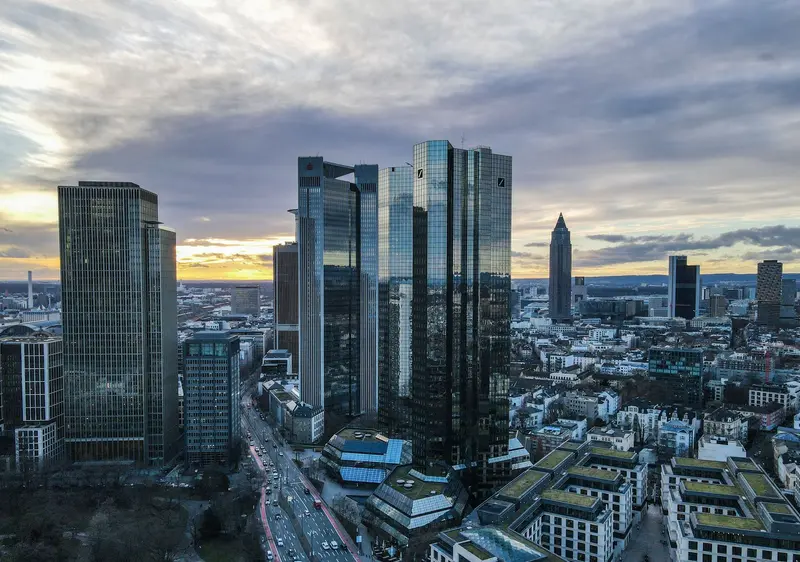
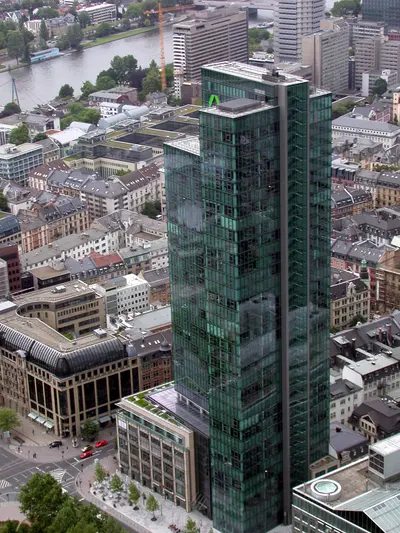
    The Westend originated in the mid-19th century as a bourgeois villa district, with Paris serving as a model for the city's boulevards and star-shaped squares. When many Gründerzeit buildings were slated to make way for offices from the 1960s onwards, it led to the Frankfurt Housing Struggle (Frankfurter Häuserkampf), which peaked between 1970 and 1974. Today, the south of the district has merged with the banking district: Here stand, among others, the Opernturm, the twin towers of Deutsche Bank, and the 208-meter-tall skyscraper Westendstraße 1. On its western edge, you'll find the Messeturm, which was Europe's tallest building from 1991 to 1997.Between skyscrapers and villas, you'll discover some of the city's most beautiful green spaces, including the Palmengarten, Grüneburgpark, and Rothschildpark, as well as the Senckenberg Naturmuseum and the Westend Synagogue. Below Bockenheimer Landstraße are the U-Bahn stations Alte Oper, Westend, and Bockenheimer Warte, while the S-Bahn stops at Taunusanlage and Messe.
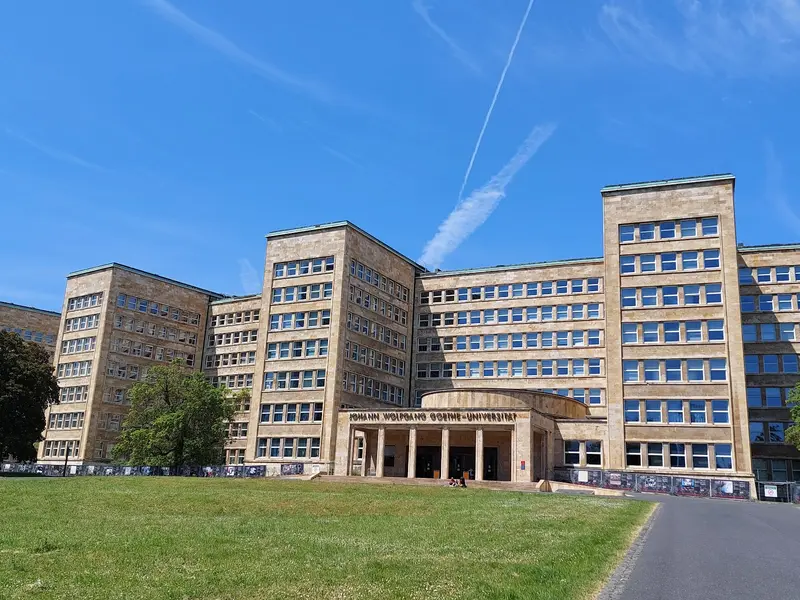
    The Westend combines 19th-century villa-lined streets with the skyscrapers of the financial district to the south, including the Opernturm and the Deutsche Bank towers. To the north are parks like the Palmengarten and Grüneburgpark, plus the Goethe-Universität's Campus Westend in the former IG-Farben-Haus. Under Bockenheimer Landstraße, the U-Bahn stops at Alte Oper, Westend, and Bockenheimer Warte stations; the S-Bahn at Taunusanlage and Messe. You can find Palmengarten, Senckenberg Naturmuseum, and Alte Oper listed under the city's attractions.

    Sights in Westend & Banking Quarter

    Discover the most important sights and attractions

    Grüneburgpark
    Park

    1Grüneburgpark

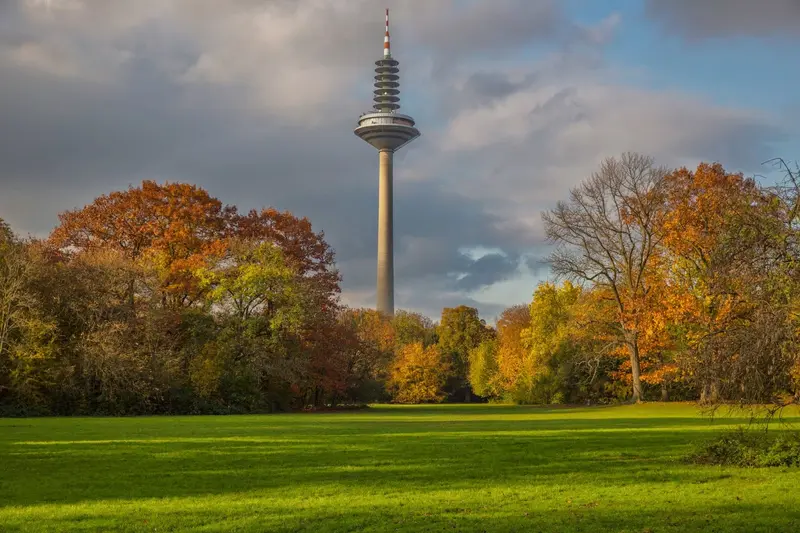
    The 29-hectare landscape park was owned by the Rothschild family for almost 100 years and has been open to the public since 1936. Since 2005, it has featured a Korean Garden, a gift from South Korea for the Book Fair, and the Botanical Garden adjoins its western side.
    Open in Google Maps
    Westend Synagogue
    Synagogue

    2Westend Synagogue

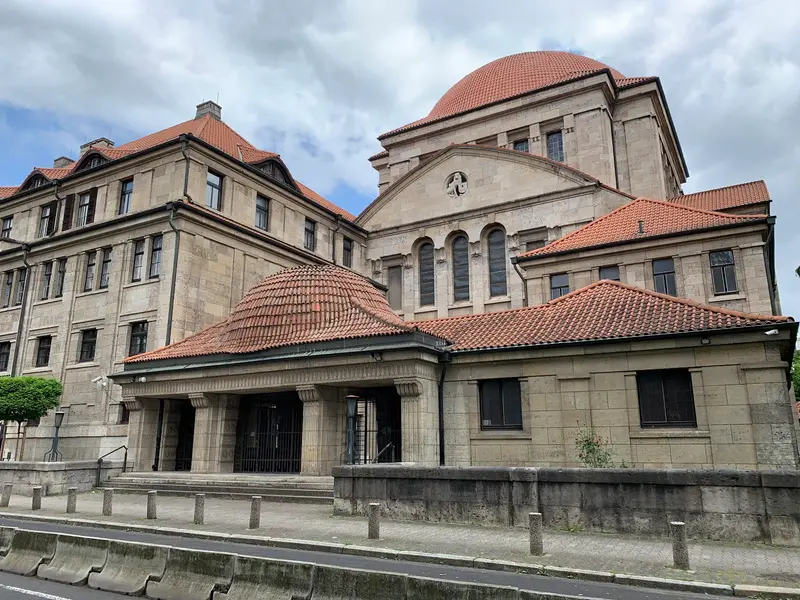
    The synagogue on Altkönigstraße, built from 1908 to 1910, combines Assyrian-inspired architecture with Art Nouveau. It is the only one of the four large Frankfurt synagogues that survived the Holocaust.
    Open in Google Maps
    Messeturm
    Attraction

    3Messeturm

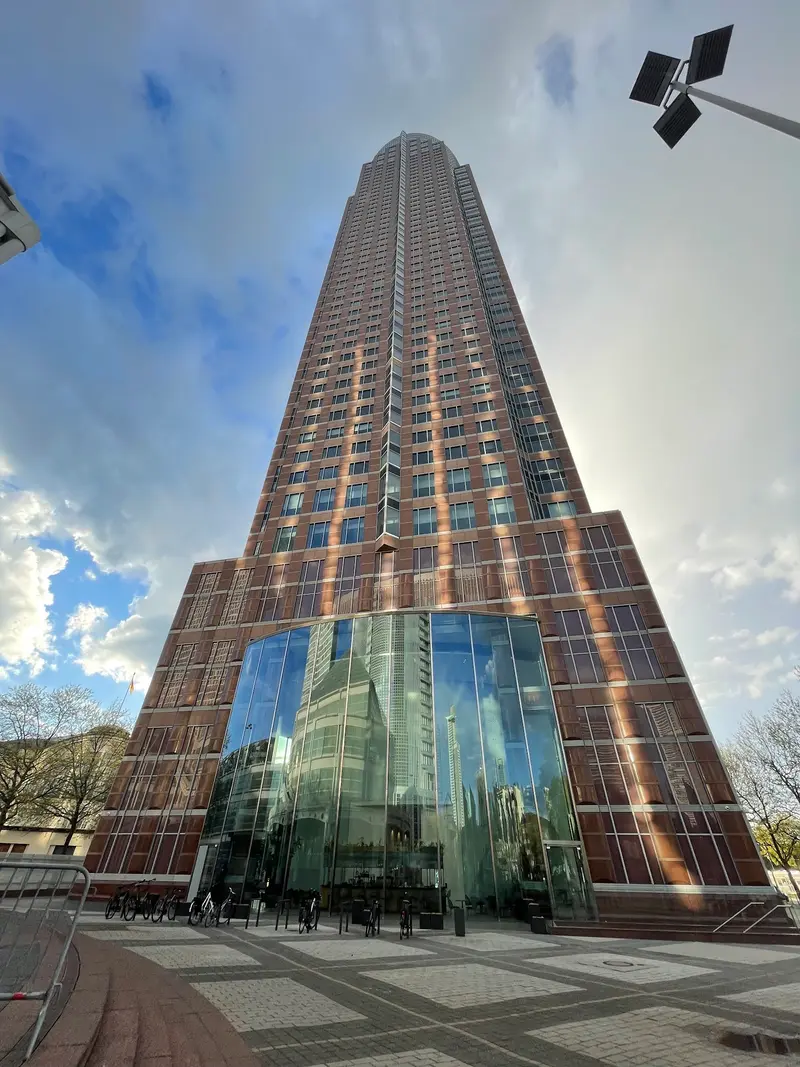
    The 257-meter-tall office tower on the western edge of the Westend was completed in 1991 and was the tallest building in Europe until 1997.
    Open in Google Maps
    IG Farben House
    Historic Landmark

    4IG Farben House

    Hans Poelzig built the 250-meter-long administration building from 1928 to 1931; after the war, it was US Forces headquarters. Since 2001, it has been part of Goethe University's Westend Campus, with the paternosters in the main building preserved due to heritage protection.
    Open in Google Maps

    Restaurants in Westend & Banking Quarter

    1

    Restaurant Lafleur

    Upscale modern cuisine with a Mediterranean touch and a vegan menu at the Gesellschaftshaus des Palmengartens.
    Show on Google Maps
    2

    Ristorante Isoletta

    Cozy Italian restaurant with pizza, pasta and tables on the sidewalk.
    Show on Google Maps
    3

    Elaine's Restaurant

    Fine-dining restaurant on Bockenheimer Landstraße 38 to 40.
    Show on Google Maps

    Nightlife

    1

    Gregor's Boutique Vinothek

    Wine bar with vinotheque at Bockenheimer Landstraße 47.
    Show on Google Maps
    2

    Copper Bar

    Restaurant and bar on two floors with glass facades, creative cuisine, modern interior, and events.
    Show on Google Maps

    Accommodations in Westend & Banking Quarter

    Find perfect stay in Westend & Banking Quarter

    Booking.com* (Affiliate link)
    Search Hotels
    Agoda* (Affiliate link)
    Search Hotels
    Airbnb
    Vacation Rentals

    * Affiliate link: if you book through it, we earn a small commission. The price stays the same for you.

    Campgrounds in Westend & Banking Quarter

    Find perfect campground in Westend & Banking Quarter

    Search via Google Maps
    Campgrounds nearby (15km)
    Camping.info
    Find Campgrounds
    Park4Night
    RV Parks & Camping

    Plan your trip to Westend & Banking Quarter

    Save places, build a route and plan your city trip, all in one place.

    1. 1
      1234

      Round trip

      12 days · 4 stops

      Saved

      Pick a route

      Pick a ready-made one or save places and plan your own.

      Open bookmarks
    2. 2

      Trip to Westend & Banking Quarter

      Live
      • 1Grüneburgpark3 days
      • 2Westend Synagogue4 days
      • 3Messeturm5 days
      Budget

      Plan your trip

      The planner sorts stops, days and budget. Plan together in real time.

      Start trip planning
    3. 3
      9:41 No signal
      Available offline

      Use it on the road

      Download the guide to your phone and use it on site, even offline.

    Nearby

    Station Quarter

    Station Quarter

    The Bahnhofsviertel emerged on the site of the former Westbahnhöfe after the Centralbahnhof opened in 1888, with the land parcelled from 1889. Wide streets in an almost symmetrical grid and enclosed blocks with historicist facades make it a typical Gründerzeit district. At just over half a square kilometre, it is Frankfurt's second-smallest district after the Altstadt.Today, you primarily come here to eat: restaurants, snack bars, and grocery stores from all over the world characterise Kaiserstraße and Münchener Straße. Towards the Main lies the Nizza, one of the city's most popular green spaces. The U-Bahn stops at Willy-Brandt-Platz (U1 to U5 and U8), the S-Bahn at Taunusanlage, and the Hauptbahnhof in neighbouring Gallus is located right at the edge of the district.
    Frankfurt am Main

    Frankfurt am Main

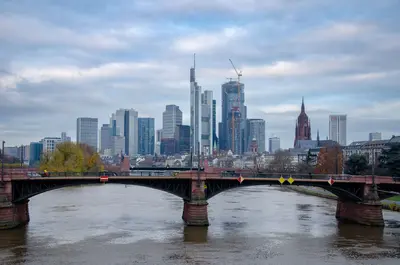
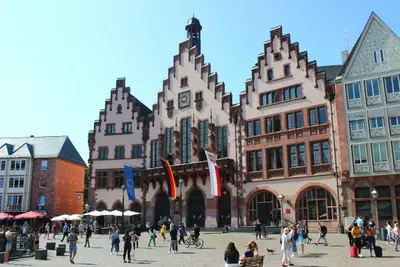
    Frankfurt am Main is the heart of the Rhein-Main region, blending a skyline of skyscrapers with an Old Town centered around the Römerberg. Since 1405, the Römer has served as the city hall; nearby, in 1848/49, St. Paul's Church hosted the first German National Assembly. From the 200-meter-high Main Tower, the city's only skyscraper with a public viewing platform, you can take it all in from above.On the south bank of the Main, 13 museums line the Museum Embankment (Museumsufer), including the Städel, showcasing art from seven centuries. Behind it begins Sachsenhausen, where you can drink Ebbelwoi from a Bembel in the apple wine taverns and try Grüne Soße (Green Sauce) with seven herbs.
    Old Town & Römerberg

    Old Town & Römerberg

    Frankfurt's Old Town, at around half a square kilometer, is the city's smallest district yet its historic heart. In the air raids of March 1944, it was almost completely destroyed; of approximately 2,000 half-timbered houses, only Haus Wertheim at the Fahrtor remained unscathed. Between the Dom and Römer, the Neue Altstadt emerged from 2012 to 2018 with 35 houses, 15 of them faithfully reconstructed. The Coronation Way, taken by emperors after their coronation in the Dom, once again runs through it.Here, you can stroll across the re-established Hühnermarkt with the Stoltze-Brunnen, visit exhibitions at the Schirn Kunsthalle, the Historisches Museum or the Museum für Moderne Kunst, and view the excavated foundation remains in the Archäologischer Garten in front of the Dom. Take the U4 and U5 subway lines to the Dom/Römer station, directly beneath the historic core. Tram lines 11, 12, and 14 also stop in the Altstadt.
    Nordend

    Nordend

    Nordend received its name around 1850 when the area north of the old city boundary was designated as a residential district. It is characterized by four-story Gründerzeit buildings with red sandstone bases; further north, the development becomes lower and more villa-like. With a good 54,000 inhabitants, it is Frankfurt's most densely populated district.Green oases lie between the residential streets: Holzhausenpark with its baroque moated castle, Bethmannpark with its Chinese Garden, and Günthersburgpark on the border with Bornheim. Three subway lines – U1, U2, U3 and U8, U4, and U5 – serve the district at ten stations; tram lines 12 and 18 run along Friedberger Landstraße.
    Sachsenhausen

    Sachsenhausen

    Sachsenhausen, located on the south side of the Main, was first documented in 1193 and now boasts over 60,000 residents. In Old Sachsenhausen, around Klappergasse, beats the heart of cider culture; at Schellgasse 8 stands the city's oldest preserved half-timbered house, built in 1291/92. Along the Main riverbank, the houses of the Museum Embankment, including the Städel, are lined up, and towering above all is the approximately 80-meter-high spire of the Neo-Gothic Dreikönigskirche.By day, you stroll along Schaumainkai from museum to museum; in the evening, you sit in a cider tavern with a Bembel. You can reach Sachsenhausen on foot from the Old Town via the Eiserner Steg. S-Bahn lines S3, S4, S5, and S6 pass through the district, while U-Bahn lines U1, U2, U3, and U8 connect it to the city center.