Fernweh: Home
ExploreGuideDestinationsMy tripsMy trip
de|en
All Places & RegionsRound tripsNight trains in EuropeAll highlightsAbout FernwehFAQPrivacy PolicyImprint
Download on the App StoreGet it on Google Play
ExploreGuideDestinationsMy tripsMy trip
    • Neighborhoods & highlights
    • Eat & drink
    • Culture
    • Getting around
    • Accommodation
    • Plan trip
    • Nearby
    Louvre, Palais-Royal and Tuileries

    Photo by Yiwen on Unsplash

    France

    Louvre, Palais-Royal and Tuileries

    City

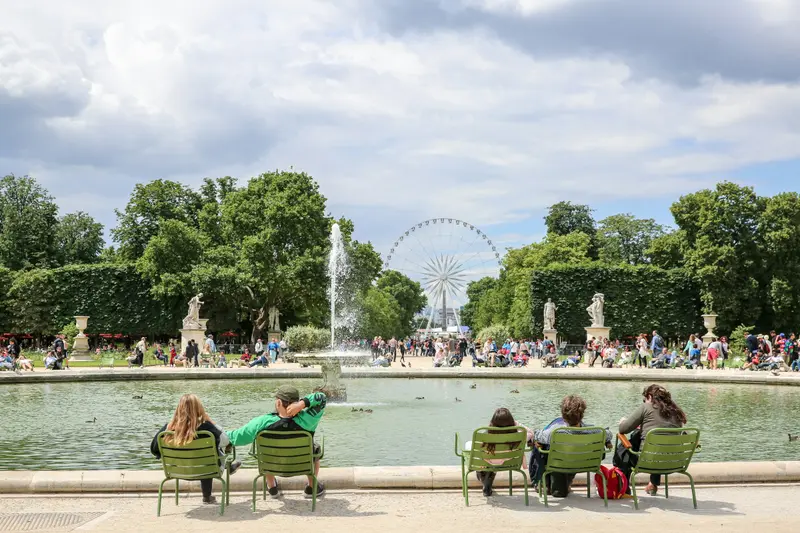
    Between the Place de la Concorde and the Louvre lies the Jardin des Tuileries, laid out in 1564 for the Tuileries Palace.

    by Felix Gillen

    1. Home
    2. Destinations
    3. France
    4. Paris
    5. Louvre, Palais-Royal and Tuileries
    Between the Place de la Concorde and the Louvre lies the Jardin des Tuileries, laid out in 1564 for the Tuileries Palace. North of the Louvre adjoins the Palais-Royal with its arcaded garden, and a few steps further, in the 2nd arrondissement, the covered 19th-century passages like the Galerie Vivienne begin. The district is ideal for a stroll between grand museums, with gardens, arcades, and historic shops.
    France travel guideRound trips in FrancePlan a trip with Louvre, Palais-Royal and Tuileries

    Contents

    • Neighborhoods & highlights
    • Eat & drink
    • Culture
    • Getting around
    • Accommodation
    • Nearby

    Sights in Louvre, Palais-Royal and Tuileries

    Discover the most important sights and attractions

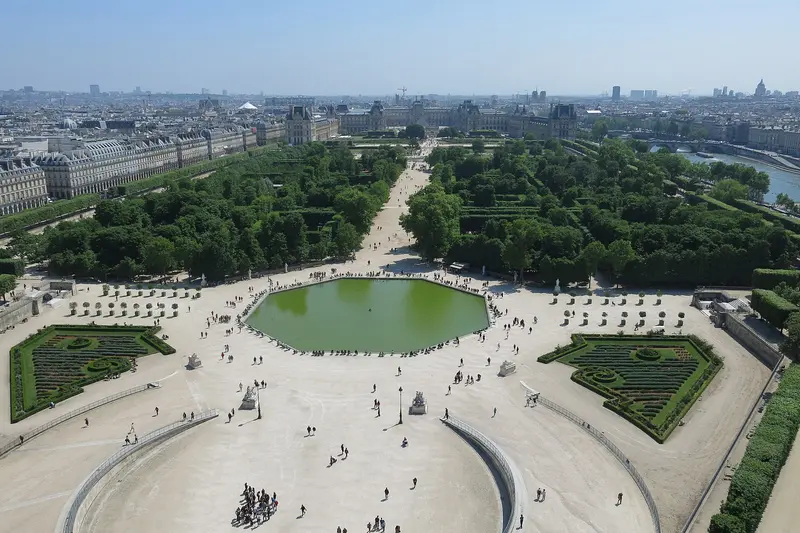
    Jardin des Tuileries

    Tangopaso / Wikimedia Commons / public domain

    Garden

    1Jardin des Tuileries

    Catherine de' Medici had the Jardin des Tuileries created in 1564 for the Tuileries Palace; it has been open to the public since 1667. André Le Nôtre redesigned it in the French style with axes, terraces, and water basins; the palace itself burned down in 1871 during the Commune. At the Musée de l'Orangerie on the west end hang Monet's Water Lilies, while the Jeu de Paume features photography and contemporary art. In the garden, sculptures by Maillol and Rodin, among others, are displayed.

    Open in Google Maps
    Garden

    2Palais-Royal with Garden and Buren Columns

    The Palais-Royal was built as the Palais-Cardinal for Cardinal Richelieu and completed around 1639, later becoming home to the Orléans family. In the late 18th century, arcades with shops, cafés, and theatres emerged around the garden; the Le Grand Véfour restaurant, dating from 1784, is still there today. The garden and arcades are open to the public, and in the Cour d'Honneur, the striped columns ‘Les Deux Plateaux’ by Daniel Buren have stood since the mid-1980s.
    Open in Google Maps
    Historic Landmark

    3Galerie Vivienne

    The covered passage, Galerie Vivienne, was built in 1823 on the initiative of Marchoux, President of the Chamber of Notaries, following plans by François Jean Delannoy, and opened in 1826. Mosaic floors extend under a glass roof with a dome; the passage is 176 meters long and has been protected as a historical monument since 1974. Entrances are located on Rue des Petits-Champs, Rue de la Banque, and Rue Vivienne, just a few steps from the Palais-Royal.
    Open in Google Maps

    Restaurants in Louvre, Palais-Royal and Tuileries

    1

    Le Grand Véfour

    The restaurant in the arcades of the Palais-Royal opened in 1784 as Café de Chartres; its name comes from Jean Véfour, who bought it in 1820. Notable guests included Napoleon, Victor Hugo, Colette, and Cocteau; small plaques at the seats commemorate them. After Guy Martin's departure at the end of 2025, it reopened in May 2026 under Chef Bruno Doucet, featuring classic French cuisine.
    Show on Google Maps
    2

    Angelina

    The Austrian confectioner Antoine Rumpelmayer founded the Salon de thé opposite the Tuileries in 1903; regular guests included Marcel Proust and Coco Chanel. It is famous for its thick hot chocolate 'L'Africain' and the Mont-Blanc dessert with chestnut cream. The original establishment on Rue de Rivoli features a Belle Époque-style hall; at peak times, you'll wait outside.
    Show on Google Maps
    3

    Café Marly

    The brasserie is located in the Richelieu Wing of the Louvre; from the tables under the arcades, you look directly at the Glass Pyramid. It is open daily from morning until late at night and is perfect for a coffee or a meal after the museum. For the evening terrace, it's best to reserve.
    Show on Google Maps
    4

    Kei

    Kei Kobayashi from Nagano worked seven years at Alain Ducasse before opening his own restaurant near the Rue du Louvre. In 2020, he became the first Japanese chef in France to earn three Michelin stars, which the establishment still holds in 2026. A French tasting menu with Japanese precision is served; closed on Sundays and Mondays.
    Show on Google Maps

    Culture and Life

    Palais-RoyalSince 1799, the Comédie-Française has performed in the Salle Richelieu at the Palais-Royal. Daniel Buren's columns have stood in the main courtyard since 1986. The garden is lined by the arcades of the Montpensier, Beaujolais, and Valois Galleries; since 2019, two avenues bear the names of Colette and Jean Cocteau.PassagesThe Galerie Vivienne (1823) and the adjacent Galerie Colbert (1826) are among Paris's covered passages, of which more than twenty survive.TuileriesThe Louvre has managed the garden since 2005. Between 1998 and 2000, sculptures including those by Rodin, Henry Moore, and Louise Bourgeois were added.

    Getting There & Around

    MétroFor the Louvre and Palais-Royal, use Lines 1 and 7 to Palais-Royal-Musée du Louvre, or Line 14 to Pyramides. The Tuileries can be accessed via Tuileries station (Line 1) or Concorde (Lines 1, 8, and 12). For Galerie Vivienne, disembark at Bourse (Line 3) or Pyramides (Lines 7 and 14).Bus and BatobusBus lines 21, 27, 39, 67, 68, 69, 72, 74, 85, and 95, among others, stop at the Louvre. The Batobus docks at the Louvre stop on Quai François Mitterrand.EntrancesThe Louvre's main entrance is the Pyramid; the Porte des Lions is closed on Tuesdays.

    Accommodations in Louvre, Palais-Royal and Tuileries

    Find perfect stay in Louvre, Palais-Royal and Tuileries

    Booking.com* (Affiliate link)
    Search Hotels
    Agoda* (Affiliate link)
    Search Hotels
    Airbnb
    Vacation Rentals

    * Affiliate link: if you book through it, we earn a small commission. The price stays the same for you.

    Campgrounds in Louvre, Palais-Royal and Tuileries

    Find perfect campground in Louvre, Palais-Royal and Tuileries

    Search via Google Maps
    Campgrounds nearby (15km)
    Camping.info
    Find Campgrounds
    Park4Night
    RV Parks & Camping

    Plan your trip to Louvre, Palais-Royal and Tuileries

    Save places, build a route and plan your city trip, all in one place.

    1. 1
      Sunrise over alpine peaks and a sea of clouds
      1234

      Round trip

      12 days · 4 stops

      Saved

      Pick a route

      Pick a ready-made one or save places and plan your own.

      Open bookmarks
    2. 2

      Trip to Louvre, Palais-Royal and Tuileries

      Live
      • 1Jardin des Tuileries3 days
      • 2Palais-Royal with Garden and Buren Columns4 days
      • 3Galerie Vivienne5 days
      Budget

      Plan your trip

      The planner sorts stops, days and budget. Plan together in real time.

      Start trip planning
    3. 3
      9:41 No signal
      Louvre, Palais-Royal and Tuileries
      Available offline

      Photo by Yiwen on Unsplash

      Use it on the road

      Download the guide to your phone and use it on site, even offline.

    Nearby

    Latin Quarter and Saint-Germain-des-Prés

    Latin Quarter and Saint-Germain-des-Prés

    The Latin Quarter is located on the Left Bank of the Seine in the 5th and 6th Arrondissements, around the Sorbonne. It gets its name from the Latin spoken at the medieval university; even today, universities, libraries, and bookstores shape the district. West of it lies Saint-Germain-des-Prés, known for literary cafés like Les Deux Magots and Café de Flore; after World War II, it was the center of existentialism around Sartre and Beauvoir. The Métro stations Saint-Germain-des-Prés (Line 4) and Cluny–La Sorbonne (Line 10) lead here.

    Kreshen·Unsplash

    Île-de-France

    Île-de-France

    The Île-de-France is the political and cultural center of France. Beyond Paris, you'll find royal châteaux, extensive forests, and historic towns, all easily reachable as day trips from the capital.

    Mehmet Turgut Kirkgoz·Pexels

    Paris

    Paris

    Paris is the capital of France, situated on both banks of the Seine. You come for its museums like the Louvre and Musée d'Orsay, for the Eiffel Tower, Notre-Dame, and Sacré-Cœur, for the cafés, bistros, and markets, and for the neighborhoods best explored on foot. The banks of the Seine between Pont de Sully and Pont d'Iéna are a UNESCO World Heritage site.Notre-Dame Cathedral on Île de la Cité reopened in December 2024, following the 2019 fire. In Le Marais, you'll find 17th-century noble mansions and small galleries; in the Latin Quarter, the Sorbonne and the Panthéon; and on Montmartre, the winding staircases around Sacré-Cœur.Good to knowPlanning: For a first visit, four to five days are sufficient. Book the Louvre, Eiffel Tower, and Orsay online with a time slot, often days in advance during peak season.Louvre: From January 2026, visitors from outside the European Economic Area pay 32 Euros; the museum is closed on Tuesdays.Best time to visit: Spring and autumn are pleasant and less crowded than July and August; many small restaurants close for their annual holidays in August.

    Juan Ordonez·Unsplash

    Île de la Cité and Île Saint-Louis

    Île de la Cité and Île Saint-Louis

    The two Seine islands form the historic heart of Paris. On the Île de la Cité stood the medieval royal palace, from which the Conciergerie and Sainte-Chapelle have been preserved; at its eastern tip stands Notre-Dame. The Île Saint-Louis was systematically developed from 1616, with straight streets and stone townhouses along the Rue Saint-Louis-en-l'Île. You can reach the Île de la Cité via Métro Line 4 to Cité station.

    DiscoA340·CC BY-SA 4.0

    Le Marais

    Le Marais

    The Marais extends over parts of the 3rd and 4th arrondissements on the right bank of the Seine. In the 17th century, the nobility settled here and built townhouses such as the Hôtel de Sully and the Hôtel Carnavalet. Around Rue des Rosiers lies the Jewish Quarter, the Pletzl, and since the 1980s, the Marais has also been a center of LGBT culture. You can reach the district via Saint-Paul station using Métro Line 1.

    Sandro Cenni·Unsplash

    Your next steps

    Louvre, Palais-Royal and Tuileries is in France. Ways to carry on from here.

    • More in France

      Highlights, areas, routes and the best time to travel for all of France.

      France travel guide
    • Round trips in France

      Ready-made routes through France, with stops, nights and a map.

      See the routes

    Sources & method

    • Photos: Wikimedia Commons, Unsplash. Each photo carries its credit.
    • Place data such as addresses and ratings comes from Google Maps.
    • The content is based on web research from public, traceable sources. How the content is made · The role of AI