Fernweh: Home
    ExploreTravel GuidesPlan a tripMy tripLast visited
    de|en
    All Places & RegionsAll highlightsAbout FernwehFAQPrivacy PolicyImprint
    ExploreTravel GuidesPlan a tripMy tripLast visited
    • Overview
    • Places in the region
    • Eat & drink
    • Food culture
    • Culture
    • Getting around
    • Round trips
    • Nearby
    Côte d'Azur

    France

    Côte d'Azur

    Region

    The Côte d'Azur, the French Riviera, is the Mediterranean coastal strip between Saint-Tropez and the Italian border near Menton.

    by Felix Gillen

    1. Home
    2. Destinations
    3. France
    4. Côte d'Azur
    The Côte d'Azur, the French Riviera, is the Mediterranean coastal strip between Saint-Tropez and the Italian border near Menton. Here you'll find cities like Nice and Cannes, seaside resorts, mountain villages in the hinterland, and numerous art museums. In the middle of the coast lies the Principality of Monaco, an independent state surrounded by France.
    The Côte d'Azur unites sophisticated coastal charm with the authentic flair of the Southern French hinterland.Here you'll discover elegant cities like Nice with the Promenade des Anglais and Cannes, famous for its film festival.The exclusive Principality of Monaco and the medieval mountain village of Èze offer unique contrasts and panoramic views.The region once inspired artists like Matisse and Picasso; Grasse is the historical center of perfume production.For a relaxed trip outside the high season, a visit in spring or autumn is recommended.
    Saint-Tropez

    Place 1 of 4

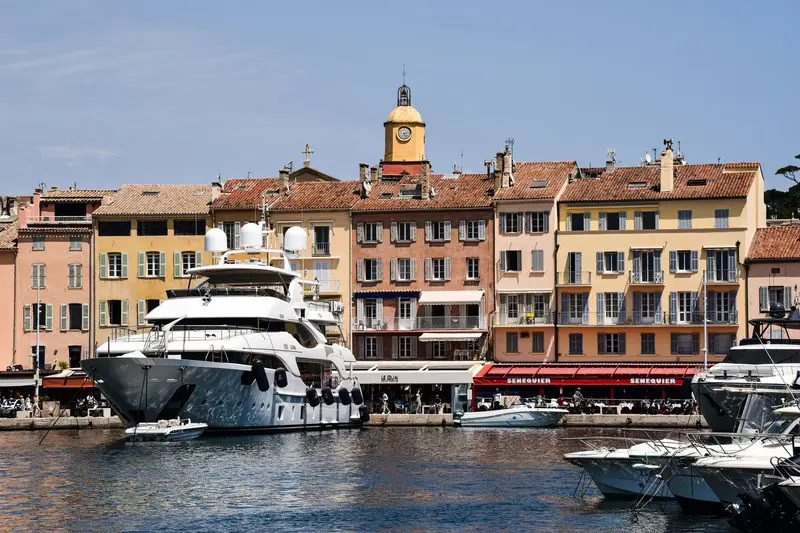
    Saint-Tropez

    Saint-Tropez lies on the northern side of a peninsula in the Var département, where the Gulf of Saint-Tropez meets the Mediterranean Sea.

    Discover
    Col de la Bonette

    Place 2 of 4

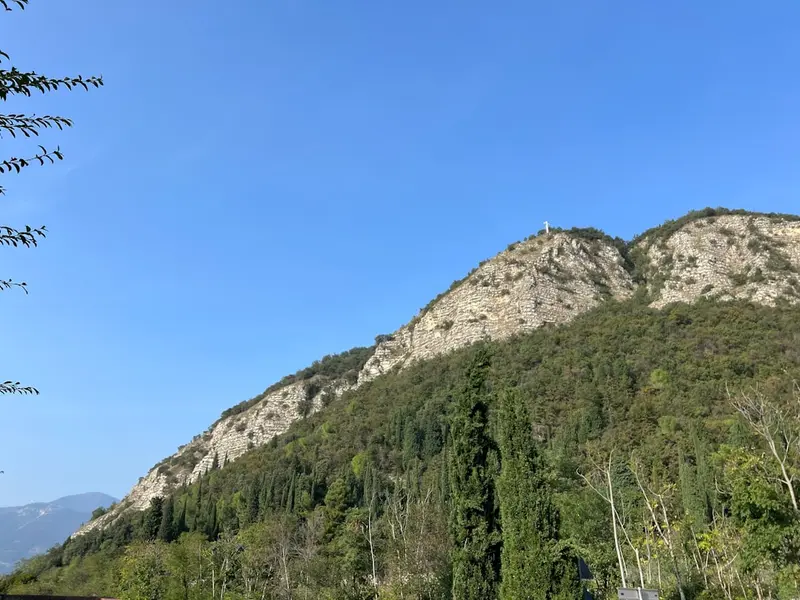
    Col de la Bonette

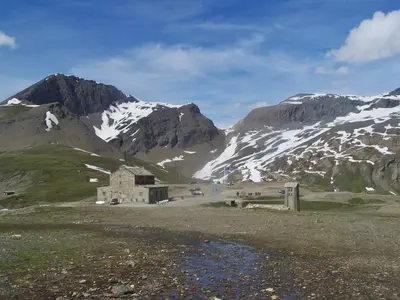
    The Col de la Bonette connects the Ubaye Valley near Jausiers with the Tinée Valley near Saint-Étienne-de-Tinée.

    Discover
    Antibes Juan-les-Pins

    Place 3 of 4

    Antibes Juan-les-Pins

    Antibes Juan-les-Pins combines a walled old town with seaside resorts on the Côte d'Azur. In Vieil Antibes, you'll find narrow streets, the Marché Provençal and the Musée Picasso in Château Grimaldi, where Picasso worked in 1946.

    Discover
    Menton

    Place 4 of 4

    Menton

    Menton, the "Lemon City" on the French Riviera, is distinguished by its exceptionally mild microclimate and its proximity to the Italian border.

    Discover

    More places in Côte d'Azur

    Monaco

    Monaco

    Monaco is a sovereign principality on the French Riviera, known for its opulent lifestyle and stunning coastal scenery. On the Rock of Monaco-Ville, its historic core, you'll find the Prince's Palace, the Cathedral, and the famous Oceanographic Museum. In the Monte-Carlo district, the iconic Casino de Monte-Carlo and the Hôtel de Paris define the image of high society, complemented by the Formula 1 circuit's route. The Grimaldi dynasty has ruled the principality for centuries, shaping its unique history as a meeting point for international celebrities. To explore the narrow streets of Monaco-Ville in peace, a morning visit is recommended. Utilize the numerous public lifts and escalators to comfortably traverse the hilly city and enjoy spectacular views.
    Nice

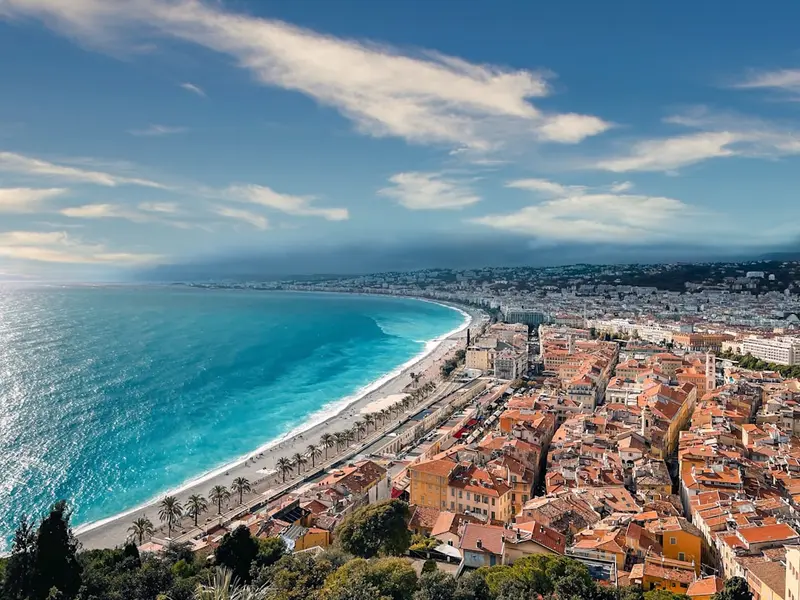
    Nice

    Nice is the largest city on the Côte d'Azur, situated on the Baie des Anges, about 30 kilometers from the Italian border. Stroll along the Promenade des Anglais by the sea; in the Old Town, Vieux Nice, you'll find baroque alleys and the flower market at Cours Saleya. From Colline du Château, you overlook the Old Town, port, and bay. The city has only been French since 1860 and has retained an Italian influence in its cuisine and culture; try Socca and visit the Musée Matisse or the Musée Marc Chagall. For mild weather and fewer crowds, April to June, as well as September and October, are ideal.
    Èze

    Èze

    Èze is a picturesque medieval village, perched high above the Côte d'Azur, distinguished by its unique location. Here you'll find narrow, winding streets that snake around the rock, creating a special atmosphere. The Jardin Exotique at the highest point offers not only an impressive collection of cacti and succulents but also spectacular panoramic views of the Mediterranean Sea. Èze is historically significant due to its long history, dating back to Roman times, and as a place where Friedrich Nietzsche found inspiration. Explore the remnants of the medieval castle and the charming artisan shops in the old stone houses. For a relaxed visit, early morning or late afternoon is recommended to avoid the largest tourist crowds. Wear comfortable shoes, as the cobblestone paths can be steep and uneven.
    Cannes

    Cannes

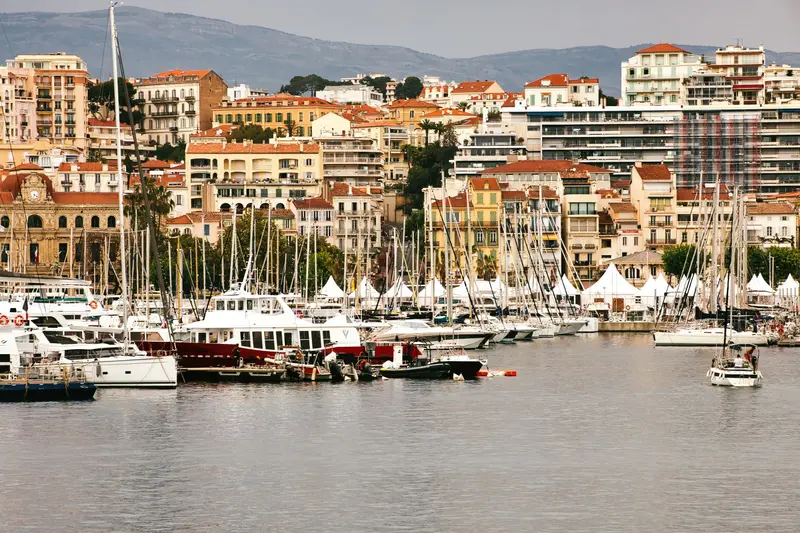
    Cannes is world-renowned as the city of the Film Festival, which first took place in 1946 and is now held every May at the Palais des Festivals. The La Croisette promenade, with its palace hotels and private beaches, defines the city's image on the Golfe de la Napoule.Beyond the glamour, explore Le Suquet Old Town on the hill above the old port, offering views over the bay and the Esterel Mountains. Off the coast lie the Îles de Lérins: On Île Sainte-Marguerite stands Fort Royal, where the "Man in the Iron Mask" was imprisoned, while on Île Saint-Honorat, monks still live in an abbey.

    Sights in Côte d'Azur

    Discover the most important sights and attractions

    Mobilboard Nice Location de vélo et vélo électrique, Location de trottinette électrique / Visite guidée en Segway et vélo

    Mobilboard Nice Location de vélo et vélo électrique, Location de trottinette électrique / Visite guidée en Segway et vélo

    Mobilboard Nice is a rental company in Nice where you can rent bicycles, e-bikes and e-scooters or book guided tours by Segway or bike. This allows you to ride along the Promenade des Anglais, for instance. Our tip: With an e-bike, you can easily ride along the coastal road to Villefranche-sur-Mer in the morning, before traffic increases.
    Open in Google Maps
    Cathédrale Saint-Nicolas de Nice

    Cathédrale Saint-Nicolas de Nice

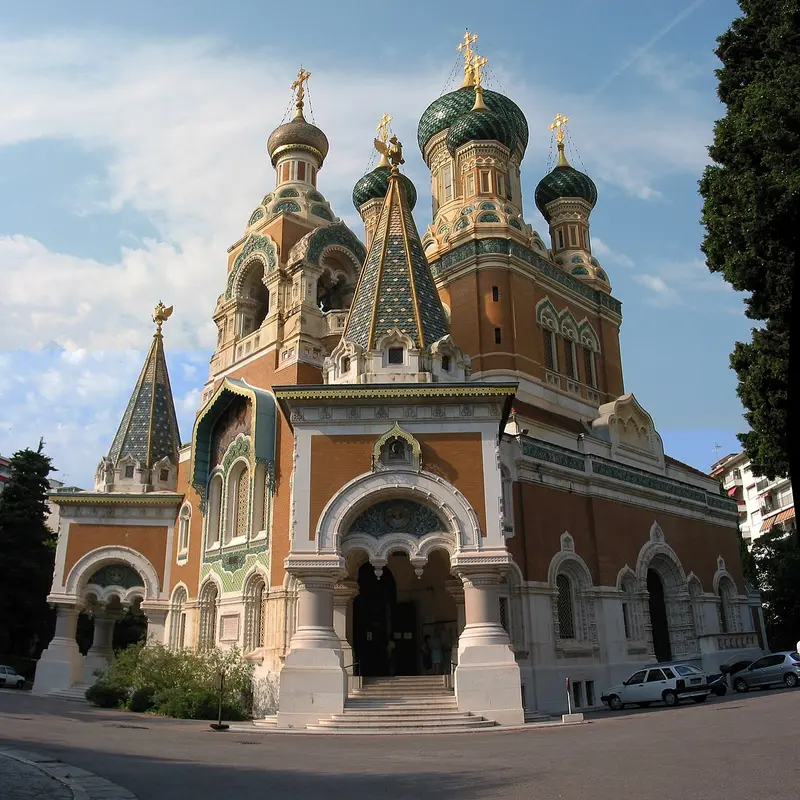
    The Cathédrale Saint-Nicolas in Nice commemorates the Russian presence on the Côte d'Azur in the 19th century and is considered Western Europe's largest Russian Orthodox cathedral. It was built with the support of Tsar Nicholas II near the spot where Tsarevich Nicholas Alexandrovich died in 1865, and was consecrated in 1912. You'll recognize it by its onion domes with colorful tiles in old Russian style. Inside, you'll find icons, frescoes, and wood carvings. The cathedral remains a house of worship for the Orthodox community. Our Tip: It's quieter in the morning. Dress with shoulders and knees covered, and observe the guidelines for photography.
    Open in Google Maps
    Promenade du Paillon

    Promenade du Paillon

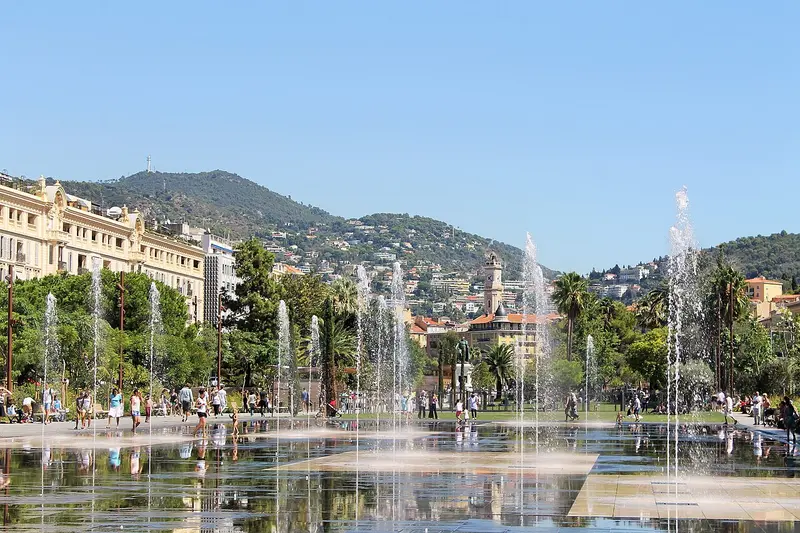
    The Promenade du Paillon in Nice is a central green space that stretches from the Théâtre National de Nice to Place Masséna. It was laid out over the covered course of the Paillon river, which once flowed openly through the city. This redesign has created an important urban area offering relaxation and leisure.Here you'll find extensive lawns, themed gardens, and impressive water features, including the famous "Miroir d'eau", a large reflecting pool with numerous fountains that provides refreshment, especially on hot days. For children, there are imaginative wooden play areas inspired by marine motifs.The Promenade serves as the city's green lung and connects various districts. It is a popular meeting point for locals and visitors alike. Our Tip: Visit the Promenade early in the morning or late in the afternoon to experience the most pleasant atmosphere and avoid the crowds. The Miroir d'eau offers excellent photo opportunities, especially at sunset, when the city lights begin to sparkle.
    Open in Google Maps
    Cimiez-Kloster

    Cimiez-Kloster

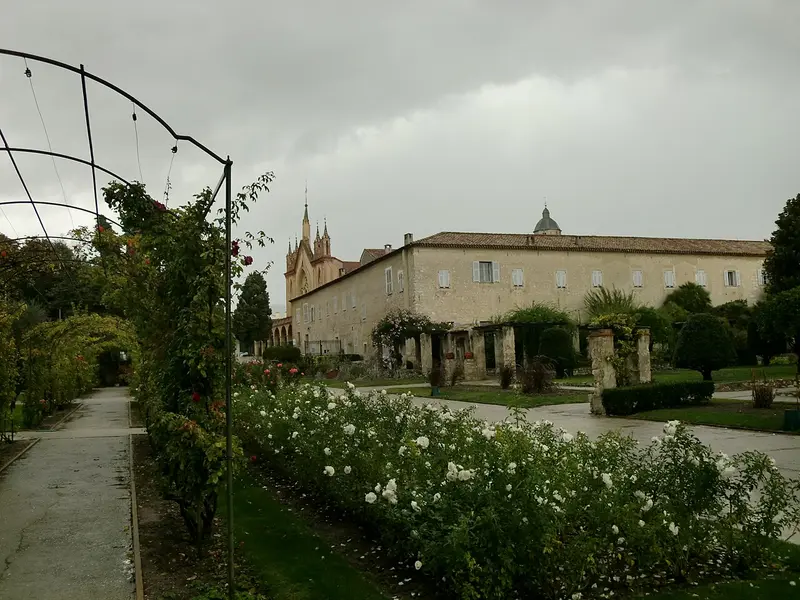
    The Cimiez Monastery is located on the hill above Nice. Its origins date back to Benedictine monks in the 9th century; Franciscans have lived here since the 16th century. The monastery church houses altarpieces by Louis Bréa, one of the most important painters of the region around 1500. A small museum tells the story of the Franciscans' lives in Nice. In the monastery garden, with its roses and citrus trees, you can enjoy a wide view over the city to the Baie des Anges. Henri Matisse and Raoul Dufy are buried in the adjacent cemetery. Our Tip: Combine your visit with the Musée Matisse and the nearby Roman ruins of Cemenelum.
    Open in Google Maps

    Riviera & Tours

    Bar in 8 Rue Chauvain.
    Open in Google Maps

    Food and Drink

    Le Vingt4

    Geselliges Restaurant mit Wurstplatten, saisonalen Speisen und großer Auswahl an offenen Weinen.
    Show on Google Maps

    Le Séjour

    Restaurant in 11 Rue Grimaldi.
    Show on Google Maps

    La Cigale

    Restaurant in 17 Av. Cyrille Besset.
    Show on Google Maps

    Boccaccio rice

    Restaurant in 7 Rue Massena.
    Show on Google Maps

    La Rotonde Nice

    Restaurant in 37 Prom. des Anglais.
    Show on Google Maps

    Dining & Drinks

    The cuisine of the Côte d'Azur is Mediterranean with a strong Italian influence. Nice and Menton were not part of France for a long time, and you can taste that to this day.

    Socca and Pissaladière

    Wood-fired chickpea flatbreads and a yeast pastry with onions, anchovies, and olives are the typical coastal snack.

    Salade niçoise and petits farcis

    The salad originally comes without cooked vegetables, the small stuffed vegetables are a family dish.

    Fish and Marine Produce

    Sea bass, red mullet, and squid are on every menu. Also offered are soups like Soupe de poissons, served with Rouille and grated cheese.

    Citrus fruits and Olives

    Menton is known for its lemon with protected origin, its hinterland for olive oil and table olives.

    Wines from Bellet and Provence

    The tiny region above Nice produces individualistic white and rosé wines that are barely exported.

    Cultural Heritage of the Côte d'Azur

    The Côte d'Azur is a region of profound historical and cultural significance, with roots stretching back to antiquity. Even the Romans left significant traces here, for example in Fréjus and in Nice, which had previously been founded by Greek settlers as Nikaia. For centuries, the region was a melting pot of various cultures and influences, shaped by counties, duchies, and the House of Savoy, before Nice and its surroundings only fell to France in 1860.This history is reflected in its diverse architecture, from the magnificent Baroque buildings of Nice's Old Town, to the medieval villages perchés like Èze and Saint-Paul-de-Vence, all the way to the opulent Belle Époque villas that preserve the glamour of the 19th century. The coast also became a magnet for artists, drawn by the light and the landscape. Names like Picasso, Matisse, Renoir, and Chagall shaped their work here, leaving behind numerous museums and studios.Local traditions such as the Nice Carnival, the Lemon Festival in Menton, and perfume production in Grasse testify to a vibrant culture that combines French savoir-vivre with Mediterranean lightness.

    Exploring Locally

    The Coastal RailwayBetween Cannes, Antibes, Nice, Monaco, and Menton, a regional train runs frequently during the day, following the coastline almost continuously. It's faster and significantly more relaxing than driving, as coastal roads are regularly congested in summer. Nice Airport is directly connected via tram and buses.The Three CornichesBetween Nice and Menton, three roads run one above the other. The Basse Corniche follows the coast through the towns, the Moyenne Corniche passes Èze, and the Grande Corniche is the highest, offering the most expansive views. You can combine them for a scenic drive.Into the HinterlandMountain villages like Saint-Paul-de-Vence or Gourdon and the Gorges du Loup are best reached by car, some also by regional buses. A unique feature is the narrow-gauge railway, the Train des Pignes, which travels from Nice into the Pre-Alps to Digne-les-Bains and is a sight in itself.

    Round trips through this region

    Provence & Côte d'Azur

    Provence & Côte d'Azur

    From Avignon, you drive into the Luberon to Gordes and on to Moustiers-Sainte-Marie on the edge of the Verdon Gorge. After that, it's down to the coast to Saint-Tropez, Cannes, and finally Nice; no leg takes longer than about two and a half hours.

    13 Days
    6 stops
    Route des Grandes Alpes

    Route des Grandes Alpes

    From Annecy, you drive to Albertville and the next day over the Col de l'Iseran at 2,764 meters to Briançon. The last stage leads over the Col de la Bonette down to Nice and takes a full day with breaks. The high passes are usually only open from June or July until October.

    9 Days
    4 stops

    Nearby

    Nice

    Nice

    Nice is the largest city on the Côte d'Azur, situated on the Baie des Anges, about 30 kilometers from the Italian border. Stroll along the Promenade des Anglais by the sea; in the Old Town, Vieux Nice, you'll find baroque alleys and the flower market at Cours Saleya. From Colline du Château, you overlook the Old Town, port, and bay. The city has only been French since 1860 and has retained an Italian influence in its cuisine and culture; try Socca and visit the Musée Matisse or the Musée Marc Chagall. For mild weather and fewer crowds, April to June, as well as September and October, are ideal.
    Èze

    Èze

    Èze is a picturesque medieval village, perched high above the Côte d'Azur, distinguished by its unique location. Here you'll find narrow, winding streets that snake around the rock, creating a special atmosphere. The Jardin Exotique at the highest point offers not only an impressive collection of cacti and succulents but also spectacular panoramic views of the Mediterranean Sea. Èze is historically significant due to its long history, dating back to Roman times, and as a place where Friedrich Nietzsche found inspiration. Explore the remnants of the medieval castle and the charming artisan shops in the old stone houses. For a relaxed visit, early morning or late afternoon is recommended to avoid the largest tourist crowds. Wear comfortable shoes, as the cobblestone paths can be steep and uneven.
    Monaco

    Monaco

    Monaco is a sovereign principality on the French Riviera, known for its opulent lifestyle and stunning coastal scenery. On the Rock of Monaco-Ville, its historic core, you'll find the Prince's Palace, the Cathedral, and the famous Oceanographic Museum. In the Monte-Carlo district, the iconic Casino de Monte-Carlo and the Hôtel de Paris define the image of high society, complemented by the Formula 1 circuit's route. The Grimaldi dynasty has ruled the principality for centuries, shaping its unique history as a meeting point for international celebrities. To explore the narrow streets of Monaco-Ville in peace, a morning visit is recommended. Utilize the numerous public lifts and escalators to comfortably traverse the hilly city and enjoy spectacular views.
    Antibes Juan-les-Pins

    Antibes Juan-les-Pins

    Antibes Juan-les-Pins combines a walled old town with seaside resorts on the Côte d'Azur. In Vieil Antibes, you'll find narrow streets, the Marché Provençal and the Musée Picasso in Château Grimaldi, where Picasso worked in 1946. Port Vauban is considered one of the largest marinas in the Mediterranean, overlooked by Fort Carré. Juan-les-Pins is known for sandy beaches, nightlife, and the festival Jazz à Juan. Along the coastal path around Cap d'Antibes, you'll pass villas and rocky coastline. Spring and autumn are quieter than mid-summer.
    Menton

    Menton

    Menton, the "Lemon City" on the French Riviera, is distinguished by its exceptionally mild microclimate and its proximity to the Italian border. The historic Vieux Menton captivates with its steep, colorful alleys leading to the baroque Basilica of Saint-Michel-Archange. Here, you'll experience a unique blend of French elegance and Italian flair, reflected in its architecture and gastronomy. Cultural highlights include the Jean Cocteau Museum by the harbor, as well as the diverse botanical gardens, including the Jardin Botanique Val Rahmeh. For relaxed explorations and to experience the full splendor of the gardens, a visit in spring or autumn is recommended. Don't miss trying the local lemon specialties, which authentically represent the city's heritage.

    Sources & method

    • Photos: Wikimedia Commons, Unsplash. Each photo carries its credit.
    • The content is based on web research from public, traceable sources. How the content is made · The role of AI