Fernweh
    ExploreTravel GuidesMy Trips
    de|en
    About FernwehImprintFAQPrivacy Policy
    ExploreTravel GuidesMy Trips
    Milos

    Milos

    City
    1. Home
    2. Destinations
    3. Greece
    4. Cyclades
    5. Milos
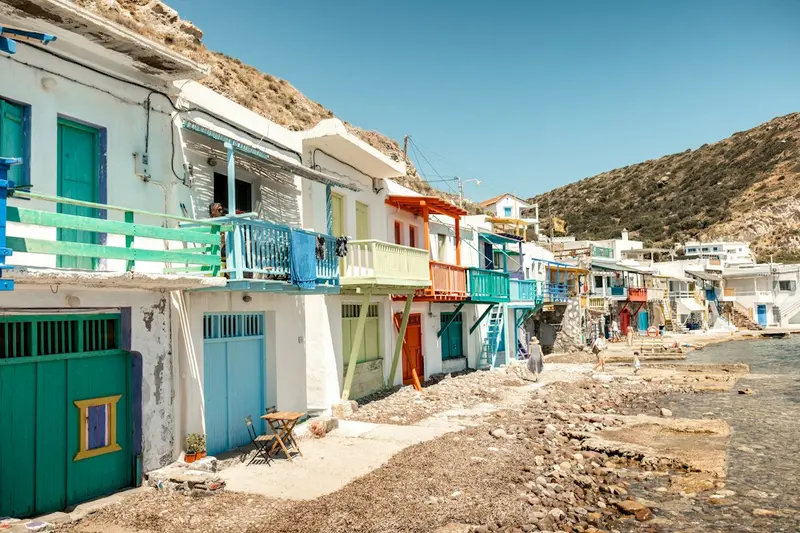
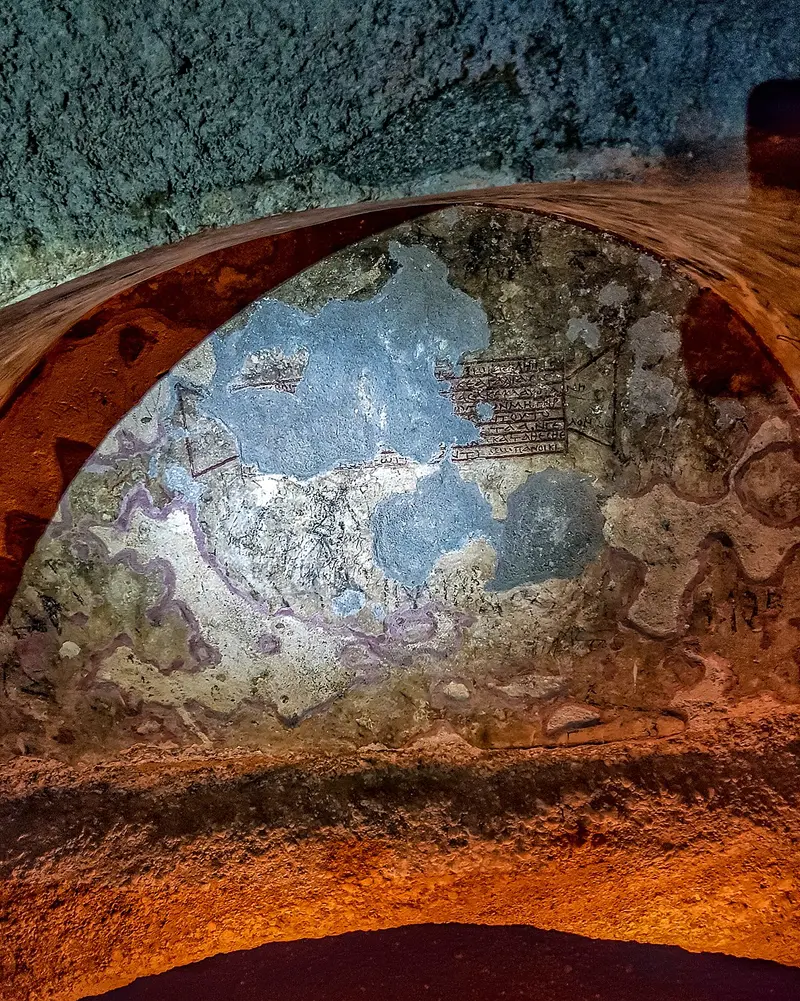
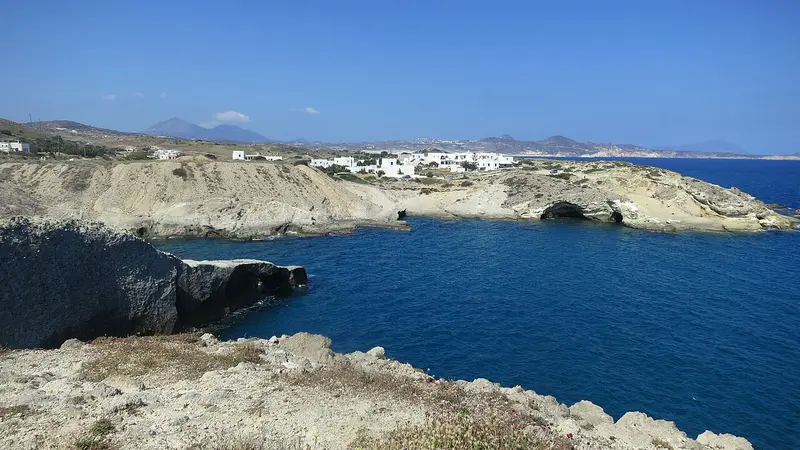
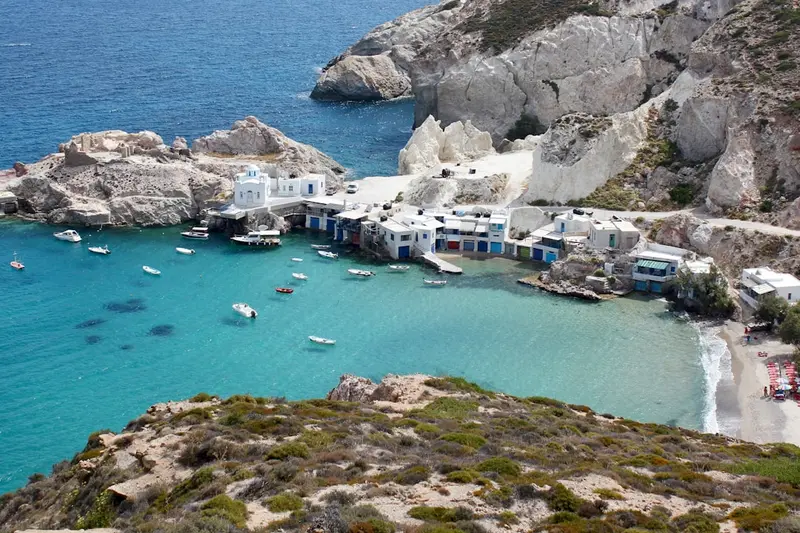
    Milos, a volcanic Cycladic island, captivates with unique geology and diverse coastal landscapes. Here you'll find Sarakiniko with its moon-like rock formations, as well as the striking sea caves of Kleftiko, ideal for exploration by boat tour. The island's capital, Plaka, offers traditional Cycladic architecture, narrow streets, and a Venetian Kastro with panoramic views. Historically significant are the discovery site of the Venus de Milo and the early Christian catacombs near the ancient city of Klima. Characteristic are the colourful fishing villages like Klima and Mandrakia, whose “Syrmata” boathouses are located directly on the water. For exploring the beaches and coves, a rental vehicle is recommended; the best travel time is late spring or early autumn.
    • Neighborhoods & highlights
    • Walking tours
    • Eat & drink
    • Culture
    • Getting around
    • Accommodation
    • Plan trip
    • Nearby
    • Neighborhoods & highlights
    • Walking tours
    • Eat & drink
    • Culture
    • Getting around
    • Accommodation
    • Plan trip
    • Nearby

    Overview

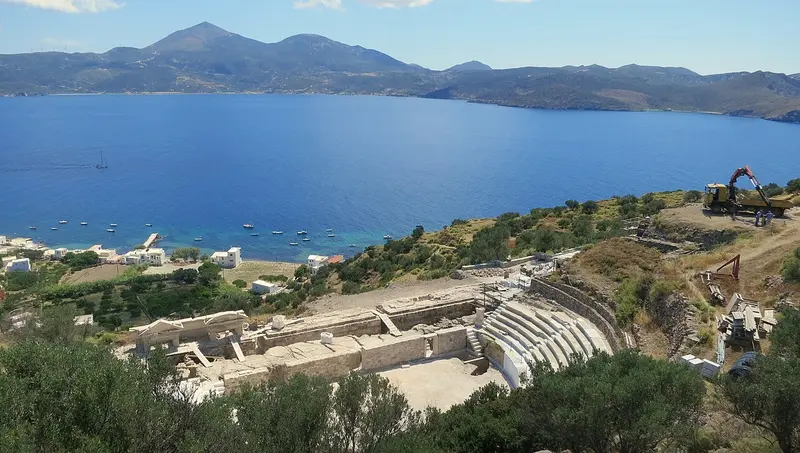
    Milos, a volcanic Cycladic island, captivates with unique landscapes and a rich history. You'll find iconic beaches like Sarakiniko, with its moon-like rock formations. The island capital Plaka entices with charming alleys, taverns, and panoramic views from the Kastro. In Tripiti, you'll find ancient catacombs and a Roman theater, the discovery site of the Venus von Milos. Picturesque fishing villages like Klima, with its colorful Syrmata, are also worth a visit. A rental car is recommended for exploring its diverse coastlines; May or September are ideal for fewer tourists.

    Places in Milos

    Discover the most important sights and attractions

    Sights in Milos

    Donkey Farm Milos

    The Donkey Farm Milos offers you an authentic insight into the traditional role of donkeys on the Greek islands. Historically, these animals were indispensable for transporting goods and people across the often rugged landscapes of Milos. Today, the farm serves as a sanctuary and care home for donkeys, often rescued from difficult circumstances. Here you can get to know the animals in a natural environment and learn more about their care and significance. It's an opportunity to experience these gentle creatures up close and support the efforts for their protection. The operators value respectful interaction and impart knowledge about the well-being of the donkeys. Our Tip: It's best to visit the farm in the morning hours or late afternoon to avoid the intense heat and see the animals more active. Make sure to follow the staff's instructions to ensure a pleasant and safe visit for everyone.
    Open in Google Maps

    The Beach Escape

    Milos, an island of volcanic origin, is famous for its unique coastal landscapes. 'The Beach Escape' embodies this distinctiveness in an impressive way. Here, a backdrop of light, often bizarre rock formations awaits you, gently sloping into the crystal-clear Aegean Sea. The island's geological history, shaped by millennia of volcanic activity, is immediately palpable here, creating an almost surreal atmosphere. You'll mostly find fine sand or small pebbles here, surrounded by pristine nature that invites relaxation and exploration. The beach's secluded location significantly adds to its appeal, making it an ideal retreat. Our Tip: Visit 'The Beach Escape' preferably in the early morning hours to optimally enjoy the tranquility and special light, and to avoid the few other visitors. As there's no infrastructure, you should definitely bring enough water, sun protection, and possibly snorkeling gear to explore the fascinating underwater world. The rock formations also offer excellent photo opportunities, especially when the sun is low.
    Open in Google Maps

    A Milos Vulva

    The rock formation A Milos Vulva is a remarkable natural feature on the Greek island of Milos, captivating with its unique shape. You'll find this geological marvel on the coast, where, over millennia, it was shaped by the combined forces of volcanic activity and marine erosion. The striking structure attracts visitors eager to explore Milos' extraordinary landscape and geological diversity. It is an impressive example of how nature's forces can create unique works of art, prompting reflection on Earth's history. Our Tip: For the best photos and to enjoy the tranquility of the spot, visit the formation in the early morning or late afternoon, when the light is softer and the rock colors are particularly vibrant. A nearby elevated viewpoint often offers the best perspective to capture the entire formation and avoid the crowds.
    Open in Google Maps

    Sarakiniko

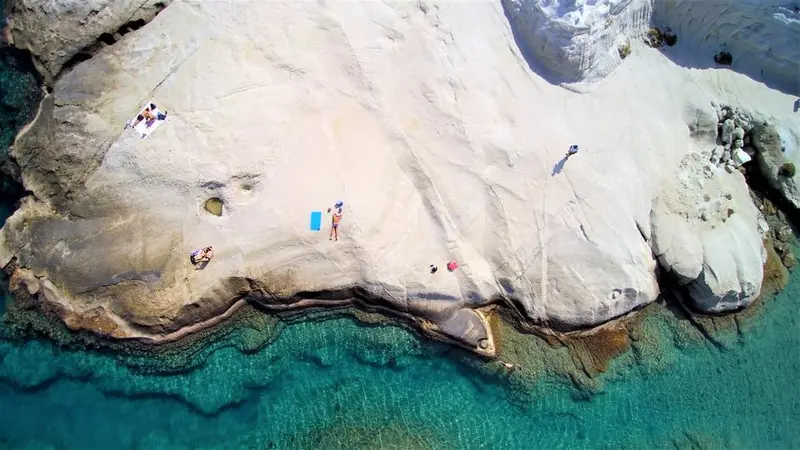
    Sarakiniko on Milos is one of Greece's most striking natural landscapes. Here you'll find a surreal lunar landscape, sculpted from white volcanic rock, eroded over millennia by wind and sea. Its unique rock formations, natural arches, and small coves offer a captivating backdrop. The name Sarakiniko derives from the Saracen pirates, who allegedly used this secluded coastal stretch as a hideout. Today, it's a popular spot for swimming in its turquoise waters and exploring the bizarre rock formations. For photographers, Sarakiniko offers countless subjects, especially during the golden hour. Our Tip: Visit Sarakiniko early in the morning to capture the special light and avoid the crowds. The rocks can be slippery, so be careful when exploring the coast.
    Open in Google Maps

    Σύρματα στο Κλήμα Μήλου

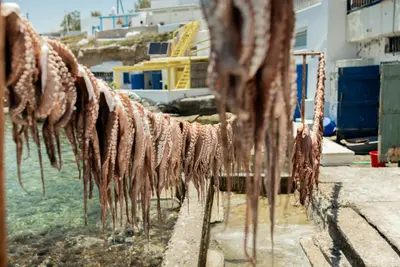
    The Syrmata of Klima on Milos are a unique testament to traditional Cycladic architecture and way of life. These colourful boathouses, often carved directly into the soft volcanic tuff, once served fishermen as winter quarters for their boats and sometimes as simple dwellings. You'll find them right by the water, their brightly painted doors – usually in blue, red, or green – forming a picturesque contrast to the azure sea. Klima is one of Milos' most famous fishing villages, preserving this distinctive architectural style. A stroll along the waterfront promenade offers an authentic glimpse into the island's maritime heritage. Many of these former boathouses are now lovingly used as holiday accommodations, lending the village a special charm. Our Tip: Visit Klima in the late afternoon to capture the soft light of the sunset, when the colours of the Syrmata glow particularly intensely. For undisturbed photos, an early morning visit is recommended, before most tourists arrive.
    Open in Google Maps

    City walks in Milos

    Curated walking tours through the city's highlights — handpicked by experienced travel journalists.

    Adamantas: Maritime Geschichte und Hafenflair

    Entdecken Sie das pulsierende Herz von Milos, das Hafenstädtchen Adamantas. Dieser Spaziergang führt Sie durch seine maritime Geschichte, präsentiert die Bedeutung des Bergbaus für die Insel und lässt Sie das lebendige Hafenflair hautnah erleben.

    ~2 Std.
    In Google Maps öffnen
    Stopps (6)

    Food and Drink

    Culture, Art and History on Milos

    The cultural and historical significance of Milos extends far back into prehistoric times. Due to its rich obsidian deposits, the island was an important trade hub in the Cyclades and played a central role in the development of Aegean civilizations.Important epochs include the Minoan and Mycenaean periods, followed by the Roman era, when famous artworks like the Venus de Milo and the Poseidon of Milos were created. The ancient theater in Tripiti still testifies to this golden age today.Milos' architecture is typically Cycladic, characterized by whitewashed houses and colorful window frames, complemented by the unique Sirmata – vibrant, rock-carved boathouses. Cultural highlights are evident in the traditional fishing villages and the numerous churches built during the Byzantine and Venetian eras.Local traditions include religious festivals, known as Panigiria, which are celebrated throughout the year in the villages and have deep roots in Orthodox faith practice.

    Getting around town

    Milos, eine Insel von überschaubarer Größe, bietet charmante, aber spezifische Transportmöglichkeiten für ihre Besucher. Anders als in urbanen Zentren gibt es hier weder eine Metro noch eine Tram. Das öffentliche Busnetz, betrieben von KTEL Milos, verbindet die größeren Ortschaften wie Adamas, Plaka und Pollonia und stellt eine kostengünstige Möglichkeit dar, zentrale Punkte der Insel zu erreichen; Tickets werden direkt beim Fahrer erworben.Für die Erkundung abgelegenerer Buchten oder für flexible Fahrten sind Mietwagen, Motorroller oder Quads die beliebteste Wahl, wobei eine frühzeitige Buchung, besonders in der Hochsaison, dringend empfohlen wird. In den malerischen Dörfern wie Plaka oder Trypiti lässt es sich hervorragend zu Fuß spazieren, allerdings sind diese oft hügelig und nicht vollständig barrierefrei. Taxis sind verfügbar, jedoch kann es in der Hochsaison zu Wartezeiten oder höheren Preisen kommen, während Ride-Sharing-Dienste auf Milos nicht üblich sind. Fahrräder und E-Scooter eignen sich gut für kürzere Distanzen und flachere Küstenwege.

    Accommodations in Milos

    Accommodations in Milos

    Find perfect stay in Milos

    Booking.com
    Search Hotels
    Agoda
    Search Hotels
    Airbnb
    Vacation Rentals
    Hotels.com
    Hotels Worldwide
    Hostelworld
    Hostels

    Campgrounds in Milos

    Find perfect campground in Milos

    Search via Google Maps
    Campgrounds nearby (15km)
    Camping.info
    Find Campgrounds
    Park4Night
    RV Parks & Camping

    Plan your trip to Milos

    Save places, build a route and plan your city trip — all in one place.

    Save places

    Bookmark sights, restaurants and neighborhoods you're interested in.

    Build your route

    Turn your bookmarks into a route — define order, days and budget.

    Refine with AI

    Let Mein Fernweh suggest experiences and put together a tailored daily plan.

    Start trip planningOpen bookmarks

    Locations nearby

    These places are nearby — perfect for additional days or a day trip.

    Paros

    Paros

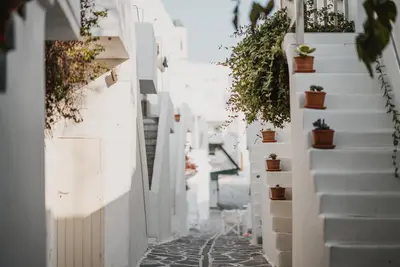
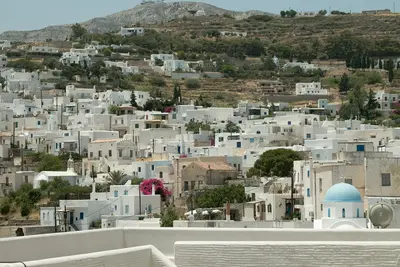
    Paros, an island of the Cyclades, captivates with its authentic aesthetic and the combination of lively coastal towns and quiet mountain villages. The capital, Parikia, welcomes you with a charming harbor, winding alleyways, and the impressive Byzantine church of Panagia Ekatontapiliani. In Naoussa, you'll find a picturesque fishing harbor that transforms into a vibrant meeting point in the evenings, known for its excellent seafood. Visit the traditional mountain village of *Lefkes* to get a glimpse into authentic island life and enjoy the panoramic views. The island is blessed with numerous beaches; Chryssi Akti (Golden Beach) is ideal for windsurfers, while Santa Maria allows for more relaxed sunbathing. To explore the island at your leisure and discover hidden coves, renting a scooter or car is recommended. The best time to visit is in late spring or early autumn, to experience pleasant temperatures and fewer crowds.
    Santorini (Thira)

    Santorini (Thira)

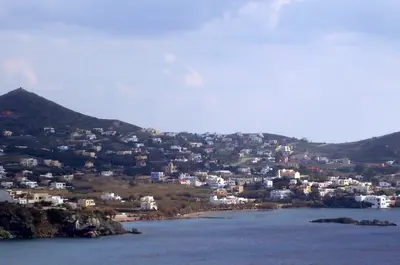
    Santorini, officially Thira, is a Greek island in the Cyclades, renowned for its dramatic caldera and unique Cycladic architecture. Its characteristic whitewashed villages like Fira and Oia cling to steep cliffs, offering expansive views of the Aegean Sea, especially at sunset. The island was formed after a massive volcanic eruption in the Bronze Age, whose remnants shape its current crescent form and buried the archaeological site of Akrotiri. Visitors explore its narrow streets, admire the blue-domed churches, and the breathtaking landscape. Beyond the main towns, beaches such as the Red Beach or the black sand beaches of Perissa and Perivolos are also worth a visit. To avoid the large tourist crowds, the shoulder season in spring or autumn is recommended; book accommodations and restaurants in popular locations early to avoid disappointment.
    Syros

    Syros

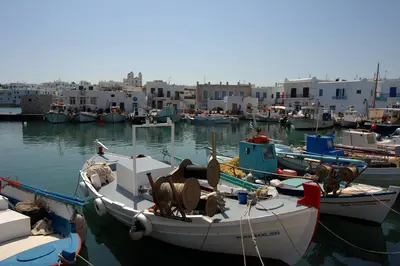
    Syros stands out as one of the most elegant Cycladic islands, with its capital Ermoupoli boasting impressive neoclassical architecture. The city, once a significant commercial hub, impresses with its magnificent Town Hall on Miaouli Square and the historic Apollo Theater, a miniature version of Milan's La Scala. Above it lies the medieval Ano Syros, a labyrinthine, Catholic quarter that, with its narrow streets and the Cathedral of Saint George, forms a fascinating contrast. Syros is also the birthplace of Rebetiko, represented by Markos Vamvakaris, and cultivates a vibrant music culture. For a more relaxed experience, a visit in late spring or early autumn is recommended to enjoy the island and its beaches, such as Galissas or Kini, without the summer crowds. The island offers an authentic blend of cosmopolitan flair and traditional island life.
    Cyclades

    Cyclades

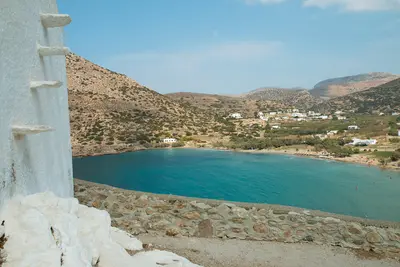
    The Cyclades, a breathtaking island group in the Aegean Sea, are the epitome of the Greek dream. With their iconic whitewashed villages, brilliant blue-domed churches, and pristine beaches, they offer an unparalleled blend of cultural richness and relaxed Mediterranean flair. Discover the allure of these islands, where history meets hospitality and every sunset is a masterpiece.
    Naxos

    Naxos

    As the largest and most fertile island of the Cyclades, Naxos offers an impressive diversity, from long sandy beaches to mountainous hinterland and traditional villages. The capital Chora impresses with the Portara, the monumental marble gate of the ancient Temple of Apollo, which overlooks the harbour. In the heart of the city, you'll find the Venetian Kastro, a medieval quarter with narrow alleys and historic buildings, reflecting the island's long history. Away from the coast, a trip is worthwhile to mountain villages like Apiranthos, known for its marble architecture and museums, or to the mythologically significant mountain region of Zas. Try the local products such as Naxos Graviera cheese and Kitron liqueur in the tavernas. The best times to visit are late spring and early autumn, to explore the island at pleasant temperatures and with fewer tourist crowds.