Fernweh
    ExploreTravel GuidesMy Trips
    de|en
    All Places & RegionsAbout FernwehImprintFAQPrivacy Policy
    ExploreTravel GuidesMy Trips
    South Downs Nationalpark

    South Downs Nationalpark

    National Park
    1. Home
    2. Destinations
    3. Great Britain
    4. South East England
    5. South Downs Nationalpark
    The South Downs National Park in Southern England spans rolling chalk hills, ancient forests, and dramatic coastlines. Here you'll find a unique landscape, shaped by the famous white cliffs of the Seven Sisters and the imposing Beachy Head. Historic market towns like Lewes and Arundel invite you to linger with their castles and alleys, reflecting the region's rich history. The National Park is also home to the 160-kilometer long-distance trail, the South Downs Way, which leads you through idyllic villages and across vast grasslands. Culturally significant are also the prehistoric archaeological sites and traditional pastoral farming. For hikers and nature enthusiasts, spring and autumn are ideal times to visit, to experience the diverse flora and fauna and avoid the crowds.

    Places in South Downs Nationalpark

    The South Downs National Park in Southern England offers rolling chalk hills and ancient woodlands. Here you'll find the iconic white cliffs of the Seven Sisters and Beachy Head. Historic towns like Lewes (castle) and Arundel (cathedral) tell tales of the region. The 160 km long South Downs Way leads you through picturesque villages and grasslands. Prehistoric sites and traditional grazing shape the cultural heritage. Spring and autumn are ideal for experiencing flora and fauna undisturbed.

    Sehenswürdigkeiten

    Discover the most important sights and attractions

    St Mary's House

    1St Mary's House

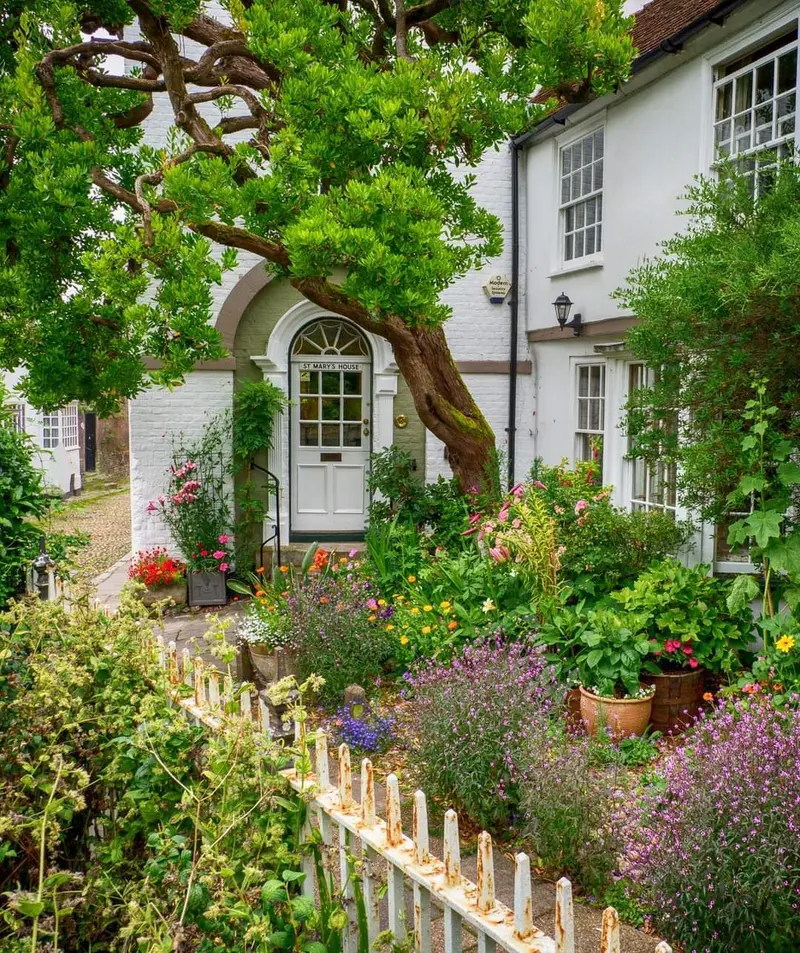
    St Mary's House in Bramber, nestled in the heart of the South Downs National Park, is a remarkable historic building. Here you'll discover a well-preserved medieval house that has absorbed various architectural influences over the centuries. Its most striking feature is the half-timbered architecture that defines the property's appearance. Inside, rooms are furnished with historic furniture and artworks, offering a glimpse into past eras. The surrounding gardens are also worth a visit; they encompass various areas, including formal beds and tranquil pathways. The house is situated in a picturesque setting near the River Adur, providing a serene backdrop. It reflects the region's history and invites you to delve into the past.
    Open in Google Maps
    Seven Sisters

    2Seven Sisters

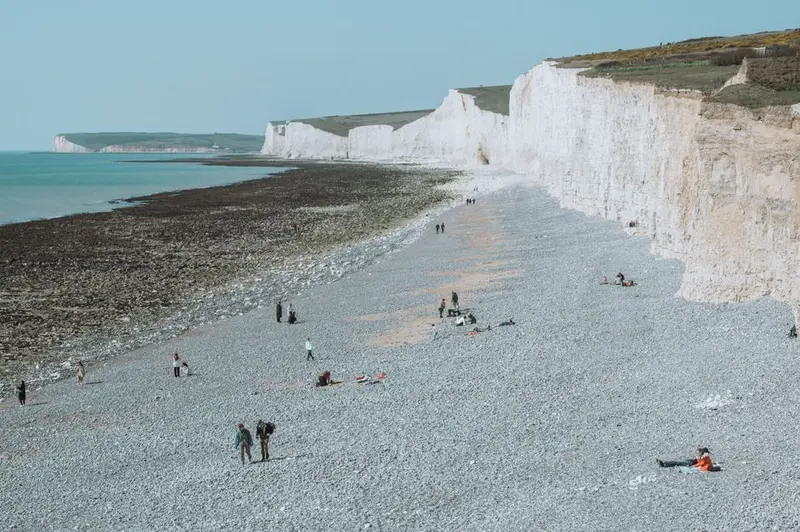
    The Seven Sisters are a chain of chalk cliffs between Seaford and Eastbourne, where the South Downs meet the English Channel. The cliffs formed when the sea cut into a series of dry valleys, which is why the edge rises and falls in regular waves. Because no coastal protection exists here, the cliff face continuously recedes and remains brilliantly white.The classic view of the entire range opens up from Seaford Head in the west, across the mouth of the Cuckmere. From the visitor centre in Exceat, paths lead down into the Cuckmere Valley and up onto the South Downs Way, which runs along the cliffs. The edge is not secured and partially undermined, so keeping a safe distance is important.
    Open in Google Maps
    Beachy Head

    3Beachy Head

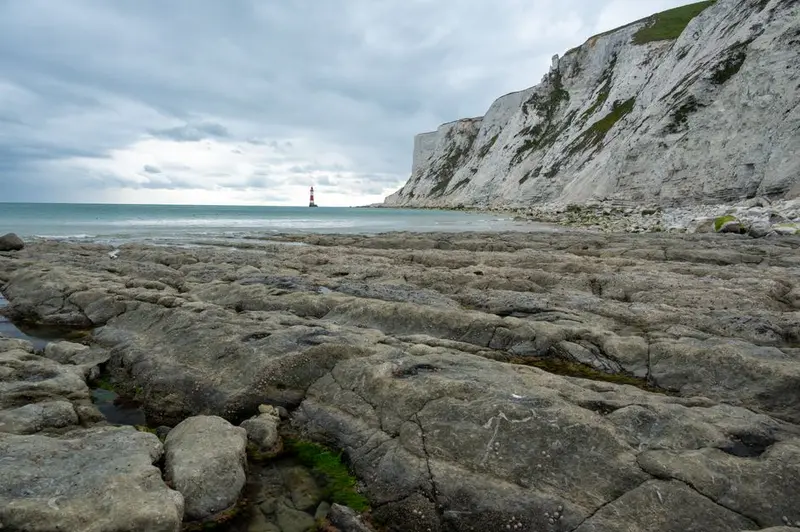
    Beachy Head, west of Eastbourne, is, at around 162 meters, Britain's highest chalk cliff and marks the eastern end of the South Downs. Below, the red-and-white striped lighthouse from 1902 stands in the water, appearing tiny from above and making the immense height of the cliff tangible.The clifftop is open chalk grassland with short, species-rich vegetation. A coastal path connects Beachy Head with the cliffs of Birling Gap and further on to the Seven Sisters. With a westerly wind, views often stretch as far as the Isle of Wight. The place has a troubled history; warning signs and local pastoral care patrols are part of the scene here.
    Open in Google Maps

    4Devil's Dyke

    Devil's Dyke, north of Brighton, is the longest, deepest, and widest dry valley in England's chalk landscape. It formed at the end of the last Ice Age, when meltwater flowed over the frozen ground and carved into the hillside. Today, the hollow is dry, its slopes covered with calcareous grassland.From the ridge, you gaze north over the Weald, reaching the North Downs on a clear day. In the late 19th century, the site was a popular excursion destination with a cable car and its own railway line; only traces of both remain. The area belongs to the National Trust and is accessible via the South Downs Way and several circular routes. Paragliders use the updraft from the slope.
    Open in Google Maps

    5Cissbury Ring

    Cissbury Ring near Worthing is an Iron Age hill fort whose rampart encloses a hilltop of approximately 24 hectares. It is one of the largest sites of its kind in Southern England. Even older are the pits in the southwest of the plateau: here, flint was already mined in the Neolithic period, with shafts extending over ten metres into the chalk.The rampart is clearly visible as a distinct earthwork, and the pit fields appear as shallow depressions in the grass. From the circular path on the summit, you can see south over Worthing to the English Channel and north into the Weald. The site's chalk grasslands support orchids and a remarkable butterfly population in summer.
    Open in Google Maps

    6Long Man of Wilmington

    The Long Man of Wilmington is a human figure, approximately 70 meters tall, on the northern slope of Windover Hill. He holds a staff in each hand and is the largest depiction of its kind in Europe. Its age is debated: for a long time, it was considered prehistoric, but current research dates it closer to the 16th or 17th century.Since 1874, its outlines have consisted of laid blocks; before that, the figure was only visible as a depression in the grass under certain light conditions. A short path leads from the Wilmington car park to the foot of the slope, but the best overall view is from some distance away from the road. Above it are Bronze Age burial mounds and a Neolithic flint mine.
    Open in Google Maps

    Restaurants in South Downs Nationalpark

    Food & Drink

    In the South Downs National Park, local produce shapes the culinary scene you'll experience in traditional pubs and farm shops. Expect regional specialities like ale, cheese, and seasonal vegetables from surrounding farms.

    Local specialities

    In South Downs Nationalpark you'll find local restaurants, cafés and markets with regional specialities. Taste your way through the dishes typical of the region.

    Culture, Art and History of the South Downs

    The South Downs are a stretch of landscape of profound historical and cultural significance, with roots reaching far into the past. Already in the Neolithic period, people settled this area, leaving distinct traces such as the impressive rampart of Cissbury Ring, one of Europe's largest Neolithic flint mines. Over millennia, various cultures shaped the landscape; from Roman villas to Anglo-Saxon settlements, whose traces can be found in numerous village names and old churches.The architecture of the South Downs reflects this rich history. Traditional flint and half-timbered houses are typical, nestling picturesquely into the hilly landscape. Numerous medieval churches, often built from local limestone, bear witness to the region's long religious tradition. Significant examples include Berwick Church, known for its Bloomsbury Group murals, or Chichester Cathedral on the western edge of the park, whose origins date back to the 11th century.Artists and writers have always been inspired by the gentle beauty of the South Downs. The area was an important retreat and source of inspiration for the Bloomsbury Group, whose members lived and worked in the region. Authors like Virginia Woolf, who lived in Rodmell, or Rudyard Kipling, who resided in Burwash, often wove the landscape into their works. To this day, the region is cherished by local artists who capture the uniqueness of the South Downs in their studios and galleries. Local traditions are often closely linked to agriculture and the sea, which is expressed in regional festivals and the awareness of preserving this cultural landscape.

    Exploring locally

    Naturally, the extensive South Downs National Park does not have metro or tram networks. Instead, regional trains along the park boundaries and local bus services are the primary public transport options to reach villages and hiking trails. Check timetables and ticket options (contactless or via apps) in advance to make the best use of multi-journey tickets.For exploring the park, walking and cycling are the most popular options, thanks to an extensive network of paths and country roads. While e-scooters are generally not permitted on natural trails, bicycles and e-bikes (often available from local rental services) are excellent means for flexible landscape exploration.For maximum flexibility, a car or taxis from surrounding towns are ideal for reaching more secluded spots; ride-sharing is less common here. The park is extremely pedestrian-friendly with well-maintained paths, but always remember maps and respect nature.

    Excursions & Activities

    Recommended activities

    Around South Downs Nationalpark there are rewarding day trips and activities – from sights and nature to the surrounding area.

    Accommodations in South Downs Nationalpark

    Accommodation

    Places to stay

    In and around South Downs Nationalpark there are places to stay across different categories and price ranges – from simple to comfortable.

    Accommodations in South Downs Nationalpark

    Find perfect stay in South Downs Nationalpark

    Booking.com
    Search Hotels
    Agoda
    Search Hotels
    Airbnb
    Vacation Rentals
    Hotels.com
    Hotels Worldwide
    Hostelworld
    Hostels

    Campgrounds in South Downs Nationalpark

    Find perfect campground in South Downs Nationalpark

    Search via Google Maps
    Campgrounds nearby (15km)
    Camping.info
    Find Campgrounds
    Park4Night
    RV Parks & Camping

    Locations nearby

    These places are nearby — perfect for additional days or a day trip.

    South East England

    South East England

    Welcome to Southeast England, a region that will captivate you with its exceptional diversity and rich history. From the dramatic chalk cliffs of the coast to the rolling hills of the National Parks – here you'll discover a perfect blend of nature, culture, and charming towns.Explore historic cathedrals, royal palaces, and picturesque villages that make this area an unforgettable travel destination.
    Brighton

    Brighton

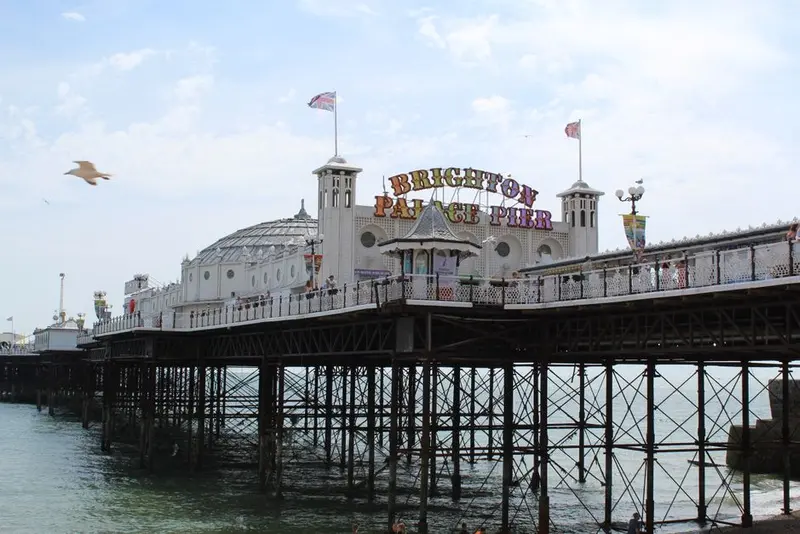
    Brighton, on England's south coast, is a dynamic city that combines royal history with a distinct alternative culture. Here you'll find a unique blend of Victorian charm and bohemian flair. A highlight is the Royal Pavilion, an exotic palace in Indian-Islamic style, built in the early 19th century for King George IV, a testament to the Regency era. Directly on the coast stretches the historic Brighton Palace Pier, an iconic landmark offering entertainment and dining. Stroll through the winding alleys of The Lanes with their independent boutiques and antique shops, or discover vintage stores and art galleries in the adjacent North Laine district. To authentically experience Brighton's vibrant life, ideally visit the city in spring or autumn, when crowds are smaller.
    Isle of Wight

    Isle of Wight

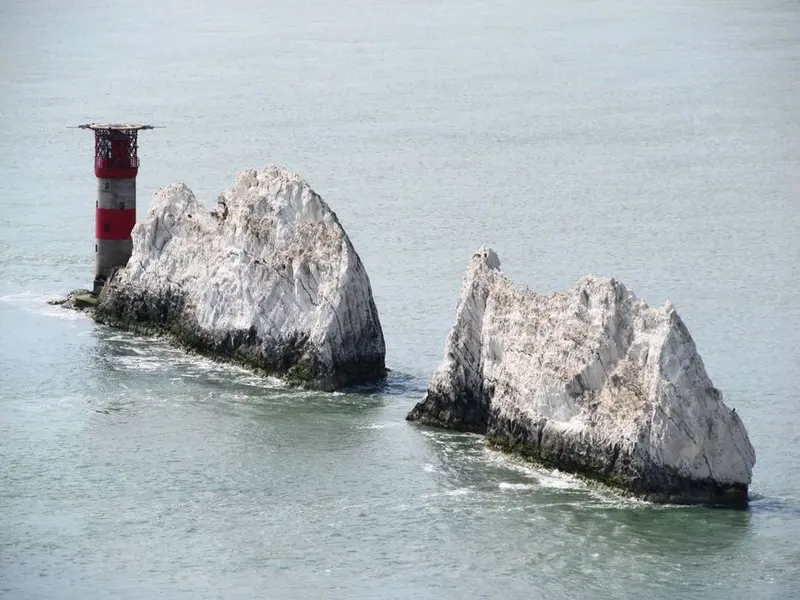
    Entdecke die charmante Insel mit ihren malerischen Stränden, farbenfrohen Felsformationen und historischen Seebädern, ideal für eine Auszeit.
    Kensington & Chelsea

    Kensington & Chelsea

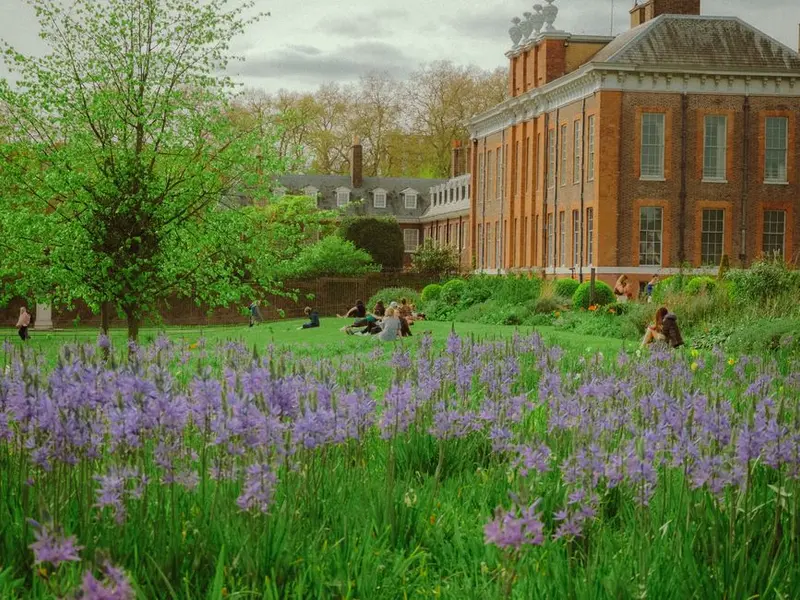
    The London borough of Kensington & Chelsea stands out as one of the city's most elegant and culturally rich districts. Here you'll find an impressive concentration of world-class museums like the Victoria and Albert Museum (V&A), the Natural History Museum, and the Science Museum, all easily explorable on foot. Magnificent Victorian buildings and verdant squares define the landscape, while King's Road in Chelsea boasts exclusive boutiques and galleries. In Kensington Gardens, you can enjoy leisurely strolls and visit Kensington Palace, the former residence of Princess Diana. Historically established as a royal borough, Kensington & Chelsea continues to reflect an affluent lifestyle and a deep appreciation for art and education. To experience the museums unhurriedly, a weekday morning visit is recommended; the area is also perfectly explored on foot or by bus.
    London

    London

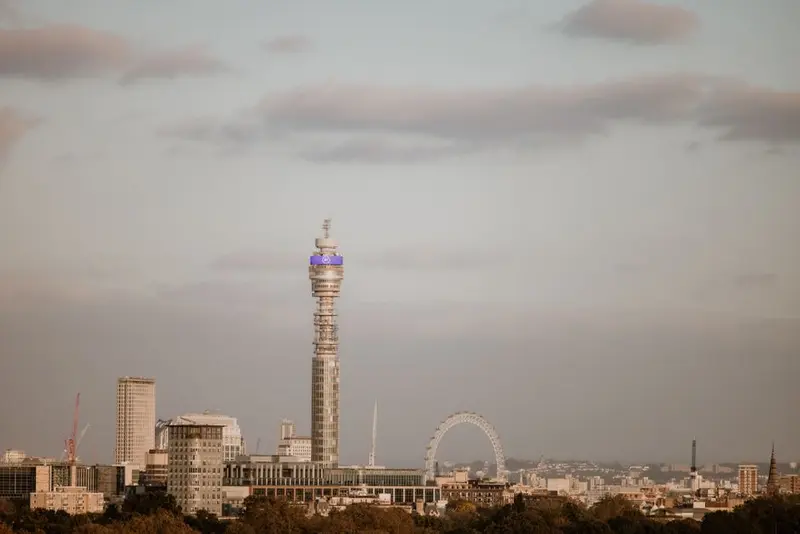
    London is a vibrant metropolis that uniquely combines history, culture, and modernity. From royal palaces to trendy districts, the city offers an endless variety of experiences that will continually captivate you.